• Washington
  • Wall Street
  • A.I.
  • Hollywood
  • Media
  • Fashion
  • Sports
  • Art
  • Join Puck Newsletters What is puck? Authors Podcasts Gift Puck Careers Events
  • Join Puck

    Directly Supporting Authors

    A new economic model in which writers are also partners in the business.

    Personalized Subscriptions

    Customize your settings to receive the newsletters you want from the authors you follow.

    Stay in the Know

    Connect directly with Puck talent through email and exclusive events.

  • What is puck? Newsletters Authors Podcasts Events Gift Puck Careers
 
Puck logo
 
Dry Powder

Hello and welcome back to Dry Powder. 


Happy Sunday, and thanks for reading Puck. If you're enjoying these private emails, consider sharing the subscription link with a friend. In today's column: David Zaslav, Jeff Zucker, Adam Arons, David McCormick, and Jamie Dimon, among others.
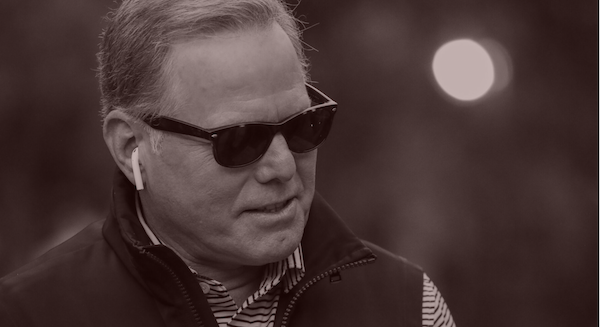
david zaslav

Zaz’s Zuck Card, Fed Anxiety, & the Next Youngkin

The inside conversation on Wall Street about Warner’s CNN headache, AMC’s meme-bond offering, and Jamie Dimon’s dream job.

William Cohan

WILLIAM D. COHAN

This past week, Facebook’s announcement that its monthly and daily active users had plateaued sent its high-flying stock down some 25 percent, shedding around $230 billion of market value in the process. Analysts and investors wondered if there would be larger ramifications for the company—which has committed far worse non-financial sins—and for the broader social-media sector? Meanwhile, the next afternoon, Amazon exceeded earnings expectations and its stock gained $190 billion in market value, a one-day gain greater than that of any other company in history. In less than 24 hours, the company basically increased by the market value of two GEs. 


Welcome to 2022, and the return of volatility in the financial markets. And it’s not only the stocks of individual companies that are reacting wildly to earnings news on a daily basis. It’s also the bond market. At the start of the year, the 10-year Treasury bond was yielding 1.5 percent; it’s now yielding 1.9 percent, a 27 percent increase in yield in a month. That’s quite a move. 


The reason volatility is back, of course, is because the Federal Reserve and its various board members, including Jay Powell, its chairman, and Roy Bostic, the president of the Federal Reserve Bank of Atlanta, have been making all sorts of noises about how the Fed is getting ready to end the 13-year Quantitative Easing party, wherein it manipulated long-term interest rates down to their lowest levels in recorded history and kept short-term interest rates at near zero. The Fed’s zero-interest-rate-policy, or ZIRP, worked magically in the wake of the 2008 financial crisis and again during the March 2020 Covid-related collapse in the financial market. But, as is too often the case, it was too much of a good thing for too long. 


After all, the Fed’s balance sheet, approaching $9 trillion, is 10 times the size it was prior to the 2008 financial crisis. That means the Fed’s been doing a whole lot of bond buying and a whole lot of manipulating the price of money down to historically low levels. The financial markets had a bacchanalia. The Dow Jones Industrial Average was around 6,500 in March 2009, when the Fed’s bond-buying began; it’s now 35,000, a mere 438 percent increase in 13 years. And all you had to do was invest in the market, or hold on to your existing portfolio of stocks. No hedge fund fees or private-equity fees required. No wonder the market is freaking out with the Fed on the verge of pulling the plug on Quantitative Easing. It also hurts, I imagine, when the morphine drip is removed from the arm of a burn victim. 


We’ve become addicted to low interest rates, you may have noticed, and why not? The constituency for low interest rates is vast and varied: anyone who makes money from money (the Wall Street crowd), anyone who borrows money (corporations and businesses around the world), and anyone who invests in stocks and bonds (almost everyone, one way or another). The only haters of low-interest rates are those people who lend money and those people who live on a fixed-income based on a portfolio of bonds, or money market funds. These people have been screwed by the low interest-rate environment. 


Anyway, it’s now starting to correct, and the tables are turning. Those people who believed stocks and bonds (and SPACs, and meme stocks, and crypto, and NFTs, etc.), like trees, could grow to the sky, are feeling the harsh pain of reality. So when Facebook or Netflix or Peloton miss earnings expectations, watch out below. Investors are in no mood to wait around and hear more hollow justifications. Just look at Cathie Wood, my longtime nemesis. She’s been highly geared to the high-flying stocks of companies she deemed to be the chosen ones. Her ARK Innovation ETF, just one of her ETFs, is down 50.5 percent in the last year. I feel terribly for all the people who believed her and have lost half of their investment in the last year. But that’s what happens when investors lose their minds.

What Will Zaz Do About Zucker?


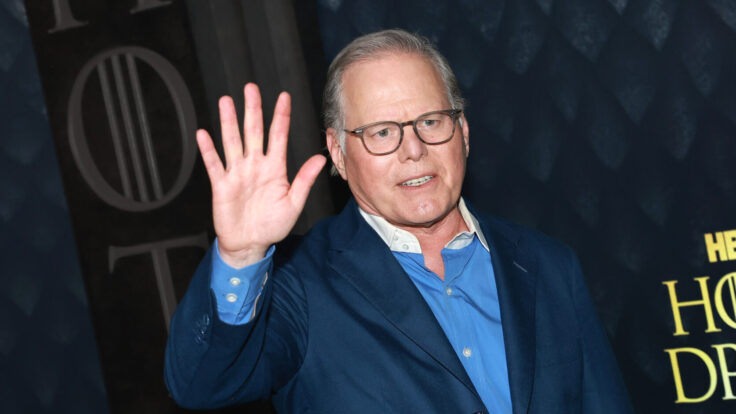
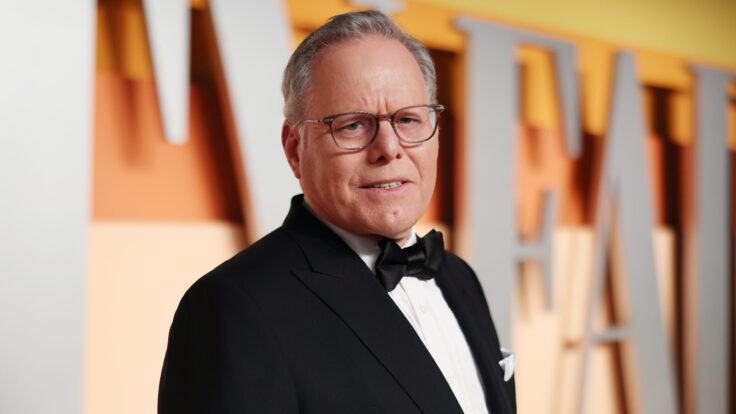
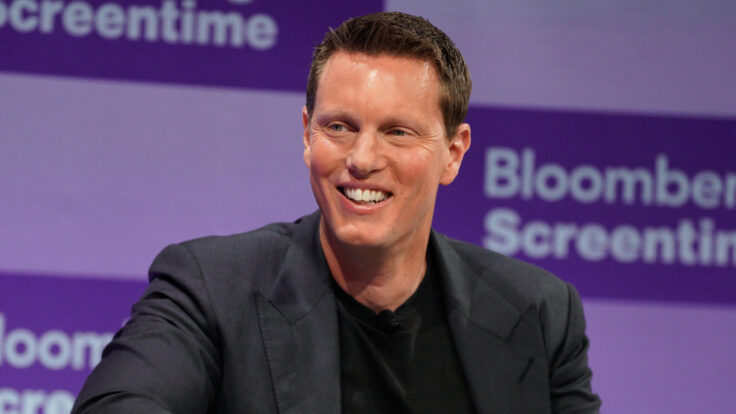
The forced resignation of Jeff Zucker from CNN following his admitting a consensual relationship with his longtime confidante and comms chief, Allison Gollust, was the story of the week. And my partner Dylan Byers did an incredible job leading the coverage about not only the reckoning, but also its consequences. In the wake of Zucker’s departure, a triumvirate of executives will serve as CNN’s interim heads, but none are likely to get the job, which will probably only be finally squared after the Warner Bros. Discovery deal closes in the second quarter. There is little doubt, though, that CNN remains one of the more valuable assets that David Zaslav will be acquiring with the $48 billion merger of Discovery and WarnerMedia. So what will Zaz do with CNN?


David is a visionary, it’s fair to say. He was one of the earliest corporate executives at GE, along with Jack Welch, Bob Wright, and Tom Rogers (let’s not forget Tom), to comprehend the importance of cable television to the future of how we consume content on the small screen. He was a big part of the team that created CNBC and MSNBC, and made them what they are today. He has long been partnered with John Malone, the cable television pioneer, and Malone remains one of Discovery Communications’ biggest shareholders. 


In January 2007, David left GE for Discovery and created a juggernaut of European sports and a variety of channels, such as Animal Planet and the Food Network, that have proved to be the perfect antidote at the end of the day when we just can’t possibly take any more bad news. He has consistently been one of the highest paid media executives. And now he will oversee the Warner Brothers television and movie production business and CNN, assuming the Feds approve the deal, which they surely will since their previous Trump-inspired foot-dragging scrutiny over AT&T’s acquisition of Time Warner was one of major reasons the deal failed, a mere three years after it finally closed. (AT&T C.E.O. John Stankey’s confounding inability to understand the media industry is another.)


Zaslav’s control of CNN brings to mind a historical irony. Once upon a time, when Zaz was trying to get Malone’s support for GE’s effort to start CNBC, and then to bolster it by buying FNN (Financial News Network) out of bankruptcy, he was concerned that Ted Turner would start a competing business channel. But Malone assured Zaslav that Turner had no interest in business news and was happy with CNN remaining a general news channel. That was sufficient assurance for the GE execs to make a winning bid for FNN and to double down on CNBC and business news. It was a wise gambit for all involved, and changed the nature of the business news industry.


I know David was close to Zucker, as has been widely reported. But he’s also a savvy executive with a long memory. He probably recalls how and why Zucker’s tenure atop NBCU never panned out as successfully as Jeff Immelt, the GE C.E.O. who gave him the job, hoped. In the meantime, Zaz is too smart to comment on his friend’s abrupt departure. Last week he said on CNBC that he had nothing to do with Zucker’s “retirement.” David is on a mission to make Warner Bros. Discovery an important player in Hollywood, New York City, and beyond. I would never bet against him. He’s been at this a long, long time. 


But he does have some serious challenges to grapple with, and fast. There is, for starters, the Discovery stock price, which is down 63 percent from its 52-week-high. Investors may also be worried about the sizable $58 billion of debt that Warner Bros. Discovery will carry—$43 billion of which AT&T is larding up on Warner Bros. before spinning it off. The combined company will have around $14 billion of EBITDA, making its leverage a seemingly manageable 4.1x. For some reason, for all the hoopla around the deal, investors just haven’t taken to it, which is a little hard for me to understand. In other words, David has a lot to think about—the merger integration, the strategic direction of the combined company, and of course his stock price. I’d put losing Jeff Zucker pretty far down his list of concerns.

The Gordon Gekko of the Meme Stock Era


A couple months ago, my partner Matt Belloni absolutely skewered Adam Arons, the C.E.O. of AMC, the left-for-dead theater chain, which somehow turned into a meme stock darling, along with the likes of Game Stop and Hertz. Instead of handling AMC’s shocking good fortune responsibly and keeping his mouth shut, Arons assumed a Trump-like affect, constantly goading his meme army—the so-called “apes”—on Twitter, in order to continue to keep their support as consumer behavior shifted, irreversibly it seems, away from theater attendance to at-home streaming. Arons appears to be still riding the meme-stock hysteria, if AMC’s recent junk bond offering—which was nearly doubled last week to $950 million—is any indication. Have the AMC apes taken over Wall Street’s junk-bond investors, too? 


Yes and no. On the one hand, Arons is just seeking to refinance AMC’s $5 billion of existing debt and this $950 million is a first step. The debt AMC is refinancing, issued early in the pandemic, paid interest at 10.5 percent. The new financing is estimated to be closer to 7.5 percent. So AMC saves 300 basis points in interest with the deal. That’s good for AMC and good for the new bondholders. It’s also good for the old bondholders, who get their money back when early in the pandemic that looked like a more risky bet.


Since debt is a contractual obligation of the debtor to repay, investors buying the AMC debt are—theoretically anyway—not taking on nearly the same risks as the AMC stockholders, who have no contractual obligation to receive anything. They are the crazy ones. But there’s no telling the holders of meme stocks anything. They are on a mission, however loony, and will not be dissuaded from it. And, oh have they paid the price. AMC’s stock is down 42 percent so far in 2022 and is off 79 percent from its 52-week-high. So AMC’s debt holders might just squeak by and get their contractual interest payments and that might be a better risk-adjusted return than they can get elsewhere. God bless them if that works out. As for AMC’s equity holders, haven’t you had enough of all of the shenanigans yet?

The Next Youngkin or McCormick?


After former Carlyle Group co-C.E.O. Glenn Youngkin’s surprise election to the Virginia governor’s mansion and optimism around David McCormick’s run for the open Pennsylvania senate seat, I’ve been getting asked the same question a lot lately: Who will be the next banker or private equity honcho that gets a taste for political life?


I think you have to divide this into two groups. There are the bankers who would love to be appointed to a White House cabinet, thus saving them from the thankless—and expensive—task of campaigning and putting their fates into the hands of actual voters. Into this camp go the likes of Jamie Dimon, Lloyd Blankfein, and Steve Schwarzman, who would love nothing more than to follow in the footsteps of Hank Paulson, Steve Mnuchin, Bob Rubin, Gary Cohn, and Steve Friedman, among others, and get nominated to be Treasury Secretary or to be appointed National Economic Advisor. In fact, I wouldn’t be surprised if the only thing that could get Jamie Dimon away from his corner office at JPMorgan Chase would be an offer to be Treasury Secretary. (Ditto Schwarzman, although he supposedly is giving up day-to-day operation of Blackstone to Jon Gray, his chosen successor.) 


Then there are former Wall Street types like Youngkin and McCormick (and before them, Mitt Romney, Jon Corzine, and Phil Murphy) with the cajones to actually put their chips on the table, run for office, and make themselves vulnerable to the public. I admire them for their willingness to make the effort (even if I don’t agree with their politics). The sweet spot for people willing to take this plunge seems to be when they are in their mid-50s, when they probably have already made their pot of gold and still have enough stamina for retail politics. McCormick, for instance, has moved to a house outside of Pittsburgh and gets picked up each morning to drive across the state to press the flesh. (Sounds exhausting!) Who on Wall Street might have both the interest and the energy for a political run is hard to say. 


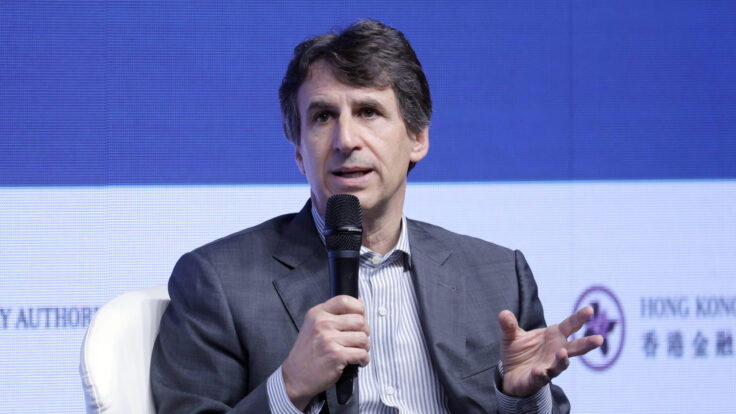
People like Antonio Weiss, 55, or Josh Steiner, who is also around the same age, are two names that come to mind. I worked with them both at Lazard, and they are both top-notch intellects and men of substance. They both once upon a time worked at the Treasury—Weiss in the Obama administration and Steiner in the Clinton administration—and they are now working as partners at their new investment firm, SSW Partners, LP, along with Eric Schwartz, a former Goldman Sachs partner. 


But not so fast. At the moment, both Weiss and Steiner have their hands full with a deal they just did to acquire Veoneer, along with Qualcomm. SSW Partners wants to end up with Veoneer’s auto parts business and is selling off the rest of Veoneer. In other words, these two dudes are plenty busy, so I don’t see running for elected office in their future anytime soon, if ever. On the other hand, if offered the job of Treasury Secretary, then all bets are off.


That's all for now. I'll be back on Wednesday with more Dry Powder.

Bill

FOUR STORIES WE'RE TALKING ABOUT

cocktail

Palin vs. The Gray Lady

It’s a strong possibility that Sarah Palin’s embarrassment makes First Amendment history, but not for the reasons you think.

ERIQ GARDNER

money bag

The Thiel Index

A potentially definitive, highly unscientific analysis of who has the most political juice right now in Silicon Valley.

TEDDY SCHLEIFER

money bag

Metaverse or Bust

Zuckerberg is diverting billions of dollars into the metaverse, even as Facebook’s core business begins to sour. Is it too late to turn back?

ALEX KANTROWITZ

card

Of Mice and Goldman

How the most prestigious bank on Wall Street became smaller than its peers. And the M&A deals that could put it back on top.

WILLIAM D. COHAN

 
swash divider
Facebook Twitter Instagram LinkedIn

You received this message because you signed up to receive emails from Puck.


Was this email forwarded to you?

Sign up for Puck here.


Sent to {{customer.email}}

Unsubscribe


Puck is published by Heat Media LLC.
64 Bank Street
New York, NY 10014


For support, just reply to this e-mail.

For brand partnerships, email ads@puck.news

SEE THE ARCHIVES

SHARE
Try Puck for free

Sign up today to join the inside conversation at the nexus of Wall Street, Washington, A.I., Hollywood, and more.

Already a member? Log In


  • Daily articles and breaking news
  • Personal emails directly from our authors
  • Gift subscriber-only stories to friends & family
  • Unlimited access to archives

  • Exclusive bonus days of select newsletters
  • Exclusive access to Puck merch
  • Early bird access to new editorial and product features
  • Invitations to private conference calls with Puck authors

Exclusive to Inner Circle only


Latest Articles from Wall Street

Geoffroy van Raemdonck
William D. Cohan • February 6, 2022
The Saks Financial Colonoscopy
Amid a torrent of bankruptcy filings, a blunt declaration by Saks Global’s newly appointed chief restructuring officer lays out precisely what went wrong and when, and who got screwed hardest—plus which risk-hungry investors are likely to call the shots moving forward. As it turns out, the company’s capital structure became “unsustainable” almost immediately after its $2.7 billion acquisition of Neiman Marcus Group in December 2024.
David Ellison
William D. Cohan • February 6, 2022
The Ellison Way of Parenting
David Ellison’s latest schemes to wrest Warner Bros. from Netflix have proved insufficient after his previous negotiating tactics ran up the price. Meanwhile, he’s losing the respect of the WBD guys across the table. But will his dad come to the rescue with another, say, $10 billion to bail him out?
Patrick Drahi
William D. Cohan • February 6, 2022
A History of Creditor-on-Creditor Violence
Wall Street invented the coercive liability management exercise, which allows companies to play their creditors against one another as they extract beneficial terms for themselves—a now-routinized tradition referred to as “creditor-on-creditor violence.” But now Apollo, Oaktree, BlackRock, and JPMorgan Chase are teaming up to put an end to this mess.


Larry Ellison, David Ellison
William D. Cohan • February 6, 2022
The Zaz–Ellison Dagger Contest
Warner Bros. Discovery’s most recent S.E.C. filing reveals the latest battle lines between the company and its hostile suitor. In particular, the document evinces a deep distrust of Paramount Skydance’s proposed deal financing, recasting the $108 billion all-cash offer as an $87 billion L.B.O. that could fall apart before closing.
David Zaslav
William D. Cohan • February 6, 2022
What Is Zaz TV Really Worth?
The battle for Warner Bros. Discovery is increasingly coming down to how Netflix and Paramount Skydance value the declining TV assets (and CNN) that David Zaslav is determined to separate from the Warners mothership. Versant, which just started trading on Nasdaq this week, may provide the answer.
greg abel
William D. Cohan • February 6, 2022
Make Berkshire Hathaway Great Again?
Greg Abel, the handpicked successor to Warren Buffett, faces one of the most exalted and daunting jobs in finance: determining what to do with the staggering $358 billion bequeathed to him by the most legendary investor of his generation. Herewith, three proposals for what Abel should buy with all that cash.


David Ellison, Larry Ellison
William D. Cohan • February 6, 2022
Zaz Is From Mars, the Ellisons Are From Venus
Murmurs from sources close to the Warner Bros. Discovery deal illuminate the latest machinations surrounding the Paramount-Netflix showdown—and where this thing is headed.


Get access to this story

Enter your email for a free preview of Puck’s full offering, including exclusive articles, private emails from authors, and more.

Verify your email and sign in by clicking the link we just sent.

Already a member? Log In


Start 14 Day Free Trial for Unlimited Access Instead →


Latest Articles from Wall Street

Larry Ellison
William D. Cohan • February 6, 2022
“Larry Didn’t Show Up, and David Got Ahead of His Skis”
Everything you wanted to know about the Warner Bros. Discovery board’s doubts with the Ellisons’ bid (but were afraid to ask) is revealed in its 14D-9 filing—a mother lode of alleged Paramount missteps, from squabbles over consent provisions and breakup fee reimbursements to junior lien debt and the financial capacity of the world’s fifth-richest man.
larry ellison david ellison
William D. Cohan • February 6, 2022
Ellison Irrevocable Trust Issues
Despite their numerous bids for all of WBD, a rift has opened between the principals at Paramount Skydance and the board and advisors of their target company—at least for now. Can money heal all wounds?
larry ellison david ellison
William D. Cohan • February 6, 2022
The Ellisons at the Gates
Paramount has raised the stakes in its hostile bid for Warner Bros. Discovery, and may yet go higher. Now Netflix must decide how much it wants to venture into junk credit-rating territory, or play games with its stock, to secure the prize.


Larry Ellison, David Ellison
William D. Cohan • February 6, 2022
Netflix’s $83B Math & The Ellison Hostile Meter
A talmudic reading of the mishegas following the $83 billion Netflix-WBD deal: Zaz’s personal economics; the likelihood that this turns hostile; the unusual consortium of banks underwriting the deal; the value of the Gunnar stub; regulatory open questions; the $5.8 billion breakup fee; and more.
Leon Black
William D. Cohan • February 6, 2022
The Epstein Monologues
The recently released, one-sided correspondence between Jeffrey Epstein and Leon Black illustrates a discourse between a hustler and a billionaire with too much money and too little time on his hands. So why couldn’t Black get rid of him sooner?
Mike Mayo
William D. Cohan • February 6, 2022
Wall Street Enters the “Cockroach” Wars
The multitrillion-dollar growth of private credit is fueling an acrimonious debate on Wall Street over whether this surging shadow market is the future of finance or the seed corn of the next crisis. Is Rowan right? Or Dimon? Or Gundlach? As Mike Mayo put it, someone is wrong.


david zaslav
William D. Cohan • February 6, 2022
Zaz the World Turns
News, notes, and palace intrigues from all sides of what might become the largest M&A deal of the year: the three-way tussle for David Zaslav’s Warner Bros. Discovery.
Get access to this story

Enter your email to get access to one article and free previews of our private emails from Puck authors and editors.

OR

Already a Member? Sign in


Latest Articles from Wall Street

wall street 1929
William D. Cohan • February 6, 2022
The Spirit of ’29
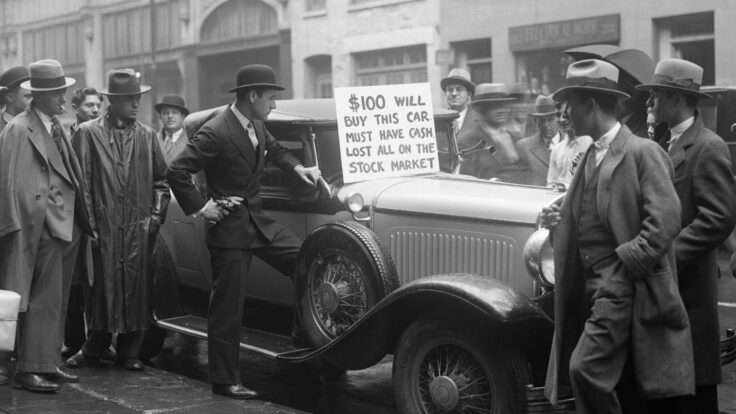
Financial history doesn’t repeat itself, but it does often rhyme. Amid a speculative frenzy, deregulation, trade wars, and a handful of megacaps propping up the markets, some of Wall Street’s brightest minds wonder whether 2026 might resemble 1929.
Marc Rowan
William D. Cohan • February 6, 2022
Street Credit
A recent string of bankruptcies and defaults suggests some challenges in the seemingly indomitable private credit market. And yet, according to some O.G.s, things have never been better. Apollo’s Marc Rowan lays bare the risks and rewards.
David Ellison
William D. Cohan • February 6, 2022
Ellisonology 101
In his first earnings call as C.E.O. of Paramount Skydance, David Ellison offered a masterclass in corporate optimism, promising “synergies” and artfully dodging questions about a possible Warner Bros. Discovery takeover. Alas, the time to act is here.


Michael Bloomberg
William D. Cohan • February 6, 2022
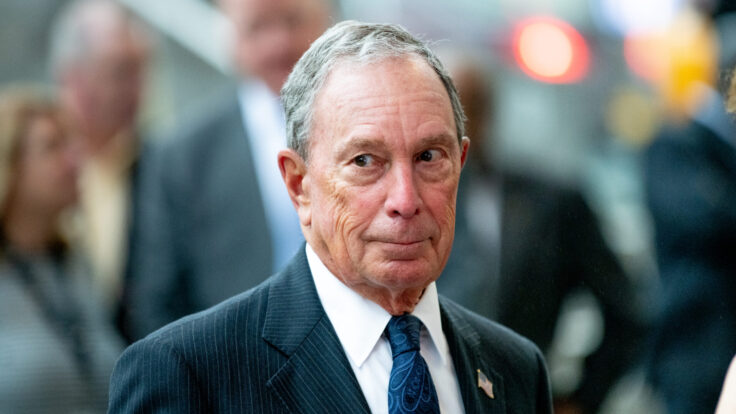
What Does Bloomberg Want for Bloomberg L.P.?
A modest proposal for how New York’s $100 billion man could bequeath his namesake, and its monumental profits in perpetuity.
Jim Chanos
William D. Cohan • February 6, 2022
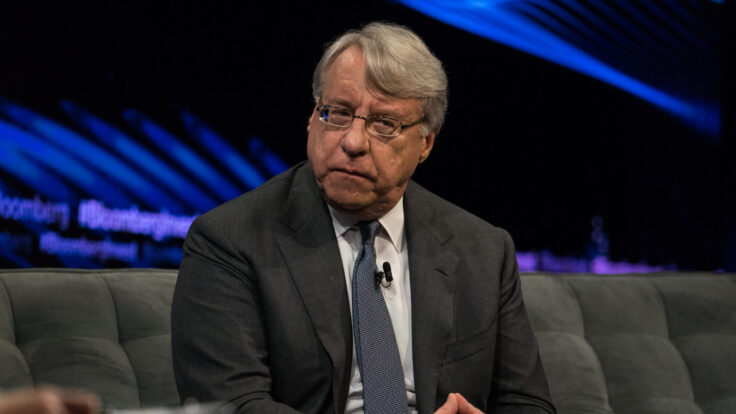
The Mag Seven Itch
The market is notching record highs for the so-called Magnificent Seven—or should that be Mag 10?—but a subterranean counternarrative is forming as once-secure food and consumer staples crater, and cracks emerge in the $3 trillion private-credit boom.
Brian Roberts
William D. Cohan • February 6, 2022
The Brian Roberts–WBD Bull Case
A new analyst note highlights a heightened sense around Wall Street that Comcast co-C.E.O. Brian Roberts doesn’t merely want WBD, but also truly needs the company—and has a real shot at the asset.


Jamie Dimon
William D. Cohan • February 6, 2022
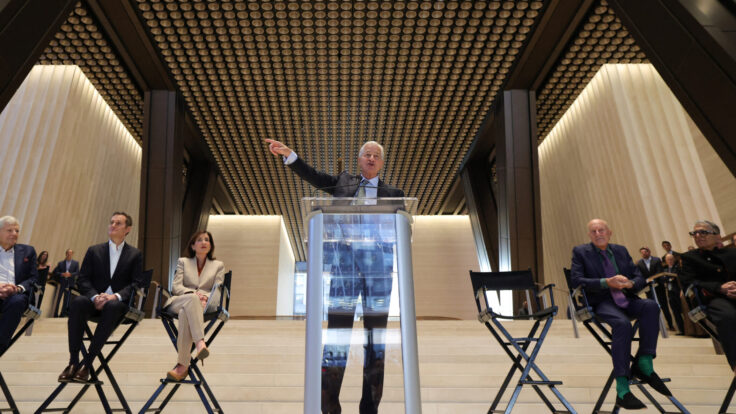
Jamie’s Castle in the Sky
Dimon’s $3 billion (or maybe as much as $5 billion, really) new headquarters is the physical embodiment of his fortress balance sheet and a metaphor for our fractional banking system. But the seeming permanence of its bronze facade shouldn’t fool old Wall Street hands, who know nothing is forever.


  • Terms
  • Privacy
  • Contact
  • FAQ
  • Careers
© 2026 Heat Media All rights reserved.
Create an account

Already a member? Log In

CREATE AN ACCOUNT with Google
OR YOUR EMAIL

OR

Use Email & Password Instead

USE EMAIL & PASSWORD
Password strength:

OR

Use Another Sign-Up Method

Become a member

All of the insider knowledge from our top tier authors, in your inbox.

Create an account

Already a member? Log In

Verify your email!

You should receive a link to log in at .

I DID NOT RECEIVE A LINK

Didn't get an email? Check your spam folder and confirm the spelling of your email, and try again. If you continue to have trouble, reach out to fritz@puck.news.

CREATE AN ACCOUNT with Google
CREATE AN ACCOUNT with Apple
OR USE EMAIL & PASSWORD
Password strength:

OR
Log In

Not a member yet? Sign up today

Log in with Google
Log in with Google
Log in with Apple
Log in with Apple
OR USE EMAIL & PASSWORD
Don't have a password or need to reset it?

OR
Verify Account

Verify your email!

You should receive a link to log in at .

I DID NOT RECEIVE A LINK

Didn't get an email? Check your spam folder and confirm the spelling of your email, and try again. If you continue to have trouble, reach out to fritz@puck.news.

YOUR EMAIL

Use a different sign in option instead

Member Exclusive

Get access to this story

Create a free account to preview Puck’s full offering, including exclusive articles, private emails from authors, and more.

Already a member? Sign in

Free article unlocked!

You are logged into a free account as unknown@example.com

ENJOY 1 FREE ARTICLE EACH MONTH

Subscribe today to join the inside conversation at the nexus of Wall Street, Washington, A.I., Hollywood, and more.

START 14-DAY FREE TRIAL

  • Daily articles and breaking news
  • Personal emails directly from our authors
  • Gift subscriber-only stories to friends & family
  • Unlimited access to archives
  • Bookmark articles to create a Reading List
  • Quarterly calls with industry experts from the power corners we cover