{{ 'now' | timezone: 'America/New_York' | date: '%b %d, %Y' }} |
|
|
Welcome back to Dry Powder. I’m Bill Cohan.
Are we finally beginning to
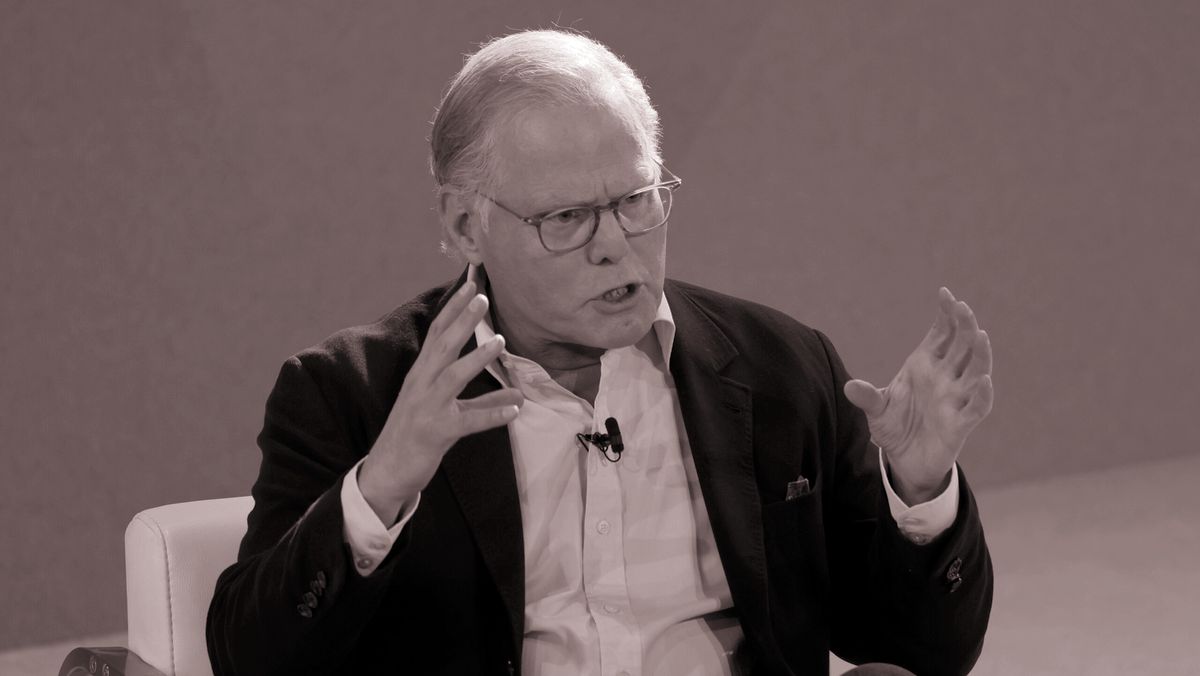
glimpse the next act in David Zaslav’s redemption tour? This week, some daylight broke through the cloud of speculation that’s been preoccupying analysts and veteran Wall Street hands ever since Zaz announced in June that he was splitting Warner Bros. Discovery into two companies. On Tuesday, he signaled that WBD has retained Allen & Co., Evercore, and JPMorgan Chase to explore strategic options in light of interest from one or more bidders for all or part of the company. Below,
I’ll walk through my own take on Zaz’s latest manifesto.
But first… |
- The
man in the arena: At my partner John Ourand’s excellent sports business conference, In the Arena, Josh Harris opened up about his recent pro sports journey. Josh, who has a net worth of around $12 billion, was one of the co-founders of Apollo Global Management, and now runs 26North Partners, a growing alternative asset management firm. He’s also the principal owner of the NFL’s Washington Commanders, the NBA’s Philadelphia 76ers, the NHL’s New Jersey
Devils, and the Crystal Palace F.C. in the English Premier League.
Onstage with John, Josh described the emotions he felt wiring the $6.1 billion or so that it cost him and his partners to buy the Commanders, then the largest price ever paid for a sports franchise, in 2023. He said it was “a surreal day” for the once middle-class kid from Maryland: “I took a moment to think about it. But at the time, obviously I knew the power of the NFL Washington franchise. I remember Washington being
the number one franchise in the NFL for many, many years. And so I did it.”
Josh said he got teased by peers, who wondered how a value investor like him could pay the highest amount ever for a sports team. “Your credentials are shattered,” he said they told him. “You paid 100x EBITDA. But obviously the NFL is such an incredible franchise, and live content and live entertainment is so in-demand, and the NFL is the biggest franchise in the world for sports content. And
then the Commanders are also a sleeping giant, and we’re now waking up. We’re now sold out, and they’re now becoming an important franchise as well.”
Of course, Josh’s timing may turn out to have been impeccable. His erasure of the Dan Snyder era helped lead the franchise back to the cusp of the Super Bowl last year for the first time in decades. Now, the NFL has advised select private equity firms that they can invest in teams, but they don’t get any control
rights—which, of course, is the exact opposite of what happens when a private equity firm buys a company. This new development will inevitably drive up the price of owning an NFL franchise, and provide liquidity opportunities to longtime owners looking to cash out. The New York Giants, which have struggled for years now, were just valued at $10 billion, thanks to a roughly 10 percent stake in the team acquired by the Koch family.
Anyway, Josh said he was fine with the
restrictions placed on private equity firms investing in professional sports teams. He said he told his co-investors in the Commanders—including his friends Mark Ein, the investor, and Mitch Rales, the co-founder of the Danaher Corporation—that he’s in it for the long haul. “Private equity funds are structured as five- to 10-year funds,” he said. “I think sports is a 30- to 50-year [investment time horizon]. I hope I never sell any of these assets, and my
family is involved with them for decades. And so that’s just a different investment strategy.” - And speaking of Mitch Rales…: Besides being a minority investor in the Commanders, Rales is also the co-founder of Glenstone, the art museum and foundation in Potomac, Maryland. I have long wanted to visit Glenstone, and last week I got my chance. It was a magnificent fall day at the sprawling property, with the sun’s rays illuminating the many
twists and turns of the extraordinary contemporary art collection and the museum’s stunning architecture, designed first (in 2006) by Charles Gwathmey, and then expanded and renovated in 2018 by Thomas Phifer and Partners. Needless to say, Glenstone is a labor of love for both Rales and his wife, Emily Wei Rales, whose home is on the property as well. (Potomac is really quite something.)
The collection includes a pantheon of 20th and 21st century artists, including Jackson Pollock, Mark Rothko, Andy Warhol, Cy Twombly, Ellsworth Kelly, Alexander Calder, etcetera, and also features works by important conceptual and minimal artists such as Michael Heizer, Tony Smith, Bruce Nauman, Andy
Goldsworthy, and Robert Gober. I’m a huge Heizer fan. In 2024, I traveled four hours from Las Vegas to see Heizer’s City, which he had spent 50 years working on, in the high Nevada desert. I was also struck by the three stone, clay, and wood cabins that Goldsworthy had constructed in the woods below
the Glenstone buildings. The whole thing was quite magical and I highly recommend a visit.
|
Now on to the main event… |
|
|
The deal maestro has turned Warner Bros. Discovery’s breakup into a full-blown Wall Street
pageant—part strategic review, part auction theater—with David Ellison waiting in the wings. |
|
|
It was perhaps inevitable that WBD would be in play, to use the old Wall Street argot, once
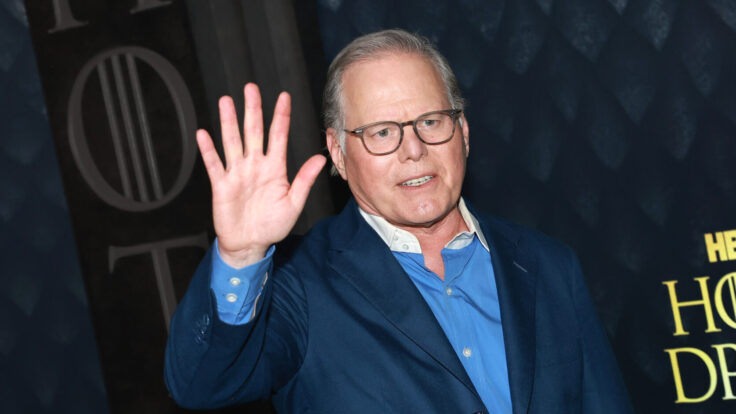
David Zaslav publicly announced that he was splitting his company last June—a signal that the board of directors might have no choice but to entertain offers for the whole company or its two parts. Zaz, after all, is a deal maven from way back in his GE days. He built Discovery Communications through M&A deals, too. In his announcement on Tuesday morning, he made de jure what had already been de facto: WBD said it had hired Allen & Co., Evercore, and JPMorgan
Chase, and “initiated a review of strategic alternatives to maximize shareholder value, in light of unsolicited interest the Company has received from multiple parties for both the entire company and Warner Bros.”
The Zaz Manifesto was both revealing and sufficiently legally vague, so as not to foreclose any of his options. Zaz made clear that he can continue with his split, or sell the whole company together, or sell any or both of its pieces to different suitors. He can also,
say, orchestrate a merger of his Streaming and Studios business with the likes of Netflix or Amazon, and then spin off Gunnar Wiedenfels’s declining but cashflow-rich Global Networks business. Unspoken in all this is the reality that the outcome will be determined by an auction process featuring well-capitalized bidders, stalking horses, plenty of rumors, deal heat, and big egos—all without a specified timeline beyond the projected April 2026 split date. On the news,
the WBD stock was up 11 percent for the day, to $20.33, and is up 91 percent so far in 2025. On Wednesday, in a down market, it was up some more.
There are a number of factors at play in this dynamic process. WBD is said to have already rejected three bids from Paramount Skydance and reportedly received
expressions of interest from both Comcast and Netflix for at least some of its assets. I am reliably told—I love that phrase—that PSKY first bid $19 a share, then $22, then most recently $23.50, 80 percent in cash and 20 percent in PSKY stock. As part of the third bid, the Ellisons offered Zaz the role of co-C.E.O., with David Ellison, as well as co-chairman of the board of directors of the combined company. All three bids were rejected, with the
$23.50-a-share bid serving as the catalyst for WBD’s decision to put itself up for sale.
Should Zaz capitulate to the Ellisons, even if their per-share offer price is below the perceived present value of a post-split WBD, which is probably around $25 per share? There’s a strong case to be made that les jeux sont fait for Zaz: that, unlike PSKY, Netflix and Comcast are not interested in the entirety of WBD, and that the Big Tech companies aren’t legitimate stalking horses, either.
For sure, these are significant impediments to Zaz’s ability to create a sense of competition here. Nevertheless, I think the process is just beginning. And Zaz, who has decades of dealmaking experience and a deal-savvy board of directors—including three new members, Anthony Noto, Joey Levin, and Anton Levy—has several options, and plenty of reasons to resist the Ellisons and their offer.
His board will be thoughtful, of course, and maybe
even set up a special committee to evaluate the next PSKY bid—assuming it’s true that three bids in the high teens and low 20s have already been proffered and rejected. That committee would also be tasked with trying to solicit higher bids from other parties while at the same time benchmarking the Ellisons’ bid against the potential value to be created by the split. |
I don’t think this is just about another personal payday for Zaz any longer. He’s already made a staggering
amount of money over the years, and his additional compensation is now squarely aligned with his shareholders. In June, Zaz recut his options package: He was granted 20.9 million WBD options, with a strike price of $10.16 a share. He will also get another 3 million options, also at $10.16 a share, on January 2, 2026. You may remember that his various other option incentive packages had strike prices that started at around $28 a share, ratcheting up to $43 a share—way out of the money,
in other words. With the WBD stock price at $20 and change, thanks to the deal talk, Zaz’s new options package is already well in the money and worth at least $200 million on intrinsic value alone. No matter what happens, Zaz is making money here. His task now is to maximize the value for all shareholders.
In my opinion, if the Ellison bid doesn’t get above $23.50 a share, it won’t win the day. (It will get there, I’m sure, but bear with me here.) On a present value basis, Zaz will be
able to argue that splitting the company will unlock more value for WBD shareholders. It’s also a fair bet that a sale of the two parts of the company, or a sale of S&S and a spinoff of Global Networks, will result in even more present value. (This is not investment advice.) A coterie of highly respected Wall Street analysts—BofA’s Jessica Reif Ehrlich, Wells Fargo’s Steven Cahall, Wolfe Research’s Peter Supino, LightShed’s Rich
Greenfield, and MoffettNathanson’s Michael Nathanson—has backed up this view, providing independent, well-informed, and well-researched support for Zaz’s split-up path—that is, as long as the Ellisons remain hunkered in the low $20-a-share range. (Both Robert Gibbs, at WBD, and Melissa Zukerman, at PSKY, declined to comment.)
Jessica’s September 30 report argued that the split-up plan is worth $30 a share to WBD shareholders.
That’s an important benchmark, and one the WBD board will take to heart, along with its three investment bankers. “We anticipate WBD will wait to take strategic actions until the company splits,” Jessica wrote. “Further, Warner Bros. (the stand-alone Streaming & Studio assets) will be more likely to generate a bidding war amongst potential buyers as a stand-alone entity. At takeout valuation (20x on the Streaming & Studio assets), we estimate the consolidated WBD entity is worth ~$30+ per
share.”
Not surprisingly, Greenfield wrote on October 20, the WBD board wants “substantially more” than $20 a share, given the board’s “hopes” for a “bidding war for the studio and HBO following the split in April 2026.” Even though Rich is skeptical that a bidding war for Zaz’s post-split business will materialize, he writes, “We can certainly see how the WBD Board could foresee a bidding war breaking out, driving the need for Paramount to meaningfully overpay for WBD to get to YES
today.” (Rich wondered why the Ellisons aren’t focusing instead on investing their many billions in taking the rest of PSKY private and cautioned that “we struggle to remember a large-scale merger that has worked in the media sector over our 30-year career,” but these are topics for another day.)
In a follow-up piece on Wednesday, Greenfield shared that he thinks Larry Ellison is prepared to invest $30 billion of his own money into PSKY’s equity plus another $20 billion,
secured by Larry’s ownership stake in PSKY—not a loan to PSKY itself. In other words, according to Rich, Larry is prepared to invest a fresh $50 billion into PSKY, giving the Ellisons a 73 percent pro forma stake in the combined PSKY-WBD. He then added, “Whether or not it’s rational, WBD is essentially putting Paramount in a challenging position: Either pay well north of $30 to get a deal done immediately for the whole company (with no other bidders willing to buy the whole
company)”—Rich’s emphasis—“potentially lose out to another suitor that wants to buy parts of the company even if less tax-efficient, or, most likely, wait until April 2027, when tax issues lapse post-split and Paramount can bid again for just Warner Bros. (including Studios and Streaming).” In other words, Rich sees the plot thickening considerably here.
Cahall, at Wells Fargo, mapped out a potential scenario come next April, after the Zaz split. “Illustratively,” he wrote on October
15, “a $60 billion equity offer for just S&S including $15 billion of debt + tax leakage could be worth more to WBD shareholders than a $22-a-share offer for all of WBD.” He believes the likelihood of PSKY raising its bid beyond $20 a share is “high,” but seemingly not to a price that would get a deal done.
The nearly unanimous support of the Wall Street analyst community for Zaz’s split-up plan—at least while the Ellisons are in the low 20s—is significant. Not only will it inform Zaz’s
board of directors and its bankers, it will also give WBD shareholders backbone to stick with his process. WBD’s recent and highly successful exchange offer on its debt won the respect of many across Wall Street, and with good reason. It was brilliantly conceived and executed, and is evidence that these guys know what they are doing—at least when it comes to doing deals (projecting EBITDA, not so much). |
Of course, the argument gets a lot tougher to make if the Ellisons reach $25 a share or above. Or if, say,
Brian Roberts at Comcast gets competitive and forces the Ellisons to pay more for WBD, just as he did with Bob Iger when Disney overpaid for Rupert Murdoch’s Hollywood assets.
Anyway, with the company officially up for sale, WBD is now in “Revlon mode,” meaning Zaz and his board of directors have a fiduciary obligation to sell the company to the highest bidder. Whether $25 a share in cash and PSKY stock today beats the promise of $30 a
share tomorrow, post-split, remains to be seen. It’s a judgment call, based on all sorts of assumptions used to evaluate the present value of the various possible scenarios. As my partner Matt Belloni wrote the other day, quoting a longtime Zaz friend: “It’s extremely simple: David is playing for the spin. Then it’s two years until it’s done, and he can party.” It might well be less than two years, but unless the Ellisons decide to compete with the present value of “the spin” in
a more serious way—and that’s probably what they will do—WBD will be Zaz’s, not theirs.
In the end, in my judgment, the WBD board will support Zaz either way. He’ll be able to get fairness opinions from his bankers to support pretty much whatever he and the board want to do here. PSKY could make the whole thing a lot easier for everyone by agreeing to pay into the upper half of the $20s, or even $30 a share. Otherwise, it could be a long slog of benchmarking the PSKY lowball offer against
the Zaz split-up plan and what might happen to those two pieces down the road. |
|
|
Join Puck’s chief political columnist, John Heilemann, as he roams the corridors of power and influence in America on this
twice-weekly interview show, taking you beyond the headlines with the people who shape our culture: icons and up-and-comers, incumbents and insurgents, moguls and machers in the overlapping worlds of politics, entertainment, tech, business, sports, media, and beyond. The conversations are rich and revealing, unrehearsed and unexpected… and reliably impolitic. A Puck-Audacy joint, new episodes drop every Wednesday and Friday. |
|
|
Puck’s daily political newsletter from Washington on what’s really happening in this town, from the White House to the Pentagon
to Capitol Hill, K Street, and the campaign trail. |
|
|
Need help? Review our FAQ page or contact us for assistance. For brand partnerships, email ads@puck.news. You received this email because you signed up to receive emails from Puck, or as part of your Puck account associated with {{customer.email}}. To stop receiving this newsletter and/or manage all your email preferences, click here. |
Puck is published by Heat Media LLC. 107 Greenwich St, New York, NY 10006 |
|
|
|