 |
|
Welcome back to Dry Powder. I’m Bill Cohan.
|
|
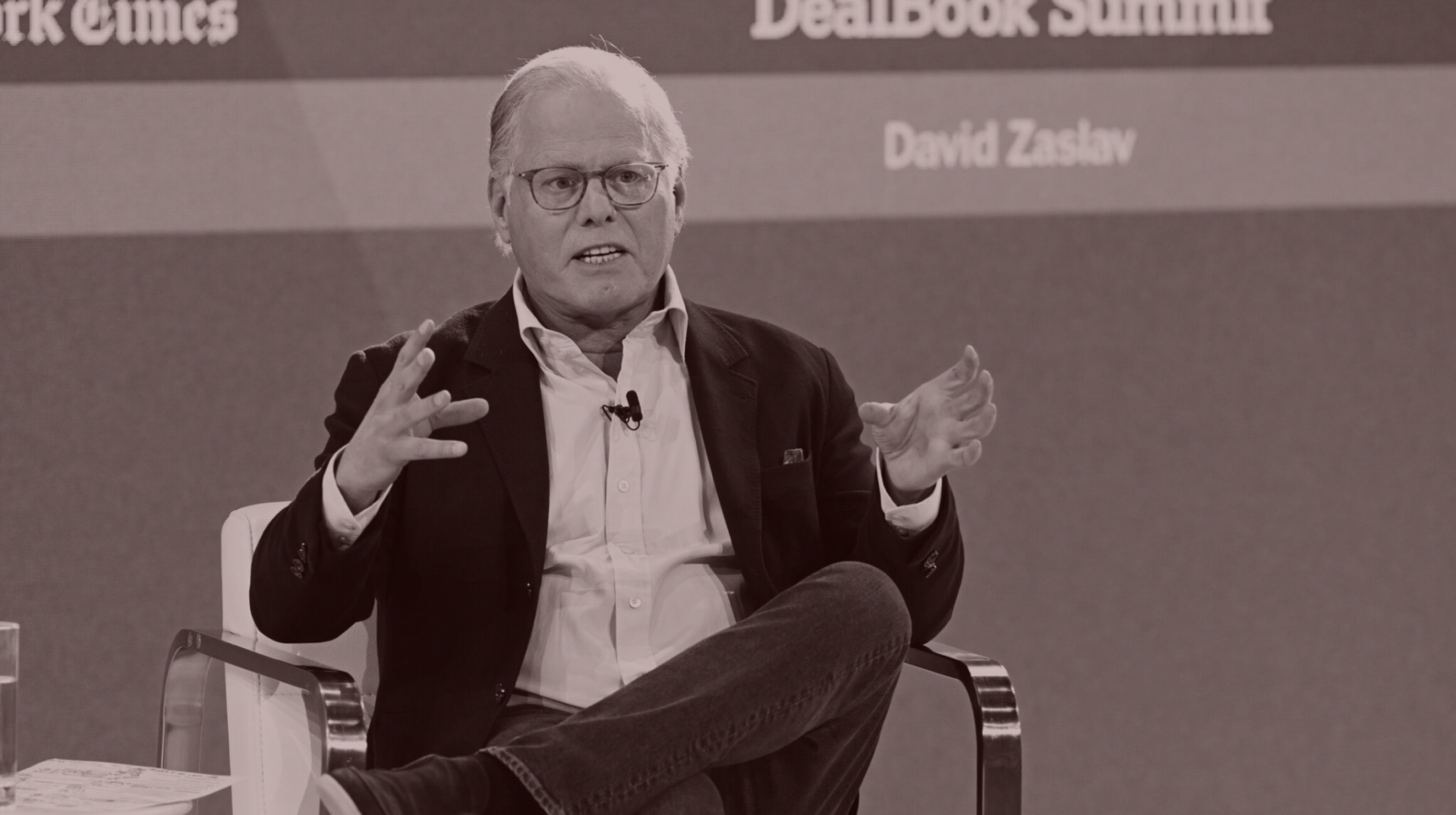
Well, it looks like my long-held theory that David Zaslav will bow out of the Paramount Global sweepstakes has come to fruition, essentially leaving David Ellison as the lone, legitimate bidder in what looks increasingly like a busted auction. In today’s issue, a close look at the smoke signals from the WBD board, Shari’s next moves, Zaz’s bonus incentives, and Trump’s significant liquidity challenge.
But first, a few items from elsewhere in the Puck cinematic universe…
- CNN anxieties: Dylan has an inside look at how the latest Mark Thompson memo is reverberating within an increasingly restless CNN—a document he describes as “a pablum-laden incremental progress report that inches closer to a more aggressive multiplatform strategy, whatever that actually means.” He continues: “Meanwhile, as the TV product that supports this business continues regressing, the natives are growing ever-more restless.”
- Biden’s uphill battle: Tara spoke with the always sunny CNBC analyst Ron Insana, who agrees with the White House that by November 2024, “Bidenomics” will not be a dirty word. Also, don’t miss the latest episode of her podcast, Somebody’s Gotta Win, with reporter Hunter Walker, where they dug into Biden’s uphill mission in Michigan. (Subscribe here and here.)
- Finally, Matt’s update on Iger’s proxy war: “Thanks to Disney’s recent stock bounce, Bob Iger had probably already won the proxy war with bored investor Nelson Peltz and the jilted exes Ike Perlmutter and Jay Rasulo. But Walt and Roy Disney’s relatives coming forward in the Times to endorse Disney’s plan is almost certainly a death blow. (I’m sure it was definitely a spontaneous move by the heirs and 100 percent not coordinated by Iger or Disney.) Even Abigail Disney, the Iger nemesis, who recently said he’s paid so much he ‘shouldn’t be able to sleep well at night,’ is now on record fingering Peltz as ‘the worst thing that could happen to the company.’ Ouch. Short of reanimating Walt’s cryogenically frozen head to tell Peltz to go to hell, there’s not much more Iger can do here.” —Matt Belloni
|
|
|
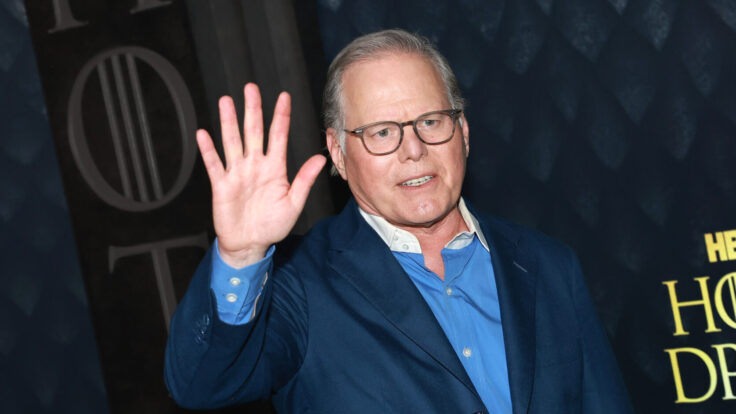
| Well, dear reader, the world found out this week what I’ve been faithfully telling you all along—there was never any real chance that David Zaslav’s imperiled Warner Bros. Discovery was going to swallow up Shari Redstone’s incredible shrinking Paramount Global. There was no way—as I wrote last December, the moment word leaked that Zaz had lunch with Paramount Global C.E.O. Bob Bakish—that the two sides were going to strike a deal.
To wit: The market would never countenance combining one overleveraged entity (WBD, with $40 billion of net debt) with another (Paramount, with $14 billion of net debt) and just roll the dice and hope that the subsequent years of accounting ambiguity covers up a multitude of sins. Both companies are perched on the edge of the BBB cliff; combining them, along with their money-losing streaming businesses (or barely breakeven, in the case of WBD) would send the combined company into the roiling morass of junk-bond hell. I know that WBD executives were quietly contemplating this fantasy for some time, as my partner Dylan Byers had noted, but it was never going to become a reality.
My analysis was confirmed after the news leaked to Axios’ Sara Fischer, whose initial report on the long and digressive lunch between the two C.E.O.s. depressed their stocks. Good for Fischer for breaking the news, but if the leak had been strategic, it backfired spectacularly. (It worked, though, as a M&A trial balloon.) Back then, the WBD stock was trading around $12.36 a share; it’s now trading at $8.80 per share, a collapse of nearly 30 percent in two months. You don’t have to be a rocket scientist to know that WBD’s investors did not want Zaz to do the Paramount Global deal. More important, by far, for him is his job to hit the EBITDA (or even “adjusted EBITDA”) targets he has promised investors. In the end, as I pointed out the other day, he whiffed on that mandate, too, by a large margin.
In other words, the message being sent loud and clear to Zaz and his C.F.O., Gunnar Wiedenfels, is to stick to the knitting… at least for now, or perhaps until the much-contemplated merger with NBCU becomes possible. (Under the rules of the Reverse Morris Trust, the structure upon which WBD was birthed, the company can merge with another entity starting next month.) |
|
|
| Even as WBD’s stock limps along, Zaz believes that he will eventually be rewarded by Mr. Market for his diligent debt servicing. After all, he and Gunnar have already paid down $15 billion in two years. Now they need to pay down the remaining $40 billion and focus on generating free cash flow. And that seems to be precisely what his board—in particular, the two voices who matter, John Malone and Steve Newhouse—wants him to do, too.
As my partner Matt Belloni recently noted, Zaz’s comp has been realigned. According to a February 26 filing with the S.E.C., the WBD compensation committee granted Zaz a little more than 3 million shares of WBD stock, worth around $24 million these days, and then he turned around and sold about 1.2 million of those shares, at $8.55 a share, to satisfy the tax man. As the filing notes, the WBD compensation committee re-cut Zaz’s incentive plan to reward him for generating free cash flow at WBD plus “certain individual strategic objectives.” On February 26, the committee decided that Zaz had met these “strategic and financial objectives” and that the free cash flow “performance” for 2023 was “significantly above the established target.”
This is all lusciously vague, of course, but enough to get the Zaz an after-tax benefit of $16 million, at the same time that the WBD stock price in calendar year 2023 was actually up around 20 percent (although it is down 42 percent in the last year). So go figure. And that stock award of $24 million pre-tax is in addition to any cash compensation for Zaz, which we should know about soon enough, as Matt also pointed out. Zaz received a $3 million salary in 2022 plus nearly $22 million in “non-equity incentive plan” compensation, which sounds like legalese for cash.
Anyway, long story short, people do what they are rewarded to do, even in the boardroom. Malone and Newhouse want Zaz to generate free cash flow, so that’s what he’s going to do. He’s not getting rewarded to buy Paramount Global. Et voila. |
| A Quick Note on the Shari Saga… |
|
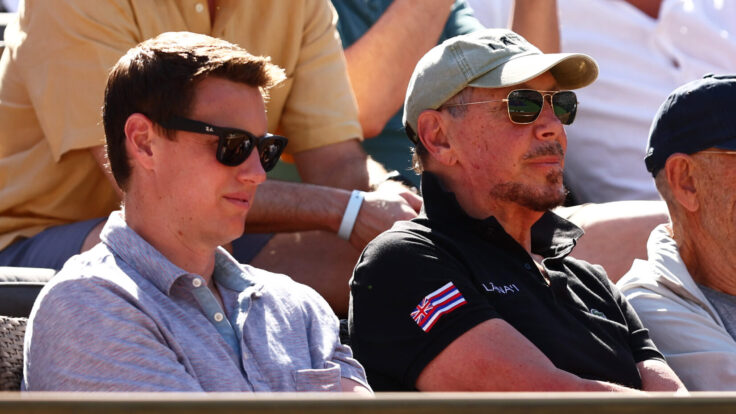
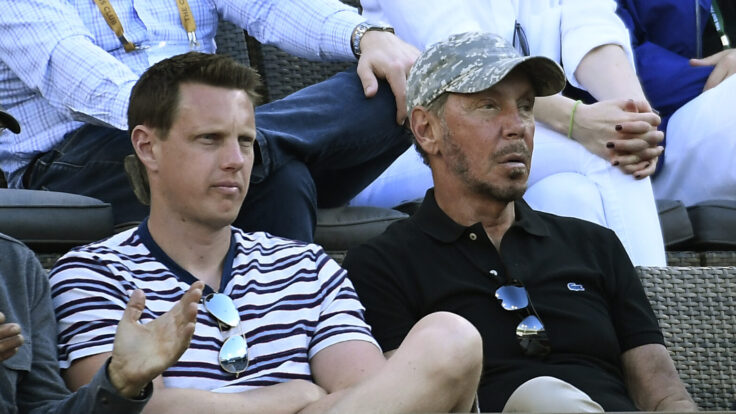
| So where does that leave our friends Shari Redstone and her financial adviser (and financial partner) Byron Trott? I’m tempted to say pretty much nowhere, and that fact is reflected in the fading Paramount Global stock price, which is down 24 percent year-to-date and nearly 50 percent in the past 12 months. Shari and Byron have a busted auction on their hands: Zaz is out, Byron Allen isn’t real and, to my mind, David Ellison has too many smart people around him to buy all of Paramount Global—or National Amusements Inc., the Redstone family holding company, and assume debts and liabilities for all of Paramount—when all he really wants is the movie studio. So what’s a smart investor to do?
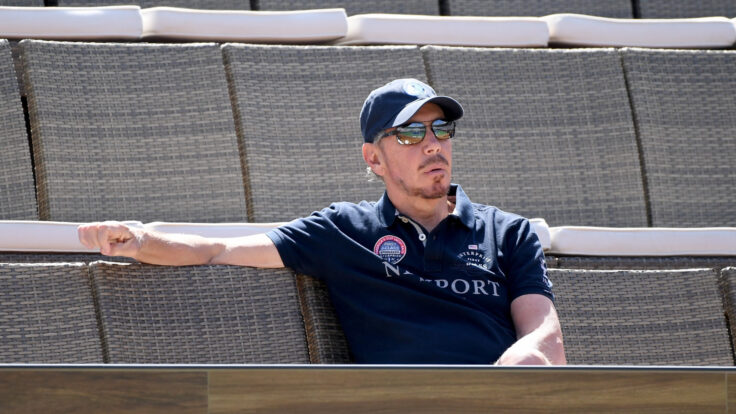
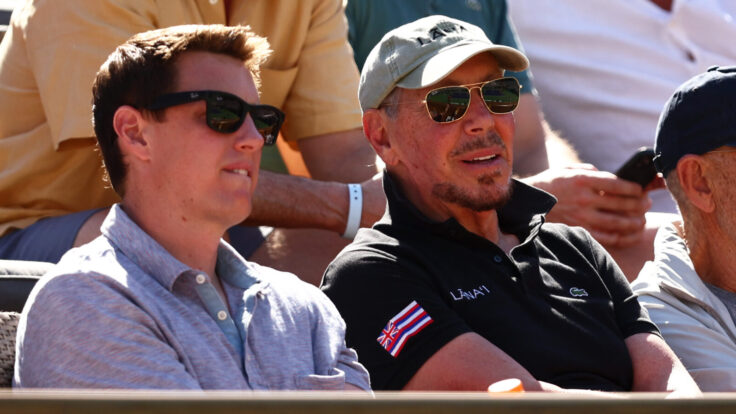
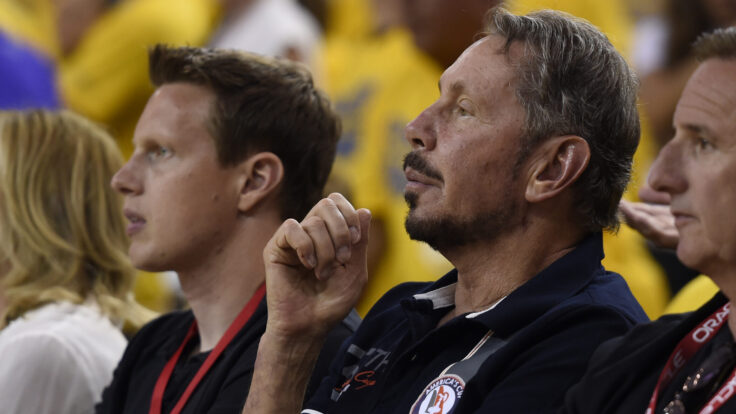
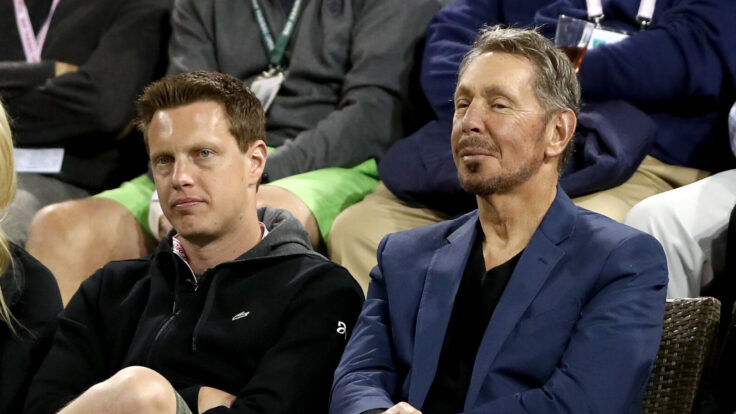
Every story these days about Ellison mentions that he’s still doing “due diligence” on N.A.I. But how long does it take to figure that out? There are some poorly performing movie theaters. There’s some debt of around $250 million. There’s Byron Trott’s preferred. And there’s the nearly 80 percent voting stake in Paramount and the nearly 10 percent economic stake. It’s not that difficult, or complex… The sticking point, as I have detailed several times, is that any financial buyer of N.A.I.—and let’s face it, that’s what David Ellison basically is—would have to refinance the $11.2 billion of senior notes at Paramount upon a change of control of N.A.I. and the inevitable credit-rating downgrade. And I assume that Ellison’s investors and advisers, like Gerry Cardinale and Henry Kravis, would tell Ellison that he’d be unwise to pay twice for an asset or risk having to refinance the Paramount senior notes at closing in this rocky debt market. Until we find out that Larry Ellison is at the table backstopping that debt with his personal fortune, it does not sound real to me.
Also: a special independent committee of the Paramount board of directors has been set up and hired the highly respected financial advisory firm Centerview Partners. Here’s some unsolicited advice, David: Make your damn offer for the Paramount studio—that’s all you want, right?—and that special committee will have no choice but to consider it, and consider it seriously. It worked for Brian Roberts in prying AT&T Broadband out of AT&T 20-plus years ago, and it can work for you today. |
| Trump’s Vanishing Bankers… |
|
| The one nice thing I can say about Donald Trump, who cheats at everything including golf, is that he’s insane enough to be able to run for president while trying to figure out how to pay the $465 million (plus interest) he owes the state of New York for defrauding his lenders and the $83.3 million he also owes E. Jean Carroll for defamation, which is coming due in a week. Trump has the assets, but there appears to be a major liquidity challenge. In his April 2023 deposition, which I reported on a few weeks ago, he said he had $400 million in cash available to him, a hoard that was growing every day, or so he claimed. Since he has proven himself to be prone to exaggeration, even if we discount that number by half, I suspect he’ll be able to pay E. Jean what he owes her from the Trump Organization treasury. (Unless of course, he was fibbing. Donald, fibbing?)
But where do things stand on the massive civil fraud penalty? He did get a little bit of relief—if you could call it that—from a New York State appeals court judge, who said that Trump must still put up a bond for the full amount if he wants to appeal the ruling. (He was prepared to post a bond covering $100 million of the verdict, but that was rejected.) Part of the reason Trump’s lawyers were seeking to post a bond for a lesser amount was because, they claimed, Judge Arthur Engoron’s decision also included a provision barring him for three years from borrowing money from any bank chartered in New York State, which of course would preclude most of the banks that could underwrite his bond. The appellate judge paused Engoron’s three-year borrowing ban, giving Trump the opportunity to find a bank that would help him post, or finance, the bond, which would allow him to automatically stay the $465 million judgment against him during the appeals process. Good luck with that Donald.
Why a money-center bank would do that for Trump is beyond me, given how often he has stiffed them in the past and how they had long ago stopped doing business with him. Even his old standby, Deutsche Bank, won’t do business with him anymore. On the other hand, he might be able to find some bank, somewhere—Russia? Saudi Arabia?—that might finance the bond in exchange for the security of Trump Tower or 40 Wall Street, which seem like his two most valuable real-estate assets, or because they are betting, if he returns to the White House, they’ll have their hooks into him but good, (although they might already, it seems). But whether he can even pledge a security interest in these two buildings to a new lender is an open question. My understanding is both buildings already have debt, or a mortgage, on them. Is there room for a second? And would a second mortgage be sufficient security for a new lender to provide him the bond he’s seeking?
Trump’s lawyers have already admitted he doesn’t have the cash to pay the verdict, or the so-called supersedeas bond, which is equal to 110 percent of the verdict amount. (That’s about $600 million, although a judge could raise or lower that number.) “In the absence of a stay on the terms herein outlined,” his attorneys wrote, “properties would likely need to be sold to raise capital under exigent circumstances, and there would be no way to recover any property sold following a successful appeal and no means to recover the resulting financial losses.” To cover his proposed $100 million bond, Trump’s lawyers said he would pledge 40 Wall Street, some apartments he still owns at Trump Park Avenue, and the Trump National Golf Club. But as that was rejected as an option, it’s more challenging for him now, especially since the 30-day clock has started ticking (and New York Attorney General Letitia James is Twixxing every day about the growing penalty.)
If a bonding company would go for it, I suppose a nifty little package of security could be put together from Trump Tower, 40 Wall Street, Seven Springs, Mar-a-Lago, and his various golf courses. (I doubt he can pledge his minority stakes in the two buildings he co-owns with Vornado.) That might be enough. But if he doesn’t pay the verdict at the end of the appeals process, then it’s the bonding company that’s on the hook for the verdict, not Trump. Who in their right mind would take that risk, even if the fee is stupendous? Maybe there is someone out there who would take the chance on Trump in order to have a chit with the next president. But bankers aren’t typically incentivized to fork over that kind of money to someone who thinks repayment is just a free option.
Trump’s best bet here, I think, remains to post collateral from his multibillion stake in Digital World Acquisition Corp., the SPAC that still hopes, at long last, to merge with his Truth Social media company. It’s a ridiculous valuation, obviously, especially given that Trump Media & Technology Group had just $1.07 million in revenue during the third quarter of 2023. Most other SPACs have already lost whatever luster they once had, and this one should too, but for the meme-like appeal DWAC has with the MAGA crowd. The DWAC stock is down 21 percent in the past week, and Trump’s potential windfall has fallen with it, to $3 billion. There is also now a new lawsuit brought against Trump and Truth Social by another investor claiming Trump has been manipulating the value of Truth Social prior to the proposed merger, which could close sometime in the next month. In any event, even with the six-month lockup post-closing and all the uncertainty surrounding the merger, Trump’s stake in DWAC might be his best asset to sell, or pledge as security for these legal judgments and fines against him. He knows better than anyone that it’s just a funny money asset anyway, unlike 40 Wall Street and Trump Tower, parting with those buildings would really hurt him. Parting with DWAC not so much.
The problem, of course, is that SPACs have been utterly discredited, and what seems like a $3 billion windfall today for Trump could turn to mush in the next six months, and then to dust if he tries to actually sell his stake. Unless it just turns into another crazy meme stock that defies all logic and all reason—perhaps serving as some public legal defense fund of sorts for the MAGA crowd. With Trump, the truth is it could go either way at this point. |
|
|
|
| FOUR STORIES WE’RE TALKING ABOUT |
 |
|
 |
| Blood Diamond |
| Digging into the $115 million plot twist in the Diamond Sports saga. |
| JOHN OURAND |
|
 |
|
 |
|
|
|
|
|
 |
|
|
|
Need help? Review our FAQs
page or contact
us for assistance. For brand partnerships, email ads@puck.news.
|
|
You received this email because you signed up to receive emails from Puck, or as part of your Puck account associated with . To stop receiving this newsletter and/or manage all your email preferences, click here.
|
|
Puck is published by Heat Media LLC. 227 W 17th St New York, NY 10011.
|
|
|
|