 |
 |
|
Happy Sunday, and welcome back to Dry Powder.
|
|
In life, I believe optimism should be celebrated. But when some of our brightest minds are forecasting a robust M&A climate in ’23, despite the current higher interest rate environment, that strikes me as outright naiveté. In today’s private email, my thoughts on what Wall Street’s deal flow might actually look like this year, observations on the slumping equity markets, a potential Warner Bros. Discovery comeback, some words for Tesla shareholders, and more.
|
 |
| Zaz vs. Goliath |
| News and notes on what's really going down on Wall Street: the new M&A environment, Twitter, David Zaslav’s debt journey, the bulls, the bears, and the pigs. |
|
|
|
| Perhaps it’s the mirth and enthusiasm of a new year—to say nothing of the eternal January optimism of investment bankers—but I’ve been reading that some of our brightest minds expect the M&A environment to rebound in 2023. I have a different view. And, naturally, it involves the instructive lesson of Elon Musk and Twitter, and ends with the instructive lesson of Elon and Tesla.
On January 12, Bank of America reports its 2022 earnings. Four days later, Morgan Stanley does the same thing. Why should anyone care? Because Morgan Stanley and BofA were the two lead banks that underwrote the $13 billion of Twitter’s senior secured debt to help finance Elon’s takeover of the company, which closed last October.
Normally the banks would syndicate—sell off—that debt lickety-split to investors all around the world and move it off their balance sheets in order to make room to underwrite and then to sell more loans, capturing fees while trying to eschew risk. Wall Street is in the moving business, not the storing business, as I’ve noted before. But since it couldn’t move the Twitter debt—at least not without perfecting a loss, probably in the range of 50 percent or so—it has had to store the debt on its balance sheets, an uncomfortable and unexpected reality of doing business with Elon.
Come next week, and their 2022 earnings release, I’m betting that the Federal Reserve has forced both Morgan Stanley and BofA to come clean about how they are valuing their Twitter loans and that information will be buried deep within their financial statements. To me, that’s when things start getting really interesting when it comes to the hash that Elon has made of Twitter. We’ve already had the news, at the end of December, that Fidelity, one of the Friends of Elon which invested in the Twitter equity, has written down its investment in Twitter by some 56 percent, after two months of ownership. That’s probably a generous mark. What we’ll likely have confirmed next week in the Morgan Stanley and BofA earnings reports is that the $31 billion of Twitter equity—$24 billion of which came from Elon and $7 billion of which came from FoEs—will be worthless, or nearly so, save for some option value.
What the banks will be revealing, if I’m right, is that, thanks to the demands of the Federal Reserve, Wall Street’s prudential regulator, the Twitter bank debt has been marked on the books of both Morgan Stanley and BofA at 50 cents on the dollar. That means that the $13 billion of Twitter debt is now worth about half that amount, or $6.5 billion, thanks to a combination of rising interest rates and Twitter’s shrinking EBITDA as well as questions about whether Elon will be able to make the roughly $600 million interest payment due on the Twitter bank debt in April. And, following the logic here, if the bank debt is only worth half of its face amount—and has now been recorded as such—that means the Twitter equity is virtually wiped out, after a mere two months under Elon’s rule.
To put it bluntly, that is an astounding and virtually unprecedented outcome in the world of leveraged buyouts. I can’t think of a single buyout where the equity was deemed worthless only two months after closing. There are plenty of buyout deals that came a cropper over time, through a combination of poor operating performance and excessive leverage. But I can’t recall a single L.B.O. that went up in flames after only two months. That’s one of Elon’s superpowers, I guess. |
|
A MESSAGE FROM OUR SPONSOR
|
 |
| Why Cybersecurity Spending Could Be Poised for Growth
As more of our personal and professional lives move online, protecting sensitive data is critical. While other areas of the tech market slowed this year, cybersecurity earnings showed resilience amid a healthy amount of M&A activity.
Explore why we believe cybersecurity remains a powerful long-term theme.
|
|
|
| And Twitter isn’t the only leveraged finance deal to go up in flames. Sadly, there are plenty of other deals where the Wall Street banks have been burned, mostly because the deals were underwritten early in 2022, before the Fed pivoted to raising interest rates to try to tame inflation, but were slated for syndication months later. Among those other deals are those for the buyouts of Citrix (“Shitrix” on Wall Street), Nielsen, and Tenneco. There are others, too. Look, occasionally deals are underwritten in one interest rate environment but are sold into a rapidly changing and different interest rate environment. The hope on Wall Street is that it doesn’t happen that often and that the rest of the time the banks are making so much during the boom times—and they did—that losing a bunch of billions when the switch flips can be absorbed or subordinated. (Talk about subordinated: I’ll be digging deep into the disclosures of Morgan Stanley and BofA to see if I can find the words about the Twitter marks.)
Absorbing a few billion in losses here and there for these banks is one problem, and one that can be managed, at least at this stage. But for the Wall Street bankers in leveraged finance, debt and equity underwriting and M&A, there are serious implications as a result of this turn of events: bonuses will be significantly lower and that’s if you don’t get fired outright. The fact is that in the current higher interest rate environment—something not seen since before September 11—the deal flow on Wall Street will likely be at levels not seen for 20 years. And that means, to me anyway, that any notion that M&A deals will rebound this year is just so much fluff. Rather, the deal environment for 2023 will stink on Wall Street because of the still evolving interest rate environment and the lack of confidence among C.E.O.s about their businesses and their stock prices, so bonuses will be lower for investment bankers across the board and layoffs—and I mean wave after wave of them—will be rife.
Howard Marks, who I often turn to for insights into the capital markets, had it right in his end of year 2022 letter. He wrote that there is a “sea change” underway on Wall Street and that in his 53 years in the business he had only seen two other such sea changes. In his assessment of the last 40 years in finance, he wrote about investors:
“They enjoyed the growth of the economy and the companies they invested in, as well as the resulting increase in the value of their ownership stakes. But in addition, they were on a moving walkway, carried along by declining interest rates. The results have been great, but I doubt many people fully understand where they came from. It seems to me that a significant portion of all the money investors made over this period resulted from the tailwind generated by the massive drop in interest rates. I consider it nearly impossible to overstate the influence of declining rates over the last four decades.”
The emphasis placed on the last two sentences is from Marks, and he’s absolutely right. The implications of the “sea change” currently underway now for Wall Street’s many highly paid investment bankers is only just starting. How bad will it get? An early inkling will come when, and if, we can determine the marks Morgan Stanley and BofA have placed on their Twitter debt. |
|
|
| Equity markets, meanwhile, continued their slump in the first week of the year, deeper into correction territory. Of course, it’s the highest-flying companies of the pandemic era—the so-called meme stocks, buoyed by irrational exuberance—that are now trading for pennies on the dollar. AMC is down 80 percent. Bed Bath & Beyond is down 80 percent and facing potential bankruptcy. Tesla is down 70 percent. GameStop, miraculously, is only down 46 percent. Heavy cake.
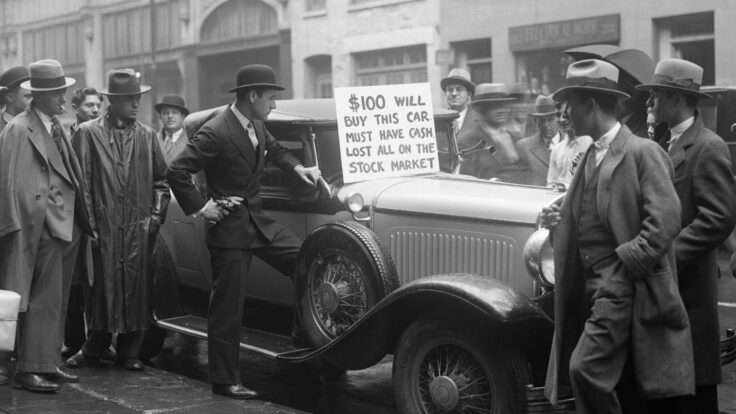
I know, I know, financial and asset bubbles are a lot of fun. No matter what you buy—stocks, bonds, real-estate, N.F.T.s, cryptocurrencies—it just keeps going up, up and away. People get fabulously rich—mostly on paper—and sometimes they are even clever enough to convert the paper winnings to cold, hard cash or Treasury bonds and bills. I know people who invested early in Coinbase, for instance, and then sold their Coinbase stock in the days after the I.P.O., in April 2021. At that time, Coinbase was valued at around $85 billion. They made a fortune and converted it to cash. Lucky—and smart—them. They knew in their guts, it was all too good to be true. Or that even if it were true, it couldn’t last. And of course, they were absolutely right. It’s not enough to see around corners and invest in businesses that other people find hard to fathom, or understand, but may yet be world-changing. (Paging Cathie Wood!) You also have to know when to count your lucky stars that you were somehow right and get out while the getting is good.
There is room for bulls and bears on Wall Street but pigs get slaughtered. These days, Coinbase is valued at around $7.5 billion, a decline of 91 percent. The people who bought in early and sold just after the frenzy of the I.P.O. made a killing on Coinbase. The people who bought into the frenzy that was Coinbase got singed, or scorched. That’s how you know we were in an asset and financial bubble. Whether it was SPACs, or N.F.T.s, or meme stocks, at some point, reality kicks in and the frenzy is over and the sentiment changes.
Hmmm, you mean, maybe GameStop is just a tired, non-performing retailer of video games that can be downloaded from the Internet and it no longer has a good reason to exist and it’s no longer a fascinating ball of string that day traders like to play with? Yes, that’s exactly what I mean. We have an entire generation of investors and traders who are getting used to the idea, for the first time, that markets go down as well as up.
It’s a harsh lesson to learn, I concede. But a valuable one nonetheless. Those of us who are older, learned this lesson early on and it shaped our view of the financial markets for a good long time. I started on Wall Street in September 1987; a month later, the stock market fell 22.6 percent in one day—Black Monday—so ya know, that kind of thing makes you cautious about getting too carried away by soaring financial markets. |
|
|
|
|
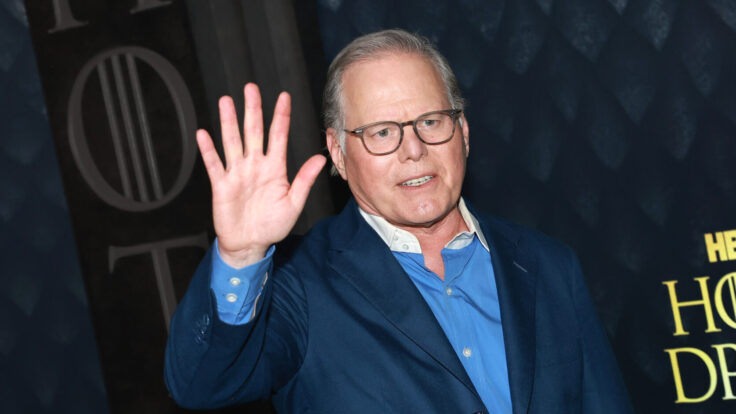
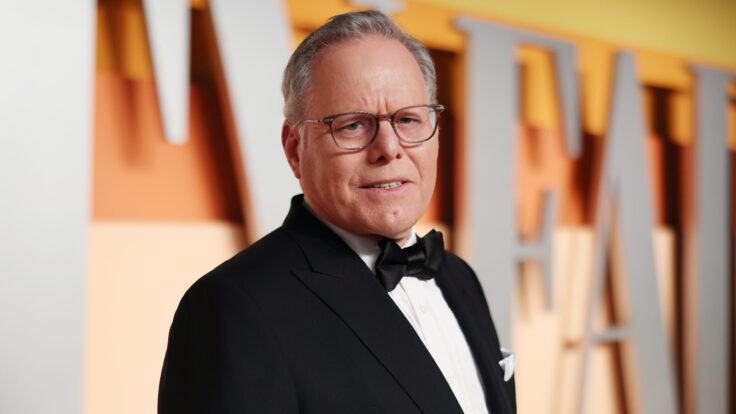
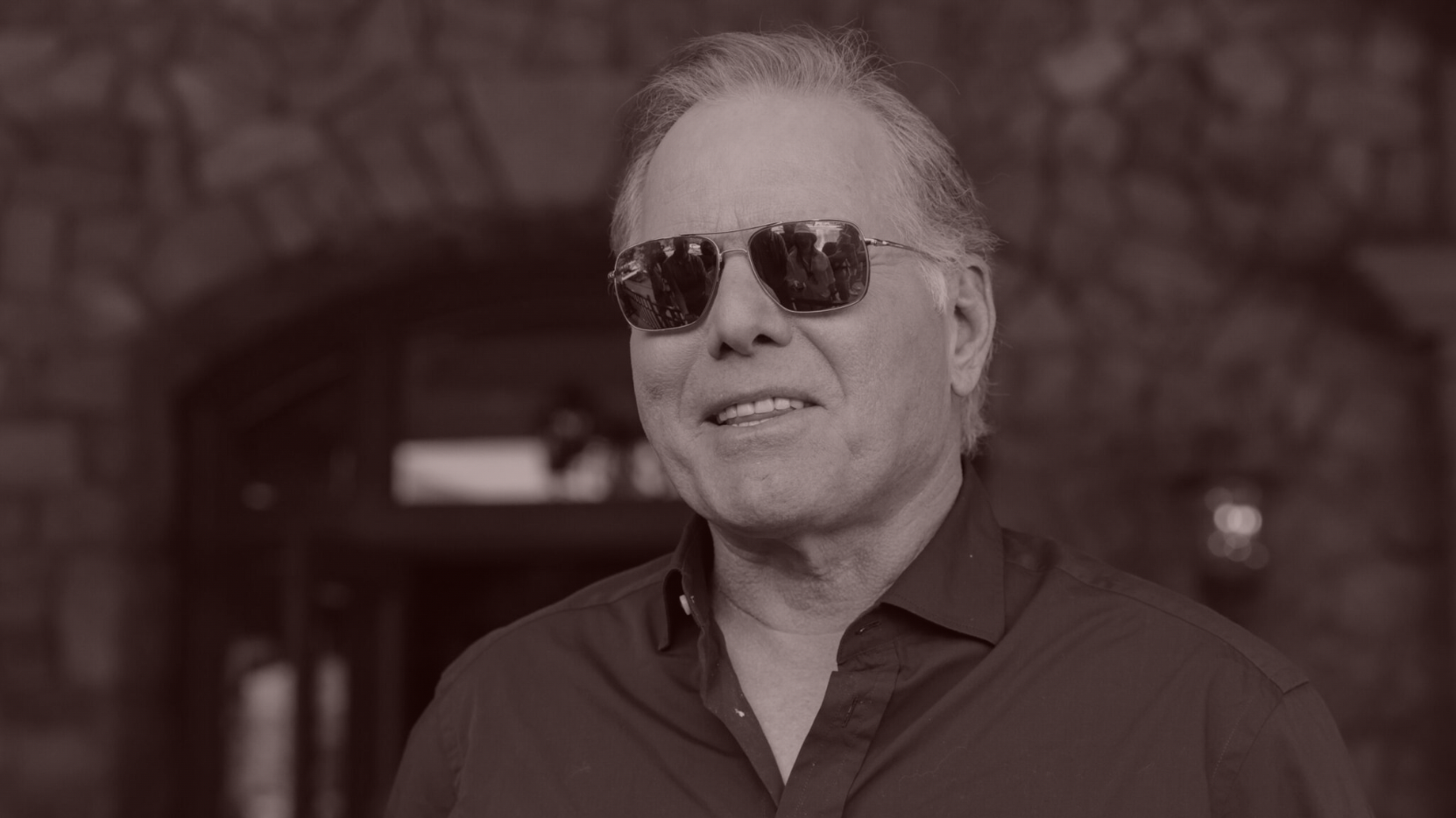
| Could things be looking up for our old friend, David Zaslav? For reasons that aren’t yet obvious, the Warner Bros. Discovery stock has been on a tear since the beginning of the year. And I mean a screamer! While the Dow Jones Industrial Average is up 1.5 percent since January 3, the WBD stock is up 18.7 percent. That could mean a serious change of sentiment—a “sea change,” perhaps?—toward Zaz and his overleveraged company is afoot, or it could be that the stock’s downward trajectory since it appeared last April—off around 54 percent—has been overblown and it’s time for a serious reset.
Some things, of course, haven’t changed at WBD. There is still a ton of debt on the company—the roughly $48 billion of net debt that AT&T saddled Zaz with as part of the Reverse Morris Trust structure that allowed his Discovery to merge with the old TimeWarner last April. That’s down from the $55 billion in debt that WBD had when it was created last April but that is still more debt than a company should have that will have its hands full getting to $12 billion of EBITDA in 2023.
It’s not that 4x leverage is too much for WBD; it’s not. Many companies do just fine with more than 4x leverage. (Twitter, for instance, has more than 13x leverage, by comparison). It’s just that WBD is in a very competitive industry where the dynamics are changing in real time, right before our eyes, as my partners Matt Belloni and Julia Alexander have been documenting beautifully. I know 2022 was a tough year throughout the halls of WBD, especially at CNN, where wave after wave of layoffs—as our other partner Dylan Byers has reported—has hurt employee morale. But Zaz should stay the course. Do whatever he can, every day, to generate as much EBITDA as possible and use whatever free cash flow he can to pay down that $48 billion of debt. A higher equity price and a smaller debt load will give Zaz a much better negotiating position when the talks with Brian Roberts, over at Comcast, get serious about combining WBD with NBCU. Yes, people at both companies get pissed at me when I discuss this, but come on… I bet that’s probably a topic for the Allen & Co. conference this summer and a deal announcement later this year or early next. |
|
|
| Finally, light a candle for the Tesla shareholders in your life, as the market valuation of the electric carmaker collapses back toward mid-2020 levels.
Oh dear, Elon, you’ve really made a mess of things, haven’t you? “12 months ago, I was Person of the Year,” he tweeted on Wednesday, a reference to the fact that he was on the cover of Time in 2021. Well, not anymore, Elon. Tesla, which was wildly overvalued to begin with by any rational metric, lost 65 percent of its value in 2022 and 2023 has started with more declines, including a 12 percent drop in a single day after Tesla reported “disappointing” sales results. What was once a company worth more than $1 trillion—for reasons I never understood—is now valued at $335 billion, not tin exactly, but nothing like what it was valued a year ago.
Let’s look at some numbers: Tesla’s EBITDA for the last 12 months, ended September 2022—the last available publicly—was around $16 billion, a decreasing portion of which comes from selling carbon credits, not electric cars. In any event, at a market value of $335 billion, Tesla is still trading at nearly 21 times its last twelve months EBITDA. That strikes me as still very high, albeit far less than what it was trading at a year ago.
Pick a competitor. How about Mercedes-Benz, which is a well-managed high-end vehicle manufacturer that has recently announced it will go all-electric by 2025, making it, I guess, a direct competitor to Tesla. Mercedes’ market value is $75 billion; its LTM 2022 EBITDA was roughly $20 billion. Mercedes-Benz trades at around 3.75 times EBITDA. I am familiar with many of the arguments why Tesla maximalists think Tesla and Elon Musk are the second coming. But at some point—and that point is nigh—reality starts kicking in. Tesla remains way overvalued compared to its automotive industry competitors and therefore, as I said on CNBC last week, it has further to fall, and rightly so. It’s been way overvalued for way too long.
This is not investment advice. Investors should do exactly what they want: If you think I’m crazy or living a life of privilege, then be my guest. Buy Tesla stock. If you liked Tesla stock at its 52-week high of $384 per share, or nearly 4 times where it’s trading now, you ought to absolutely love it as it moves closer to $100 a share. Knock yourself out. Have fun. As for me, I’m thinking about loading my dump truck up to Mercedes-Benz, which looks like a real bargain at these price levels. |
|
|
|
| FOUR STORIES WE’RE TALKING ABOUT |
 |
|
 |
| Boebert’s Aggression |
| Will Boebert and Gaetz’s Ukraine grandstanding ironically backfire in ruby red states? |
| JULIA IOFFE |
|
 |
|
 |
|
|
|
|
|
 |
|
|
|
Need help? Review our FAQs page or contact us for assistance. For brand partnerships, email ads@puck.news.
|
|
|
|
Puck is published by Heat Media LLC. 227 W 17th St New York, NY 10011.
|
|
|
|