 |
|
Happy Sunday, and welcome back to Dry Powder.
|
|
Interestingly, the Hail Mary merger I envisioned last week, featuring Warner Bros. Discovery and NBCUniversal, is looking more likely by the day, especially following WBD’s stark earnings call last Thursday. Today, I dig further into the logic underpinning the hypothetical deal, offer some notes on Elon’s Twitter countersuit, consider the remarkable resilience of the carried interest “loophole,” and, finally, attempt to make sense of AMC’s head-scratching new financial ploy.
|
 |
| Zaz Optionality and Elon’s Complaint |
| Wall Street’s sharp heel turn on Warner Bros. Discovery has media insiders envisioning an M&A Hail Mary. Plus notes on Musk counter-suing Twitter, Sinema bailing out private equity, and Adam Aron’s APE dividend gimmick. |
|
|
|
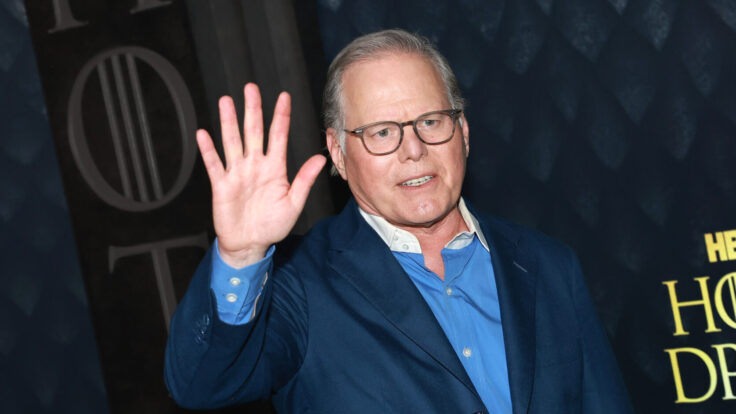
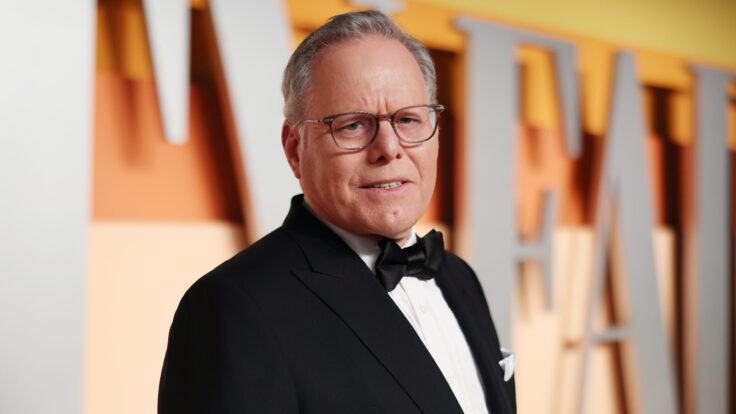
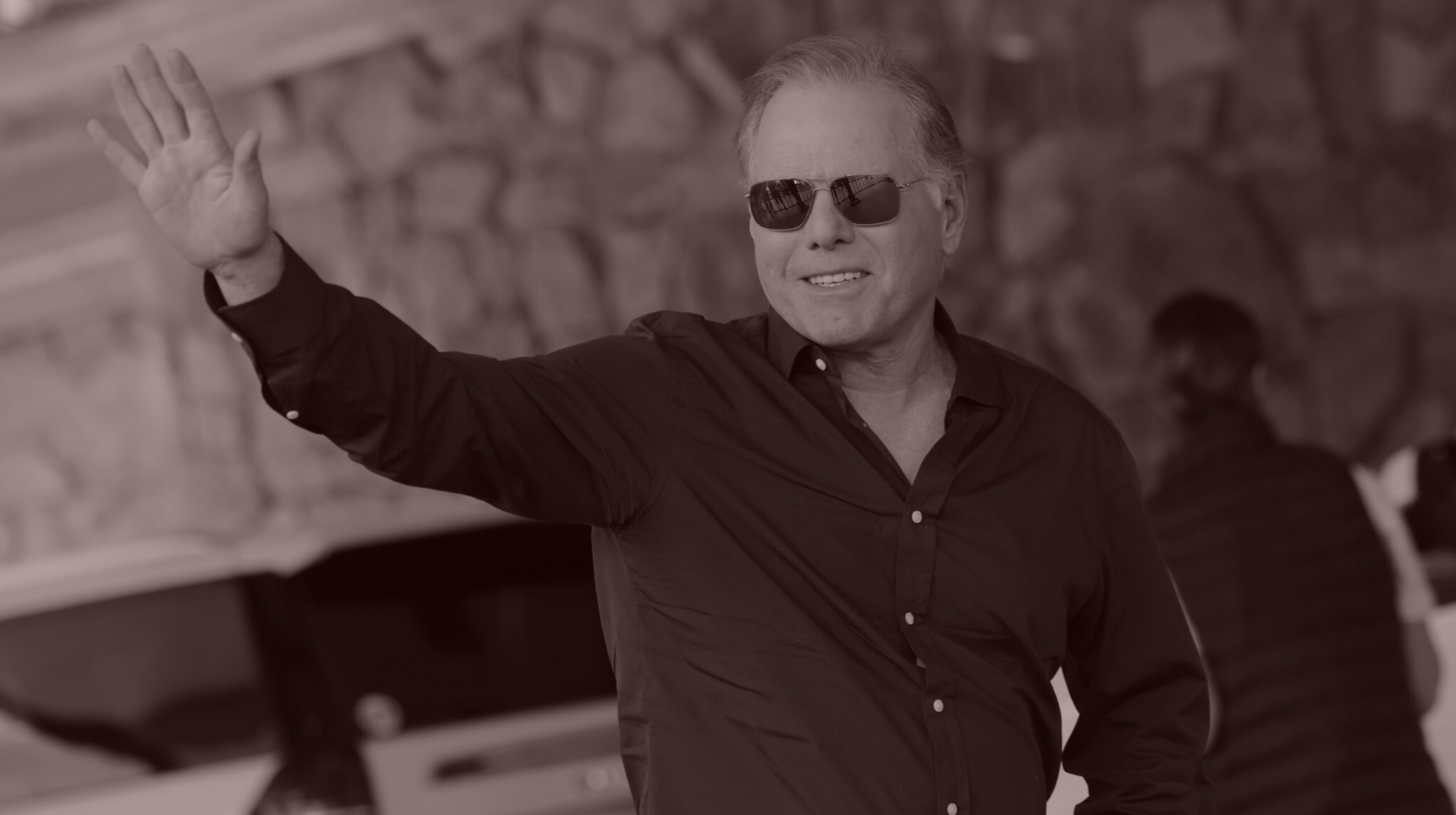
| Well, I hate to say I told you so, but it looks like we are heading into the very scenario that I, along with cable pioneer Tom Rogers, hypothesized on Wednesday as being a real possibility—that at some point relatively soon, David Zaslav is going to have “do something” with Warner Bros. Discovery, perhaps even merge with NBCUniversal, to make it a viable long-term enterprise. On Thursday, during WBD’s quarterly earnings call, Zaz lowered his guidance for next year, prompting investors to dump the stock. The question now is whether Wall Street will be patient, or if Zaz’s finger is hovering over Brian Roberts’s name on his speed dial.
Look, the brutal fact is that WBD has $56 billion in debt, an astounding number, most of which is rated by the credit rating agencies just a rung or two above junk. That’s not Zaz’s fault per se, but it is literally the biggest part of the price he agreed to pay to take WarnerMedia off of AT&T’s hands in April. At that time, he promised that he would find $3 billion in synergies and that WBD’s EBITDA for 2023 would be $14 billion. Now Zaz has lowered that estimate to $12 billion, a decrease of 14 percent. That revision came as a surprise to equity investors, causing WBD’s stock to fall nearly 17 percent.
I’m sure Brian Roberts is monitoring the situation at WBD carefully, although the Reverse Morris Trust rules will likely prevent WBD from entering into any kind of joint-venture with Comcast’s NBCU for at least another 18 months or so. On the other hand, given how long it takes such combinations to get regulatory approval and close, there is no time like the present to see if a combination between WBD and NBCU makes any sense at all for Zaz and Brian. I say it does. None of them are saying a peep, of course, and it’s probably six months too early for any kind of serious conversations about how the joint-venture could work. But, let’s face it, even though both NBCU and WBD are not small companies, they are competing in the land of giants and probably each needs to get bigger. NBCU, with about $6.5 billion in EBITDA, is probably worth around $75 billion these days. WBD’s enterprise value is about $88.5 billion—its $35 billion of equity plus $56 billion of debt, minus its $2.5 billion cash on hand. Combined they’re roughly a $150 billion competitor (accounting for the likely divestitures needed for regulatory approval). For all its recent missteps, Disney still has an equity value of $200 billion. So, ya know.
In the meantime, I worry a lot about Zaz’s $56 billion of debt and whether the credit ratings agencies will use the revised 2023 EBITDA number as a catalyst for a downgrade. If that occurs, and depending on the size of the downgrade, Zaz and WBD could find themselves in a whole heap of trouble. At the moment, WBD is on the so-called “BBB Cliff.” If WBD’s debt gets downgraded into “junk” territory, that could open up a rather large can of worms for the Zaz, making it more expensive for the company to refinance debt and putting its debt into the hands of investors who have considerably sharper elbows than par buyers of investment-grade debt.
But let’s not go there—at least not yet. While the revised 2023 EBITDA brings WBD’s debt/EBITDA ratio to 4.7x, making it borderline troublesome, there is also the issue of the 2022 debt/EBITDA ratio (to the extent investors still care about that). On the investor call on Thursday, WBD lowered its EBITDA estimate for 2022 to between $9 billion and $9.5 billion. Let’s give Zaz the benefit of the doubt at $9.5 billion. That means WBD’s 2022 leverage ratio is nearly 6x, which is the kind of debt multiple that leveraged buyout moguls feel comfortable having, not Hollywood titans.
Not to say that Zaz can’t pull the rabbit out of his hat. If anyone can do it, it’s probably him. But what last week’s news makes clear is that the bar that Zaz now has to clear has gotten higher and more treacherous—the exact opposite of where he was probably hoping to be right now when he made the call to John Stankey. And, in the meantime, there will continue to be more operational fallout across the various WBD business units, beyond what we have already seen. There’s a reason that my Puck partners Matt Belloni and Dylan Byers refer to the WBD C.F.O. Gunnar Wiedenfels alternatively as the “ax man” and “the hatchet man.” If I were the Zaz, I’d be thinking seriously about playing some golf with Brian Roberts pretty soon. Nothing buys time with investors quite like the announcement of a big, complicated joint venture that won’t close for 18 months while it winds its way through the S.E.C. and other Washington regulators. |
|
|
| Elon Musk accused Twitter of fraud in a countersuit that was unsealed this week, claiming once again that the social media company miscounted its users when he made his unsolicited, $44 billion takeover offer. Talk about a bad divorce for a marriage that never happened!
We’re really into the ugly phase of the legal conflict now, where both sides call each other names for a few months while we wait for the trial to start in October. None of that matters. What we’re witnessing is just a full employment act for Twitter’s lawyers at Wachtell Lipton and Simpson Thatcher and Elon’s lawyers at Skadden Arps and Quinn Emanuel. What does matter, however, is what the Chancery Court decides after the October trial. Elon’s ridiculous bluster and buyer’s remorse reminds me of the famous Leo Strine quote, when he was vice chancellor of the very court that Elon finds himself in at the moment. Strine, now at Wachtell Lipton, was opining about the circumstances that led to the merger between the two food companies, Tyson and IBP. “The negotiations between IBP and Tyson did not take place between a world-wise, globe-trotting capitalist with an army of advisors on one side, and Jethro Bodine, on the other,” Strine wrote. “Instead, two equally sophisticated parties dealt with each other at arms’ length with the aid of expensive and highly skilled advisors.” Exactly.
The consensus seems to be that Elon will lose the ruling in Delaware—and I agree that he will—because if his signature on a heavily negotiated merger agreement means nothing, then we’re in for a world of Donald Trump-style craziness. This was a deal that Elon himself initiated, after all. It’s one thing, unfortunately, to have the Trump insanity in our politics but if a business contract is no longer worth the paper it’s printed on in the Chancery Court in Delaware then I hate to say it, but we’re truly fucked.
So I am assuming Elon loses in the Chancery Court, which either orders him to close the deal, pay a large fine—my proposal has been $5 billion—or pay the difference between the $44 billion he offered for Twitter and the $32 billion or so that Twitter is worth these days. (Ironically, the Twitter stock is up a whopping 27 percent since Elon pulled the plug on the deal.) I have no idea how the Chancery Court imposes its will on Elon other than by attaching liens to his various assets. That will be quite a show to witness.
What I suspect will actually happen, however, is that the judgment against Elon this fall will serve as the starting point for the two sides to find a suitable glide path out of this mess, if one hasn’t already been found prior to the start of the October trial. There is no logical scenario under which Elon ends up owning Twitter. He doesn’t want it anymore and Twitter never wanted to be sold in the first place, let alone to a wild man like Elon, who claimed on Thursday, during the Tesla annual shareholder meeting, that he knows just what to do to unleash his engineers to fix Twitter even though he still doesn’t want to own it. How can there be any logic to forcing someone to buy something they don’t want to buy from someone who doesn’t want to sell?
But there can only be a serious conversation about reaching a settlement once Elon loses in Delaware. That way Twitter will be able to claim victory and Elon will realize if he doesn’t compromise to the tune of a couple billion, the penalty phase of the process could end up costing him a lot more—somewhere between the $12 billion and the $44 billion and might also begin to tarnish both Tesla, whose stock has recovered smartly since he abandoned the Twitter deal, and SpaceX, both of which need Wall Street support to keep their game of musical chairs going. Of course Twitter is right on the law. But while its shareholders want the $54.20 that Elon has promised—and I get that, believe me—shareholders are not the only constituency here that has to be heard. There is the company itself. There is the company’s management. There are the company’s employees. I feel confident in saying that none of these constituencies want Elon Musk to own Twitter.
There is also the danger lurking in the wings for the Wall Street banks that have agreed to provide the $13 billion in senior secured loans to Twitter once Elon’s deal for the company closes. Given the dramatic increase in interest rates since the April 25 merger agreement, the Wall Street banks trying to sell the senior notes will have to increase materially the interest rates on the notes to get them out the door. That will mean the banks will suffer a mark-to-market loss in the tens of millions of dollars straight off to account for what they committed to in April and what it will take to offload the notes in November, or whenever the deal closes, if it ever closes. Given how rough 2022 is already looking on Wall Street, Morgan Stanley et al. doesn’t need a big mark-to-market loss. Elon’s banks will no doubt want Elon to settle once he loses in Wilmington, even while Twitter’s advisors, Goldman Sachs and JPMorgan Chase, have the exact opposite incentive: They will make a lot more money if the deal actually closes—$133 million if it does but only $20 million if it doesn’t.
Whatever. I’m of a mind to ignore the inevitable legal wrangling that is going to occur in this case until October, or until there is a settlement prior to any trial. It’s all just so much fluff at this point. |
|
|
| It appears that Senator Kyrsten Sinema has stepped up as the latest savior of private equity, vowing to support Joe Manchin’s so-called Inflation Reduction Act sans the carried interest revision, raising the question—as I suggested last week—of whether this decades-old “loophole” is essentially bulletproof. Perhaps so. I honestly don’t know how this benefit for private-equity, hedge funds, and real-estate developers keeps getting read its last rites and then coming back from the dead. And yet it keeps happening, and now has happened again. I hope Steve Schwarzman is giving his man in Washington, Wayne Berman, a big raise.
It’s just mind-boggling to me that for simply doing the job your limited partners hired you to do—invest their money wisely—you can get capital gains tax treatment on the profits you generate. Are you telling me that private-equity moguls would stop doing their jobs if they had to pay tax at ordinary income rates (roughly 35 percent) instead of at capital gains tax-rates (roughly 20 percent) on their gains? Hedge funds and private equity firms are licenses to print money, while using other people’s money to boot. A number of bankers I used to work with on Wall Street are now working in private equity, or have their own P.E. shops, in which I have some investment. These guys remain my friends but to a person they have done fabulously well—big homes in Palm Beach, the Hamptons etc.—and I am pretty sure they would not give up their golden goose over having to pay 15 percentage points more in tax.
Now, being human, they are not going to give up a tax benefit without a fight and so here we are. I don’t know how or why this keeps happening year after year and decade after decade. It’s quite an amazing feat. I am sure Berman could share with us the secret sauce of how this ridiculous benefit keeps surviving for people who are already among the wealthiest in the land. Is it right and fair that a man or a woman working on the assembly line at Tesla or as a writer for Puck pays a higher tax rate than the general partners at a private equity firm? We’re all just doing our jobs, but the P.E. mogul, already richer than Croesus, has figured out a way to bend the system for his benefit. Some, like Warren Buffett and Bill Ackman, have called for reforms. They probably recognize that enough is enough and this kind of ongoing and inexplicable inequity creates powerful resentments that one day will blow the whole thing up. Wayne, if you’d like to meet for coffee while you’re in Nantucket and share with me how this sausage keeps getting made, I’d be delighted to join you. |
|
|
| AMC’s plan to give shareholders a special dividend of “AMC Preferred Equity”—which will trade on the New York Stock Exchange as “APE,” naturally—is a real head-scratcher. The company’s public filings about the security are nearly incomprehensible. I reached out to Ryan Noonan, the head of communications at AMC, to try to have a conversation with a real person about what AMC is doing here. He is on vacation this week. He also passed along my request to a colleague and, while I’m still waiting for that call, directed me to AMC C.E.O. Adam Aron’s comments about the new security during Thursday’s AMC earnings call. But I’m not sure I understand the logic for the issuance of the new security any better after reading Aron’s comments than I did before by reading the company’s muddled S.E.C. filings.
What is clear to me is that Aron is convinced that the new preferred stock dividend will be fabulous for AMC shareholders and just awful for those investors shorting AMC stock and wishing the company ill. We’ll get to Aron’s (over)excitement in a moment, but first I’ll try to share with you what I have been able to discern about this dividend. Aron helpfully described it as akin to a 2-1 stock split, which would of course double the amount of AMC shares outstanding while also halving the stock price. (Simple mathematics there.) The difference here is that AMC is not splitting its stock. Rather, AMC is issuing to its existing shareholders a dividend of one share of AMC preferred stock for every share of common stock they own. In effect, AMC is doubling its shares outstanding but with a preferred stock dividend rather than a common stock dividend. After August 22, an AMC stockholder will own his or her AMC shares plus a corresponding number of the preferred shares, known by AMC as APEs, a shout-out to the online “ape army” that turned AMC into the quintessential meme stock last year.
I’m not sure what this accomplishes other than creating another class of publicly traded AMC security for the retail apes to send to the moon. But Aron seems to think it’s the most important thing the company will do all year. (He also thinks the AMC stock, now trading at $22 a share, will soon reach $1,000 a share.) “With the creation of APEs, AMC is deeply and fundamentally strengthening our company,” Aron said. He claimed this will happen because in the future AMC will be able to issue more of the preferred stock for cash that can be used to pay down AMC’s debt and to “immensely” reduce AMC’s “survival risk” as the company continues to “work our way through this pandemic to recovery and transformation.” He also implied that AMC could use the new preferred equity as an acquisition currency for “potentially transformative investment opportunities.”
On the earnings call, one listener asked whether Aron was, in effect, overhyping the importance of issuing the new preferred shares. On the contrary, Aron answered, “It’s bigger and it’s more important than I said in the press release. As I mentioned in my prepared remarks, I think this is the biggest single step forward that AMC is going to take in 2022.” Of course, the other motivation for this move, as I noted earlier, is to thwart investors who have been shorting the stock. “We all know, there are a lot of people out there in the world who are not rooting for AMC,” Aron explained. One of them, our friend Rich Greenfield at Lightshed Partners, initiated his coverage of AMC with a sell rating and a target stock price of one cent.
Aron has long been a bit of a Harold Hill type. “He’s a good salesman,” another friend, Charlie Gasparino, said on Fox Business News on Friday. “Some would even say a good B.S.-er.” The AMC stock was up nearly 19 percent on Friday and is up an astounding 55 percent in the last five trading days. AMC investors are once again buying what Aron is selling, even though the AMC stock is down 32 percent in the last year. I get that people are returning to movie theaters, which has resulted in AMC’s “adjusted” (yuck!) EBITDA of $107 million in the second quarter of 2022, a massive $258 million improvement from the same quarter in 2021. That can indeed move a stock. What shouldn’t move it, in my opinion, is a meaningless stock dividend that raises no capital for the company and seems to be nothing more than a strange gimmick. If someone from AMC ever decides to return my call and explain why this is such an important and dramatic move for the company, I would be happy to listen. |
|
|
|
| FOUR STORIES WE'RE TALKING ABOUT |
 |
| The ‘Batgirl’ Sacrifice |
| Zaz’s controversial decision to shelve the film is tied Hollywood's Netflix fixation. |
| MATTHEW BELLONI |
|
 |
| ‘Manchinema’ No More |
| The former political duo are actually as unaligned as you could imagine. |
| TARA PALMERI |
|
 |
| The Truther Gauntlet |
| Election denialism is becoming an increasingly critical voting issue on the right. |
| TINA NGUYEN |
|
 |
| The Murdochs' Legal Hell |
| Eriq and Teddy unravel the defamation lawsuit keeping the Murdochs up at night. |
| TEDDY SCHLEIFER |
|
|
|

|
|
|
| You received this message because you signed up to receive emails from Puck
Was this email forwarded to you?
Sign up for Puck here
Sent to
Unsubscribe
Interested in exploring our newsletter offerings?
Manage your preferences
Puck is published by Heat Media LLC
227 W 17th St
New York, NY 10011
For support, just reply to this e-mail
For brand partnerships, email ads@puck.news |
|
|