|
Welcome back to Dry Powder. I’m Bill Cohan.
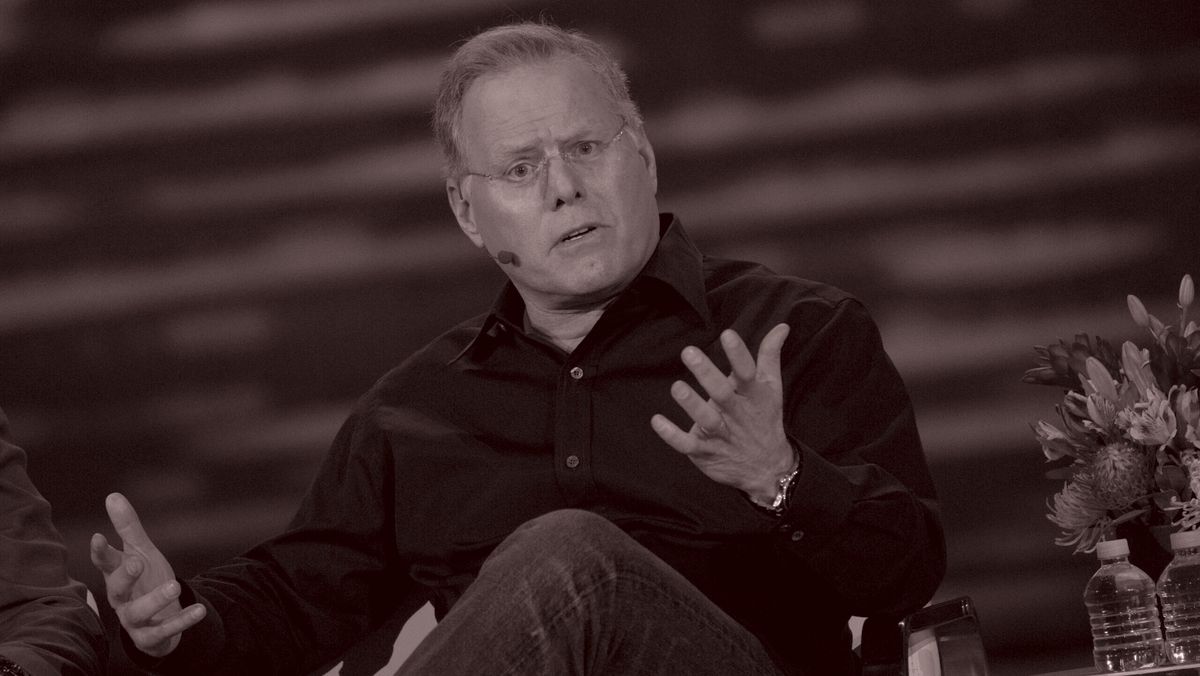
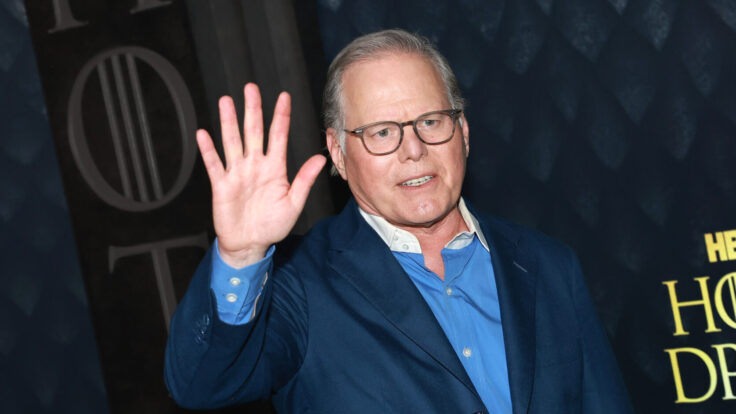
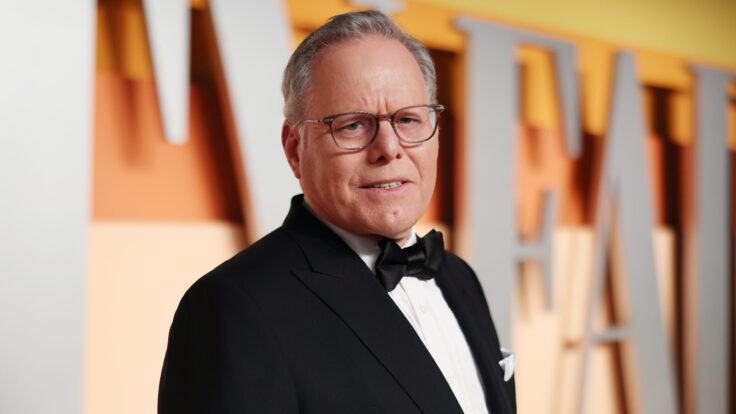
In the three years since the creation of Warner Bros. Discovery, there has been no better cheerleader for the business than C.E.O. David Zaslav, who had plenty to boast about last week after the company put out its first quarter numbers. The streaming business is picking up serious steam—as he was quick to remind me, when I shot him a text from Paris last week—and the company has now separated its streaming and studio segment from its “global linear networks.” In today’s issue, a close look at the Q1 numbers, and the seemingly inevitable, perhaps imminent, announcement that WBD will create its own version of Comcast’s SpinCo, a.k.a. Versant.
But first…
|
- Sphereheads: Greetings from Las Vegas, where Dylan and I, coincidentally, are both taking in some Dead shows at the Sphere. Let me just say, this is the most spectacular venue in all of concertdom. As one wise music industry veteran told me, “The Sphere changed everything you think about live music.” The Dead have always been on the cutting edge, graphically speaking (to say nothing of musically), and the Sphere accentuates those touches, and integrates them with the music, in ways that have rarely been seen before onstage. This is not to be missed, if you can swing it. And John Mayer in the Jerry Garcia role has never been better.Meanwhile, Peter Supino, the Wolfe Research analyst, has long been a big bull on Sphere Entertainment, the publicly traded company that owns the Sphere in Las Vegas and is building another one in Abu Dhabi. The Sphere cost some $2.3 billion to erect in Vegas, but the company has a market value of little more than $1 billion these days, down 22 percent so far this year. Supino wrote in a note to investors on Saturday that the stock is unloved and underappreciated on Wall Street, and “that the company is in better shape than the stock.” The Sphere is, of course, a Dolan family extravaganza, and Supino thinks that this baggage may account for the poor trading of the stock—a so-called “Dolan discount.” But who knows, maybe things are looking up for both the Knicks—another Dolan joint—and for the Sphere. (This, of course, is not investment advice.)
|
|
|
|
Days after NBCU announced the name of its SpinCo—ask a doctor if Versant is right for you—David Zaslav kicked the rumor mill into overdrive by announcing that Warner Bros. Discovery, too, had successfully cordoned off its declining cable business—another step, presumably, toward launching a Versant of its own.
|
|
|
|
A couple of weeks ago, while I was walking around the Arc de Triomphe in Paris, waiting to catch a ride to see the David Hockney show at the Fondation Louis Vuitton, a city bus breezed by with an advertisement on the side for Max’s The Last of Us. Seeing the ad reminded me of one of my recent conversations with David Zaslav, the C.E.O. of Warner Bros. Discovery, the parent company of Max, HBO, the Warner Bros. movie studio, and a bunch of linear television channels such as CNN and Discovery. In those chats, Zaz never failed to remind me about his effort to make WBD more international, and how HBO and Max were becoming increasingly available in a variety of new countries and with increasing popularity. When I saw the bus go by, I couldn’t resist texting Zaz about the street scene. “We’re global ya know…” I wrote, mimicking one of his familiar phrases. “Love that!” he shot back. “MAX is firing on all cylinders.”
There has been no better cheerleader for WBD than David Zaslav, of course. He’s been singing the company’s praises for the past three years, ever since it was created in April 2022 with the merger of AT&T’s Warner Media with Zaz’s Discovery Communications. And, sometimes, he’s been seemingly the only cheerleader out there. The problem with the merger, right from the outset, was, in effect, Zaz’s price of admission to Hollywood: that pesky $55 billion mountain of debt with which John Stankey, the AT&T C.E.O., saddled WBD. It has proved to be a tall peak to scale. But as Zaz has shown from the start—and as he did again on Thursday, with the release of WBD’s first-quarter 2025 financial performance—he and C.F.O. Gunnar Wiedenfels know how important it is to service debt to make their publicly traded leveraged buyout a success.
As of March 31, WBD has $34 billion of net debt, having paid down another $2.2 billion of debt in the first quarter. The WBD debt load has now been reduced by $21 billion in three years. The company’s net leverage ratio is 3.8x, a function of the $34 billion of net debt divided by the $9 billion in “adjusted EBITDA” the company generated in the past 12 months, ending March 31. While the net debt continues to be paid down, the leverage ratio of 3.8x has remained static, in large part because WBD’s moving average of past-twelve-months “adjusted EBITDA” has not increased sufficiently to get the ratio to move downward. That remains the singular challenge for Zaz and Gunnar—they know it, of course, and their annual compensation depends on getting on top of the problem. In the shareholder letter, also released on Thursday, WBD said that it will continue “to target” a gross leverage ratio of 2.5x to 3x, and that it “will act on opportunities to make further progress toward that goal.”
That’s very nice. But the ratings agencies remain somewhat skeptical. Last August, S&P kept its BBB– rating on WBD’s debt stack but changed its “outlook” for the company to “negative” from “stable,” in large part because, while Zaz has proven that WBD can generate the cash to pay down debt, he has yet to prove to the market that he can hit his “adjusted EBITDA” targets. In the August 2024 note, S&P correctly predicted that WBD’s leverage ratio would be 3.8x in 2025—exactly where it is—but, alas, it would still be above the 3.5x leverage ratio that S&P needs to see in order to change its rating on the debt.
Still, Zaz & Co. have breathing room: WBD’s average interest rate is 4.7 percent, not much above the rate on 10-year Treasuries, and the average maturity on the debt is nearly 14 years. Both are good. Zaz also cleverly refinanced some debt maturing next year with new debt that is also maturing next year but has a lower interest rate. But to get off the BBB cliff—which will be essential if the WBD stock is ever going to hit its potential—that leverage ratio is actually going to have to move down into the range that Gunnar has targeted. (This is not investment advice.)
|
The debt paydown, though, has to be considered good news, no matter how you slice it. There was more good news to be found in WBD’s first quarter numbers, too. For one, streaming—in the form of the increasingly global HBO and Max—is starting to pick up momentum. The business added 5 million new subscribers in the first quarter, much of it internationally, and the streamer has added 22 million new subscribers in the past year. WBD’s streamers now have 122.3 million subscribers, and management expects there to be more than 150 million subscribers by the end of 2026.
The WBD streaming business also seems to have become solidly profitable, at least in the dreaded “adjusted EBITDA” sense. In the first quarter, the streaming business generated $339 million of adjusted EBITDA, and the company is now predicting that there will be “at least” $1.3 billion in adjusted EBITDA in that business for 2025. By the way, that streaming adjusted EBITDA for the first quarter is 30 percent more than the $259 million in adjusted EBITDA that WBD’s film and television studios generated in the first quarter.
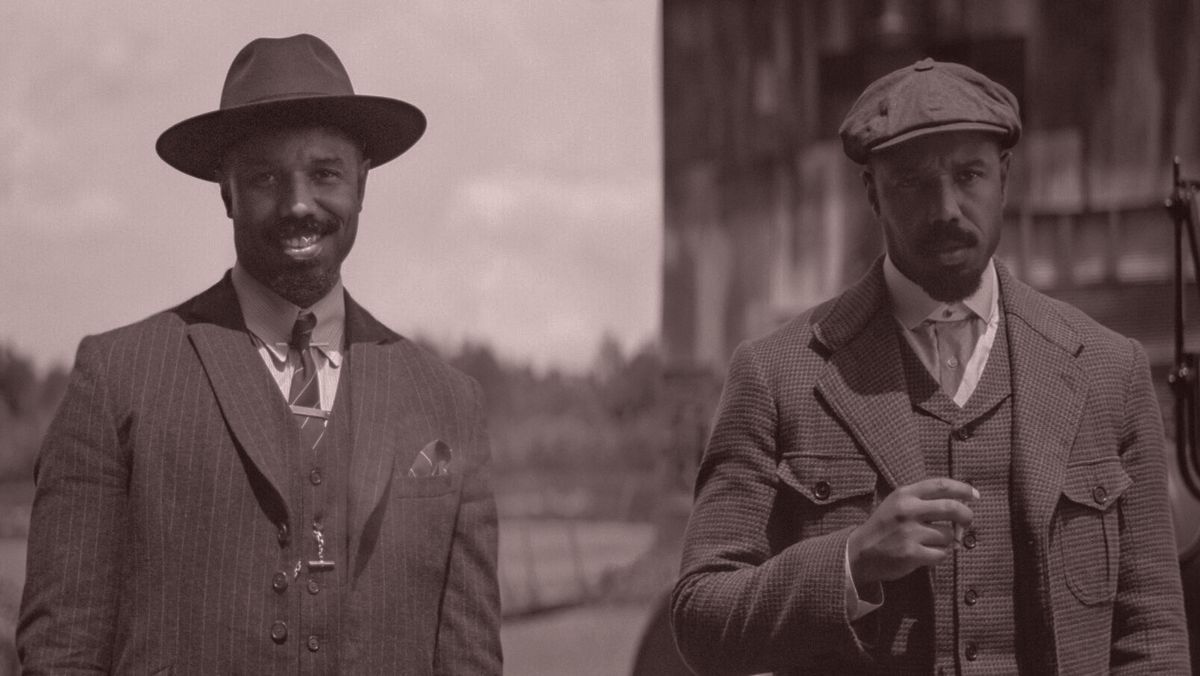
The studios’ first quarter “adjusted EBITDA” was up 41 percent from the first quarter of 2024, but it’s safe to say it still wasn’t the greatest performance. The unit “underperformed expectations,” the company wrote to its shareholders, although the second quarter is shaping up to be a bit of a bonanza, with the success of both Minecraft ($900 million in box office revenue and counting) and Sinners (more than $250 million in box office revenue).
Overall, WBD also hit the jackpot with The White Lotus, The Pitt, and the aforementioned The Last of Us. Zaz also has very high hopes for Superman—“our next tentpole film,” he said—which hits theaters July 11, even if Hollywood remains jittery about it. It’s all part of the plan, Zaz told Wall Street analysts. “Our commitment to high-quality storytelling, powered by the most exceptional creative talent in front of and behind the camera, continues to be the engine that powers Warner Bros. Discovery,” he said. “That engine has never been stronger, more differentiated, and more important, both here in the U.S. and around the world.”
Zaz also announced that the company’s “restructuring” to separate its streaming and studios segment from its “global linear networks” segment has been completed. The buzz mill has since gone into overdrive, anticipating that Zaz is about to announce WBD’s own version of Versant, the newly named Comcast SpinCo. On Thursday, Dave Faber over at CNBC—I’m imagining him saying, at some point soon, “Hi, I’m Dave, and I work for Versant…”—reported that “in the not-too-distant future,” WBD would hive off its “global linear networks” composed of CNN, Discovery, TNT, et al. That got Wall Street buzzing, and along with the decent first quarter numbers, the WBD stock moved up nearly 5 percent on Thursday, to around $9 a share. Still, it’s been a rocky ride for the WBD stock, which is down nearly 16 percent in 2025 and down nearly 65 percent since the April 2022 merger. The Netflix stock has more than tripled in that same period.
The good news for WBD’s linear TV group is that it still generates significant “adjusted EBITDA”—nearly $1.8 billion in the first quarter. The bad news is that adjusted EBITDA was 15 percent less than the $2.1 billion that segment generated in the first quarter last year. There isn’t a whole lot to say about the ongoing decline of the linear TV segment at WBD, and neither Zaz, Gunnar, nor the Wall Street analysts mentioned it other than in passing. (If you want to delve further into this topic, read my partner Dylan Byers’s excellent piece on the future of CNN from Friday.) Zaz and Gunnar also have not confirmed Faber’s reporting. But it does seem inevitable that the business will go the way of Versant, and probably pretty soon.
It’s clear, from the WBD letter to shareholders, that the linear TV business has become little more than a means to an end for Zaz. “Our global linear networks continue to prove highly profitable and cash generative, supporting our path to transform Warner Bros. Discovery, deliver outstanding long-term shareholder value, and position this iconic company to thrive for generations to come,” he wrote. It won’t be long now. ChatGPT recommends both “Heritage Networks” and “LinearOne” as possible names for WBD’s SpinCo. Both seem better than Versant, but that’s me.
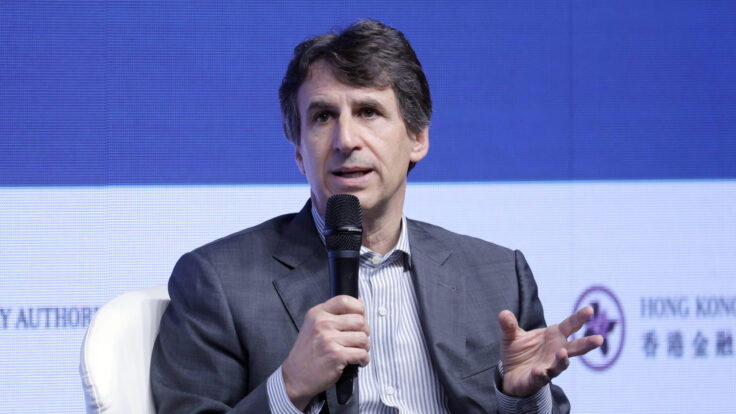
To get another perspective on the WBD narrative, I reached out to Peter Supino again. He said he thought it was “a tough quarter” for WBD because it missed Wall Street’s consensus expectations for both revenue and
cashflow. He said the company may be stuck at the 3.8x leverage multiple, but he also saw positive “shoots” in both the streaming and the studio businesses, which are the “key to the stock’s cashflow multiple.” And while he was impressed with Max’s subscriber growth and EBITDA increases, he was only “neutral” on the stock right now. “Leverage is still too high,” he wrote.
Interestingly, he also thought the Faber report was perhaps a little premature. “If WBD splits into two stocks tomorrow, we’ll be sorry we missed it. [But] that restructuring may require a lot more patience with media M&A looking stuck, and [there’s] a reasonable case for waiting to act until the company’s strategic path is clearer.”
|
|
|
|
Join Puck’s chief political columnist, John Heilemann, as he roams the corridors of power and influence in America on this twice-weekly interview show, taking you beyond the headlines with the people who shape our culture: icons and up-and-comers, incumbents and insurgents, moguls and machers in the overlapping worlds of politics, entertainment, tech, business, sports, media, and beyond. The conversations are rich and revealing, unrehearsed and unexpected… and reliably impolitic. A Puck-Audacy joint, new episodes drop every Wednesday and Friday.
|
|
|
|
Puck’s daily political newsletter from Washington on what’s really happening in this town, from the White House to the Pentagon to Capitol Hill, K Street, and the campaign trail.
|
|
|
Need help? Review our FAQ page or contact us for assistance. For brand partnerships, email ads@puck.news.
You received this email because you signed up to receive emails from Puck, or as part of your Puck account associated with . To stop receiving this newsletter and/or manage all your email preferences, click here.
|
|
Puck is published by Heat Media LLC. 107 Greenwich St, New York, NY 10006
|
|
|
|