 |
 |
|
Happy Sunday. Welcome back to Dry Powder.
|
|
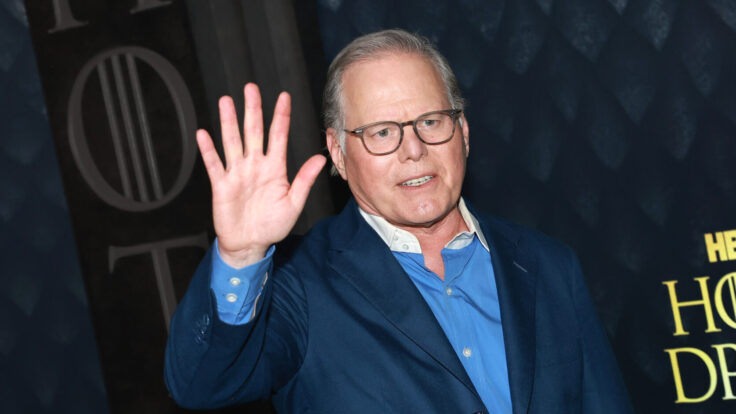
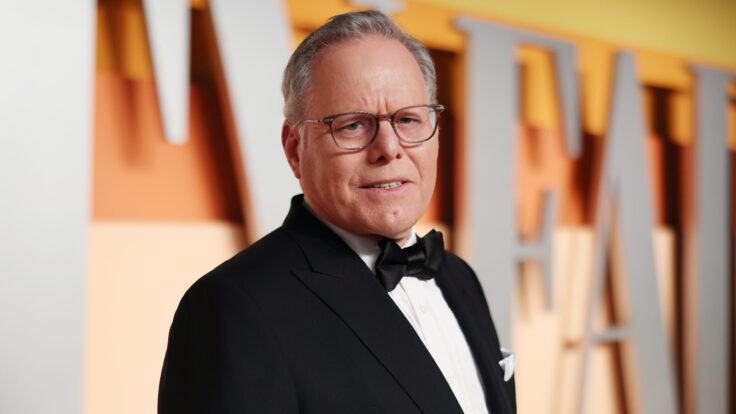
With the CNN fiasco temporarily in the rearview, can David Zaslav and Gunnar Wiedenfels now devote their full energy to pulling WBD’s stock back from the edge of a BBB debt cliff? Today, a look at their Sisyphean mandate, observations on Gary Gensler’s long-coming war on crypto, and a timely remembrance of the time Donald Trump tried to crash Chelsea Clinton’s wedding.
|
 |
| Zaslav’s ‘Martian’ Mission |
| Notes on the inside conversation percolating through the Teterboro crowd: WBD’s Sisyphean debt boulder and Gensler’s crypto holy war. Plus, a totally fitting Trump story for the ages. |
|
|
|
| Alas, poor Yorick, as the indefatigable Dylan Byers has documented so brilliantly for the past 13 months, Chris Licht’s demise from CNN was inevitable. And now come the inevitable recriminations and second-guessing: Was he set up from the beginning as David Zaslav’s fall guy for necessary cost cutting? Was he just executing John Malone’s editorial bidding as channeled through Zaz? Was he on his own, doing what he thought C.F.O. Gunnar Wiedenfels wanted, but generating resentment every step of the way among the rank-and-file?
Look, I feel badly for Chris. For sure, he made plenty of mistakes—among them, keeping his desk away from the action; moving Don Lemon to the morning and his unceremonious firing; the all-access, backstage pass to Tim Alberta, at the Atlantic; the predictably acrimonious Trump town hall—but he’s also suffered a humiliating and public defenestration that seemed way, way out of proportion for a guy who committed no crimes, moral or otherwise, and was just doing the best he could running a linear cable-television channel in decline. But he had to go. He had become the story, and we know how these things go. He was going to remain the story until Zaz took him out to Central Park, in the purple haze, and gave him his walking papers.
So what does Zaz do now? He no doubt hopes removing Licht will stanch the bleeding, or at least the bleeding caused by the 24-hour news cycle’s focus on CNN. But CNN—as with all linear TV—will remain a headache for Zaz. It’s a declining asset, at least in its present form. And it would seem highly unlikely that Zaz will resurrect the shuttered CNN+, the digital project that he zotzed out of the gate. I think the best thing for Zaz right now would be to hope that under the new, temporary leadership, CNN can get back to being a news gathering and reporting organization, not the focus of other news organizations’ news gathering and reporting.
Indeed, Zaz needs to get back to focusing on the bigger picture at WBD—increasing the company’s EBITDA beyond the expected 2023 “pro-forma adjusted EBITDA” of $11.5 billion and continuing to pay down the company’s net debt of around $45 billion. In other words, Zaz and Gunnar must put the CNN fiasco in the rearview mirror and get back to the most important task they face: paying down debt and getting WBD to be comfortably an investment-grade credit, not one hovering near the edge of the BBB cliff.
If these two men want their grand experiment in Hollywood dealmaking to pay off, this must remain the singular focus. They must stop the self-inflicted wounds and keep in mind that WBD is a publicly traded leveraged buyout that is still teetering on the edge of success, or failure. Yes, the WBD stock is up 45 percent this year, including up nearly 18 percent in the last five days, largely because at the same time that Zaz zotzed Licht, the company announced that it had paid down some $2 billion of debt in the second-quarter of the year—about $1 billion more than some analysts expected. Good for you, Zaz. But the stock is still down 43 percent since it started trading as WBD in April 2022. That is hardly a ringing endorsement of the enterprise and I seriously doubt that Malone and Newhouse are happy with that outcome.
Zas is not going to be in the clear unless and until that $45 billion of net debt gets whittled down considerably to around, say, $30 billion, or 2.5x EBITDA—comfortably investment grade—or until the real WBD EBITDA and not the “pro-forma adjusted EBITDA” reaches a much higher level. And let’s face it, neither of those two things is going to be easy for Zaz and Gunnar to achieve. Of course, Zaz and Gunnar could go all Matt Damon, in The Martian, and just start jettisoning WBD assets to pay down the debt: Maybe sell CNN? Maybe sell the Food Network? A lighter ship is how Damon made it back from Mars. Tough decisions, I know. Maybe, come to think of it, Licht is the one who is better off in this still-precarious WBD situation. |
|
A MESSAGE FROM OUR SPONSOR
|
 |
| Only a few more days to register for Threads 2023. Tune in for a new virtual event by Plaid, the industry's leading network empowering financial institutions, enterprises, and fintechs to build the future of finance. Hear from Plaid CEO and Co-Founder, Zach Perret, CTO, Jean-Denis Greze, and other leaders in digital banking on how to supercharge every aspect of your financial offering. Accelerate payments, fight fraud, onboard more users, and more—all with the help of Plaid’s new products and cutting-edge updates. Register today, stream June 22.
REGISTER NOW |
|
|
|
|
| Part of me wonders what has taken Gary Gensler so long to wage his war against crypto, and why he has chosen this path. Apparently, it would be excruciating for Gensler to try to draft new regulations on the crypto industry and then get his fellow commissioners to adopt them. It must be easier, on some level, to bring the litigation against Coinbase and Binance (as well against Sam Bankman-Fried) than it is to figure out how to regulate the industry. Perhaps by the time the litigation is resolved, there won’t be much of an industry left to regulate. Is that Gensler’s hope?
Maybe as Stephane De Baets, the president of Elevated Returns, a digital asset management firm, tweeted on Saturday, “Crypto will end up as Monopoly money.” Who knows? One thing I feel certain about, though, is that the S.E.C. will prevail in its battles against all of Coinbase, Binance and S.B.F. One way or another Gensler and the S.E.C. will get their pounds of flesh. Either each of the defendants will figure out a way to settle with the agency—I suspect that’s what Brian Armstrong and Changpeng Zhao will do—or the S.E.C. will prevail, curtailing the bad behavior it is worried about.
The idea that because the S.E.C. approved Coinbase’s I.P.O. registration statement, it had somehow also approved its business plan—which, if I understand it correctly, is the essence of Coinbase’s defense—is preposterous. That’s not how S.E.C. approvals work. When the S.E.C. approves a registration statement as part of an I.P.O. process, it is merely agreeing that sufficient information about the offering and the company has been made public in the statement to satisfy regulators, nothing more, nothing less, and certainly the S.E.C. does not approve business plans when it approves an S1. In fact, every registration statement the agency does approve has to display, on the cover, what is known as the “S.E.C. No Approval Clause,” which essentially just means that it does not approve or disapprove of the securities being offered. The S.E.C.’s approval of a registration statement does not convey any notion of approval of a company’s business plan.
One thing, however, is crystal clear to me: At some point, and I don’t know when, the S.E.C. and the C.F.T.C. will lay down the regulations under which what remains of the crypto industry will be forced to abide. On the one hand, I appreciate the tough talk coming out of Armstrong, just as I appreciated the tough talk coming from Francis deSouza, who as of this morning is the former C.E.O. of Illumina, which is taking on all of the F.T.C., the E.U. and Carl Icahn in its fight to keep Grail. (DeSouza resigned in a surprise move, just a week or so after Carl Icahn won one seat on Illumina’s board.) But the regulators will prevail.
In fact, I have trouble understanding why this has taken so long. Crypto gambling has been essentially unregulated since Bitcoin started to be mined and traded in and around early 2009, a few months after someone by the name of Satoshi Nakamoto wrote his famous Bitcoin “white paper.” That’s more than 13 years at this point. During that time, any number of crazy crypto-related events have occurred, including to name but a few: the crazy S.B.F. roundtrip; the I.P.O. of Coinbase, which has fallen 84 percent since; the rise and fall of ridiculous crypto-related currencies, such as dogecoin (thanks Elon!), FTT, FTX’s ridiculous crypto token, and any number of other stupid cryptocurrencies (some 2,000 in number), etcetera.
On the other hand, the faithful have been rewarded so far in 2023. Bitcoin, down 63 percent from its all-time high, is up nearly 55 percent so far this year, as crazy as that seems. It is basically unchanged since Gensler and the S.E.C. mounted its legal assault on Binance and Coinbase. Go figure. I’ve given up trying to figure out why people buy these things, just as I’ve given up trying to figure out why people pay up for NFTs, meme stock or Tesla at these prices. (Tesla is up 126 percent so far this year.) What becomes of Bitcoin remains to be seen, of course. Is it a viable and useful technology, or the biggest con since the onset of the tulip-bulb mania in the 17th century? I haven’t a clue what the answer to that question is. |
|
|
| Donald Trump, Wedding Crasher |
|
| The ultimate irony of Donald Trump’s recent federal indictment is that he was the champion for tougher laws about absconding with classified documents, as a weird deranged form of retribution toward Hillary Clinton, his rival for the 2016 presidential election. Fittingly, then, I am duty-bound to share what I know about The Donald’s unsuccessful efforts to crash Chelsea Clinton’s wedding, in 2010, to Marc Mezvinsky, which was held at the Astor Courts, near Rhinebeck, New York.
At the time, of course, the location of the wedding was a deeply guarded secret. People had a vague sense that the wedding was going to be somewhere in and around Rhinebeck but weren’t sure exactly where. Trump, I’m told, figured that he and Melania should be invited, especially since Bill and Hillary had attended his most recent nuptials, in 2005. On the Friday before the wedding, which was on Saturday, July 31, 2010, Rhona Graff, Trump’s longtime executive assistant, was madly calling Clintonworld, presumably trying to squire an invitation for her boss.
When one of Clinton’s people called her back, Graff explained that Bill Clinton had just called Trump to invite him to the wedding on the day before the ceremony. It seemed apocryphal at best. “By the way, at this time, Clinton didn’t own a cell phone,” explained a person familiar with what happened, “and all his calls were put through his personal assistant, and there’s no way he would do that.” It was explained to Graff that it was not true that Clinton had invited Trump to his daughter’s wedding on the day before it was scheduled to occur.
Graff, alas, would not be deterred. “Would you mind holding for one second?” she asked. The next thing the staffer knew, The Donald was on the line. After mangling the staffer’s name, Trump said, “Bill just called me and he invited me to the wedding and he said you would tell me where it is. Melania and I will take a helicopter.”
The staffer, wary of the game Trump was playing, could not reveal the location of the wedding and told Trump he thought there was a misunderstanding. Peeved, the future twice-impeached and twice-indicted President of the United States hung up the phone in a huff.
On the very small chance that Trump had been telling the truth, Clintonworld went into overdrive, sending emails flying relaying what had just transpired. “Someone has called Donald Triumph’s [sic] office inviting them to the wedding,” Helen Robinson, the director of administration at the Clinton Foundation, wrote in an email to others in Clintonworld before 5 p.m. that Friday. “They said that it was a male voice identifying themselves as BC.” She recommended that “someone” call “Casey,” actually Kacey Kennedy in “Donald Triumph’s” office “ASAP.” Doug Band, then a top advisor to Clinton, responded to Robinson’s email and said that he had emailed Donald’s “person” and told another staffer to call Trump’s office and “say not true.” The staffer, who had been on the receiving end of Trump’s demand, then emailed the team, “I let them know. They called me too. Trump was patched through via Rhona. Said ‘Bill’ called him and invited him + Milania [sic] to CVC’s wedding tomorrow. I told him it was probably a prank as WJC unavailable today. He hung up on me.”
Meanwhile, the emails were flying in the Trump Organization, too. Dan Scavino, then the general manager of the Trump National Golf Club, in Westchester, and later deputy chief of staff for communications in Trump’s White House, emailed Kacey Kennedy a few minutes after hearing from Band—subject line “Clinton Wedding”—that he “got an email from President Clinton’s office. It was not Mr. Clinton, as it was a prank call....call me should you have any questions.”
The Clinton staffer, recalling the whole incident, told me, “I had to memorialize that this happened. And this pathetic person, literally, he would have found out the address. He would have taken a helicopter up there and he would have crashed the wedding and because he was a famous person, no one would have stopped him. He would have just been there at the wedding and then Chelsea would have chewed me out for being the one who told him the address.” |
|
|
|
| FOUR STORIES WE'RE TALKING ABOUT |
|
|
|
|
|
 |
|
|
|
Need help? Review our FAQs
page or contact
us for assistance. For brand partnerships, email ads@puck.news.
|
|
|
|
Puck is published by Heat Media LLC. 227 W 17th St New York, NY 10011.
|
|
|
|