Welcome back to The Varsity. I’m John Ourand, looking down from the top of Puck’s fantasy
football standings today. Before we get started, a quick shout-out to Ray Hudson, the soccer commentary virtuoso, who officially called it quits today. His final call was an epic Champions League semi for CBS—Inter Milan beat Barcelona by a 7-6 score in aggregate. Richard Deitsch has a good write-up on
Hudson.
Meanwhile, last Friday, ESPN researcher Flora Kelly bashed the custom methodology that Nielsen put in place to count YouTube’s NFL audience. “Not the same approach as the rest of us… not a fair comp,” she posted on X. Left unsaid, of course, was whether the NFL had a hand in helping Nielsen develop its new system for
counting viewers—a notion that has rankled all of its other media partners. After all, just last week the NFL’s chief data and analytics officer, Paul Ballew, publicly accused Nielsen of underestimating game audiences.
Below, Julia Alexander expands on this issue, and argues that YouTube’s audience has to be counted differently from traditional linear TV given its 69 million creators. Julia looks behind the numbers to highlight whether the league can consider the game a success. As always, click here to upgrade to
the Inner Circle to read the full issue—and access all the other benefits that come with a higher-tier subscription to Puck. |
Stat of the Week:
31.6 million
|
Just before I went to bed Thursday night, right around the time that Mike Tirico started
boasting about his meteorological skills, I tweeted that I’d love to know the East Coast viewership drop-off caused by that rain delay in the NFL season opener. Now, we kind of have the answer. The Cowboys-Eagles game was set to average about 31.6 million viewers across NBC and Peacock before the rain delay, which started with an injury before the first snap, then actual spitting in the first 10 seconds. In fact, the game saw a peak viewership of 34.3 million viewers
in the second quarter. But the total average dropped to 28.3 million viewers following the delay, just under the 29.2 million viewers for last season’s Raven-Chiefs opening game. Look, 28.3 million isn’t anything to scoff at—but you’ve got to imagine Brian Roberts was cursing the skies. |
|
|
A MESSAGE FROM OUR SPONSOR |
Greatness isn't achieved in an instant. It's tested until there is no question — only performance. |
|
|
- RedZone sells out: Depending whom you ask, RedZone’s introduction of advertising was either a benign inevitability, or the beginning of the NFL highling channel’s enshittification. If you’ve never come across the term, coined by internet historian Cory Doctorow, it refers to the moment in a product’s lifestyle where management decides to sacrifice a good consumer experience in order to juice revenue. It’s typically reserved for the Metas and Googles of the
world, but I’m seeing the term turning up in relation to RedZone.
I don’t think this is the beginning of the end for Scott Hanson’s NFL Sunday feed. Nor does this have anything to do with ESPN’s incoming ownership of RedZone as part of its recent deal with the league. I think it has everything to do with how few complaints NFL executives received when they experimented with ads last year, and so they figured, Hey, why not? We’re not a nonprofit.
If anything, it’s odd that it took RedZone this long. Sure, the last two decades featured marketing boasting of the ad-free experience, but Reed Hastings said Netflix would never have ads, and now they’re a core part of the company’s business. Ads are never going away, and if this is the extent of what people have to contend with, it’s not the worst. - Ryan Clark, what are you doing?: Jimmy Pitaro can’t get away
from the headaches brought on by his roving talent roundtable. Although Pat McAfee and Stephen A. Smith have avoided headlines these last couple of weeks, Ryan Clark has managed to step in it twice in week one of the NFL season. His first news cycle, driven by his bizarre suggestion that Drew Brees, Peyton Manning, and Tom Brady shouldn’t be considered generational talents, was
relatively benign. But his decision to lay into new ESPN analyst and beloved Varsity cinematic universe denizen Peter Schrager for not having played professional football is the type of interpersonal nonsense that Pitaro would have likely preferred happen off-air.
I don’t think Clark wants to become another Smith or McAfee, but you can’t blame the guy for recognizing the benefits of playing the heel. McAfee spouts off about ESPN executives and gives airtime to
Aaron Rodgers’s anti-vax theories and gets rewarded with more prominent placement on the network. Smith beefs with LeBron James and gets a $100 million extension. In the attention economy, Clark is simply trying to play the game as it’s now incentivized, however clumsily. After all, it wasn’t just Patrick Mahomes and Josh Allen who dominated headlines during the NFL’s first week back. Ryan Clark got his share, too. - Sinking a sports pirate: Along with cable’s continued decline and young audiences preferring to consume their sports via shortform clips on social media, the main nightmare keeping league executives awake in the wee hours is piracy. Executives from the NBA, NFL, and UFC put out a statement last year attesting that piracy was costing them $28 billion in lost revenues. Tom Burrows, head of media rights at DAZN, told the
Financial Times that “media-rights deals have been done on the basis of exclusivity, but I think there’s almost an argument to say you can’t get exclusive rights anymore because piracy is so bad.”
That’s why the shuttering of Streameast, the largest source of sports piracy in the world, with more than 1.6 billion visits clocked over the last year, is cause for minor celebration. While its dismantling is seen as a significant win in the battle against piracy, it may be a Pyrrhic
victory: For every service that’s taken down, two pop up in its place. League executives are focusing on plans to fight piracy long term, but just ask music and movie executives how that’s going.
|
|
|
It’s time to argue over the numbers for YouTube’s first NFL game. Was that 17 million figure
soft, or should the real conversation be about the 69 million creators whose individualized viewing experience could be key to the league’s future? |
|
|
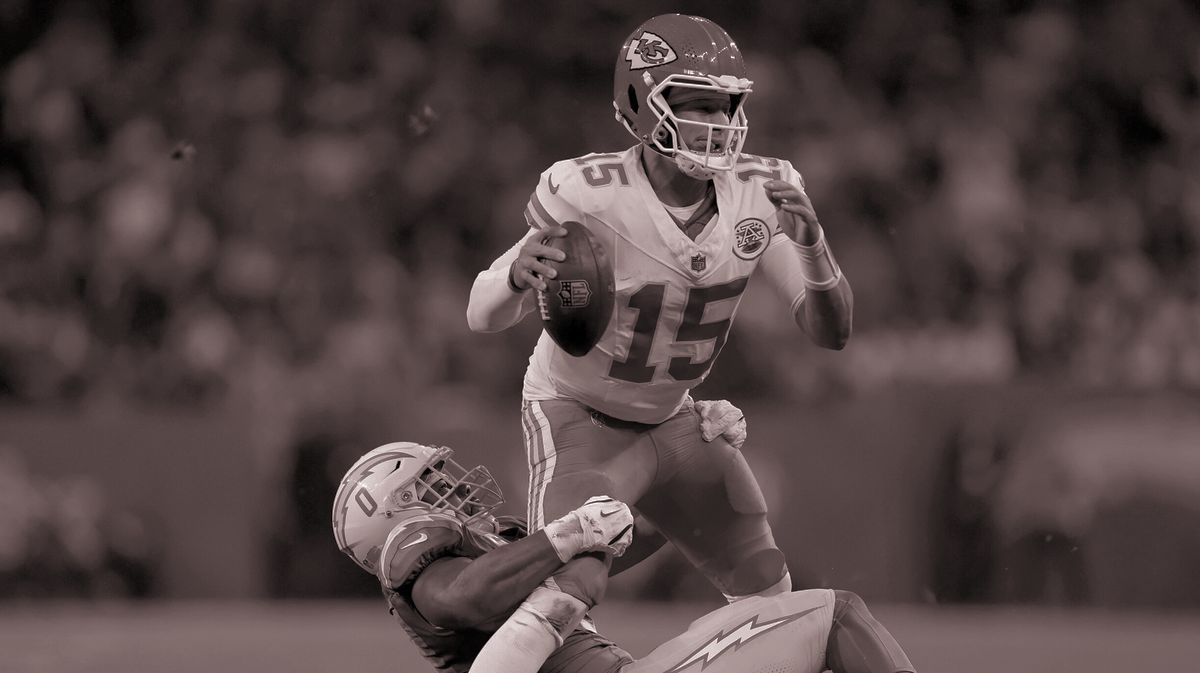
Around 17.3 million global viewers watched YouTube’s first-ever NFL game last Friday, which pitted
Patrick Mahomes’s Chiefs against Justin Herbert’s Chargers in São Paulo—including thousands of broadcasters, media analysts, and media buyers all desperate for a tangible omen about the future of sports media. And yet, despite loads of audience data, none of the game’s viewership numbers brought us any closer to answering the existential questions about the trajectory of sports viewership—and YouTube’s role in that ecosystem, in
particular.
Viewership for YouTube’s inaugural game was up 14 percent in the U.S. over last year’s Brazil game on Peacock, but far under the combined audience for the NFL season opener the night before on NBC (23.4 million viewers) and Peacock (4.9 million viewers). YouTube’s audience would have ranked among the top 30 broadcasts of 2024, as measured by Nielsen, but still fell far short of expectations for a free game available on an easy-to-access platform. (Austin Karp
at Sports Business Journal had predicted 20 million viewers, for instance.)
Does that make YouTube’s broadcast a flop? Even that’s not as clear as legacy media insiders had hoped, and the questions start with the numbers themselves. To measure the game’s viewership, Nielsen created a custom methodology whose results only YouTube can access, sparking predictable outrage from rivals and competitors. On X, Fox Sports’s Michael Mulvihill called this
“a flagrant departure from Nielsen’s history of transparency and a slap in the face to longstanding clients,” while ESPN’s Flora Kelly said Nielsen’s new system “is not a fair comparison” with linear audience measurements. |
|
|
A MESSAGE FROM OUR SPONSOR |
Greatness isn't achieved in an instant. It's tested until there is no question — only performance. |
|
|
I understand their frustration, but of course it’s not a fair comparison. YouTube can’t be fairly
measured against broadcast or cable networks, and that’s precisely why Roger Goodell & Co. want to experiment. The NFL already dominates sports culture and American viewing habits, so the important number here is not the 17.3 million viewers, but how many new viewers were among that 17.3 million. Just because a platform creates more opportunities to catch a game doesn’t mean it will also create new audiences. That’s something the leagues and
media players will have to contend with in the years ahead. |
Traditionally, there are only two numbers that matter for a standard NFL broadcast: the average
minute audience and the average viewer age. Friday’s game had an average minute audience of 16.2 million in the United States, with an additional 1.1 million globally. That’s roughly in line with the average viewership for a regular season NFL game last year: 17.5 million, which was down 2.2 percent year over year. In terms of demographics, last year, the average age of an NFL viewer was around 56. Forty percent of YouTube’s U.S. audience is between 30 and 49, per Nielsen, and 24 percent is
under 18.
Did YouTube’s young audience show up for the NFL? We don’t know. Neither YouTube nor Nielsen is breaking out that number, a fact that has further aggravated executives from other NFL media partners. But based on YouTube’s average age demographic, it’s likely that the game’s audience was at least slightly younger than a typical NFL broadcast’s.
But there’s a third metric to consider, and it’s one that Goodell is certainly weighing heavily as he tries to grow the
NFL’s international revenue: YouTube’s total non-U.S. audience for the game was 1.1 million, a disappointment given the inherent potential of a borderless, easily accessible sports destination. That number is well below Netflix’s two Christmas NFL games last year, which had an overseas audience of about 3.5 million.
Sure, this is far from an apples-to-apples comparison. Netflix’s games aired at 1 p.m. ET and 4:30 p.m. ET—or 6 p.m. and 9:30 p.m. in the United Kingdom, one of the biggest
foreign markets for the NFL, on a global holiday. Netflix also had Beyoncé, driving the Ravens-Texans matchup to over 27 million viewers at its peak. Meanwhile, YouTube’s game kicked off at 8 p.m. ET on a Friday, which is 1 a.m. for audiences in the United Kingdom. And despite the Mahomes and Kelce of it all, no one even cares about the Chargers in L.A.
On some level, YouTube’s goals were more modest: to prove that it could handle a regular season game in
a new format—giving creators the ability to turn a typical NFL broadcast into a more intimate experience for their own audiences—without impeding fans who just wanted to watch the game. Even if their numbers underwhelmed, YouTube showed it could draw roughly the same number of viewers as a standard broadcast or Prime Video game, while providing enough variation on a traditional broadcast to make it feel unique for younger audiences.
More importantly, however, YouTube proved to advertisers
that it could reach the same sized audience (and likely a larger one if it wasn’t a Friday game) and carry that attention to other channels that already make YouTube appealing to advertisers. Connected TV ad spending is projected to hit $33.3 billion this year, with annual double-digit growth projected into 2028, per eMarketer. YouTube is expected to net just under 12 percent of that ad revenue in 2026, or around $3.96 billion. That’s higher than Amazon Prime Video and Disney, at around
10 percent each.
But the global audience, the demographics, and the ad sales are still only part of the YouTube story. The rest depends on whether YouTube’s vast network of creators can help to mint new NFL viewers while also deepening existing fans’ connection to the game. They need to meet fans where they want to watch, and with the people they want to watch with. And that’s where YouTube’s real strength lies. |
YouTube’s number one advantage over broadcasters is its more than 69 million reported creators, each with
their own dedicated fan base. YouTube’s experimental “Watch With” program is predicated on the notion that those fans will want to watch a game with their favorite creators.
So did that happen on Friday? YouTube declined to share average stream numbers from the creators who participated in the Watch With program, but we have a smattering of insights from the creators themselves. Tom Grossi, an NFL-focused streamer with nearly 1 million subscribers, noted that his
NFL Watch With stream attracted more than 1.4 million viewers, a personal record. Portuguese-speaking CazeTV, one of the first YouTubers to participate in the Watch With program, amassed more than 9 million views during the past couple of days, but that’s at the higher end of the spectrum and includes replay viewing.
However, we still don’t know whether these individual creators brought in new audiences—although I’m sure those numbers will be
broken out internally soon if not already. As one media executive I spoke to over the weekend said, “It’s a real collision between the NFL as the last monoculture force and YouTube audiences. Weird YouTube niche audiences make zero sense in this context.” And yet part of YouTube’s promise is that it can have it both ways—amplifying the traditional format while simultaneously offering an exponent of variations for audiences who want an alternative, more individualized layer with their football.
YouTube doesn’t necessarily need to create new domestic NFL fans, but it may need to give those fans more options to experience it differently. As Netflix and Prime Video executives discovered, people who like football will go to whatever platform has the rights. Those who don’t care about the sport aren’t going to suddenly start engaging just because their favorite creator is livestreaming a game—something Amazon discovered while trying unsuccessfully to bring the NFL to its top Twitch creators
via a co-watching feature, which the company disabled not long after its introduction.
Instead, the goal is to make even the NFL feel like another part of a YouTube user’s self-curated YouTube diet. The company’s true secret weapon, which remains clear as ever after this Friday game, is that it can be hyper-tailored for each individual person. It’s an algorithm Ted Sarandos and Bob Iger can only dream of having one day. |
Thanks, Julia. See you all on Thursday,
John |
|
|
Puck sports correspondent John Ourand and a rotating cast of industry insiders take you inside the executive suites and owners boxes where
the decisions that shape the entire sports business are made. You’ll hear interviews with players, network execs, and everyone in between. The Varsity is an extension of John’s private email for Puck by the same name. New episodes publish every Wednesday and Sunday. |
|
|
Ace media reporter Dylan Byers brings readers into the C-suite as he chronicles the biggest stories in the industry: the future of cable
news in the streaming era, the transformation of legacy publishers, the tech giants remaking the market, and all the egos involved. |
|
|
Need help? Review our FAQ page or contact us for assistance. For brand partnerships, email ads@puck.news. You received this email because you signed up to receive emails from Puck, or as part of your Puck account associated with {{customer.email}}. To stop receiving this newsletter and/or manage all your email preferences, click here. |
Puck is published by Heat Media LLC. 107 Greenwich St, New York, NY 10006 |
|
|
|