Welcome back to The Varsity. I’m John Ourand, still bleary-eyed from
watching Bill Belichick’s humbling first game shellacking—all the way from the promising start to the final whistle, with all the attendant cutaways to Randy Moss and Jordon. Yes, Hulu’s behind-the-scenes docuseries on UNC football is still on… at least for now. But will ESPN have to reconsider its Deion-esque full-blown Chapel Bill programming strategy if this becomes a nightmare? The Heels have a few cupcakes before
games against UCF and Clemson.
George Raveling, a sports business hall of famer, died yesterday at the age of 88. A Mike Tollin–directed documentary on Raveling premiered just a month ago at the Martha’s Vineyard African American Film Festival, featuring Charles Barkley as an executive producer and Marlon Wayans as the narrator. (Wayans portrayed Raveling in the film Air.) Legend has it that Raveling, once a
coach for the 1984 U.S. Olympic basketball team, persuaded Michael Jordan to sign with Nike even before he started as director of global sports marketing.
Below, Julia Alexander sits down with one of the smartest minds in the sports rights marketplace: William Mao, the senior vice president of global media rights at Octagon, the global marketing and consulting firm. Naturally, my ears perked up when Julia asked
him whether YouTube would ever be in the running to carry the Super Bowl, given that Mao was YouTube’s former manager of sports content partnerships.
Remember, Julia’s stories are only available to Puck’s Inner Circle members, so click here to upgrade.
Take it away, Julia… |
Stat of the Week: 3.5 million
|
A record-breaking average 3.5 million people tuned in to College GameDay for the emotional
farewell to legendary anchor Lee Corso, making it the most watched episode ever. Not gonna lie: Seeing him put on his signature cartoonishly giant headgear to announce his pick ahead of the Ohio State–Texas game even got to my cold heart. In a remarkable tribute, Ohio State’s marching band formed the words “Corso” on the field in front of a sold-out stadium, packed with more than 100,000 people.
The groundswell of support for Corso, and the love for him across the nation,
is yet another reminder that sports now dominate what remains of the monoculture. Oh, it really is the most wonderful time of the year… for everyone except Belichick this week. Welcome back, college football. (Geaux Tigers!) |
- Dave Portnoy’s WWE energy: The anticipated battle between Dave Portnoy and Pat McAfee’s teams over the last week makes more sense if you look at these college football personalities as WWE characters. Like many of you, I tuned in to watch Portnoy’s first appearance on Fox’s Big Noon Kickoff ahead of the Buckeyes-Longhorns game (we will not be getting into Arch Manning’s less-than-great season debut
here). And boy, did Portnoy deliver, walking out onto the stage, yelling at Ohio State students, singing Hail to the Victors, wearing a “*Still Can’t Beat Michigan” t-shirt, and playing the classic heel in a standard WWE Raw arc. Ah, now I get what Fox and ESPN were going for with their creators strategy.
We’re witnessing the Bravoification of culture, which has spread across government, businesses, and institutions as attention becomes more difficult to
capture. The only real thing that captivates a generation that has never known a world without reality TV is drama, and Portnoy understands this better than just about anyone. He’s Trumpian in his approach to dominating headlines and giving his fans (and haters) exactly what they tune in for. He’s turning Big Noon Kickoff into appointment TV—although without ratings at the time of publishing, we don’t know how much of an appointment it is just yet. Still, I can’t wait
to see what manufactured drama he kicks up next. - Nielsen’s upcoming ratings story: There’s a major change coming to the way Nielsen reports live sports viewership that will make NFL, NBA, NHL, and college football appear even bigger this fall and winter. Nielsen’s new “Big Data” methodology will incorporate viewership from some on-platform streaming, rather than just relying on the traditional panel system. As SBJ has pointed out, this
could mean an increase from 5 to 8 percent on average for NFL games, and even north of 10 percent for larger events. (The NFL has argued that Nielsen’s new measurement system, while an improvement, may still undercut true viewership.)
Now, this doesn’t necessarily mean more people are watching, but rather that the tracking measurement has become more accurate than ever. Either way, brace yourselves for an avalanche of ratings stories out of NBCUniversal next
February. After all, NBC and Peacock have the Winter Olympics, the NBA All-Star Game, and Super Bowl LX all in the same month. - Sports rights spending crosses $30 billion: With each new deal, sports rights get more and more expensive: The NBA scored a $77 billion deal last year; UFC landed a $7 billion package from David Ellison’s Paramount Skydance; and DAZN paid $1 billion for the FIFA Club World Cup. And, of
course, MLB rights negotiations are underway. Now, a new report from Ampere Analysis has a number on just how expensive those rights have become: a total of $30.5 billion spent on rights in the U.S. as of this year, up 122 percent from 2015, when that number sat at $13.8 billion.
Per Ampere, the equation is relatively simple. As
the TV markets slow in the U.S., sports become more essential to customer acquisition, lowering customer churn and increasing engagement at a time when advertisers are moving their dollars away from linear spend to digital—everything we already knew, of course, but now pithily captured with data-specific support.
It’s fascinating to juxtapose this dynamic with startlingly different market conditions abroad. TV revenue has outpaced sports rights acquisition fees over the last six years
across five major European markets: the U.K., Spain, France, Germany, and Italy. In the U.S., sports rights increased at five times the rate of TV’s growth. If you ask most people sitting in finance departments, that’s a problem. If TV viewing becomes stagnant, or drops, at the same time that sports rights increase, the success rate of those rights acquisitions gets lower and lower.
|
And now on to the main event… |
|
|
Nothing produces more sports media agita than YouTube, whose sports
endgame remains a mystery. But former YouTuber turned Octagon executive William Mao has some ideas about what might be coming next. |
|
|
With each new deal, YouTube’s role in sports media is becoming ever more firmly established—from
the $2 billion it’s paying each year for Sunday Ticket to C.E.O. Neal Mohan’s recent decision to spend a pretty penny on this week’s Friday night game between the Chiefs and the Chargers. (Although financials weren’t disclosed, Peacock paid $105 million for the same game.) The company’s maneuver to poach Justin Connolly from Disney, despite some minor legal love taps on both sides, also suggests that it views sports as a core ingredient in its attempt to create
a TV-oriented service. And, of course, YouTube has unique levers at its disposal, like tapping creators iShowSpeed and Roberto Morales to provide alternate simulcasts of the Chiefs-Chargers game to their combined 50 million subscribers.
But YouTube’s ultimate sports ambitions remain a giant question mark. Outside of the 10-figure NFL deal, Mohan has been reluctant to bid on the NBA, and YouTube has demonstrated indifference about the MLB. (YouTube doesn’t
really have the same incentives as competitors, since the business has essentially gotten its milk for free without making any livestock purchases.) And yet, YouTube’s growing ubiquity, three-dimensional understanding of its data, and endless coffers have put fear in the hearts of the rest of the industry. Unlike everyone else, it doesn’t need live rights… and yet it still clearly covets them.
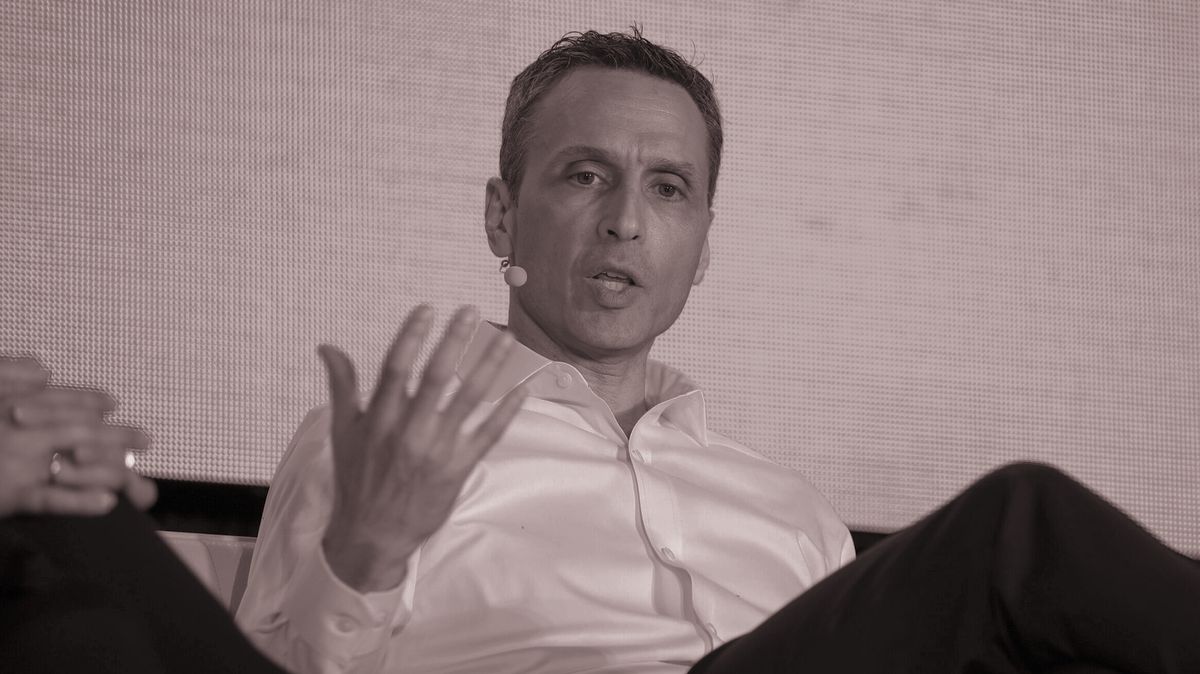
I recently sat down with William Mao, a senior vice president of
global media rights at Octagon, the marketing consultancy, and a former YouTube employee who worked on the league partnership side back when that meant trying to get leagues to start even using YouTube. We got into what YouTube really wants out of these deals, the potential for smaller leagues to use YouTube as their own streaming service for fans, and more. Below is a condensed version of that conversation. |
Julia Alexander: Just to properly set up your
expertise, walk me through your team at Octagon’s day-to-day as a consultancy.
William Mao: We primarily work with rights-holders, but also platforms. From a rights-holder’s perspective, it’s the traditional questions from clients: They have rights available in a market, or coming up for availability in a market, and they want to understand what’s going on. On the flip side, if a platform is launching in a
market, and executives may not have as much familiarity with sports rights in that particular market, they may look to us to help them get smarter about what’s going on—where they can identify points of leverage and value, and create a unique proposition to then acquire a portfolio of rights.
Having worked on sports partnerships at YouTube before it really got into the TV business, how are you thinking about rights
today?
Well, firstly, there’s always another big deal right around the corner. The Premier League is right around the corner; the Big Ten comes back around again; and the WSL is coming up. But there’s always a league that operators want to get ahead of. Take rugby, particularly with the Rugby World Cup, coming to the U.S. at the end of the decade. That’s a sport that can have huge upswing momentum in the U.S. Ilona Maher was the
star of the Paris Olympics last year, and that momentum has continued over into the current calendar year. Having the World Cup here, similar to next year’s men’s and women’s FIFA World Cup, could be a great opportunity for someone looking to build on that audience development.
If you’re a league commissioner, you may think: YouTube would help with advertising and discovery, and give us features, like community building tools, that we may not have the bandwidth to create. Do you
think that’s an option down the line, as more people watch sports on YouTube?
That line of thinking has some great logic to it. Especially if the proposition of sports, in general, becomes not only presence, but also prioritization for a platform that big. A recent analogue example of this strategy is ESPN’s new unlimited app. The analogy, in my mind, is instead of spinning up my own direct-to-consumer app as a league, does it make sense for me
to make more of my content available via ESPN’s digital-first offering, and potentially expand upon that relationship with a partnership on the linear side in some capacity?
Something like MLB.TV and ESPN’s rumored deal.
From a discoverability perspective, I think that type of logic would fit within ESPN’s strategy, and would also potentially fit the example you gave with YouTube. |
YouTube’s incentives for buying rights isn’t as clear as a company like ESPN. Take what’s
happening with the Bundesliga, whose games will air on YouTube for free on Fridays, without YouTube having to go big with any kind of bid. Do you think YouTube will bid on more leagues?
When I was at YouTube, we were talking to the leagues simply about leveraging our platform more. They’ve come a long way. I always think about YouTube from the viewpoint of the necessity and the alternatives. Does YouTube need a certain set of rights in the same
way a cable sports network does? And how could the sports partnership benefit the broader business—in YouTube’s case, and Google/Alphabet more broadly? YouTube has had a focus on the “lean-back” experience, even when I was with the company. The fact that YouTube already commands the largest share of TV consumption in the U.S. also suggests the platform may not need to increase its bidding on live sports to be successful in getting users to watch on TVs.
YouTube is pushing a “Watch
With” feature during this NFL game, which involves creators bringing these big, mainstream events to their smaller audiences. Do you expect we’ll see more of those moments on the platform?
YouTube is focused on getting people into the app to engage with their programming—and that means creators. YouTube, the platform, could go strike a deal with the league, as we’ve seen with the NFL. Looking at the Bundesliga example, the leagues may think
there’s a creator, or someone who’s backing a network of creators, who may want to acquire a set of rights that they can then put their own flavor on. There are groups out there, like the Creators Sports Network, that are doing exactly what you’re talking about. Sports leagues want to target these younger fans, and get ahead of their future fans. So it could be a platform doing the deal directly, or
it could be creators and major networks on those platforms striking those deals to deliver and deploy across the YouTube platform.
Is there a world where YouTube is the exclusive home to the Super Bowl, even in the U.S.?
This question about YouTube going for big events has been kicked around for years. During my time at YouTube, a decade ago, we were asking questions about whether we could have the Super Bowl in international
markets, because those rights were obviously locked up in the linear market in the U.S. Richard Deitsch of The Athletic asked me whether the World Series would no longer be on linear television [one day] and move to something like YouTube, and I think we might be cresting closer to that, simply based on the increasing number of marquee events making their way to platforms in the digital space. It’s more of an economic question.
For YouTube or the
leagues?
No one would argue that YouTube isn’t super accessible to everyone in the market. No one would express concerns around the foundational technology or product. It’s about the expected audience for the leagues, which will ask themselves: What am I currently getting compensated for these rights? How will this impact the spend around advertising and sponsorships? How do the new revenue economics compare to how I’m currently distributing
and delivering them?
Sports leagues want to target these younger fans and ensure they’re where their future fans are going to be. And maybe there’s a sponsor or brand that wants to get behind this whole idea, and can brand the whole exercise. That’s how the commercial model works, and that’s the revenue-generating part of the deal that underpins what would traditionally be considered a rights fee. That’s how the whole new equation could evolve. |
Thanks, Julia. See you all on Thursday.
John |
|
|
Puck sports correspondent John Ourand and a rotating cast of industry insiders take you inside the executive suites
and owners boxes where the decisions that shape the entire sports business are made. You’ll hear interviews with players, network execs, and everyone in between. The Varsity is an extension of John’s private email for Puck by the same name. New episodes publish every Wednesday and Sunday. |
|
|
Ace media reporter Dylan Byers brings readers into the C-suite as he chronicles the biggest stories in the industry:
the future of cable news in the streaming era, the transformation of legacy publishers, the tech giants remaking the market, and all the egos involved. |
|
|
Need help? Review our FAQ page or contact us for assistance. For brand partnerships, email ads@puck.news. You received this email because you signed up to receive emails from Puck, or as part of your Puck account associated with {{customer.email}}. To stop receiving this newsletter and/or manage all your email preferences, click here. |
Puck is published by Heat Media LLC. 107 Greenwich St, New York, NY 10006 |
|
|
|