 |
 |
|
Hello, and welcome back to The Best and the Brightest. Julia Ioffe here, popping in real quick from my book leave—who wants to hear about Soviet pro-natalist policies? yeah!—to say hi and because it felt important to write to you now as Secretary Antony Blinken bounces from Beijing to London, trying to wrangle two of America’s gnarliest foreign policy issues: China and the war in Ukraine.
Blinken arrived in Beijing over the weekend, five months after his original meeting with Xi Jinping was canceled when China’s spy balloon decided to make figure-eights over some very sensitive parts of the continental U.S. and domestic politics in Washington made such a visit absolutely radioactive. Ever since, the State Department and White House have been working with the People’s Republic of China on cashing that raincheck.
It was a 35-minute, carefully staged meeting, but Blinken emerged to say a few important things. First, he said that Xi had reaffirmed that China has not and would not, send lethal weapons to Russia, an assurance that, Blinken said, was “not new.” “We appreciate that, and we have not seen any evidence that contradicts that,” Blinken said. He also said that the U.S. does not want Taiwan’s independence, a claim which I’m sure will provide plenty of red meat to Joe Biden’s opponents back home. And, contrary to Beijing’s assertions, he said that Washington isn’t trying to contain China or to “decouple” its economy from America’s. “The phrase of the day,” he said, is “‘de-risk, not decouple.’”
Regardless of the truth of this claim, it was interesting that Blinken used it and to whom he attributed it: European Commission President Ursula von der Leyen. This is important, because it underscores the centrality of Brussels to the Beijing-Washington rivalry. The Biden administration has spent a tremendous amount of energy trying to peel Europe off from China, to convince the old continent that China’s interests in it aren’t purely economic, and that European countries risk ceding strategically vital assets and with it, political sovereignty in exchange for short-term gain. In invading Ukraine and securing Beijing’s support, Putin did more for that lobbying effort than Biden ever could. Still, the presidents of France and Spain have made sojourns to Beijing during the last few months and Europe has been hesitant to fully cut ties. As the famous Russia scholar Stephen Kotkin has said, the U.S.-China relationship runs through the trans-Atlantic alliance. It is also why, as I wrote, Xi made a call to Volodymyr Zelensky: in the hopes of appeasing Europeans.
Furthermore, much of the rest of the world, especially the Global South (though I hate that term), doesn’t want to put all their eggs in one Chinese or American basket. They also don’t want to get stuck in the middle of a war between the two economic powerhouses. Blinken seems to be fully aware that this geopolitical saga isn’t playing out in a vacuum, and that the rest of the world needs Beijing and Washington to do a little less beefing.
|
|
|
| OK, that’s all from me, for now. I’ll be back from book leave and writing to you regularly once again beginning in two weeks. Until then, I’ll leave you in the capable hands of The Stratosphere writer Teddy Schleifer, who’s got a fascinating update on what in the world is happening with Pierre Omidyar, the billionaire eBay founder and Intercept funder who appears to be taking a step back from politics, for now.
But first… |
| The Capitol Hill Cafeteria Report |
|
| An utterly indispensable, high-minded, and, yes, occasionally dishy readout of what our lawmakers are really legislating behind closed doors.
By Abby Livingston
- Relief in the Minority: It’s never easy to give up the gavel. But several House Democratic members, aides and lobbyists have told me over the last week that this has been one of their easier transitions out of power. Because Democrats control the Senate and the presidency, there was little fear at the outset that Republicans would be able to move major conservative policies into law. Instead, the real House Republican threat has been their subpoena power, which can be leveled at, well, almost anyone. Most specifically, majority power gave the Republican-controlled Oversight committee almost carte blanche to investigate the Biden administration.
But multiple Democrats say there’s been a collective sigh of relief over how little Republicans have managed to accomplish with their investigations, at least so far. That will be tested again this week: Republicans spent the last few days touting planned hearings with special prosecutor John Durham, who investigated the origins of the F.B.I.’s probe into Russian interference into the 2016 election. His report, released last month, criticized the F.B.I but mostly underwhelmed the political class.
- Hunter Off the Hook?: But just because Democrats are relieved, that doesn’t mean they find these probes to be pleasant. Sure, Hunter Biden’s criminal legal problems appeared to be winding down Tuesday, upon the news that he’d struck a deal with federal prosecutors to plead guilty to two misdemeanor tax charges. A judge must approve the deal, but Biden is likely to escape incarceration.
Of course, congressional probes into the president’s son will continue over at the Oversight Committee, where chairman James Comer called the plea deal “a slap on the wrist” and pledged not to rest “until the full extent of President Biden’s involvement in the family’s schemes are revealed.”
Democrats I’ve spoken to recently don’t seem to think Hunter Biden presents an existential threat to his father’s presidency. But there is an undeniable squeamishness when it comes to defending an endless accounting of Biden’s self-destructive behaviors. These comments are delivered in the tones of voices I’ve only heard from older Democrats when they reflect on the slog that was the Clinton-Lewinsky scandal.
- McCarthy’s Miscalculation: Meanwhile, one congressional investigation that’s over-delivered on its promise is last year’s mostly-Democratic House investigation into the Jan. 6 insurrection, according to a blockbuster Washington Post report over the holiday weekend. Apparently, the committee so effectively made its case to the public that it essentially shamed a reluctant Justice Department to push forward on criminally investigating Trump’s involvement.
Indeed, Kevin McCarthy’s handling of the Jan. 6 committee may prove to have been one of his greatest miscalculations. When then-Speaker Nancy Pelosi removed two McCarthy-appointed Republicans—Jim Banks and Jim Jordan—from the committee, McCarthy responded by pulling all of his loyalists, aiming to give the committee a partisan stench. Instead, G.O.P. heretics Liz Cheney and Adam Kinzinger signed on, giving it a bipartisan sheen. McCarthy’s lieutenants were locked out and unable to kick sand into the committee’s gears, allowing for a series of smooth and disciplined presentations that made for rare must-see summer television programming.
|
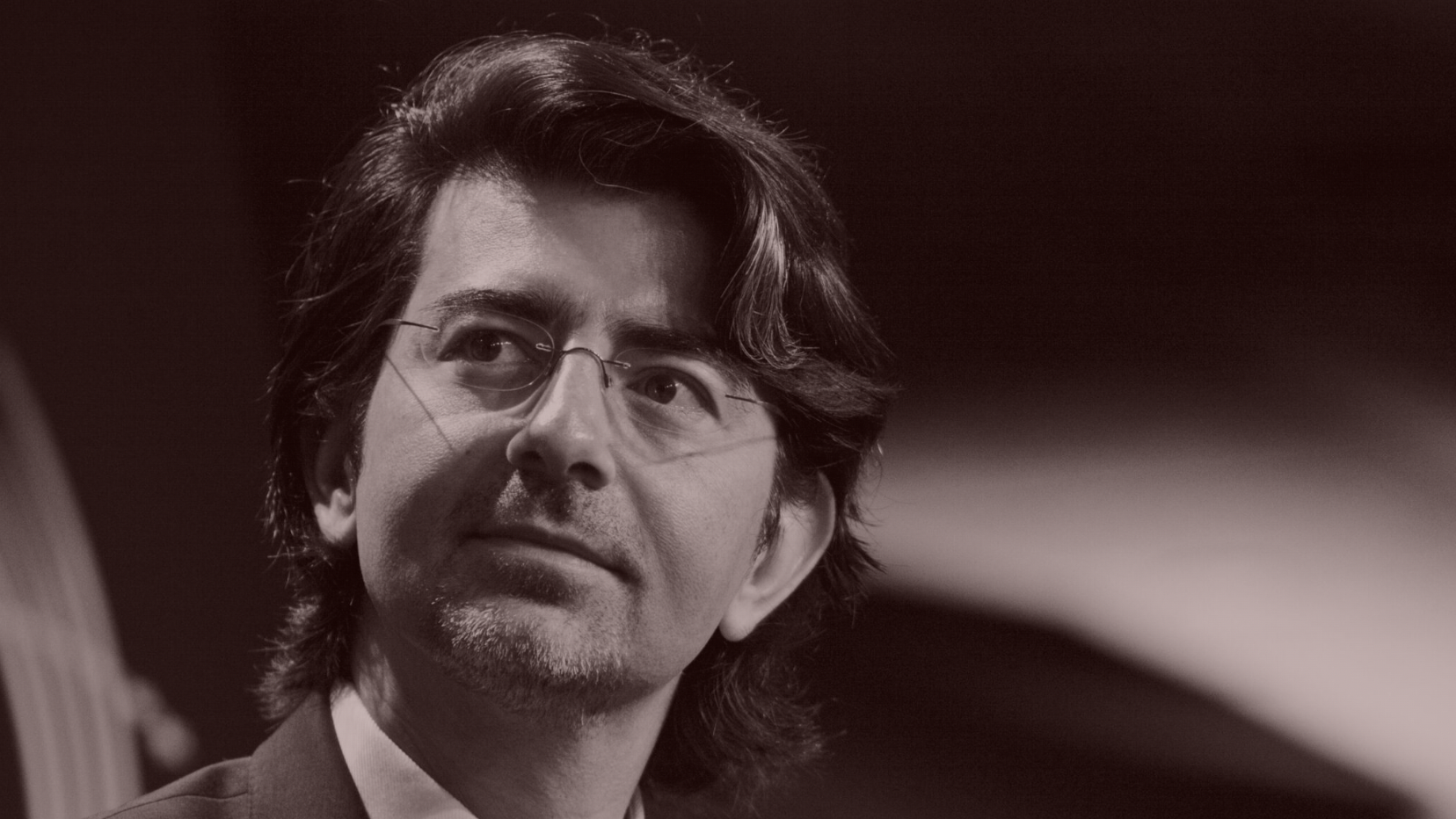 |
| Has Anyone Seen Pierre Omidyar? |
| The reclusive and peripatetic billionaire philanthropist appears to be changing gears once again, with plans to seemingly scale back his political and philanthropic work. The fallout could be significant. |
|
|
|
| It’s something of an inside joke in philanthropy circles that eBay founder Pierre Omidyar, every few years, seems to go through some sort of half-baked pseudo-philosophical reassessment of his priorities and role in the world. He’ll spin out a new organization or two in a restructuring, or decide to go after Mark Zuckerberg and bankroll a Facebook whistleblower, or even just delete his Twitter account—seemingly impulsive decisions usually dressed up in some bullshit-laden, cringeworthy, MBA-strategy gobbledygook about the complex challenges of the world and the systemic changes needed to fix them.
Now, I’m told, the more-reclusive-than-ever multi-billionaire is making another major pivot. Omidyar, who is primarily holed up these days in New Zealand, has recently been sending word to the network of organizations that depend on his support that he is planning to scale back his political and philanthropic giving, perhaps dramatically. The network of organizations, part of a constellation called The Omidyar Group, have received almost all of their funding to date from Pierre and his wife, Pam. Without their largesse, these nonprofit and for-profit companies, each of which have received hundreds of millions of dollars from the Omidyars over the last decade or two, will possibly be forced to scramble to find alternate funding to remain operational. “The folks I have heard from in several of the orgs are worried, some freaked,” said one person close with leaders at multiple Omidyar groups. |
|
A MESSAGE FROM OUR SPONSOR
|
| |
 |
Connection does more than bring people together – it opens a world of possibilities. AT&T has invested more than $100 billion in American infrastructure from 2018 to 2022, including U.S. capital investment and acquisitions of wireless spectrum, to connect Americans to a brighter future. AT&T is working to expand high-speed fiber access, enhance 5G connectivity and strengthen communications for first responders.
Learn more about how AT&T is expanding broadband access and investing in America’s future. |
|
|
| The fallout could be a major storyline over the next year. Asked for comment, an Omidyar spokesperson first downplayed the conversations as merely preliminary. But the following day, in a rare, unsigned blog post—the Omidayars’ first substantive post since April 2021—the organization all but confirmed, in the typical Omidyarian word-salad style, that they “are now shifting into even deeper modes of collaboration and diversifying support of our work.” Describing the pivot as “a necessary step in our evolution,” the statement went on to say that “collaboration can take many forms” and that some Omidyar teams will indeed need to partner with new funders to continue their work. “For others, collaboration may be more heavily rooted in advocacy campaigns in coalition with trusted partners, community members, and activists,” the message continued. “There are many other models we are exploring and dynamic learning conversations around this approach are underway. This exploration will take time.” |
|
|
| One of my first stories at Puck, in the summer of 2021, was about a very different spin of the bottle by Pierre and his brain trust. Once a proud neoliberal and “social entrepreneurship” pioneer who Bill Clinton called “the new face of philanthropy,” Omidyar went through a dramatic transformation during the Obama years, turning deeply anti-war and anti-drone, and deeply suspicious of the bipartisan waters he’d been swimming in since making his e-commerce fortune.
In 2014, he launched a combustible anti-establishment partnership with Glenn Greenwald at The Intercept. Over the following years, one of his flagship political organizations—the Omidyar Network—would become much more avowedly wonky and leftist, spending millions of dollars to successfully amplify the emerging anti-Big Tech backlash. (Omidyar himself also got much more comfortable with dark-money political contributions, although they weren’t really dark because, admirably, he decided to voluntarily disclose his gifts to 501(c)4 groups each year, detailing $106 million in contributions from 2019 to 2022.)
Throughout it all, of course, Pierre was an active strategist behind his groups’ political activities, in addition to its financial principal. His name was literally on the door. The ten organizations that today are part of the Omidyar Group are backed exclusively by Pierre and his wife, each of whom are also the board chairs of several of the groups. Indeed, the Omidyars have donated more than $4 billion to these organizations over the last thirty years. Which is why this latest strategy shift has so many tongues wagging around Silicon Valley.
Early, quiet signs of a pullback were there if you knew where to look. Some Omidyar-backed projects in recent years have been leaning on co-funders more, I hear. And over the last year, several groups within the Omidyar portfolio added new board members, for the first time, with no ties to the Omidyar family, potentially laying the groundwork for new sources of funding to enter the picture, with an appropriate governance structure to manage it. In February, the Omidyar Network added three new members to its Omidyar Group-only board; in April, Humanity United named two new members, after including only Omidyar Group aides until that point; the Democracy Fund did the same thing in April, adding three to the veritable Pierre-fest that was the prior board.
And then just last Wednesday, for instance, Luminate—a foundation previously backed with $155 million from a Pierre Omidyar trust—added three new members to its board, which was previously just Luminate’s C.E.O. and two of Pierre’s inner circle members at the Omidyar Group, Pat Christen and Jeff Alvord. Needless to say, the fact that Luminate’s only source of funding is suddenly at risk was not mentioned in the press release.
Officially, The Omidyar Group says that Pierre and Pam’s commitment to their organizations aren’t changing. “The Omidyars are deeply committed to the TOG organizations, the teams, and their work—their resolve has not changed,” said their nameless aides. I guess we’ll have to see. But overall, the upshot doesn’t look good for Omidyar’s grantees. It was only two years ago that First Look Institute, the Omidyar nonprofit behind The Intercept, added a chief philanthropy officer to raise more money from other donors and work on subscriptions; in January, First Look announced that it was spinning out The Intercept, its flagship publication, as part of a restructuring that involved the site turning to outside funding.
And then there is Omidyar himself. I don’t know all the specifics as to why he is further retrenching from his political and philanthropic activities—Omidyar, with approximately $10 billion in assets, isn’t low on money. But from everything I hear, the French-born Buddhist has become much more reclusive. After making his fortune with eBay, Omidyar drifted between estates in the Las Vegas area and Hawaii. More recently, however, Omidyar has been spending his time even further afield in the Pacific—I hear he and Pam are mostly in New Zealand these days, a notoriously difficult country for foreigners to claim residency. A New Zealand publication reported in late 2021 that Omidyar “is understood to be keen to stay in NZ to learn more about the country” after helping to set up a climate lab there. (One of the Omidyar kids lives there too, I’m told.) An ocean away from Silicon Valley, he appears to be in his Howard Hughes era, withdrawing from the world. |
|
|
|
|
| I’ve been around philanthropy long enough to know that the dream of getting other funders to back your own priorities is part of the billionaire circle of life. Last year, for instance, I broke the news that Tom Steyer would be backing away from his investments in political organizing, adding outside board members and seeking new funding for NextGen America. Sometimes it works, sometimes it doesn’t. But it’s not unusual, maybe even inevitable, for the UHNWI set to lose interest, or delegate the work, or bring in new financing from outside backers, especially as the landscape changes from one crisis to another.
That’s not to say the Omidyar groups are doomed. Donors sometimes feel organizations only really develop when they are more sustainable. But change is coming. The Democracy Fund, for instance, Pierre’s democracy-reform nonprofit, has taken in $400 million from Omidyar’s family office over the last decade, and its affiliated 501(c)4 has received at least another $60 million from him. Omidyar also put $200 million or so into First Look Media, $200 million into Imaginable Futures, and $450 million into Humanity United, according to my reading of tax filings. That’s a lot of cash to replace with other donors, particularly on a short time frame. Some downsizing may be inevitable.
This is, of course, the problem inherent to entities solely funded by one billionaire or another. As anyone who worked for Sam Bankman-Fried can tell you: You live by the billionaire, you die by the billionaire. A stroke of a check—hell, a podcast episode that catches the eye of one of the world’s wealthiest people—can uncork millions of dollars and headcount for their passion project. But when the benefactor’s gaze shifts to new horizons, or when they just want to enjoy their mega-yacht, there are real people who have to manage the consequences. |
|
|
|
| FOUR STORIES WE’RE TALKING ABOUT |
|
|
|

|
 |
|
|
|
Need help? Review our FAQs
page or contact
us for assistance. For brand partnerships, email ads@puck.news.
|
|
You received this email because you signed up to receive emails from Puck, or as part of your Puck account associated with . To stop receiving this newsletter and/or manage all your email preferences, click here.
|
|
Puck is published by Heat Media LLC. 227 W 17th St New York, NY 10011.
|
|
|
|