{{ 'now' | timezone: 'America/New_York' | date: '%b %d, %Y' }} |
|
|
|
Welcome back to The Varsity, where, yes, it feels like we’re in the middle of the NFL
season—even though we’re supposed to be nearing the climax of the NBA and NHL playoffs.
Pod alert: Jerry Silbowitz, UTA’s co-head of sports media, rejoins the Varsity podcast this weekend to break down the latest trends for on-air talent and how the creator economy is affecting the sports business. Also, I received a tremendous amount of positive feedback about yesterday’s episode: SC Holdings co-founder and managing partner
Jason Stein offered his view of the sports business through a P.E. lens. We’re only in the earliest stages of the full-blown professionalization of amateur sports, from the NCAA downward. For those interested, Jon Kelly is prepared to negotiate N.I.L. deals for the 12U Montclair Bulldogs travel baseball team. Anyway, listen here and
here.
Speaking of the pod, we’re starting to develop some real-life karma—the opposite of the Madden curse. Less than two months after his first appearance on The Varsity, ESPN promoted Mike
Foss to replace Dave Roberts as executive vice president and executive editor of sports news and entertainment. Yes, I take full credit.
In today’s private email, available exclusively to Inner Circle members, I survey the scenes at Fox and NBC, with less than a month to go before the first World Cup on North American soil in more than 30 years. Yes, the headlines have been bad, and FIFA has a habit of stepping on every rake on the pitch. But everyone connected
to the sport is still bullish on the power of the games to transcend all that—and make a ton of money. Upgrade to the Inner Circle here if you haven’t already. (And email Fritz@puck.news if you encounter any issues in the process.)
Also mentioned in this issue: Gianni Infantino,
Mike Davis, Lane Kiffin, Andrew Giuliani, Jeff Miller, Egon Durban, Tammy Baldwin, Mike Johnson, Joni Ernst, Mikie Sherrill, Maria Cantwell, Debbie Dingell, David Attenborough, Chuck Schumer, and more… |
Player of the Week: Jeff Miller
|
Only the NFL can take a simple schedule release and turn it into a weeklong storyline that sucks
all the oxygen out of upfronts week. Jeff Miller, the league’s E.V.P. of communications, public affairs, and policy, may not have the same profile as some other executives at 345 Park, but as the exec who oversees communications, he plays a major part in the breadcrumbing approach to the schedule announcement. |
Down to the J.V.: Lane Kiffin
|
It’s one thing to leave your team in the lurch before a playoff game. It’s another thing entirely
to kick them once you’re out the door. LSU football coach Lane Kiffin deserves all the bad press he’s been getting over his comments about the difficulties of recruiting kids to play at his former stomping grounds, Ole Miss. And let’s take a breather before we anoint LSU as the Harvard
of the bayou… |
- The NFL’s international dilemma: It’s no secret that the NFL has looked at streaming deals as a way to grow its game internationally. After all, Netflix, YouTube, and Amazon Prime have subscribers across the globe. But of the league’s nine international games next season, only one will be carried by a full-scale streamer: Week 1’s 49ers-Rams clash in Australia, by Netflix. Weren’t those games supposed to anchor the five-game international package the league shopped this
spring?
Well, a couple of sources suggested that the biggest problem is time zones: Primetime kickoffs in the U.S., for example, start after midnight in Europe, which makes it hard for streamers like Netflix or YouTube to capitalize on their international subscriber bases. But the more salient reason is the games’ potential, or lack thereof, for—steady yourself—eventizing. Streamers, as you know, are mainly interested in big tentpole moments, such as Netflix’s Blackout Wednesday
or Amazon Prime’s Black Friday. By contrast, the São Paulo or London games can feel like one-offs—a view that has dampened enthusiasm. YouTube’s Chargers-Chiefs game from Brazil last year, for instance, logged 19.7 million global viewers, while Netflix’s Lions-Vikings game on Christmas Day had 30.5 million. - The NFL’s broadcast statement: Almost as soon as the NFL announced a slate of games for Netflix—including that Blackout Wednesday game between the
Packers and Rams—Wisconsin Senator Tammy Baldwin condemned the deal, saying in a press release that it will force “millions of Wisconsinites to pay for a subscription just to watch their home team play.” (A local broadcaster in Milwaukee and Green Bay will carry the game, but
residents in other Wisconsin markets, like Madison, will have to watch it on Netflix.)
Anyway, it was a sour note in a week when the NFL has been trying to relay a clear message to Capitol Hill: that broadcast TV remains a big priority. This week’s deals, for example, included two games that moved from cable to broadcast (Fox’s Week 10 international game and NBC’s Week 17 Saturday game), two games moving from cable to streaming (Netflix’s Thanksgiving Eve game and Week 18 Saturday game),
and two games that moved from regional broadcast distribution to a national broadcast window (Week 15 Saturday games on both CBS and Fox). - Raiders sale: Earlier today, Bloomberg reported that Silver Lake executive Egon Durban is
heading up a group to buy 25 percent of the Las Vegas Raiders—a reminder that the market for NFL teams is still white-hot. Durban’s purchase is apparently coming from minority stakeholders, but Bloomberg noted that just a couple of months ago, NFL owners said Durban could buy a majority stake in the team when owner Mark Davis or his heirs decide to sell.
|
|
|
|
The World Cup’s descent on North America has been greeted by the typical grab bag
of micro-scandals and preemptive complaints. In their private group chats, though, top industry executives don’t really care—they’ve seen this film before, and they’re convinced they are about to make stacks of cash. |
|
|
|
On Tuesday, a crowd of Beltway power players—including House Speaker Mike Johnson,
Sen. Joni Ernst, Sen. Maria Cantwell, and Rep. Debbie Dingell—gathered on the rooftop of a D.C. office building for Fox Sports’s World Cup kickoff party. Andrew Giuliani, the head of the White House World Cup Task Force, grabbed the mic and enthusiastically told the crowd that “this is gonna be such an incredible story, and not just of the incredible successes that happen on the field.” He added that he expects his role to fade
into the background when the tournament starts on June 11.
Perhaps it was a moment of wishful thinking. The tournament starts in one month, and so far, Giuliani’s role has been very much in the foreground—and there’s no sign that’s going to change anytime soon. The World Cup has been besieged by a stream of bad press over the past several months, repeatedly dinged for everything from exorbitant ticket prices and slower-than-expected ticket sales to travel concerns and ICE
enforcement.
And yet, in both public and private, network executives share an unshakeable belief that once the tournament kicks off, the deluge of sky-is-falling stories that precede almost every big international competition will slow to a trickle. “I can tell you right now, the noise will get louder between now and kickoff,” one sports business executive told me. “You’re going to see more stories hammering FIFA on ticket prices and seating charts. The first time somebody shows
up in an airport and can’t get into the country, there’ll be a ton of visa stories. But once the games start, that will all fade into the background.”
The 2024 Paris Olympics offer a useful case study. Before the Games started, the press uncovered a ton of unflattering stories: The Seine was too polluted to host swimming competitions, Paris had removed homeless people from the city during the event, etcetera. Of course, these were all legitimate concerns (at least a few German swimmers’
gastrointestinal systems paid the price for competing in the river). But two years later, the Paris Games are widely considered one of the most successful on record, at least from a media standpoint.
That pattern is almost certainly looming in the minds of network executives at NBC and Fox, which collectively shelled out
more than $1 billion for World Cup rights. Indeed, one day before the D.C. event, during NBC’s upfront presentation in New York (the network, via Telemundo, holds the World Cup’s Spanish-language rights in the U.S.), executives predicted that the domestic tournament will be the biggest non-NFL sports event to hit the U.S. in recent history. Obviously, nobody mentioned ticket prices. |
At the same time, FIFA should be prepared for the barrage of negative press.
It’s practically a World Cup tradition. When Qatar hosted the tournament in 2022, pre-tournament stories focused on the use of migrant workers to build stadiums and the country’s history of human rights abuses. Four years earlier, when Russia hosted, FIFA dealt with a ton of stories around the country’s own poor human rights record before the event started. (Yes, “at least we’re not in Putin’s Russia” is maybe a low bar, but so it goes in 2026.)
In that context, brushing
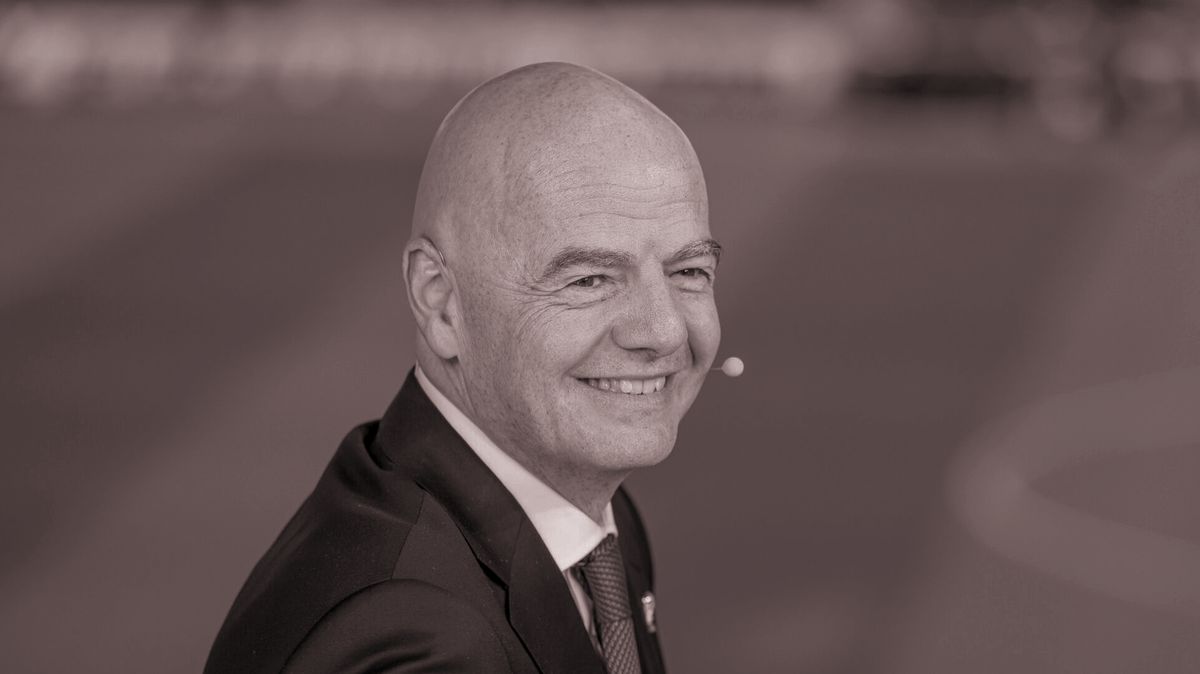
back negative pieces about ticket prices and travel concerns should be a cakewalk. But insiders have complained that FIFA has a frustratingly laissez-faire approach to P.R.—and, basically to a person, fault the body’s longtime president, Gianni Infantino, who doesn’t seem to care about bad press or bad optics. To wit, at the Milken Institute Global Conference last week, Infantino defended the World Cup’s high ticket prices before a gathering of U.S. executives.
“We have to apply market rates,” he said, speaking off-the-cuff in response to a question.
In fact, one of the few times that FIFA pushed back on a negative story this year was when Sen. Chuck Schumer and New Jersey Governor Mikie Sherrill called on the organization to help pay for transit security costs. In a
statement, FIFA offered this tepid number: “We are quite surprised by the N.J. governor’s approach on fan transportation.” (Welcome to doing business in New Jersey, guys! Everything is parking…)
Anyway, sports business executives aren’t turning a blind eye to these stories. Several have reacted with frustration to the cost
of tickets, especially amid a push to grow the game’s footprint in the U.S. Still, they’re certain that the stadiums will look great on television, and their optimism is buoyed by the recent popularity of other international competitions, like the World Baseball Classic and Olympic hockey. Plus, the fact that the games will be held in the U.S., Canada, and Mexico basically guarantees massive viewership—even if the U.S. team crashes out early. |
On NFL media: “I don’t get all the hullabaloo about the NFL putting games on streaming. Do
people think they have a right to watch all games for free? If so, why? That’s never been the case. I grew up on Long Island with an antenna on my roof. Each week I got the Giants game and the Jets game, and if it was one of those lucky weeks that allowed for a doubleheader, or one of those teams was on a bye, I might get another game. I could also watch Monday Night Football on ABC. Sunday night? Nope, that was ESPN (mostly) and we didn’t pay for cable. I’m not sure what weekends
looked like in non-team markets, but I’m guessing only three or four games, too. If anything, it’s better now because there are the options to get Sunday Ticket or subscribe to as many streaming services as you’d like. Today I can watch all 272 regular-season games and all the playoff games from my couch—an option that definitely didn’t used to exist. Plus, you also get all the content those streaming services offer. It’s not just NFL on there! Seems like a win for consumers.” —A
Varsity subscriber
More on NFL media: “I really enjoyed Peter Kafka’s appearance on the Varsity podcast, mainly because he’s the first person I’ve heard in a while who mentioned that you get the same NFL package you had 25 years ago at the same price: Sunday afternoons, Sunday night, and Monday night have always been on broadcast and basic cable, with all local games on broadcast. The extra services that you need are for more
products, which is how every business in America is run.” —A Varsity subscriber
On pickleball as a media property: “Pickleball needs to do something about the sound of the ball. It sounds awful, like when David Attenborough got Wimbledon to change the tennis balls to yellow to make them show up better on TV. Are you getting
any pitches on padel as a sports property? It’s much more popular across Europe than pickleball.” —A sports business veteran |
Have a great weekend. See you Monday,
John |
|
|
|
Puck founding partner Matt Belloni takes you inside the business of Hollywood, using exclusive reporting and insight
to explain the backstories on everything from Marvel movies to the streaming wars. |
|
|
|
Ace media reporter Dylan Byers brings readers into the C-suite as he chronicles the biggest stories in the industry:
the future of cable news in the streaming era, the transformation of legacy publishers, the tech giants remaking the market, and all the egos involved. |
|
|
|
Need help? Review our
FAQ page or contact us for assistance. For brand partnerships, email ads@puck.news.
You received this email because you signed up to receive emails from Puck, or as part of your Puck account associated with {{customer.email}}. To stop receiving this newsletter and/or manage all your email preferences, click here. |
Puck is published by Heat Media LLC. 107 Greenwich St., New York, NY 10006 |
|
|
|
|