|
When I was finishing up college at North Carolina State, I found myself at a crossroads that I thought would determine the rest of my life: I could either move to rural North Carolina and work as a journalist at a local radio station, or shelve those plans and instead go to work for one of the most powerful people in Washington. Worried that I might never be promoted to reporter, I put journalism aside, and joined the staff of Senator Harry Reid, the former boxer turned power broker who represented my home state of Nevada. It was, as it turns out, a fateful decision that ultimately led me to Puck, where I’ll be covering Capitol Hill.
I’d never been to Washington. When I arrived, the atmosphere was extraordinarily charged, perceptible even to a 21-year-old political novice. The Supreme Court had just handed George W. Bush the election and the Senate was split 50-50. From my perch as assistant to Susan McCue, Reid’s glass-ceiling-shattering chief of staff, I acted as a gatekeeper to the gatekeeper and witnessed first-hand how power, soft and hard, was wielded.
Reid was a transactional dealmaker, a real creature of the chamber, obsessed with his own power and whatever benefited Nevada. At the time, he’d somehow persuaded Senator Jim Jeffords, a moderate Republican disgruntled with his party’s conservative turn, to drop his party affiliation and vote with the Democrats, a masterstroke that gave Democrats the majority and the ability to slow Bush’s agenda, quickly putting Reid on the path to becoming leader.
It was, in many ways, the perfect training ground for a political reporter. Riding shotgun with McCue, I observed the inside machinations of Reid’s yearlong, round-the-clock strategy sessions to persuade, arm-twist, and barter with enough senators to kill the Yucca Mountain nuclear waste repository in Nevada—a NIMBYist move that pitted most of the country against my home state.
My extremely low-paying but eye-opening job left me uninterested in participating in partisan battles, but it also armed me with a new understanding of how the most powerful people operate. It was an awareness that would keep pulling me back to Capitol Hill. After I left Reid’s office, I moved to New York to pursue the career I actually wanted: journalism. I interned and freelanced, but mostly waited tables. Eventually, I became a radio reporter during Bush’s lame duck years and the beginning of Barack Obama’s term, when the economy was crashing and the wealthy got rewarded—seeds of the populist backlash that led to Donald Trump.
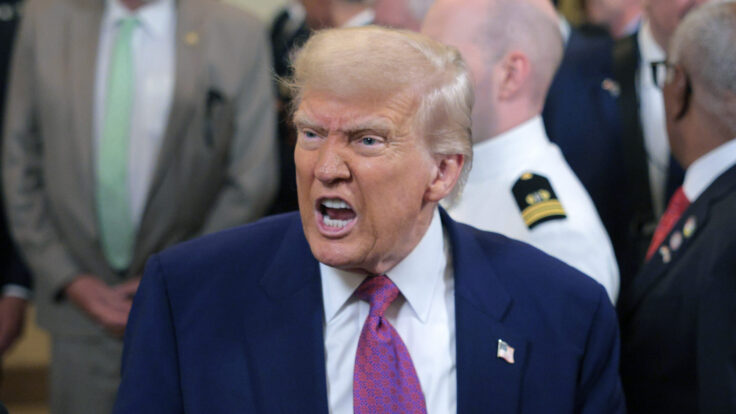
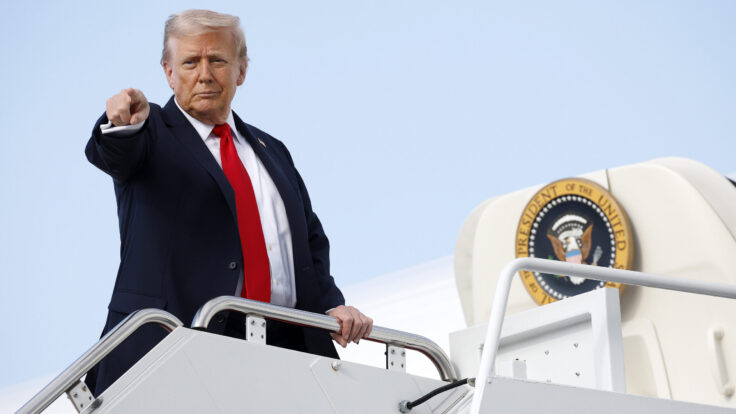
During the 2016 presidential campaign, at NBC News, I covered Republican donors and grassroots organizers. Power and influence had been flipped on its head: Wealthy G.O.P. fundraisers who had driven the party’s agenda and played huge roles in determining its presidential nominee were late to the game. It was the populist base that fell in line behind Trump and drove his success—the same base that he continues to use and manipulate to his everlasting advantage.
Eventually, my beat pivoted to the impact of Trump’s first term on the Hill. (I still recall fondly the afternoon when a happy-go-lucky John McCain, just back from brain cancer treatment, joined a FaceTime call with my kids—hours before he provided the decisive vote against Obamacare repeal.) Trump hadn’t yet figured out how to mold Washington—the town’s rhythms and rituals were largely alien to him—but his staff, and Senate Majority Leader Mitch McConnell, knew how to mold the Supreme Court. I covered the sexual assault allegations against Brett Kavanaugh, his controversial confirmation hearings, and Republican efforts to ensure he was confirmed. It was an extension of the #MeToo movement, where the power balance seemed to be shifting, even temporarily, away from traditional centers of influence. My reporting from that era helped to reveal that the Hill’s version of an ethics office had shielded the accused from allegations and
repercussions.
The Trump years were a time of remarkable and initially surprising growth for the media. I joined the best political reporters in the country at The Washington Post, one of the most financially stable news organizations backed by one of the richest men in the world. A winning combination, I thought. I helmed the Post’s flagship morning political newsletter during a tumultuous time in Congress, breaking news about efforts to oust then Speaker Kevin McCarthy and the nearly monthlong journey to find his replacement. I wrote the definitive final act of the years-long power struggle between McConnell and Reid, my old boss.
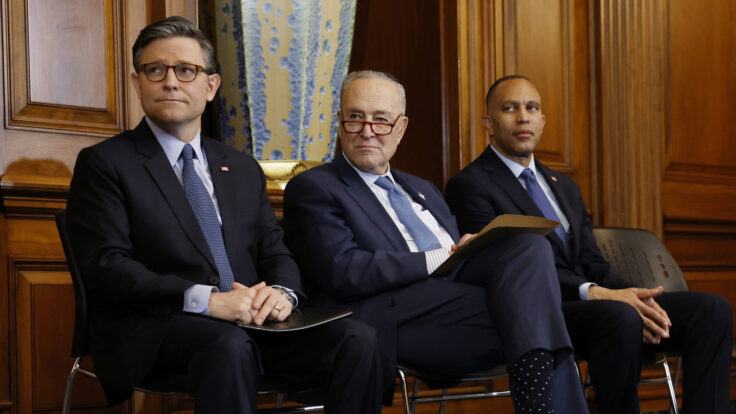
My years at the Post brought me deep into the inner sanctum of power. I detailed why the earnest new speaker of the House, Mike Johnson, was willing to lose his job to fund Ukraine’s defense against Russia. (Months later, during an interview with Johnson, he asked me whether I was the person who’d asked him at a news conference why he’d put everything on the line for Ukraine. He told me it was a tough question but one he appreciated and was pleased to be able to articulate.) I broke stories about the Democrats’ pressure campaign during the torturous three weeks after President Biden’s disastrous debate performance and his agonizing decision to drop out.
As an anchor for Washington Post Live, I chatted with Senate Democratic leader Chuck Schumer about artificial intelligence, pressed Senate Republican leader John Thune about his relationship with Trump, and held court with Kyrsten Sinema, who rarely talks to the media, for 30 minutes onstage. I hosted a show that featured Republican and Democratic lawmakers, in concert with one another—an anomaly in these polarizing times, when so many politicians fear that a picture of bipartisanship will be weaponized against them.
These days, much of journalism is in crisis, struggling to find an audience and business model to stay solvent. I loved my job, but Puck offered something new—the chance to have a say in how the business of media is run, plus the ability to report aggressively and write with abandon. Puck has a vision and a voice, and I wanted to help build its influence in Washington, D.C., in general, and on the Hill, in particular.
At Puck, I’ll return to Capitol Hill, where I’ll make sense of the perpetual jockeying over agendas and status. I’ll be writing for Puck’s flagship political newsletter, The Best & The Brightest, starting with a regular Sunday column that captures the week’s inside conversations on the Hill and also presages the challenges and opportunities ahead.
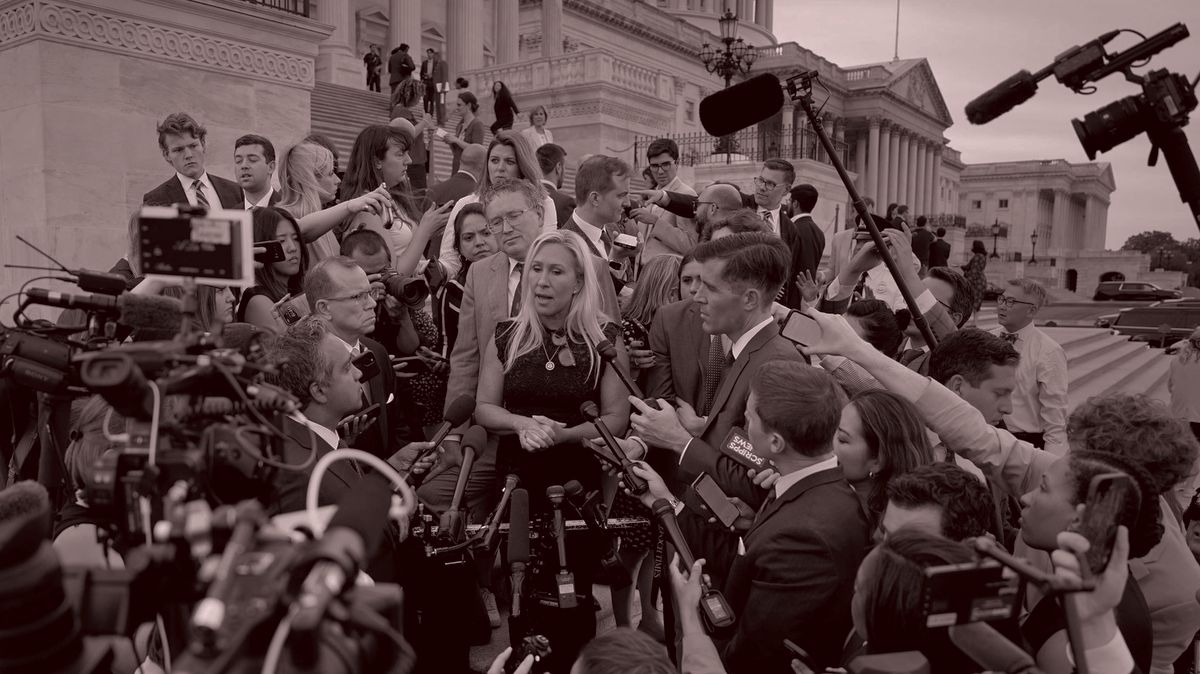
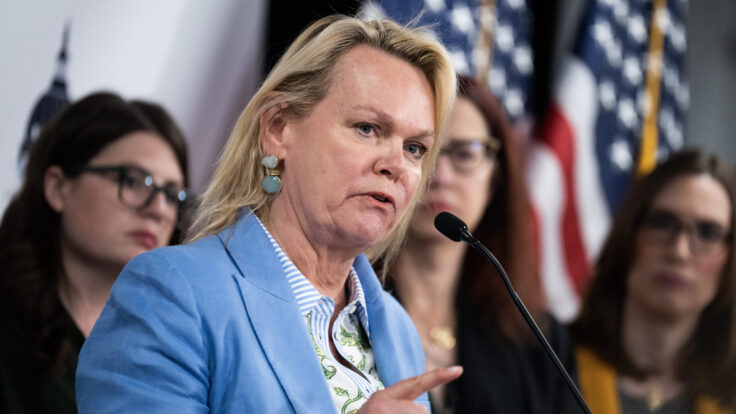
I’ll also take you inside the (mostly smokeless) back rooms of the Hill to provide a deeper understanding of how power is used and sometimes abused. I’ll introduce you to characters you didn’t know you needed to know. I’ll reveal the cliques, the moods, and the infighting that makes this place unique. When Rep. Marjorie Taylor Greene suddenly shifts her tone toward Johnson, I’ll tell you why. It’s the details and the color and the conversations that most fascinate me in an institution where process is actually not the story.
It’ll be a blast. Plus, isn’t Puck everyone’s favorite Shakespeare character?
|