{{ 'now' | timezone: 'America/New_York' | date: '%b %d, %Y' }} |
|
|
|
Welcome to The Hidden Layer. I’m Ian Krietzberg.
The sudden explosion of
cheers you heard on Monday afternoon was OpenAI’s legal team celebrating the dismissal of Elon Musk’s lawsuit. The jury deliberated for less than two hours before deciding that Musk’s claims fell outside the statute of limitations. (A man with Elon’s perverse sense of humor ought to be able to laugh at that…) It was a pretty resounding loss, and a somewhat anticlimactic conclusion to one of the
biggest Silicon Valley dramas of the past few years. Now we wait for an appeal.
In today’s issue, a close look at the mystifying state of China-U.S. cooperation on A.I. in the wake of President Trump’s recent two-day trip to Beijing. Plus, news and notes on the thousands of investment transactions Trump recorded in the first quarter of the year, and
a surge in tech layoffs.
Also mentioned in this issue: Xi Jinping, Joe Biden, Scott Bessent, Martha Stewart, Jensen Huang, Lisa Su, Scott Singer, Chris McGuire, Kyle Chan, and more. |
Two Things You Should
Know…
|
-
Trump’s insider tech trades: As I’m sure you’ve seen, new financial disclosure forms released by the U.S. Office of Government Ethics, detailed roughly 3,700 investment transactions recorded under President Trump’s name in the first quarter of 2026—including
stock purchases of a host of familiar companies and government collaborators such as Amazon, Microsoft, Oracle, AMD, Nvidia, and Palantir.
The timelines are pretty damning. On January 6, Trump bought between $500,000 and $1 million of Nvidia stock. About a week later, the Department of Commerce agreed to allow Nvidia to sell some of its chips in China. Around the same time, Trump purchased between $50,000 and $100,000 of AMD; the following week, the government approved AMD’s ability to
sell chips in China. On February 10, Trump purchased between $1 million and $5 million of Nvidia stock, just a week before the company announced a computing deal with Meta. He also bought hundreds of thousands of dollars’ worth of Palantir shortly before praising the stock on Truth Social. (The White House declined to comment on the timing of these deals, referring me to the Trump Organization, which didn’t respond.) - The A.I. RIF parade: As A.I.
reshapes the workforce, tech companies are unsurprisingly continuing to take the lead—proactively eliminating jobs that they expect to be endangered by the technology, correcting previous hiring sprees, and deploying the sort of fiscally conservative strategy that Wall Street analysts appreciate. Last week, for instance, Cisco announced the elimination of around 4,000 jobs (less than 5 percent of its total workforce). C.E.O. Chuck Robbins was relatively pragmatic in a
letter, noting that A.I. has forced the company to make hard decisions “about where we invest, how we’re organized, and how our cost structure reflects the opportunity in front of us.” The labor cost savings will apparently fuel investments in silicon, security, and company-wide A.I. adoption. It comes as Cisco hit a record quarterly revenue number of $15.8 billion.
There have been
labor cuts elsewhere, too—at Block, Pinterest, and Dow, in addition to several of the major hyperscalers, including Amazon, Microsoft, and Meta, whose latest round of mass layoffs (8,000 people, or around 10 percent of its workforce) begins this week. Meta C.F.O. Susan Li said during the company’s earnings call last
month that reducing head count will help “offset the substantial investments we’re making” in A.I.-related infrastructure. Li later added that Meta doesn’t “really know what the optimal size of the company will be in the future.”
Whether these layoffs are actually due to internal A.I. replacement, or the tech is just a convenient smoke screen for companies looking to cut staff and achieve a stock boost, remains unclear. But it’s likely a combination of both factors. In a note earlier this
month, Goldman economists wrote that “A.I.’s labor market impact remains narrow,” while the correlation between A.I. adoption and “labor market slack measures” remains “limited.”
|
Quote of the Week: Martha A.I.
|
“For more than 40 years I have been documenting how a well-run home should work: the standards, the seasonal
routines, the small decisions that prevent expensive problems. All of that expertise is now embedded in Hint.”
—Martha Stewart, ringing in the launch of her new A.I. company, complete with $10 million in seed funding. I would say we’ve hit peak A.I. frenzy, but I’m sure that’ll be proven wrong next week. |
-
Cerebras, the A.I.-focused semiconductor firm, debuted rather explosively on the Nasdaq last week, spiking nearly 70 percent on its first day of trading. It’s now holding at a market cap of around $60 billion, an early proof point of the public market fervor surrounding the impending I.P.O.s of SpaceX, OpenAI, and Anthropic.
- Speaking of, Anthropic is
reportedly raising another $30 billion, this time at a $900 billion valuation—or around where its shares are apparently trading on the secondary market. In February, Anthropic raised $30 billion at a $380 billion valuation. It’s been three months.
- Isomorphic Labs, the A.I. drug
discovery-startup spun out of Google DeepMind and still run by its chief, Demis Hassabis, closed a $2.1 billion Series B round last week.
- Anduril, the defense tech startup, secured a $5 billion round last week (a Series H) at a valuation of $61 billion, double the
company’s previous $30.5 billion valuation. In a letter, C.E.O. Brian Schimpf said that we’ve entered a “new Cold War period,” a moment that requires a technological edge as a new means of deterrence.
|
And now for the main event… |
|
|
|
One week after the president dragged Silicon Valley’s top C.E.O.s halfway across the world
to extract various business deals with Xi Jinping, the crew returned to Washington with more questions than answers. Among them: Does the White House have a unified policy on A.I.? And is China a competitor, or a customer? |
|
|
|
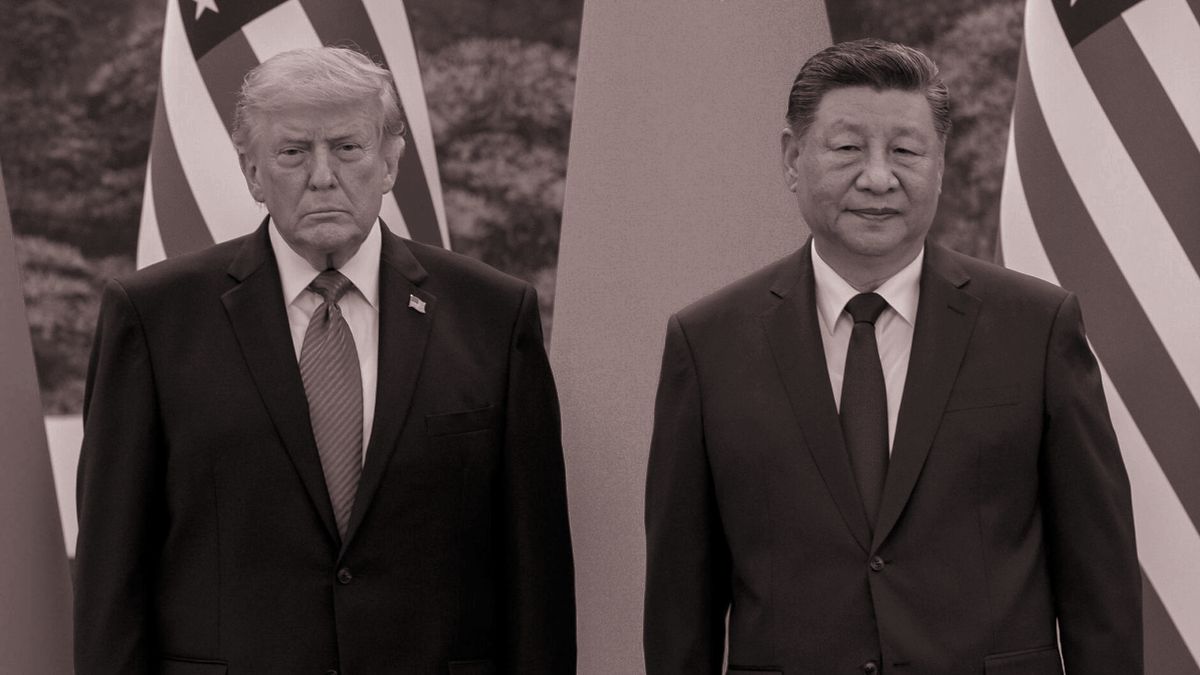
President Trump’s two-day summit last week with Chinese President Xi
Jinping—his first trip to China since 2017—included all sorts of agenda items: the Strait of Hormuz, the future of Taiwan, global trade, etcetera. But like everything else these days, the real focus came down to artificial intelligence, which has served as the central battleground of the increasingly tense cold war between the two countries. From Pennsylvania Avenue to Sand Hill Road, the binary race for A.I. supremacy has become the existential national-security justification
for the White House’s broadly anything-goes regulatory posture.
Against this backdrop—and especially considering the Trump administration’s growing anxiety over Claude Mythos—there was modest (perhaps quixotic) hope that the meeting would result in some sort of precedent-defining alignment on cybersecurity and A.I. safety. Such an agreement was at least within the “spectrum of possibilities,” according to Scott Singer, a fellow at the Carnegie Endowment for International
Peace. The business of A.I. was also expected to be a major point of discussion, given Trump’s entourage of a dozen executives including Meta’s Dina Powell McCormick, Micron’s Sanjay Mehrotra, Coherent’s Jim Anderson, Nvidia’s Jensen Huang (a last-minute addition who carpooled in from Alaska), and, of course, Elon Musk.
But two days and 30-ish hours of flight time later, the idea of a future deal
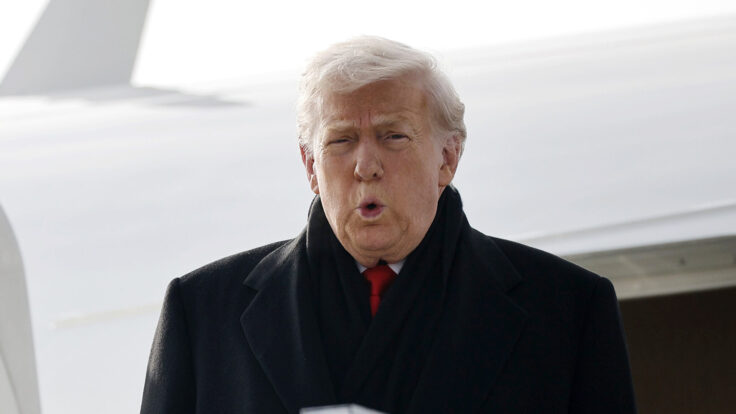
seemed like an afterthought. The post-summit fact sheet published by the White House mentioned U.S. planes, agriculture, beef, and Iran—but not A.I. On Air Force One, Trump told reporters, “We talked about possibly working together for guardrails.” When asked to
specify which guardrails, he said, “The standard guardrails that we talk about all the time.” The president then noted with characteristic bravado: “A.I. is fantastic. … We probably will—we’re going to work together.”
Meanwhile, in an appearance on CNBC during the talks, Treasury Secretary Scott Bessent offered a slightly clearer impression of the negotiations. “The two A.I. superpowers are going to start talking,” he said. “We’re going to set up a protocol in
terms of, how do we go forward with best practices for A.I. to make sure nonstate actors don’t get a hold of these models?” Singer found the lack of tangible results “relatively unsurprising” given the requisite theater embedded in this type of diplomacy. But, like many people I spoke with, he also believed that much more “could have been done that would have been in the national interests of both countries.” |
The status quo outcome may have been inevitable. After all, the American and Chinese governments have been
effectively micro-negotiating over A.I. soft power for years in plain sight. In 2022, the Biden administration imposed export limits on semiconductor chips and the equipment required to manufacture them. Those restraints were tightened over the following two years, and Trump added more in 2025—all of which hit China’s
semiconductor industry and triggered a countrywide effort to produce chips independently. Trump relaxed those restrictions only last July, following an intense lobbying campaign from Huang and AMD’s Lisa Su. And while the U.S. has since
cleared 10 Chinese companies to acquire Nvidia’s more advanced H200 chips, China has yet to approve the potential purchases. Trump’s decision to display the brain power of the American innovation industry served as merely the latest flex in this game of geopolitical tit-for-tat.
There’s also the
fact that the White House itself is still refining its position on the matter. Kyle Chan, a Brookings research fellow and China expert, acknowledged the challenges inherent in a negotiation that mixes economics and national security. Ever since industry booster David Sacks left the administration, he said, “there’s no unified voice on the U.S. side.” Chris McGuire, a senior fellow at the Council on Foreign Relations, echoed the sentiment. “It
seems like the administration isn’t totally decided on what its own stance or policy is,” he told me. “It’s not even clear who the administration’s lead on A.I. policy is.”
Mythos, Anthropic’s recent model that the company deemed too dangerous for public release, appears to be the source of this newfound equivocation. “I think the Trump administration didn’t quite understand the urgency of it until Mythos,” McGuire said, adding that the unreleased model “changed the whole
conversation within the administration.”
During his first year in office, Trump’s approach to A.I. policy was “premised on this assumption that A.I. was going to be important down the road, but wasn’t that important right now,” McGuire continued, calling this “the only reason you would advocate for complete deregulation and sharing the technology with other countries, with China, etcetera.” But after the release of Mythos, he said, “it’s very clear that a lot of senior people in
government are very convinced that this is an urgent issue, and we need to have a policy framework structured accordingly. But they’re starting basically from scratch.”
We’ve seen evidence of the administration’s scramble in recent weeks, particularly through its advocacy for pre-deployment model safety testing. Still, not everyone in Trump’s orbit is
on the same page, and Trump himself “seems to be unclear where he stands on the issue,” Chan noted. Meanwhile, political factions beyond the White House, including prominent Republican groups and a wide array of lawmakers,
are also pointing to Mythos as a justification for federal intervention. |
Stumbling Blocks Everywhere
|
Meaningful conversations with China will have to take place eventually, and when they do, Chan told me, they
will be heavily influenced by “the conversation in the U.S. about A.I. safety.” He said he wouldn’t be surprised to see some near-term progress on those talks, mainly because the Chinese are “sort of interested in A.I. as an area of potential cooperation,” and, interestingly, don’t really view it as a “divisive issue.”
But many of the researchers I’ve spoken with are asking what an overarching A.I. deal would look like—and what it means that we seem so far away from achieving one. As
McGuire pointed out, if the motivation were as simple as a shared interest in mitigating existential risk, “we would have seen something, so the fact that we haven’t means this is complicated.” He added that China is likely to view any U.S. proposal with suspicion and would be unwilling to make too many concessions, given that its “top priority is to catch up to the United States.” Basically, there are stumbling blocks everywhere. “These are hard issues, and they’re moving in real time. They’re
very technically complicated,” McGuire told me. “I think the administration really needs to appoint someone who’s their lead on A.I.”
For Singer, though, the idea of some grand agreement is immaterial. “At the end of the day, the most important work is going to be what the U.S. and China do, themselves, to make the models safer,” he said. “It’s a much harder question to figure out how to share information across borders, but simply having governments that understand what’s happening
inside their own countries is going to be really important.” |
That’s all for today. I’ll see you on Thursday.
Ian |
|
|
|
Join Emmy Award-winning journalist Peter Hamby, along with the team of expert journalists at Puck, as they let you in on the
conversations insiders are having across the four corners of power in America: Wall Street, Washington, Silicon Valley, and Hollywood. Presented in partnership with Audacy, new episodes publish daily, Monday through Friday. |
|
|
|
A professional-grade rundown on the business of sports from John Ourand, the industry’s preeminent journalist, covering the
leagues, players, agencies, media deals, and the egos fueling it all. |
|
|
|
Need help? Review our
FAQ page or contact us for assistance. For brand partnerships, email ads@puck.news.
You received this email because you signed up to receive emails from Puck, or as part of your Puck account associated with {{customer.email}}. To stop receiving this newsletter and/or manage all your email preferences, click here. |
Puck is published by Heat Media LLC. 107 Greenwich St., New York, NY 10006 |
|
|
|
|