{{ 'now' | timezone: 'America/New_York' | date: '%b %d, %Y' }} |
|
|
Welcome back to The Best & The Brightest. I’m Julia Ioffe.
Normally, I’d
be writing to you on Thursday, but this week is different: Tomorrow, my very first book, Motherland, finally, finally drops. Thanks to the readers who have been hearing me talk about this project since we launched Puck in 2021, as well as to my
friends and colleagues who have covered for me over the years when I took time off to finish writing it.
If you’re in D.C., come see me and Sabrina Tavernise Tuesday night at Politics and Prose. If you’re in New York on Thursday evening, I’ll be in conversation with David Remnick at the
92nd Street Y (use JULIA20 at checkout for a special discount). More locations and dates here. |
Today, before the book officially goes on sale, I want to share one of my favorite chapters from
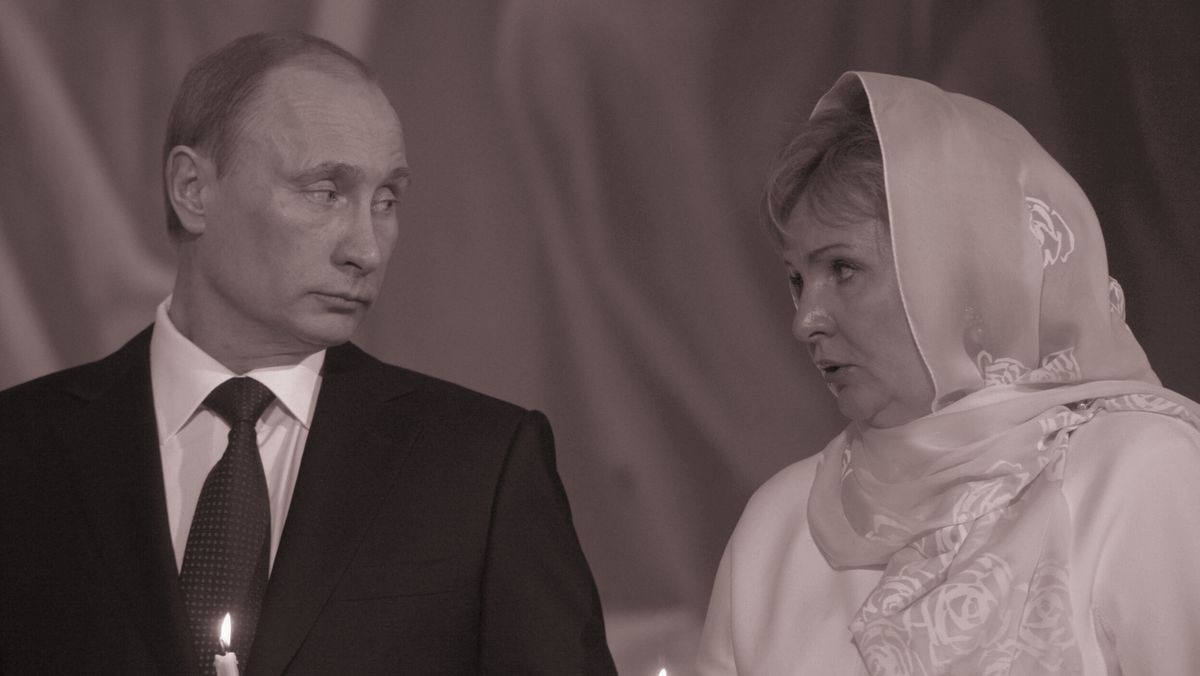
Motherland. It’s about the young Vladimir Putin, from the point of view of his now ex-wife, Lyudmila Ocheretnaya. You won’t be surprised to learn that he was a horrible boyfriend, a lousy fiancé, and an even worse husband. Still, reading Lyudmila’s recollections of their courtship and early marriage, I found myself shocked over and over again at just how awful he was. This is Putin as you’ve never seen him before, through the eyes of the person
who knew him best—or so she thought. |
|
|
Inside the courtship of Vladimir Putin and Lyudmila Ocheretnaya, his first imperial
subject—from a chance encounter in Leningrad and their K.G.B. days in Dresden to raising their family in St. Petersburg on the cusp of his sudden ascendance to unimaginable power. This piece has been adapted from Julia Ioffe’s new book, Motherland, a feminist history of modern Russia and a finalist for the National Book Award. |
|
|
“Lyuda, I congratulate you!” One of her girlfriends exclaimed, using the familiar version of her name when
Lyudmila picked up the phone. It was New Year’s Eve 1999, and she thought this was yet another of the many New Year’s greetings pinging around Moscow that day. “And I you!” she responded automatically.
Her friend was baffled. “Haven’t you heard?” she asked. “No,” Lyuda stuttered. “What happened?” |
|
|
A MESSAGE FROM OUR SPONSOR |
Hospitals are here when you need us most – but hospitals across America are at risk of closure. |
|
|
What happened was that at noon, Boris Yeltsin, the enfeebled Russian president, had
announced on national television that he was resigning his post and handing it over to a caretaker until the presidential elections in March: Lyuda’s husband, Vladimir Vladimirovich Putin.
Lyuda and Volodya Putin had discussed this possibility once, months ago, but she had thought it was all theoretical. It turned out that Yeltsin had anointed her husband as his successor nearly three weeks before springing it on the country, but Volodya hadn’t bothered to tell her. She
didn’t even find out when her countrymen did. Since she hadn’t known that she should turn on the TV, she missed her husband informing the entire country that he was now their president. The full understanding of what her husband had just done, without any consultation, overwhelmed her. “I understood that my personal life ended with this,” she confessed a few weeks later. “For three months at least, until the presidential election, and at most for four years.” She cried the rest of the day.
|
In reality, her personal life had ended long before. It happened in Leningrad over the International Women’s
Day holiday weekend in 1980, when the 22-year-old Lyuda met the friend of a friend of a friend on the steps of the Lensovet Theatre. He was a bleak and unremarkable young man named Volodya Putin. “He was very modestly dressed,” Lyuda recalled years later. “I would even say, shabbily. He was so nondescript, I wouldn’t have even noticed him on the street.” Lyuda herself was hardly a great beauty. It was mostly her youth that made her pretty. It amplified her thick blond hair and big blue eyes set
low and wide on her face; it distracted from her tiny mouth with its slightly buck teeth.
Lyuda had grown up in Kaliningrad, the daughter of a factory worker and a cashier. She had dropped out of technical college for the much more glamorous work of being an Aeroflot flight attendant. This is what had brought her and her co-worker Galina on a short trip to Leningrad in March 1980. A local young man had invited Galina to the theater and she asked Lyuda to come with her,
which prompted the young man to invite his friend.
It was Volodya who, through his connections, had been able to produce the tickets for this popular and hard-to-see show. Growing bold during the intermission, Lyuda asked him if he could get tickets for the next night’s show at the Leningrad Music Hall. Volodya managed to procure those, too, as well as more tickets for the following night. When it was time for Lyuda to fly back to Kaliningrad, Volodya gave her his telephone number. This
surprised his friend: Volodya didn’t readily give out his personal information.
When Lyuda got home, she called him. Soon she was cobbling together four-day weekends and flying to Leningrad to visit. By July she had decided: “This is exactly the person that I very much needed.” She moved to Leningrad and applied to Leningrad State University, Volodya’s alma mater. Volodya helped her find a room to rent in a communal apartment and a job to cover the rent.
But Volodya proved a hard
man to love. He was stubborn and silent, closed and bristly. He was gratuitously late for every date. By the time he arrived an hour and a half late (his standard), Lyuda felt too defeated to register her discontent. And yet she always showed up on time, hoping that this would be the day he would be as punctual for her as he was for his work. Remembering her long waits decades later, she chided herself for not bringing a book.
Lyuda’s decision in July 1980 to love Volodya Putin proved to
be her last in the relationship. Going forward, it was Volodya who made all the decisions, big and small. She was his obedient subject, his first before he acquired 143 million more. In 1981, Volodya decided they would take up downhill skiing. He didn’t ask Lyuda’s opinion. “For Vladimir Vladimirovich, it was self-evident that we would just start skiing,” she recalled. This was not an obvious hobby in a city that was built on a flat marsh, and the ski jump took nearly two hours to reach on
public transport. But Volodya insisted on going every weekend. Skiing now took up all of Lyuda’s free time and resources.
That summer, while on vacation in Crimea, Volodya insisted on going out to the end of a wild peninsula that was accessible only by trekking over treacherous cliffs or swimming around the shoreline. Lyuda didn’t know how to swim, but Volodya decided to take the sea route anyway. Since not going was not an option, she paddled along on a raft in the open water and got so
badly sunburned that her skin sloughed off for days afterward. When they finally reached the spot he had in mind, Volodya spent an hour sitting underwater with a spear gun, which he made her carry on the return journey, since he had decided to trek back over the cliffs. Lyuda was left to paddle back alone and was so panicked during this ordeal that she couldn’t remember how she made it back to their room.
“I always had the feeling that he was constantly observing me,” she remembered.
“What decision will I make? Will it be the right one or not?” Once, early in their courtship, she made the wrong decision. During one of her visits to Leningrad, they went to a party where Lyuda danced and laughed and enjoyed herself. “Vladimir Vladimirovich didn’t like this, and I was told extremely clearly that a continuation of our relationship was impossible,” she said. “I didn’t even argue since everything was said quite definitively.” Heartbroken, she returned to Kaliningrad.
Two
weeks later, she saw a note from him pinned to her apartment door. The note, which addressed her as druzhochek, or tiny little friend, included his number at the hotel. Lyuda raced over and, when they met, she wept and confessed her love. Volodya, however, was very clear that Lyuda was not the reason for the trip: He was in town for work. The hour of his flight back to Leningrad approached, and he still hadn’t taken her back. Lyuda followed him to the airport, where, at the departure
gate, in the last moments before boarding the plane, “he decided to continue our relationship.” |
Lyuda was nearing her mid-20s. It was high time to get married, and Volodya had an inner strength that pulled
her to him like a magnet. In a country where masculinity was in crisis, he exuded a “masculine dependability,” she told an interviewer decades later. He didn’t drink or lose control of himself. He was always trim and active and took his health seriously. Unlike the driftwood that passed for men in those days, Volodya had goals and ambitions and focus.
He was the third and only surviving son of two parents hardened by war and by life. Volodya’s world was largely devoid of girls. What he
saw in popular culture, especially in The Sword and the Shield, the popular spy films that inspired him to join the K.G.B., only reinforced for him the notion that women were not real people. In the films’ romanticized view, men ran the world and women were there to help them. They were to be treated politely, but they were not equals, nor were they for falling in love with. They were tools, vessels.
This rigid division of the sexes was familiar, even reassuring, to Lyuda, as it
was to most Soviet women born into the traditionalism of the postwar era. If anything, it appealed to her that her wishes were always subservient to Volodya’s. It took the pressure off her. In a hard Soviet life, he offered the rare promise of stability and comfort.
Lyuda didn’t understand exactly what Volodya did, but she knew he had a very good job. He told her he worked as a detective in the police department, though he always deflected her questions with jokes. His salary and
connections allowed him to get goods others couldn’t—like those theater tickets at their first meeting—to drive her around in his own car, and to take her on vacation to the Black Sea, where they stayed in the guardhouse of Brezhnev’s seaside villa and played tennis. |
|
|
A MESSAGE FROM OUR SPONSOR |
Hospitals need your help to stay. Protect 24/7 care—because when the doors close, it is too late. |
|
|
It was a year and a half into their relationship when she learned he was working for the K.G.B. In the office
one day, her co-worker, the girlfriend of one of Volodya’s friends, revealed the truth out of nowhere. “You know, Lyuda, that Volodya…” She hesitated. “I don’t think he works in criminal investigations,” she finished, adding that Lyuda’s boyfriend was in fact an officer of the feared secret police.
The news hurt Lyuda deeply. She had always wanted to know more about what Volodya did all day, not because she was nosy but because she wanted to be his confidante, his support. But no matter
how much she tried to create this kind of partnership, he never told her anything, and now she knew why. A year and a half into a courtship she hoped would end in marriage, he still did not trust her. After all those tests, she was still hovering on the perimeter of his life, waiting to be allowed in. |
Lyuda may have decided fairly quickly that she wanted to marry Volodya, but it took him three years to decide
the same about her. It was an unheard-of delay for a generation more accustomed to shotgun weddings than long engagements. But Volodya was in no rush. He had been engaged before, to a young doctor also named Lyuda, but broke things off just before the wedding. At Lyuda’s first meeting with his mother, Maria told her that she had liked the first Lyuda better.
Volodya’s friends liked the second Lyuda well enough. Though his friend
Sergei Roldugin described her as occasionally “suffocating,” he appreciated that his friend was with “a real woman.” As Roldugin recalled approvingly, she “can not sleep all night and have fun, but in the morning, will tidy the apartment and cook everything.” Volodya himself would have been perfectly happy living a life independent of attachment
to another human were it not for his socially conservative employer. There was something dangerously nonconformist about men who didn’t marry, and in the K.G.B. it made them susceptible to blackmail and honeypot traps. Volodya’s career had been puttering along for nine years, and he seemed no closer to his dream of spying for the Soviet Union abroad, the most elite tier of K.G.B. work.
Eventually, he seemed to have decided that he needed Lyuda for his career, and his proposal one spring
evening in 1983 was as romantic as his calculations. “Druzhochek,” he began, addressing her again as his tiny little friend, his buddy. “Now you know what I’m like. I’m not a very easy person.” Then he laid out his many faults: He was prone to long silences, he could be quite harsh, he was adept at hurting her feelings. “In three years, you’ve probably made up your mind?” he asked.
“Actually, I have,” Lyuda offered, sensing that he was breaking up with her. “Really?” he asked
skeptically, then added, to Lyuda’s utter surprise, “Well, if that is the case, then I love you and I propose we get married on this date.”
They married three months later. They had a small reception for family and friends on a boat in one of Leningrad’s many canals. Lyuda had a wonderful time celebrating her hard-won marriage. Later, she would remember how loved she felt by those who had come to toast them, but she couldn’t recall if she and her new husband had kissed to the traditional
shouts of “Gor’ko!” The following day, they had a second reception, in a private dining room of the Moscow Hotel. This one was for Volodya’s K.G.B. colleagues, who could not risk being unmasked to the bride and groom’s relatives.
A year later, Volodya was finally selected for training at the Red Banner Institute in Moscow, the exclusive K.G.B. academy that molded agents into foreign spies. When he set off for the academy in September 1984, a pregnant Lyuda stayed in Leningrad,
where she now lived with Volodya’s parents. Once a month she made her way to the capital to see her husband. He rarely made the return visit.
On April 27, 1985, Lyuda went into labor. By this point she had moved out of the elder Putins’ apartment and rented a small room near the aerodrome. Although Volodya was very touching in his concern for her health, she had been alone for virtually her entire pregnancy. When the contractions started, she spent the day cleaning, doing laundry, and
preparing the apartment for her return. At 10 p.m., she caught a taxi and went to the hospital. At 2:30 in the morning, her daughter was born. Volodya arrived the next day, but since men weren’t allowed into maternity hospitals, Lyuda had to call him to discuss the girl’s name.
Lyuda had one picked out: Natasha. She had a friend named Natasha and she felt it had a lovely ring to it. “No,” her husband told her over the phone. “She will be Masha,” like his mother. Lyuda
burst into tears. “But I understood that I had no choice, and my little daughter would be Masha regardless.”
Three days after Lyuda and little Masha came home, Volodya left again for Moscow. Lyuda found it hard to be alone with an infant while trying to keep up with her university studies, but she tried to see her husband’s departure in a positive light. “Because he didn’t change diapers, get groceries, or cook breakfast, lunch, and dinner, it became easier after he left,” she told
herself. “Because before, I had to take care of the two of them—my husband and my child—but now I was left with just Masha.” |
The Real Housewives of Dresden
|
In the summer of 1985, Lyuda was summoned to the personnel department of the university. When she arrived at
the office, she was told that she had passed the K.G.B.’s background check, which she hadn’t known was happening. She also discovered that another decision had been made about her life: Her husband was being transferred abroad. He had hoped to go to Berlin, the hub of Cold War espionage, but he was posted instead to Dresden in East Germany, a backwater in a Soviet satellite where the small K.G.B. staff operated almost in the open.
Still, Lyuda was happy. A posting abroad meant access to
precious goods—food, electronics, and clothing—that had become so scarce at home. When, in the fall of 1985, Lyuda arrived in Germany with little Masha in tow, she found that Volodya, who had gone ahead of them, had lovingly prepared their new apartment for their arrival. There were fresh flowers and a bowl of fruit on the kitchen table. Lyuda was deeply touched to see a bunch of bananas, their waxy yellow skins so unfamiliar and enticing. |
|
|
Volodya had also set aside some money for Lyuda’s arrival, expecting her to do what every Soviet woman
dreamed of: shop for clothes and jewelry. Instead, she spent it on pots and pans and things for her new domestic domain. The wives of K.G.B. officers were discouraged from working outside the home. “There was an unspoken rule: The wife has to stay at home and to create the right conditions for her husband’s work,” Lyuda recalled. Not that she minded. She had a toddler and was seven months pregnant with her second child: Her husband had wanted two children close in age.
Life for Lyuda
wasn’t exactly easy. She was expected to clean and look after the children and cook three hot meals for her husband, every day, from scratch—though he never complimented her efforts. “There is this famous saying,” Lyuda told herself, “Don’t praise a woman, lest you spoil her.” Evegenia Timofeevna, the wife of Volodya’s boss, kept a close watch on all the K.G.B. wives in Dresden to make sure they were adequately performing their domestic duties.
The Putins’
apartment was on the sixth floor, and the building, which also housed the families of Stasi officers, had no elevator. One day, a K.G.B. neighbor saw Lyuda, heavily pregnant, Masha on one arm, a big bag of groceries in the other, huffing up the stairs. Horrified, he grabbed Masha and the groceries and carried them up to the Putins’ apartment. Afterward he scolded Lyuda’s husband. “Volodya, you have to help out. You have to help out, Volodya!”
The intervention produced no discernible
results. “Vladimir Vladimirovich had a rule: A woman must do everything at home by herself,” Lyuda explained. |
From
Leningrad to St. Petersburg
|
In February 1990, Lyuda and her family returned to Leningrad. Life in Dresden had flowed pleasantly along for
four and a half years until the Berlin Wall fell and the Soviet puppet regime in East Germany fell with it. Lyudmila was saddened by the events. Her babies had become little girls who spoke German. She, too, had learned the language and made some local friends. During the harvest season she would pick peaches and currants with some of the Soviet military wives.
Leningrad in 1990 was another planet. With the Soviet economy on the brink of collapse, this was a city of angry women jostling
each other in lines in their hunt for scant supplies, getting into shouting matches and physical fights with the women behind the counter, who were just as angry as they were. In Leningrad, Volodya and Lyuda moved in with his stern parents, who had managed to trade their small apartment for a three-room flat that fit all of them but was in disrepair. They had no furniture and no money to renovate it, and Volodya was not around to help.
So Lyuda got a job, likely through her husband,
teaching German at the university. Volodya eventually found a stable position as the deputy to the city’s first democratically elected mayor, Anatoly Sobchak. Volodya helped Sobchak navigate the city’s transition from Leningrad to St. Petersburg, from a totalitarian system to democracy, from a command economy to a free-market one. It was a daunting task for men who had never experienced any form of political or economic freedom. Volodya left early in the morning and came home
after midnight.
There were rumors and investigations surrounding his work in the mayor’s office, like a shadowy deal in which $120 million of precious exports were to be traded for food that the city desperately needed but which never materialized. If Lyuda heard about these scandals, she never let on. She avoided going to social events with her husband. She found politics boring and the people on the political circuit fake and suspect. Her life was in the university and at home, where
she was raising two young girls according to their father’s strict standards. He insisted that Masha and Katya, their second daughter, attend all manner of extracurricular activities: dance and music lessons, language classes. It was Lyuda’s job to make sure the girls got to them all.
During these years, Lyuda finally got a taste of what it was like to be a real Soviet woman. Four times a week, after dropping one daughter off at school and the other at kindergarten, she
went to teach at the university. She got off work just in time to scoop them up from school and ferry them to ballet and violin lessons, then scrounge for groceries. “No one gave me a pass on doing the housework,” she remembered.
At least Lyuda had a car, unlike the average Soviet woman. It made her life as a working mother far easier—she didn’t have to manage heavy bags of groceries and unruly children on crowded public transport—until it almost ended it. One day in October 1993, she was
taking Katya to school when a driver ran a red light and slammed into the side of Lyuda’s car. Katya was unharmed, but Lyuda woke up naked in the hospital.
Later, it would turn out that she had fractured some vertebrae in her neck as well as the base of her skull. Someone contacted Volodya Putin, now the second man in the city, who arrived at the hospital and was reassured that Lyuda was fine. He took the doctor’s word for it and went back to work without seeing his
wife.
Excerpted from Motherland: A Feminist History of Modern Russia, From Revolution to Autocracy by Julia Ioffe. Copyright © 2025 by Julia Ioffe. Reprinted by permission of Harper, an imprint of HarperCollins Publishers. |
|
|
Join Emmy Award-winning journalist Peter Hamby, along with the team of expert journalists at Puck, as they let you in on the
conversations insiders are having across the four corners of power in America: Wall Street, Washington, Silicon Valley, and Hollywood. Presented in partnership with Audacy, new episodes publish daily, Monday through Friday. |
|
|
The industry’s go-to source for unflinching reporting on the trillion-dollar business of artificial intelligence - perhaps the
single most important technology of our time. Ian Krietzberg, the powerhouse journalist behind The Deep View, delivers twice-weekly insights into the latest dealmaking and breakthroughs in A.I., and how the intersecting worlds of finance, entertainment, media, and politics are being transformed in its wake. |
|
|
Need help? Review our FAQ page or contact us for assistance. For brand partnerships, email ads@puck.news. You received this email because you signed up to receive emails from Puck, or as part of your Puck account associated with {{customer.email}}. To stop receiving this newsletter and/or manage all your email preferences,
click here. |
Puck is published by Heat Media LLC. 107 Greenwich St, New York, NY 10006 |
|
|
|




_01K81VSHCQCGW42CAX5HE07C0Y.jpg)