• Washington
  • Wall Street
  • A.I.
  • Hollywood
  • Media
  • Fashion
  • Sports
  • Art
  • Join Puck Newsletters What is puck? Authors Podcasts Gift Puck Careers Events
  • Join Puck

    Directly Supporting Authors

    A new economic model in which writers are also partners in the business.

    Personalized Subscriptions

    Customize your settings to receive the newsletters you want from the authors you follow.

    Stay in the Know

    Connect directly with Puck talent through email and exclusive events.

  • What is puck? Newsletters Authors Podcasts Events Gift Puck Careers
 
Puck logo
 
Dry Powder

Hello and welcome back to Dry Powder. 


Thanks as always for being a subscriber to Puck, our new media company covering the intersection of Wall Street, Washington, Silicon Valley, and Hollywood.


Each week, I receive feedback from readers and sources about Wall Street's biggest characters and concerns. Today I'm opening my notebook to address questions about

what Wall Street really made of Elizabeth Holmes, the trouble with Softbank, and Tesla's new price target. Plus, in the spirit of Thanksgiving, I reflect on a few of the greatest Wall Street dealmakers of all time. Or at least those whom I've been lucky enough to observe up close. 


If you're enjoying this private email, consider sharing the subscription link with a friend. They'll be glad you did. 


Bill
holmes

Elizabeth Holmes, Softbank’s China Woes, and More Tesla Inanity

Plus: Giving thanks for some of the greatest Wall Street dealmakers of all time.

William Cohan

WILLIAM D. COHAN

Each week, I receive feedback from readers and sources about Wall Street’s biggest characters and concerns. I’ll be engaging with some of those questions here—in addition to a few observations of my own.

Softbank's C.F.O. recently conveyed to the Journal some dispiriting news about its investments in crypto and China, among other sectors. Does Wall Street have a revised view of the fund?


Wall Street will always view Softbank as the gravy train, the place to turn to if a startup company you are working with needs a lot of capital fast. There is, after all, no bigger venture capital fund on the planet, and if the WeWork saga made anything clear, it is that Masayoshi Son, Softbank’s founder, has a lot of money at his disposal and a nearly insatiable appetite to spend it. It can be the one-stop shop for all your outlandish funding needs and desires. 


The more interesting story about Softbank is not how lousy its investment portfolio appears to be at the moment, but rather how much money Elliott Management, the hedge fund founded by Paul Singer, made from its more than $2.5 billion February 2020 investment in Softbank. Elliott is an activist investor and pushed Son to buy back Softbank’s stock, in order to increase the stock price, and to take other measures that would increase transparency into Softbank’s $100 billion Vision Fund. The stock nearly doubled in the year after Elliott announced its position, following Son’s decision—at Eliott’s urging—to buy back some $20 billion of Softbank stock. 


Since May, the Softbank stock is down about 35 percent, due largely to Beijing’s crackdown on Chinese tech companies. Still, according to the New York Post, Elliott has made “as much as $500 million” on its investment in Softbank, or about half of what the infamous WeWork co-founder Adam Neumann extracted from Softbank in order to go away. 

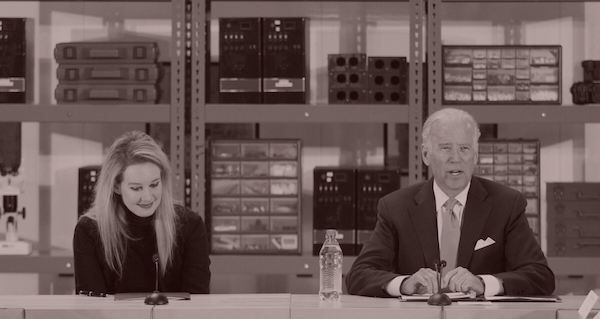
The Elizabeth Holmes trial is reaching a momentous inflection point with her decision to testify. Just curious: When Theranos was the toast of Silicon Valley, what were your Wall Street sources saying? 


Holmes testified for about an hour on Friday afternoon, and her testimony is expected to continue into early next week. But, to be honest, it was years before more than a handful of people on Wall Street cared a whit about Elizabeth Holmes. It was only after she started appearing on the covers of Fortune (June 2014), Forbes (September 2015), Inc. (October 2015) and T: The New York Times Style Magazine (also in October 2015) and the valuation of Theranos kept ratcheting up and up and up, to $9 billion, that Wall Street began to take notice of the company in a big way. (Never underestimate Wall Street’s ability to get excited about a potentially hot I.P.O.; see WeWork above.) 


Of course it all came crashing down that same October with the publication of The Wall Street Journal reporter John Carreyou’s front-page article, “A Prized Start-up’s Troubles.” The rest, as they say, is history. The arc of Theranos’ narrative on Wall Street lasted about 15 months, from June 2014 to October 2015. During that time, Holmes was a Wall Street darling, showered with capital and attention. 


The brief period of adulation looks foolish in retrospect, but you have to understand that few people on Wall Street ever take a critical view of a high-flying company, even when warning signs are strewn across the financial landscape. Wall Street thinks in terms of “wallets”—as in, how much in fees can be made from underwriting the debt or equity of a company, or how much money can be made raising venture capital for a company, or how much money can be made advising a company on its sale or on an acquisition or merger. “Oh, this Theranos is a total mess, I’m not going to get near it with a ten-foot pole,” said no one on Wall Street ever. The banker who says something like that gets fired because at the end of the year, he or she has no revenue on his or her ledger, which means there is no way to justify paying him or her a bonus, which means there is no reason to keep him or her around. 


Ultimately, Wall Street is a very Darwinian business. Those that survive the longest generate boatloads of fees year in and year out. And the only way that happens is doing deals that close—a debt offering, an I.P.O. underwriting, or advising on an M&A deal. No one gets paid for not doing deals, or for questioning a company’s ethics or business plan. 


I remember thinking how quaint and paternalistic it used to be at Lazard when Michel David-Weill, who then owned the vast majority of the firm, would occasionally take pity on one or two partners if they’d had a year where they didn’t produce, for one reason or another. Suffice it to say that those days are over at Lazard and never really had much of a place anywhere else on Wall Street. At the senior levels, the mandate is simple: produce revenue or get the hell off the stage. 

I don't want to trigger you, Bill, but Wedbush recently raised Tesla's price target to $1,400 per share, suggesting that the automaker could become a leader in a $5 trillion market opportunity. Take a beta blocker and tell us what you think.


What investment banks and brokerage firms such as Wedbush do, and what portfolio managers such as Cathie Wood do, is “talk their own book,” as they say on Wall Street. They publicly advocate for positions that will benefit them, or their investors. This is as old as the hills, and is not illegal but frankly it might as well be. 


I asked for but did not receive a copy of Dan Ives’ report about Tesla, in which he wrote that Tesla’s stock would increase more than 23 percent, but I would bet dollars to donuts that there are two disclosures in his report, way in the back, in tiny print that no one reads. One of those disclosures likely tells readers what role, if any, Wedbush plays in underwriting Tesla securities, or in trading Tesla’s securities; the other disclosure reveals what percentage of Wedbush’s equity research calls are buys, sells, or holds. I would further bet that the vast majority of Wedbush’s equity calls, like sell-side analysts across Wall Street, are recommendations to buy stocks. 


I say that because there is no upside for sell-side analysts to urge investors to sell a stock. That’s a contrarian position that few research analysts have the guts to advocate. Of course, the right call on Tesla is indeed to sell the stock, which is wildly overpriced and has been for years, especially when you consider that the vast majority of Tesla’s profits come from selling carbon credits, not electric cars. I don’t know Ives—he seems like a nice fellow—but the game he is playing, I suspect, is simply to increase his name recognition and media attention. A quick Google check reveals that after Ives made his $1,400 call, he was on Bloomberg, CNBC and Yahoo Finance talking about it. Good for Dan, I guess. Good for Wedbush. Good for Tesla. Potentially very bad for the investors who take Ives’ advice.


As for Cathie Wood, she is the ultimate book talker. Suffice it to say that unlike Ives, who has a credible claim on objectivity, Wood is completely biased. Tesla has been the largest holding in her portfolio for years. It remains by far her largest holding across her various funds—now representing just over 8 percent of her invested assets, or some $3.1 billion. So, ya, I’m not quite triggered but I remain skeptical when those with vested interests provide investing advice. 

Bill, Thanksgiving is coming up. In the spirit of giving thanks, who were some of the best dealmakers that you ever saw in action?


Well, keeping in mind that my last day on Wall Street was more than 17 years ago, my first-hand knowledge of “the best” dealmakers is necessarily more than a little dated. Nevertheless, I still am happy to share my opinions. For pure revenue generation—and I suppose for wisdom too (although that can be debated)—no one that I witnessed first hand in my nearly 20 years on Wall Street could match Felix Rohatyn. In his more than four decades at Lazard, he would often generate one way or another as much as 80 percent of the M&A revenue in any given year. That was incredible, and gave him immense power at the firm. His other partners would fairly cower in his presence. 


Interestingly, Rohatyn wasn’t particularly greedy when it came to money. He made around $10 million a year at Lazard, at a time when that was considered a huge amount of money, but he could have demanded—and received—a whole lot more from Michel David-Weill (see above) had he wanted it. He also could have had a significant slice of the real equity in Lazard had he wanted to ask Michel for it. But he didn’t. When the company went public, in May 2006—one of the last major Wall Street private partnerships to do so—Felix could have made a killing, not unlike the way Michel took out $2 billion as part of the Lazard I.P.O.. But, no, Felix was greedy for power, not money.


Other bankers who impressed me considerably on Wall Street were David Supino, a leading restructuring banker at Lazard whom I worked with closely, as well as Al Garner, one of the longest serving Lazard partners, and Christina Mohr, one of the longest surviving woman bankers on Wall Street. I was also very impressed by Jack Levy, whom I worked for at Merrill Lynch (when he was co-head of M&A there before heading to Goldman as a partner). Jack was like a warm knife through butter. Clients loved him and his team respected him greatly. Jimmy Lee, at JPMorganChase, was sui generis and died much too young. I admired Jimmy greatly, although he could be ruthless. 


I am also quite impressed by bankers I have known for a long time who had the guts to put up their own shingles and try to make a go of it on their own, outside of the protection of the big Wall Street banks. These include people like Blair Effron, at Centerview Partners; Paul Taubman, at PJT Partners; Ken Moelis, at Moelis & Co., and Aryeh Bourkoff, at LionTree Partners. Talk about guts. Wow!


That’s all for today. I’ll be back in your inbox before the holiday with more Dry Powder.


Bill


Have a question you’d like answered in the next edition? Email us at fritz@puck.news.

FOUR STORIES WE'RE TALKING ABOUT

cocktail

Netflix's New Love Language

Netflix is finally, subtly lifting the veil on its ultra secretive streaming data—in a way that benefits Netflix, of course.

MATTHEW BELLONI

money bag

Critical Race Backlash

Backlashes against racial progress are as American as apple pie. But C.R.T. has unleashed a new torrent of grievances.

BARATUNDE THURSTON

martini

Bob Chapek's Master Plan Is...

... doubling down on Hulu? Yes, Hulu. Plus: Could Joe Scarborough be the next loose-in-the-saddle talent to put the screws to MSNBC?

DYLAN BYERS

cocktail

Tesla Bears and Peloton Follies

An insider look at the questions transfixing Wall Street this week. Among them: What does Larry Culp really want from GE?

WILLIAM D. COHAN

 
swash divider
Facebook Twitter Instagram LinkedIn

You received this message because you signed up to receive emails from Puck.


Was this email forwarded to you?

Sign up for Puck here.


Sent to {{customer.email}}

Unsubscribe


Puck is published by Heat Media LLC.
64 Bank Street
New York, NY 10014


For support, just reply to this e-mail.

For brand partnerships, email ads@puck.news

SEE THE ARCHIVES

SHARE
Try Puck for free

Sign up today to join the inside conversation at the nexus of Wall Street, Washington, A.I., Hollywood, and more.

Already a member? Log In


  • Daily articles and breaking news
  • Personal emails directly from our authors
  • Gift subscriber-only stories to friends & family
  • Unlimited access to archives

  • Exclusive bonus days of select newsletters
  • Exclusive access to Puck merch
  • Early bird access to new editorial and product features
  • Invitations to private conference calls with Puck authors

Exclusive to Inner Circle only


Latest Articles from Wall Street

Geoffroy van Raemdonck
William D. Cohan • November 21, 2021
The Saks Financial Colonoscopy
Amid a torrent of bankruptcy filings, a blunt declaration by Saks Global’s newly appointed chief restructuring officer lays out precisely what went wrong and when, and who got screwed hardest—plus which risk-hungry investors are likely to call the shots moving forward. As it turns out, the company’s capital structure became “unsustainable” almost immediately after its $2.7 billion acquisition of Neiman Marcus Group in December 2024.
David Ellison
William D. Cohan • November 21, 2021
The Ellison Way of Parenting
David Ellison’s latest schemes to wrest Warner Bros. from Netflix have proved insufficient after his previous negotiating tactics ran up the price. Meanwhile, he’s losing the respect of the WBD guys across the table. But will his dad come to the rescue with another, say, $10 billion to bail him out?
Patrick Drahi
William D. Cohan • November 21, 2021
A History of Creditor-on-Creditor Violence
Wall Street invented the coercive liability management exercise, which allows companies to play their creditors against one another as they extract beneficial terms for themselves—a now-routinized tradition referred to as “creditor-on-creditor violence.” But now Apollo, Oaktree, BlackRock, and JPMorgan Chase are teaming up to put an end to this mess.


Larry Ellison, David Ellison
William D. Cohan • November 21, 2021
The Zaz–Ellison Dagger Contest
Warner Bros. Discovery’s most recent S.E.C. filing reveals the latest battle lines between the company and its hostile suitor. In particular, the document evinces a deep distrust of Paramount Skydance’s proposed deal financing, recasting the $108 billion all-cash offer as an $87 billion L.B.O. that could fall apart before closing.
David Zaslav
William D. Cohan • November 21, 2021
What Is Zaz TV Really Worth?
The battle for Warner Bros. Discovery is increasingly coming down to how Netflix and Paramount Skydance value the declining TV assets (and CNN) that David Zaslav is determined to separate from the Warners mothership. Versant, which just started trading on Nasdaq this week, may provide the answer.
greg abel
William D. Cohan • November 21, 2021
Make Berkshire Hathaway Great Again?
Greg Abel, the handpicked successor to Warren Buffett, faces one of the most exalted and daunting jobs in finance: determining what to do with the staggering $358 billion bequeathed to him by the most legendary investor of his generation. Herewith, three proposals for what Abel should buy with all that cash.


David Ellison, Larry Ellison
William D. Cohan • November 21, 2021
Zaz Is From Mars, the Ellisons Are From Venus
Murmurs from sources close to the Warner Bros. Discovery deal illuminate the latest machinations surrounding the Paramount-Netflix showdown—and where this thing is headed.


Get access to this story

Enter your email for a free preview of Puck’s full offering, including exclusive articles, private emails from authors, and more.

Verify your email and sign in by clicking the link we just sent.

Already a member? Log In


Start 14 Day Free Trial for Unlimited Access Instead →


Latest Articles from Wall Street

Larry Ellison
William D. Cohan • November 21, 2021
“Larry Didn’t Show Up, and David Got Ahead of His Skis”
Everything you wanted to know about the Warner Bros. Discovery board’s doubts with the Ellisons’ bid (but were afraid to ask) is revealed in its 14D-9 filing—a mother lode of alleged Paramount missteps, from squabbles over consent provisions and breakup fee reimbursements to junior lien debt and the financial capacity of the world’s fifth-richest man.
larry ellison david ellison
William D. Cohan • November 21, 2021
Ellison Irrevocable Trust Issues
Despite their numerous bids for all of WBD, a rift has opened between the principals at Paramount Skydance and the board and advisors of their target company—at least for now. Can money heal all wounds?
larry ellison david ellison
William D. Cohan • November 21, 2021
The Ellisons at the Gates
Paramount has raised the stakes in its hostile bid for Warner Bros. Discovery, and may yet go higher. Now Netflix must decide how much it wants to venture into junk credit-rating territory, or play games with its stock, to secure the prize.


Larry Ellison, David Ellison
William D. Cohan • November 21, 2021
Netflix’s $83B Math & The Ellison Hostile Meter
A talmudic reading of the mishegas following the $83 billion Netflix-WBD deal: Zaz’s personal economics; the likelihood that this turns hostile; the unusual consortium of banks underwriting the deal; the value of the Gunnar stub; regulatory open questions; the $5.8 billion breakup fee; and more.
Leon Black
William D. Cohan • November 21, 2021
The Epstein Monologues
The recently released, one-sided correspondence between Jeffrey Epstein and Leon Black illustrates a discourse between a hustler and a billionaire with too much money and too little time on his hands. So why couldn’t Black get rid of him sooner?
Mike Mayo
William D. Cohan • November 21, 2021
Wall Street Enters the “Cockroach” Wars
The multitrillion-dollar growth of private credit is fueling an acrimonious debate on Wall Street over whether this surging shadow market is the future of finance or the seed corn of the next crisis. Is Rowan right? Or Dimon? Or Gundlach? As Mike Mayo put it, someone is wrong.


david zaslav
William D. Cohan • November 21, 2021
Zaz the World Turns
News, notes, and palace intrigues from all sides of what might become the largest M&A deal of the year: the three-way tussle for David Zaslav’s Warner Bros. Discovery.
Get access to this story

Enter your email to get access to one article and free previews of our private emails from Puck authors and editors.

OR

Already a Member? Sign in


Latest Articles from Wall Street

wall street 1929
William D. Cohan • November 21, 2021
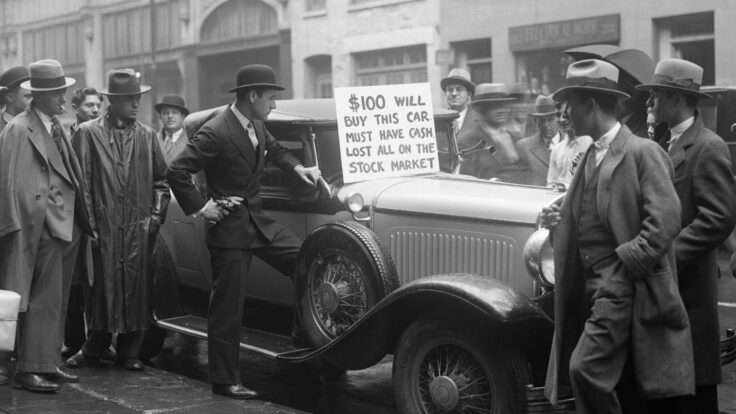
The Spirit of ’29
Financial history doesn’t repeat itself, but it does often rhyme. Amid a speculative frenzy, deregulation, trade wars, and a handful of megacaps propping up the markets, some of Wall Street’s brightest minds wonder whether 2026 might resemble 1929.
Marc Rowan
William D. Cohan • November 21, 2021
Street Credit
A recent string of bankruptcies and defaults suggests some challenges in the seemingly indomitable private credit market. And yet, according to some O.G.s, things have never been better. Apollo’s Marc Rowan lays bare the risks and rewards.
David Ellison
William D. Cohan • November 21, 2021
Ellisonology 101
In his first earnings call as C.E.O. of Paramount Skydance, David Ellison offered a masterclass in corporate optimism, promising “synergies” and artfully dodging questions about a possible Warner Bros. Discovery takeover. Alas, the time to act is here.


Michael Bloomberg
William D. Cohan • November 21, 2021
What Does Bloomberg Want for Bloomberg L.P.?
A modest proposal for how New York’s $100 billion man could bequeath his namesake, and its monumental profits in perpetuity.
Jim Chanos
William D. Cohan • November 21, 2021
The Mag Seven Itch
The market is notching record highs for the so-called Magnificent Seven—or should that be Mag 10?—but a subterranean counternarrative is forming as once-secure food and consumer staples crater, and cracks emerge in the $3 trillion private-credit boom.
Brian Roberts
William D. Cohan • November 21, 2021
The Brian Roberts–WBD Bull Case
A new analyst note highlights a heightened sense around Wall Street that Comcast co-C.E.O. Brian Roberts doesn’t merely want WBD, but also truly needs the company—and has a real shot at the asset.


Jamie Dimon
William D. Cohan • November 21, 2021
Jamie’s Castle in the Sky
Dimon’s $3 billion (or maybe as much as $5 billion, really) new headquarters is the physical embodiment of his fortress balance sheet and a metaphor for our fractional banking system. But the seeming permanence of its bronze facade shouldn’t fool old Wall Street hands, who know nothing is forever.


  • Terms
  • Privacy
  • Contact
  • FAQ
  • Careers
© 2026 Heat Media All rights reserved.
Create an account

Already a member? Log In

CREATE AN ACCOUNT with Google
OR YOUR EMAIL

OR

Use Email & Password Instead

USE EMAIL & PASSWORD
Password strength:

OR

Use Another Sign-Up Method

Become a member

All of the insider knowledge from our top tier authors, in your inbox.

Create an account

Already a member? Log In

Verify your email!

You should receive a link to log in at .

I DID NOT RECEIVE A LINK

Didn't get an email? Check your spam folder and confirm the spelling of your email, and try again. If you continue to have trouble, reach out to fritz@puck.news.

CREATE AN ACCOUNT with Google
CREATE AN ACCOUNT with Apple
OR USE EMAIL & PASSWORD
Password strength:

OR
Log In

Not a member yet? Sign up today

Log in with Google
Log in with Google
Log in with Apple
Log in with Apple
OR USE EMAIL & PASSWORD
Don't have a password or need to reset it?

OR
Verify Account

Verify your email!

You should receive a link to log in at .

I DID NOT RECEIVE A LINK

Didn't get an email? Check your spam folder and confirm the spelling of your email, and try again. If you continue to have trouble, reach out to fritz@puck.news.

YOUR EMAIL

Use a different sign in option instead

Member Exclusive

Get access to this story

Create a free account to preview Puck’s full offering, including exclusive articles, private emails from authors, and more.

Already a member? Sign in

Free article unlocked!

You are logged into a free account as unknown@example.com

ENJOY 1 FREE ARTICLE EACH MONTH

Subscribe today to join the inside conversation at the nexus of Wall Street, Washington, A.I., Hollywood, and more.

START 14-DAY FREE TRIAL

  • Daily articles and breaking news
  • Personal emails directly from our authors
  • Gift subscriber-only stories to friends & family
  • Unlimited access to archives
  • Bookmark articles to create a Reading List
  • Quarterly calls with industry experts from the power corners we cover