• Washington
  • Wall Street
  • A.I.
  • Hollywood
  • Media
  • Fashion
  • Sports
  • Art
  • Join Puck Newsletters What is puck? Authors Podcasts Gift Puck Careers Events
  • Join Puck

    Directly Supporting Authors

    A new economic model in which writers are also partners in the business.

    Personalized Subscriptions

    Customize your settings to receive the newsletters you want from the authors you follow.

    Stay in the Know

    Connect directly with Puck talent through email and exclusive events.

  • What is puck? Newsletters Authors Podcasts Events Gift Puck Careers
 
Puck logo
 
Dry Powder

Hello and welcome back to Dry Powder. 


Thanks as always for subscribing to Puck, our new media company covering the intersection of Wall Street, Washington, Silicon Valley, and Hollywood. And thanks for being part of the Dry Powder community.


In today's column: Jamie Dimon, Jeremy Barnum, Larry Fink, Sam Zell, and Bill Ackman; some praise for Mike Milken, and a few words on John Foley.


Bill


P.S. If this email was forwarded to you, you can sign up for Puck here.

dimon

Jamie vs. the Crypto Bulls

What’s really going on between Wall Street’s blockchain envy, bonus season at Goldman, and Larry Fink’s god complex.

William Cohan

WILLIAM D. COHAN

You don’t need to watch that ridiculous Matt Damon commercial on loop to understand that the crypto markets have been on fire. Venture firms, in particular, are placing huge new bets on the crypto market: FTX, the crypto exchange, just launched a $2 billion fund, competing with similarly sized funds from a16z ($2.2 billion) and Paradigm ($2.5 billion) last year. On the other side, however, Jamie Dimon says “cryptocurrency has no intrinsic value” and called bitcoin “worthless.” 


There are a couple of different things going on here. The VCs are focused on the Next Big Thing and believe that the blockchain technologies behind digital currencies, smart contracts, and NFTs will lead to a whole new architecture for the Internet and a wave of important new businesses that could become the next Google, Amazon, or Meta. The VCs are raising these big funds, or have already raised them, with the intention of placing lots of bets on what they hope this future will look like.


The Big Banks, on the other hand, are trying to shore up economic moats that are slowly but surely being eroding. You can see the concern growing at JPMorganChase, for instance, which is feeling increased competition in both its payments and consumer-lending businesses. On Friday, Jamie announced that the bank would “spend a few bucks” to defend its turf. Talk about an understatement: JPMorganChase had record earnings of $48 billion in 2021, and is increasing its $12 billion technology expenditure by 20 percent this year to keep pace.


Jeremy Barnum, the bank’s C.F.O., elaborated that “part of the reason” for the increased spending is because of competition “from novel entrants,” alluding to, I presume, companies like Square (now Block) and Stripe, in the payments business, and from upstart consumer lenders like Lending Club and SoFi, which have been undercutting the Big Banks on the price of consumer loans. Why would someone, say, borrow $100,000 from JPMorganChase at 6 percent interest when Lending Club would offer them the same $100,000 for 4 percent interest? So while the moats remain huge at the Big Banks in most investment banking businesses, such as debt and equity underwriting, trading, corporate lending and M&A, the competitive concerns are growing in other parts of the consumer lending and payments business. (That is one reason that James Gorman, the C.E.O. of Morgan Stanley, told me during our recent lunch that Morgan Stanley is not in those businesses.)


As for Bitcoin and cryptocurrencies generally, Jamie may end up being right. But who knows? (JPMorganChase, for what it’s worth, has created its own digital coin to speed up corporate payments.) I prefer to think of it this way: If someone is willing to pay $43,000 for a single Bitcoin, then it’s worth $43,000, in the same way that a Picasso is worth $30 million if someone will pay $30 million for it, while to someone else it might just be a canvas with a couple of cans of paint on it.

Larry Fink’s Latest Milestone


Larry Fink’s BlackRock now manages $10 trillion in assets, according to the firm’s Friday earnings report. It’s a staggering sum that has some sounding off about the impact on the efficiency of markets when so much money is concentrated in just a few passive investment funds.


But I worry less about the absolute dollar amount that BlackRock manages and more about Fink’s seemingly never-ending need to be seen as the most powerful man on Wall Street. Every few months or so, there is a new wave of fawning media coverage about Fink, or a series of Fink cable-television appearances. Last week, we were treated to yet another lavish profile, this time in the Wall Street Journal. It began, “Few private citizens wield more power in America today than Larry Fink, the chief executive of BlackRock, Inc.” (The Journal reporter met with Fink at his “horse farm” in Westchester County.) 


According to the Journal, BlackRock funds are among the three largest shareholders in 400 of the S&P 500 companies. Ok, I get it, by controlling so many assets under management—equal to about 10 percent of the world’s G.D.P.—Fink has an immense amount of power, theoretically anyway, as a large shareholder in a broad array of companies to push whatever agenda seems to be important to him at any given time. At the moment, Fink seems quite taken up with BlackRock’s E.S.G. agenda—that’s Environmental, Social, and Governance—and his warning that we all must begin to prepare for the day when fossil fuels are either no longer available or no longer commercially viable. He seems content to be in the middle of a firestorm between people who think he’s too aggressive and those who think he’s not aggressive enough. 


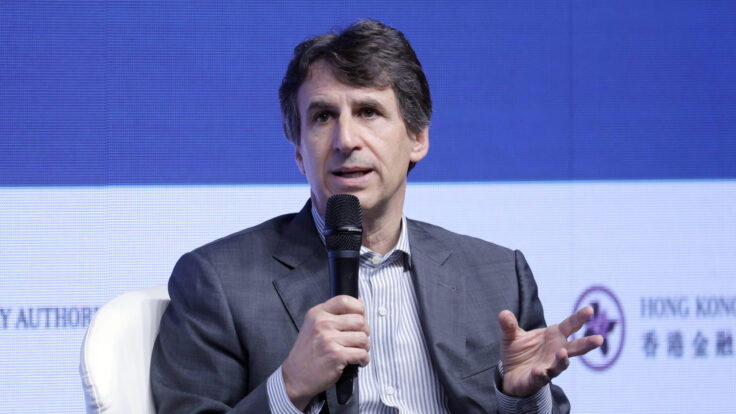
For all his high-minded investment philosophizing, Fink is also a political creature who was able to sweep apparent narrative inconveniences–such as his departure from First Boston and fallout with Steve Schwarzmann–under the rug. He was on the short list to be Hillary Clinton’s Treasury Secretary, but then accepted a role on Trump’s C.E.O. advisory council—at least until it became a liability to do so after Charlottesville. Fink’s name was also floated to be Joe Biden’s Treasury Secretary. That post went instead to Janet Yellen. But the number two position at Treasury went to Fink’s chief of staff, Adewale “Wally” Adeyemo, while the head of Biden’s National Economic Council, Brian Deese, was in charge of BlackRock’s sustainable investing initiative. As the longtime contrarian investor Sam Zell once told CNBC, “I didn’t know Larry Fink had been named God.” As usual, Zell is right.

Goldman Bonus Fever


Goldman’s commodities desk had a phenomenal year—$2.2. billion, wowza—and now top traders are getting bonuses upwards of $30 million each. This made me think of the biggest bonus seasons from my time working on, and covering, Wall Street.


First, a note of caution. Bankers and traders on Wall Street had better load up the bonus dump truck for 2021 because it’s highly unlikely 2022 will be as good. Last year, it seemed that every aspect of the investment banking business was on fire: M&A, debt underwriting, equity underwriting, I.P.O.s, SPACs—you name it. So those people raking in the big bonuses on Wall Street probably believe they deserve them based on the profits they generated for their firms. When JPMorganChase can still make $48 billion in net income after paying out what will probably be record bonuses, you know the year was very special. 


Of course, the truth is these bankers and traders should be thanking Jay Powell for their good fortune because without the Fed’s prolonged Quantitative Easing policies—flooding the financial markets with cheap money—stock prices would not be hitting new highs and M&A volume would not be at an all-time record. All that is poised to change in 2022, as the Fed is signalling its intention to raise short-term interest rates—as many as four times, Goldman says; Dimon sees as many as seven hikes this year—and that it will be tapering its Q.E. program. It’s time to fight inflation, it seems, and to stop pouring tequila into the punchbowl. 


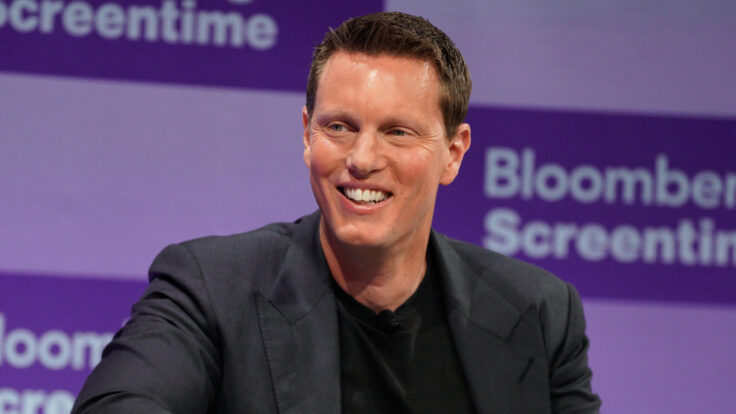
Wall Street bonuses, while absurd for people who have none of their own capital at risk, are all relative. When a crew of Goldman proprietary traders made the bank $4 billion in profit by betting against the mortgage market in 2007, and were paid bonuses of around $10 million each for that accomplishment, they protested that the bonuses weren't big enough. They left Goldman to start their own hedge fund. Bank employees must have had a similar feeling when hedge fund manager Bill Ackman made $3.6 billion for his investors on a $27 million investment in three weeks in and around February and March 2020—netting something like $500 million for himself. Paydays like that get clever traders wondering what lies beyond the hallowed walls of Goldman Sachs for them, if they have the guts to go out on their own. 


Once upon a time on Wall Street, the bonuses really meant something. Who can forget Mike Milken’s $550 million bonus in 1987? That’s when bonuses were bonuses! All it took was for Milken to create a whole new vein of finance—the junk-bond market—and then to make his firm, Drexel Burnham Lambert, the undisputed king of that market. Of course, two years later, Milken was indicted for racketeering and securities fraud (and pleaded guilty to securities fraud, spending two years in prison) while Drexel Burnham filed for bankruptcy in 1990 and was liquidated. Meanwhile, the junk-bond market that Milken created continues to thrive and thrive, netting for the bankers who underwrite junk-bond deals millions of dollars in annual bonuses. Thanks Mike! 

Peloton vs. Reality


Old Dominion Freight Line, a 100-year-old trucking company, just replaced Peloton in the Nasdaq 100. Was it a sign of the times?


Peloton makes a mean machine, there’s little doubt about that. But the company and its “story” of being able to create social networks of like-minded Peloton enthusiasts always struck me as a bit far-fetched and just so much hype. That was certainly my impression when John Foley, the Peloton C.E.O., spoke about the company in October 2019 at the Vanity Fair New Establishment Summit a month or so after the company’s I.P.O. There was a ton of hype around the company, just as there was two decades prior, when the Stairmaster came out of nowhere to take the home and gym exercise market by storm. 


But these days, the bloom is off the rose for Peloton, just as it blew off Stairmaster once upon a time. In the past year, Peloton’s stock has fallen more than 80 percent, which probably explains why the Nasdaq 100 dropped it from the index. There will be more of this kind of thing in 2022, as the equity markets begin to move into a more “risk-off” mode, in line with the Fed’s tightening of the credit markets and rising interest rates. For the past few years, reaching back into the early days of the Trump administration, hype and unbridled enthusiasm has been the theme of the equity markets (and the debt markets for that matter). That was bound to change, and the change is afoot. I’d expect investors to continue to tire of owning stock in companies such as Peloton, or BuzzFeed (down 55 percent since it went public last month), or even Tesla which is off 13 percent already in 2022. The rotation into value stocks, like Old Dominion, which would never be accused of being hyped up, is under way. Old Dominion’s stock is up 22 percent in the last six months.

FOUR STORIES WE'RE TALKING ABOUT

cocktail

The Chapek Doctrine

The Disney C.E.O.'s “relentless focus on our audience” is generating a lot of chatter, but, as always, there's an alternative motive.

MATTHEW BELLONI

money bag

D.C. Does Hollywood

Is Washington losing its luster to the media-content machine? Plus: Ted Cruz’s apology tour and the return of Beto O’Rourke.

PETER HAMBY

money bag

Netflix Eats ESPN's Lunch

Some thoughts on whether Netflix is trying to steal ESPN’s playbook, and Axios’ turning point. Plus some other dish.

DYLAN BYERS

card

How Jeff Immelt Lost NBC

NBCUniversal is now probably worth well north of $100 billion. So why the hell did GE sell it for $30 billion a decade ago?

WILLIAM D. COHAN

 
swash divider
Facebook Twitter Instagram LinkedIn

You received this message because you signed up to receive emails from Puck.


Was this email forwarded to you?

Sign up for Puck here.


Sent to {{customer.email}}

Unsubscribe


Puck is published by Heat Media LLC.
64 Bank Street
New York, NY 10014


For support, just reply to this e-mail.

For brand partnerships, email ads@puck.news

SEE THE ARCHIVES

SHARE
Try Puck for free

Sign up today to join the inside conversation at the nexus of Wall Street, Washington, A.I., Hollywood, and more.

Already a member? Log In


  • Daily articles and breaking news
  • Personal emails directly from our authors
  • Gift subscriber-only stories to friends & family
  • Unlimited access to archives

  • Exclusive bonus days of select newsletters
  • Exclusive access to Puck merch
  • Early bird access to new editorial and product features
  • Invitations to private conference calls with Puck authors

Exclusive to Inner Circle only


Latest Articles from Wall Street

Geoffroy van Raemdonck
William D. Cohan • January 16, 2022
The Saks Financial Colonoscopy
Amid a torrent of bankruptcy filings, a blunt declaration by Saks Global’s newly appointed chief restructuring officer lays out precisely what went wrong and when, and who got screwed hardest—plus which risk-hungry investors are likely to call the shots moving forward. As it turns out, the company’s capital structure became “unsustainable” almost immediately after its $2.7 billion acquisition of Neiman Marcus Group in December 2024.
David Ellison
William D. Cohan • January 16, 2022
The Ellison Way of Parenting
David Ellison’s latest schemes to wrest Warner Bros. from Netflix have proved insufficient after his previous negotiating tactics ran up the price. Meanwhile, he’s losing the respect of the WBD guys across the table. But will his dad come to the rescue with another, say, $10 billion to bail him out?
Patrick Drahi
William D. Cohan • January 16, 2022
A History of Creditor-on-Creditor Violence
Wall Street invented the coercive liability management exercise, which allows companies to play their creditors against one another as they extract beneficial terms for themselves—a now-routinized tradition referred to as “creditor-on-creditor violence.” But now Apollo, Oaktree, BlackRock, and JPMorgan Chase are teaming up to put an end to this mess.


Larry Ellison, David Ellison
William D. Cohan • January 16, 2022
The Zaz–Ellison Dagger Contest
Warner Bros. Discovery’s most recent S.E.C. filing reveals the latest battle lines between the company and its hostile suitor. In particular, the document evinces a deep distrust of Paramount Skydance’s proposed deal financing, recasting the $108 billion all-cash offer as an $87 billion L.B.O. that could fall apart before closing.
David Zaslav
William D. Cohan • January 16, 2022
What Is Zaz TV Really Worth?
The battle for Warner Bros. Discovery is increasingly coming down to how Netflix and Paramount Skydance value the declining TV assets (and CNN) that David Zaslav is determined to separate from the Warners mothership. Versant, which just started trading on Nasdaq this week, may provide the answer.
greg abel
William D. Cohan • January 16, 2022
Make Berkshire Hathaway Great Again?
Greg Abel, the handpicked successor to Warren Buffett, faces one of the most exalted and daunting jobs in finance: determining what to do with the staggering $358 billion bequeathed to him by the most legendary investor of his generation. Herewith, three proposals for what Abel should buy with all that cash.


David Ellison, Larry Ellison
William D. Cohan • January 16, 2022
Zaz Is From Mars, the Ellisons Are From Venus
Murmurs from sources close to the Warner Bros. Discovery deal illuminate the latest machinations surrounding the Paramount-Netflix showdown—and where this thing is headed.


Get access to this story

Enter your email for a free preview of Puck’s full offering, including exclusive articles, private emails from authors, and more.

Verify your email and sign in by clicking the link we just sent.

Already a member? Log In


Start 14 Day Free Trial for Unlimited Access Instead →


Latest Articles from Wall Street

Larry Ellison
William D. Cohan • January 16, 2022
“Larry Didn’t Show Up, and David Got Ahead of His Skis”
Everything you wanted to know about the Warner Bros. Discovery board’s doubts with the Ellisons’ bid (but were afraid to ask) is revealed in its 14D-9 filing—a mother lode of alleged Paramount missteps, from squabbles over consent provisions and breakup fee reimbursements to junior lien debt and the financial capacity of the world’s fifth-richest man.
larry ellison david ellison
William D. Cohan • January 16, 2022
Ellison Irrevocable Trust Issues
Despite their numerous bids for all of WBD, a rift has opened between the principals at Paramount Skydance and the board and advisors of their target company—at least for now. Can money heal all wounds?
larry ellison david ellison
William D. Cohan • January 16, 2022
The Ellisons at the Gates
Paramount has raised the stakes in its hostile bid for Warner Bros. Discovery, and may yet go higher. Now Netflix must decide how much it wants to venture into junk credit-rating territory, or play games with its stock, to secure the prize.


Larry Ellison, David Ellison
William D. Cohan • January 16, 2022
Netflix’s $83B Math & The Ellison Hostile Meter
A talmudic reading of the mishegas following the $83 billion Netflix-WBD deal: Zaz’s personal economics; the likelihood that this turns hostile; the unusual consortium of banks underwriting the deal; the value of the Gunnar stub; regulatory open questions; the $5.8 billion breakup fee; and more.
Leon Black
William D. Cohan • January 16, 2022
The Epstein Monologues
The recently released, one-sided correspondence between Jeffrey Epstein and Leon Black illustrates a discourse between a hustler and a billionaire with too much money and too little time on his hands. So why couldn’t Black get rid of him sooner?
Mike Mayo
William D. Cohan • January 16, 2022
Wall Street Enters the “Cockroach” Wars
The multitrillion-dollar growth of private credit is fueling an acrimonious debate on Wall Street over whether this surging shadow market is the future of finance or the seed corn of the next crisis. Is Rowan right? Or Dimon? Or Gundlach? As Mike Mayo put it, someone is wrong.


david zaslav
William D. Cohan • January 16, 2022
Zaz the World Turns
News, notes, and palace intrigues from all sides of what might become the largest M&A deal of the year: the three-way tussle for David Zaslav’s Warner Bros. Discovery.
Get access to this story

Enter your email to get access to one article and free previews of our private emails from Puck authors and editors.

OR

Already a Member? Sign in


Latest Articles from Wall Street

wall street 1929
William D. Cohan • January 16, 2022
The Spirit of ’29
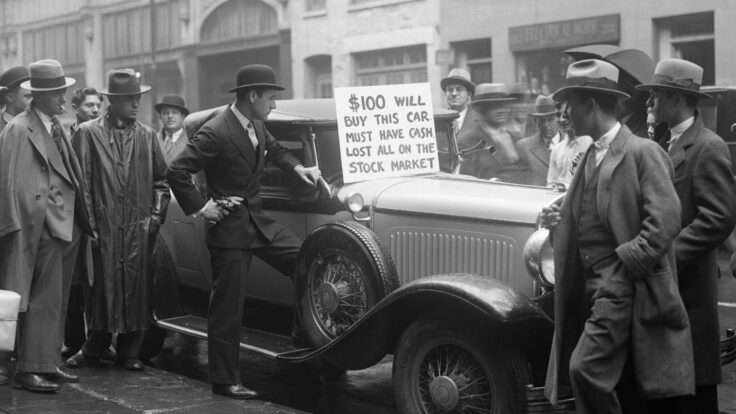
Financial history doesn’t repeat itself, but it does often rhyme. Amid a speculative frenzy, deregulation, trade wars, and a handful of megacaps propping up the markets, some of Wall Street’s brightest minds wonder whether 2026 might resemble 1929.
Marc Rowan
William D. Cohan • January 16, 2022
Street Credit
A recent string of bankruptcies and defaults suggests some challenges in the seemingly indomitable private credit market. And yet, according to some O.G.s, things have never been better. Apollo’s Marc Rowan lays bare the risks and rewards.
David Ellison
William D. Cohan • January 16, 2022
Ellisonology 101
In his first earnings call as C.E.O. of Paramount Skydance, David Ellison offered a masterclass in corporate optimism, promising “synergies” and artfully dodging questions about a possible Warner Bros. Discovery takeover. Alas, the time to act is here.


Michael Bloomberg
William D. Cohan • January 16, 2022
What Does Bloomberg Want for Bloomberg L.P.?
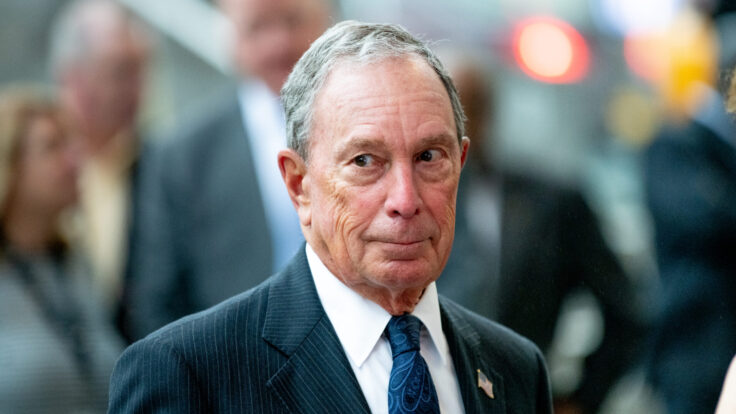
A modest proposal for how New York’s $100 billion man could bequeath his namesake, and its monumental profits in perpetuity.
Jim Chanos
William D. Cohan • January 16, 2022
The Mag Seven Itch
The market is notching record highs for the so-called Magnificent Seven—or should that be Mag 10?—but a subterranean counternarrative is forming as once-secure food and consumer staples crater, and cracks emerge in the $3 trillion private-credit boom.
Brian Roberts
William D. Cohan • January 16, 2022
The Brian Roberts–WBD Bull Case
A new analyst note highlights a heightened sense around Wall Street that Comcast co-C.E.O. Brian Roberts doesn’t merely want WBD, but also truly needs the company—and has a real shot at the asset.


Jamie Dimon
William D. Cohan • January 16, 2022
Jamie’s Castle in the Sky
Dimon’s $3 billion (or maybe as much as $5 billion, really) new headquarters is the physical embodiment of his fortress balance sheet and a metaphor for our fractional banking system. But the seeming permanence of its bronze facade shouldn’t fool old Wall Street hands, who know nothing is forever.


  • Terms
  • Privacy
  • Contact
  • FAQ
  • Careers
© 2026 Heat Media All rights reserved.
Create an account

Already a member? Log In

CREATE AN ACCOUNT with Google
OR YOUR EMAIL

OR

Use Email & Password Instead

USE EMAIL & PASSWORD
Password strength:

OR

Use Another Sign-Up Method

Become a member

All of the insider knowledge from our top tier authors, in your inbox.

Create an account

Already a member? Log In

Verify your email!

You should receive a link to log in at .

I DID NOT RECEIVE A LINK

Didn't get an email? Check your spam folder and confirm the spelling of your email, and try again. If you continue to have trouble, reach out to fritz@puck.news.

CREATE AN ACCOUNT with Google
CREATE AN ACCOUNT with Apple
OR USE EMAIL & PASSWORD
Password strength:

OR
Log In

Not a member yet? Sign up today

Log in with Google
Log in with Google
Log in with Apple
Log in with Apple
OR USE EMAIL & PASSWORD
Don't have a password or need to reset it?

OR
Verify Account

Verify your email!

You should receive a link to log in at .

I DID NOT RECEIVE A LINK

Didn't get an email? Check your spam folder and confirm the spelling of your email, and try again. If you continue to have trouble, reach out to fritz@puck.news.

YOUR EMAIL

Use a different sign in option instead

Member Exclusive

Get access to this story

Create a free account to preview Puck’s full offering, including exclusive articles, private emails from authors, and more.

Already a member? Sign in

Free article unlocked!

You are logged into a free account as unknown@example.com

ENJOY 1 FREE ARTICLE EACH MONTH

Subscribe today to join the inside conversation at the nexus of Wall Street, Washington, A.I., Hollywood, and more.

START 14-DAY FREE TRIAL

  • Daily articles and breaking news
  • Personal emails directly from our authors
  • Gift subscriber-only stories to friends & family
  • Unlimited access to archives
  • Bookmark articles to create a Reading List
  • Quarterly calls with industry experts from the power corners we cover