{{ 'now' | timezone: 'America/New_York' | date: '%b %d, %Y' }} |
|
|
Welcome to Dry Powder. I’m Bill Cohan.
The bidding war over
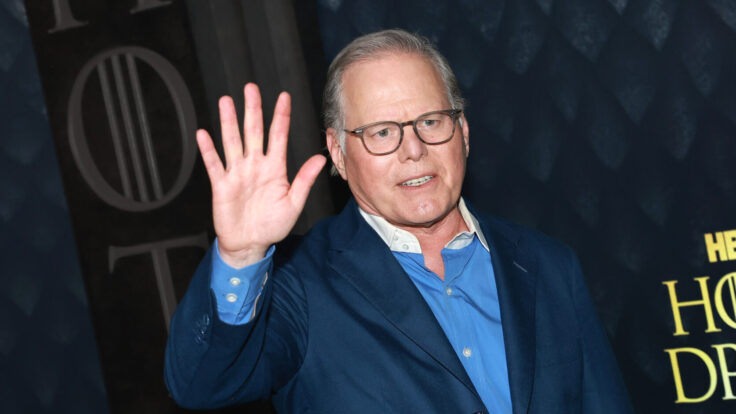
David Zaslav’s Warner Bros. Discovery, which I’ve been covering along with some of my Puck partners, has continued to throw off sparks since I last checked in on Sunday, as the deal heat intensifies. The Ellisons have sweetened Paramount’s offer six times, backed by Gulf sovereign wealth funds, only to be outflanked—at the moment anyway—by Netflix’s Ted Sarandos and Greg Peters. Tonight, I’m looking at how much an
eventual deal will depend on the competing valuations of Gunnar Wiedenfels’s declining linear TV stub and Netflix’s willingness to venture into junk credit-rating territory. Then I have a suggestion for how David Ellison can end this whole thing right now.
But first… |
|
|

| Julia Alexander
|
|
- Versant’s
outlandish viewership data: During Versant’s big investor day last week, the company displayed a chart for analysts that offered an elite case study in the art of spin. The chart suggested that Versant’s suite of orphaned cable channels ranked second in total hours watched behind only Netflix, with 14.4 billion hours compared to the streaming giant’s 40.5 billion. Versant’s data put the company ahead of Hulu’s 13.8 billion hours and Disney+’s 10.4 billion
hours.
Accurate, perhaps, but missing some important context. After all, there’s a big difference in value between declining, stagnant audiences and audiences that can be converted to digital subscription platforms. To wit: Cable’s share of total TV time dropped from 33 percent in November 2022 to around 22 percent last month. Meanwhile, digital platforms are now collecting more than 50 percent of total TV advertising spend. So while Versant has more total hours watched than Hulu or
Disney+, it’s safe to say that the vast majority of investors, advertisers, and audiences would pick Hulu and Disney+ over Versant any day of the week. (As Bill would say, this is not investment advice.)
|
|
|
And now on to the main event… |
|
|
Paramount has raised the stakes in its hostile bid for Warner Bros. Discovery, and
may yet go higher. Now Netflix must decide how much it wants to venture into junk credit-rating territory, or play games with its stock, to secure the prize. |
|
|
As could easily be surmised from the tea leaves last weekend, there was no way
that Paramount was going to go gently into that good night and allow Netflix to walk away with Warner Bros. Discovery for $27.75 a share in cash and stock, plus the value of the Discovery Global stub equity. After all, the Ellisons essentially launched the battle for WBD on September 11, with the leak to The Wall Street Journal that they wanted to own the whole company and would be bidding for it, though WBD had not officially put itself up for sale. The ink had been
dry barely a month on the Ellisons’ acquisition of Paramount before they were thinking about what to buy next.
Three days after the Journal leak, on September 14, David Ellison made the pilgrimage to see David Zaslav at his Beverly Hills home, once owned by legendary film producer Robert Evans, and subsequently made a cash-and-stock offer to acquire all of WBD for $19 a share: a
52 percent premium to the unaffected stock price, and a figure that instantly made Zaz’s recently recut stock options—with a strike price of $10.16 a share that would fully vest upon a change-of-control transaction—extremely valuable.
Between September and early December, the Ellisons made an astounding six bids for WBD, finally sweetening their offer last week to $30 a share, all cash—a 58 percent increase from their first offer. I can’t recollect another example of one company
bidding so aggressively against itself so many times until finally giving the seller pretty much everything it asked for (according to the tender offer documents, anyway)—only to be jilted, in the end, in favor of another suitor, with what could be construed as a lower bid. We’ve all read David Ellison’s beseeching (and cringy) text trail to Zaz: “It would be the honor of a lifetime to be your partner,” he texted. “Please note importantly we did not include ‘best and final’ in our bid.” Thirty
minutes later, Blair Effron, the co-founder of Centerview Partners, representing Paramount, texted his old friend Roger Altman, the co-founder of Evercore, one of WBD’s three bankers, and reiterated that the $30-a-share, all-cash offer wasn’t the end of it for Paramount. But the appeals fell flat. |
|
|
A MESSAGE FROM HARRY WINSTON |
This holiday season, give the gift that shines forever. Celebrate the holiday season with the timeless brilliance of diamond
jewelry by Harry Winston. |
|
|
The Ellisons probably do have more cash to offer WBD. The market certainly seems
to be expecting a higher price for the company. On Wednesday, the WBD stock was trading at about $29.70 per share, suggesting that the arbs in the stock, and just about everyone else, expect a deal above $30 per share. (That’s a price that Zaz said he wanted, and one that everyone thought he was smoking something to want.) The question, I suspect, is when to up their $30-a-share offer, and by how much. Should they increase the price soon in order to try to seal the deal with
shareholders? Or after December 22, when WBD is required to respond to Paramount’s initial hostile tender offer with its recommendations for WBD shareholders? I can’t imagine the board will recommend that its shareholders tender to PSKY, at least not at this point.
Regardless, the money is there. The Ellisons and their partners at RedBird Capital have agreed to “backstop” the full $40.7 billion of equity required by its $30-a-share offer, alongside $54 billion in debt commitments from a
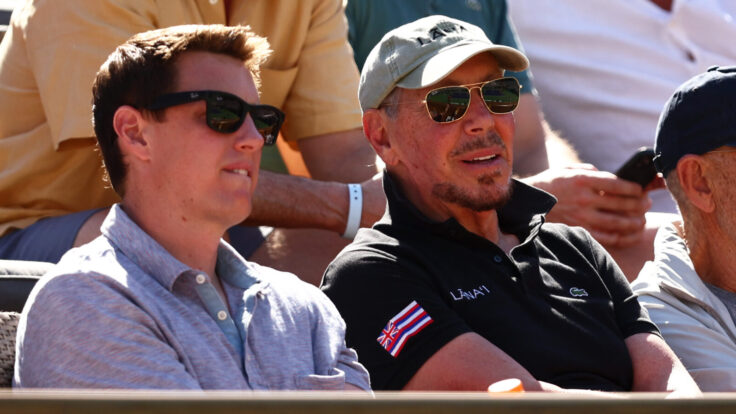
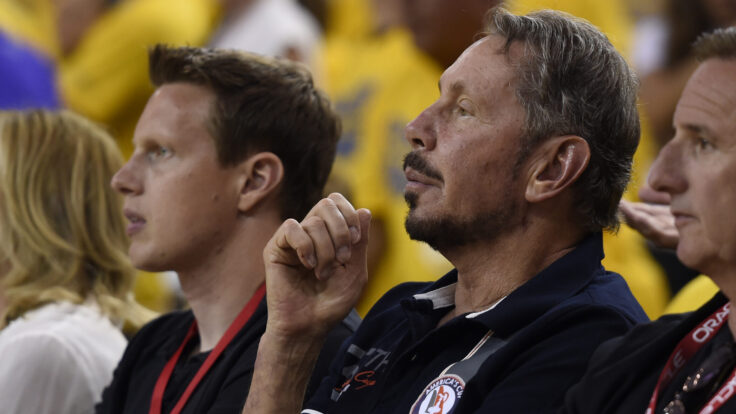
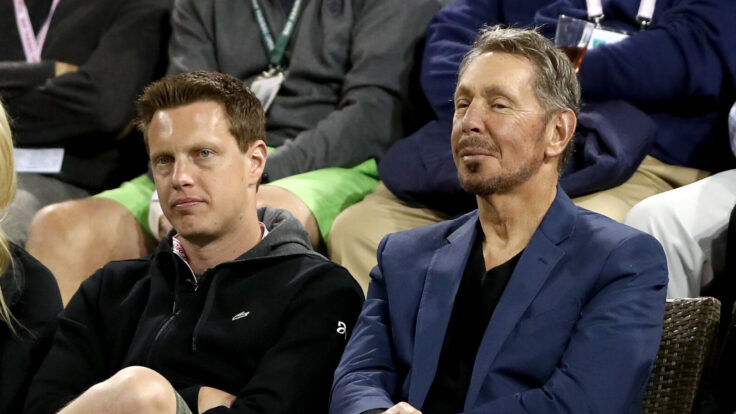
troika consisting of Bank of America, Citigroup, and Apollo, and the assumption of $13.7 billion in WBD debt that will not be refinanced. (Oh, how the world has changed.) Upon closer inspection, as has been widely reported, Larry is putting up nearly $12 billion of the equity, with another $24 billion collectively coming from three Gulf sovereign wealth funds: the Public Investment Fund of Saudi Arabia, the Qatar Investment Authority, and L’imad Holding Company PJSC (backed by
Abu Dhabi). Each of these three entities has astoundingly agreed to make the investment without receiving a board seat, any preferred return, or any governance rights at all—measures, no doubt, intended to avoid a federal CFIUS (Committee on Foreign Investment in the United States) review. Then there’s the $200 million or so in equity from Affinity Partners, Jared Kushner’s private equity fund, most of which comes from Saudi Arabia as well.
RedBird also agreed to absorb the $1 billion that Tencent, the Chinese tech company, was going to invest before pulling out of the deal.
So, the majority of Paramount’s equity for the deal is coming from foreign sovereign wealth funds, with a dollop also coming from Donald Trump’s son-in-law. Nothing unusual there, right? Given the blowback Paramount is getting for Jared’s involvement for $200 million, why keep him in the deal? I suspect he may drop out
before all this is over.
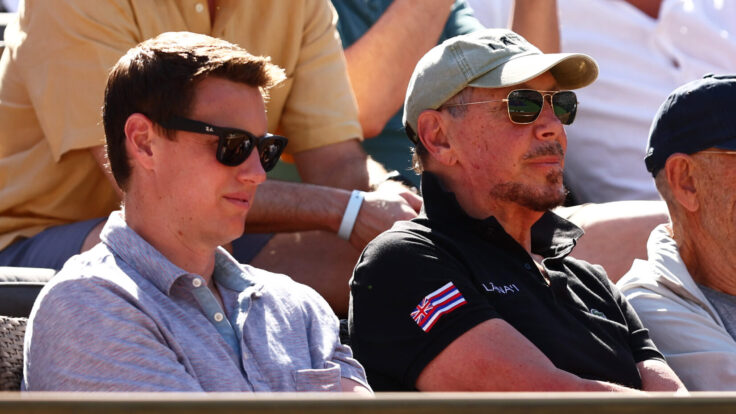
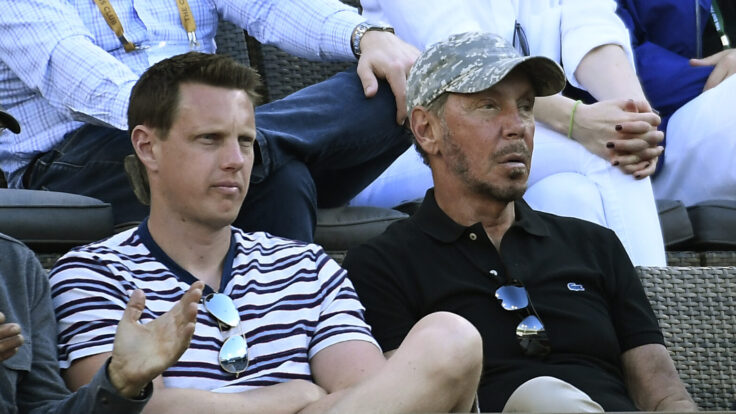
Incredibly, the world’s second-richest man, with a net worth estimated these days at $350 billion, is only (a word I use advisedly here) putting up $12 billion of that fortune, or 29 percent of the total equity amount. Larry also invested $6 billion in Paramount when the Ellisons took control of the company in August. Comparatively, Elon Musk stepped up for $24 billion of the $31 billion in his $44 billion hostile takeover of Twitter—77
percent of the total equity invested. (Yes, Larry threw a billion into that deal, too.) Given that each $1-a-share increase in the bid for WBD adds another $2.5 billion, it sure seems like Larry could easily step up for another few dollars a share here. What’s another $4 a share, or $10 billion, for Larry at this point? I don’t mean to be flip with Larry Ellison’s billions, but if you are going hostile and you want to win, then this is your moment. (This is not investment advice. Also:
As a result of our recent acquisition of Air Mail, Zaz is a de minimis investor in Puck. Through the same deal, RedBird Capital is a minority shareholder in this company.) |
Before contemplating where this all might lead, let’s assess the debate over the current bids:
Paramount’s $30 a share, all cash, versus Netflix’s $27.75 a share in cash and stock, plus the value of Gunnar Wiedenfels’s cable spinoff stub. As I indicated on Sunday, the WBD board probably reached its decision because its bankers are valuing Gunnar’s stub in excess of $2.25 a share. Duh. Is that crazy or not? As I’ve referenced many times before, Jessica Reif Ehrlich at Bank of America valued the stub at a little more than
$5 a share in September. I’ve been told that’s because she’s “in Zaz’s pocket.” This is ridiculous, of course; she is a top-ranked analyst who has been plying her trade for some 30 years or more. Plus, I note with interest, Bank of America is the lead bank on the Paramount debt financing. But deal heat makes people crazy. On December 7, after the WBD board decided to go with Netflix, Jessica issued a revised report, valuing the Discovery Global stub at $3 a share. (She lowered her EBITDA
estimate, cut the amount of debt on the stub to $15 billion, and removed the $6 billion for the equity stake in Streaming and Studios—since Netflix is buying the whole business, not 80 percent of it.)
Anyway, the Paramount folks think Jessica’s analysis, whether $3 or $5, is nuts. In his conversation with CNBC’s David Faber on Monday, David Ellison said that his crew was valuing the stub at $1 per share. Well, obviously, at $1 a share for the stub, the Ellisons’
$30-a-share bid is superior—or, as David likes to say, it’s $17.6 billion more in cash than what Netflix is bidding. That $1-a-share value for Gunnar’s stub is in line with the value proposed by analysts at both Morgan Stanley ($1.50) and Raymond James (up to $2 a share).
To try to get a better handle on how Paramount got to its $1-a-share value for Gunnar’s stub, I rang up some well-informed sources. They suggested, like Morgan Stanley, that the stub could be worth as much as $1.50 per
share, but nowhere near Jessica’s original $5 per share, or even her lower $3. The Paramount analysis has Gunnar’s EBITDA declining to $3.6 billion, from $5.2 billion, in the next two years, and uses a 4.5x multiple instead of a 5x multiple. The analysis also assumes Gunnar’s business will be loaded with $15 billion of debt, after $11 billion goes with Streaming and Studios and some $4 billion more is paid down between now and closing. Stay with me here. The Paramount analysis has Discovery
Global’s EBITDA for the last 12 months at $4.7 billion and for the next 12 months at $3.9 billion. That analysis uses the $3.9 billion, times a 4.5x multiple, less $15 billion in debt, and gets an equity value of $2.55 billion, or a shade more than $1 per share. |
|
|
A MESSAGE FROM HARRY WINSTON |
This holiday season, give the gift that shines forever. Visit your nearest Harry Winston salon and discover a gift that’s as
radiant as you. |
|
|
As a former banker, I know that bankers are very good at creating analyses to justify
whatever outcome their clients are seeking. Obviously, the Paramount folks want Gunnar’s stub to be valued as low as possible since it’s becoming the crucial part of the analyses of Netflix’s bid. But if $3.9 billion and 4.5x are too low—and we’ll know about the 4.5x multiple soon after Versant starts trading on a “when issued” basis in a week or so—then that analysis might get tossed right out the window, as might Jessica’s, for that matter. What’s clear to me is that, for whatever reasons, the
experienced bankers working with WBD—Allen & Co., Evercore, and JPMorgan Chase—obviously are valuing the Gunnar stub equity at more than $2.25 a share. And it doesn’t have to be as high as Jessica’s $3 (in the revised scenario) for the WBD board to have justified its decision and be well within its “business judgment” rights. |
As best as I can tell, it’s been 25 years since Wall Street has enjoyed a battle royale this
engaging. Back in 2000, the barbarians at the gates were only slightly less sexy. The combatants were Warner Lambert, a pharmaceutical and consumer products company that made Listerine, Lipitor, and Chiclets; American Home Products, a company similar to Warner Lambert; and Pfizer, the pharmaceutical behemoth.
Long story short, AHP had agreed to acquire Warner Lambert for $71 billion in a friendly deal. But then Pfizer decided it wanted Warner Lambert and initiated a hostile
all-stock bid for the company—one of the largest hostile stock deals ever—for $82 billion. After a three-month battle, Pfizer won Warner Lambert for $90 billion—$112 billion including debt, actually—creating the second-largest pharmaceutical company in the world. Pfizer paid AHP a $1.8 billion breakup fee. As an ironic coda, AHP later changed its name to Wyeth, which Pfizer acquired in 2009 for $68 billion.
Is something similar about to unfold with Paramount besting Netflix for
WBD? We’ll see. In the end, Pfizer increased its hostile bid by $8 billion, in stock, to get Warner Lambert to give up its AHP deal and make its deal with Pfizer a friendly deal. (Every hostile deal turns into a friendly deal if it’s successful.) And it’s worth recalling that Paramount Skydance was built on the back of Sumner Redstone’s hostile takeover of Viacom, back in the 1980s, and then fortified by Sumner’s successful purloining of Paramount Pictures from the clutches of
Barry Diller, and QVC, a few years later. Hostile deals are in Paramount’s DNA!
What can Netflix, whose market cap is around $100 billion larger than Larry’s personal fortune, do to stay competitive? It depends on how far the streamer is willing to slide down the credit-rating scale, into junk territory. At the UBS media conference on Monday, co-C.E.O. Ted Sarandos addressed the elephant in the room at the outset, but not much beyond
that. “Today’s move was entirely expected,” he said of the Paramount hostile. And then blew right past it. “We have a deal done, and we are incredibly happy with the deal,” Sarandos said. “We think it’s great for our shareholders; we think it’s great for consumers. We think it’s a great way to create and protect jobs in the entertainment industry. We’re super confident we’re going to get it across the line and finish.”
Sure, but there are some tactical considerations. On December 3, an
Allen & Co. banker representing WBD told Effron that “cash is king”—which prompted Paramount to eliminate the stock portion of its bid. Can Netflix eliminate the stock portion of its bid? Some $4.50 per share of Netflix’s $27.75-per-share bid is in stock. That’s $11.25 billion. Could Netflix make that cash instead of stock? Does Netflix have the capacity for another $11.25 billion of debt on top of the $59 billion in an unsecured bridge loan that the company secured from a consortium of
Wells Fargo, BNP Paribas, and HSBC, with Wells Fargo committing $29.5 billion of that total? It’s already the largest bridge loan in Wall Street history.
Could that $59 billion bridge loan balloon to $70 billion? Using recent assumptions from Peter Supino, an analyst at Wolfe Research, the combined Netflix and WBD Streaming and Studio business should have $25.5 billion in pro forma EBITDA in 2027. At the current structure, including the $4.50 per
share of stock, Supino estimates pro forma net debt of $76.6 billion for the combination, or a leverage ratio of 3x—hefty, but not out of control, and still investment grade. If that were increased by another $11.25 billion, to $87.85 billion of debt, the leverage ratio would tick upward to 3.4x—even heftier, of course, but still in the ballpark. If Netflix raised its bid to $30 a share, all cash, or by another $5.6 billion ($2.25 a share times 2.5 billion shares), the borrowings would
increase to $93.45 billion, or a leverage ratio of 3.7x. Now that’s borderline junk territory.
At the moment, Netflix has an enviable investment-grade credit rating. Is it prepared to compete with Paramount by trashing its balance sheet and becoming a junk-rated company? I suspect not. But if it wants to compete with Larry’s billions, and the compliant equity capital from the Gulf, it may have to be willing to do just that. Netflix could also take a page from the Ellisons and
raise new equity capital. Of course, that would probably hurt its high-flying stock, which is already down some 17 percent in the last month. But that may be the price of doing business. And you can be sure that the Ellisons and my pal Blair know this.
If the Ellisons really want to end this drama right here, right now, they should raise their offer to $34 a share, all cash, and take this baby off the table. Netflix won’t be able to match it. Some $93 billion in borrowings is both a
bridge too far for Netflix’s balance sheet and, dare I say, even for the debt markets as a whole during these uncertain times. Otherwise, it’s going to be a long, tough slog before someone can repeat what Diller said about losing Paramount to Sumner and Viacom 30 years ago: “They won. We lost. Next.” |
|
|
Ace media reporter Dylan Byers brings readers into the C-suite as he chronicles the biggest stories in the industry:
the future of cable news in the streaming era, the transformation of legacy publishers, the tech giants remaking the market, and all the egos involved. |
|
|
Join Emmy Award-winning journalist Peter Hamby, along with the team of expert journalists at Puck, as they let you in
on the conversations insiders are having across the four corners of power in America: Wall Street, Washington, Silicon Valley, and Hollywood. Presented in partnership with Audacy, new episodes publish daily, Monday through Friday. |
|
|
Need help? Review our FAQ page or contact us for assistance. For brand partnerships, email ads@puck.news. You received this email because you
signed up to receive emails from Puck, or as part of your Puck account associated with {{customer.email}}. To stop receiving this newsletter and/or manage all your email preferences, click here. |
Puck is published by Heat Media LLC. 107 Greenwich St., New York, NY 10006 |
|
|
|