 |
|
Welcome back to Dry Powder. I’m Bill Cohan.
|
|
My partner Dylan Byers and I have heard rumblings that WBD leadership is starting to sniff around for a buyer for CNN—or at least seriously consider the possibility. In tonight’s special issue of Dry Powder, we look at prospective buyers and the rationales behind a sale.
Also, if you missed my conversation with Matt Belloni, earlier this week, about Bob Iger’s sophomore slump, you can find it here.
|
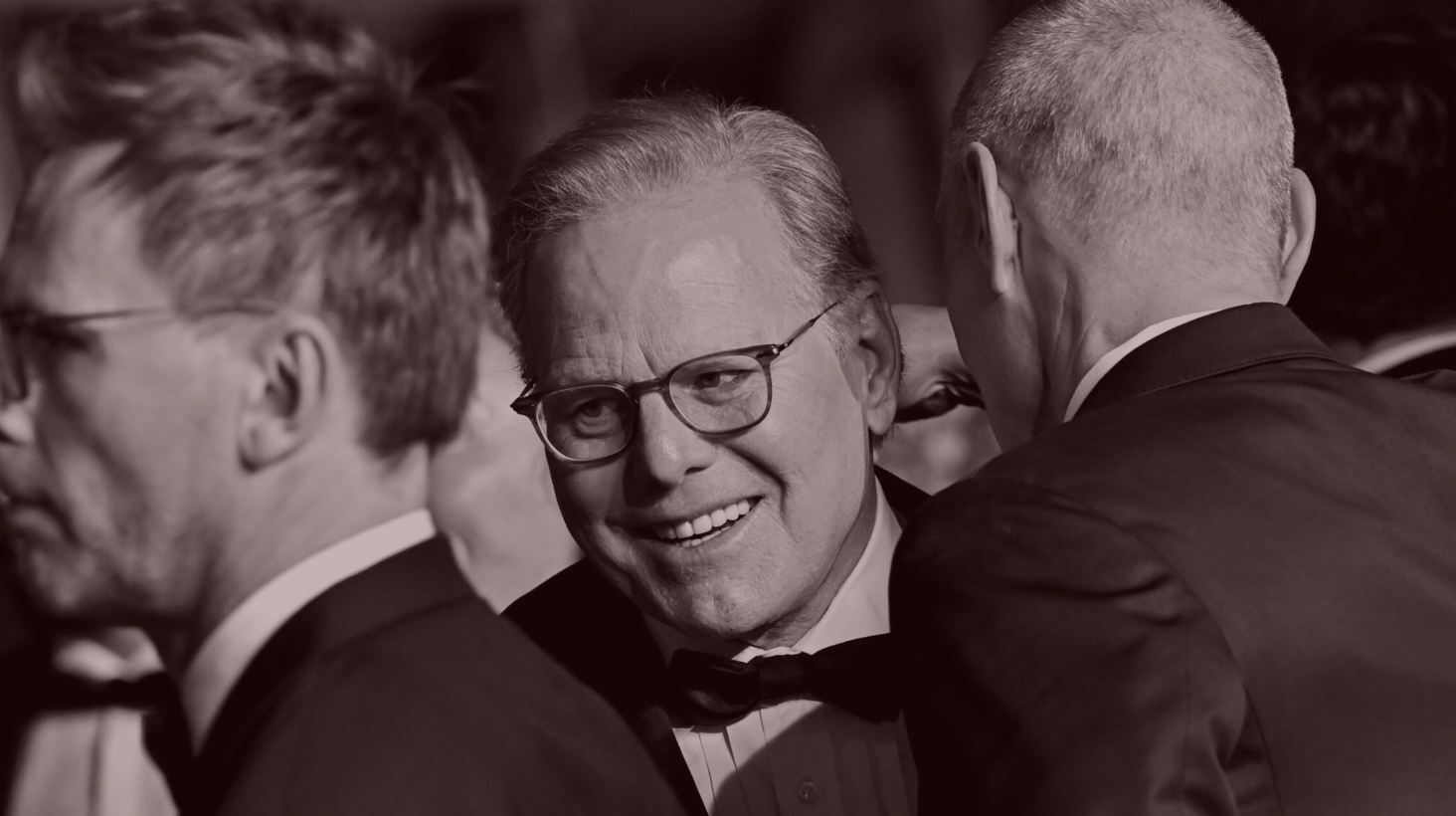 |
| Is Zaz Ready to Enter CNN Deal Mode? |
| As the Allen & Co. conference beckons, and CNN remains leaderless, bankers and executives are wondering if Zaz is ready to seriously consider selling the network in order to service WBD’s debt and excite the equity market (and probably avoid a headache or two). And, if not now, when? |
|
|
|
|
|
| With less than three weeks until the annual Allen & Co. conference, the media mogul set is entering deal heat. All sorts of things get discussed at these gatherings, of course, and this year should be no different. Presumably there will be lots of whispering about the fates of Hulu, ESPN, and Paramount Global, a perennial favorite, as well as the next strategic steps for Bob Iger and Brian Roberts. But one of the most intriguing possibilities being discussed among the M&A crowd on Wall Street pertains to whether David Zaslav might be willing to unload CNN.
CNN, to be clear, isn’t for sale. And senior executives at Warner Bros Discovery will reasonably go out of their way to profess their commitment to the network and to the news business, especially after the very public turmoil of the Chris Licht era and his recent sunrise defenestration in Central Park.
Nevertheless, nothing is ever for sale until it’s for sale: To wit, exploratory and hypothetical exercises are standard banker fare long before actual material conversations emerge and term sheets are distributed. That’s what bankers do. And indeed, bankers have recently been calling prospective buyers to gauge their interest in CNN, according to sources familiar with those calls.
Meanwhile, WBD executives have privately intimated that they are in no rush to name a permanent replacement for Licht, the former chairman and C.E.O., and may not even do so until after the 2024 presidential election, which is still 500 days away. This hiring time frame may reflect WBD executives’ desire to spare themselves, and CNN’s journalists, from any further agita after a series of dramatic ownership and leadership changes, and also to calm things down under the quadricipital leadership coalition of Amy Entelis, Virginia Moseley, Eric Sherling and David Leavy (these power-sharing agreements have their own challenges, of course). But, as importantly, this protracted interim period provides WBD executives with more-than-ample runway to consider their options.
After all, selling isn’t a crazy idea, especially down the line, after all that agita recedes. In the meantime, the WBD team is presumably motivated to rebuild the equity and EBITDA of the business, and there’s no way that Zaz, possibly the most motivated media C.E.O. of his generation, would sell such a prized asset during a fallow market, where it would fetch only a fraction of its peak value. (A WBD official declined to comment.)
At the right price, a CNN sale could be a bonanza for Zaz and for WBD, his publicly traded leveraged buyout, which has some $45 billion of net debt. Zaz’s equity, and that of his principal shareholders, John Malone and the Newhouse family, in particular, would benefit immeasurably from such a paydown. Regardless, the company has to do something here. Even though the WBD stock is up 22.5 percent so far in 2023, it’s down 52 percent since April 2022, when the company was formed, and it’s down 15.4 percent since June 9, about the time Zaz showed Licht the door during their early-morning stroll in the park. |
| The Everything on the Table Era |
|
| Even if CNN is not for sale, it’s clear that we’ve entered a stage in the media business cycle when, to steal a recent coinage from Bob Iger, seemingly everything is on the table. On some level, speculative conversations about CNN’s future aren’t surprising at all. This is what M&A bankers do in a moment of turmoil, especially amid a dearth of dealmaking activity: They pitch an idea, such as selling CNN to the likeliest prospective buyers, and see who bites, if anyone.
The logic for such a deal, at least from a potential buyer’s perspective, is manifold: CNN is a pristine brand, one that could only come up for sale a couple times in a generation. Also, there is no full-time C.E.O. at the top of the company, and there may not be one for at least a year, making it a good time for a buyer with its own management expertise to step in. Then again, from the buyer’s perspective, CNN is in a bit of a lull. The business had been generating EBITDA of around $1 billion a year during the Trump-Zucker heyday, but the expectation is that CNN will probably generate only around $725 million of EBITDA in 2023. A rising interest rate environment has also depressed purchase-price multiples. Not so long ago, we’re told, Wall Street bankers were valuing CNN at around $12 billion to $13 billion, or more than 10x EBITDA. It’s safe to say that kind of valuation for CNN is no longer on the table.
But, again, M&A bankers like to create action in moments of flux—perhaps to see if they can get a putative buyer on the hook to sniff around, or to at least take a meeting. We hear those discussions among bankers and potential buyers are in embryonic stages. Of course, large companies constantly engage M&A bankers to kick tires and explore ideas, but we also hear that Zaz and his C.F.O., Gunnar Wiedenfels, have expressed curiosity about CNN’s potential valuation and potential buyers and potential timing with Wall Street bankers. One thing we know for sure: despite that laughable New York Post report, Zucker and Gerry Cardinale’s RedBird Capital are not trying to buy it. |
|
|
| As a fiduciary for the company, it’s Zaz’s responsibility to contemplate all of his chess moves, however likely or far-fetched. But the timing is complicated and CNN’s outcome would seem to hinge on the dual consideration of Zaz’s long-term conviction about how the business can perform and his short-term responsibility to service WBD’s debt and to pay it down. If Zaz thinks CNN has become too big a headache, or if he thinks the CNN EBITDA is going to $500 million instead of $1 billion, then now might be the time to gin up a sale process or to take meetings from buyers that Wall Street bankers have gotten excited about.
More likely, perhaps, is that Zaz and Gunnar think that CNN’s EBITDA might rebound to $1 billion during and after the upcoming election season. That way, they can bide their time to either find a new leader or see if the market ripens for a sale. If WBD could get $10 billion for CNN—say, 10x $1 billion—that would reduce WBD’s debt down to $35 billion or so, off the BBB cliff, propelling its stock higher. (This is not investment advice.)
Debt aside, things are looking up at WBD. The company is ahead of its 2023 “synergy” plan of $500 million or so, its direct-to-consumer business is heading toward profitability, and fast, and WBD’s debt-to-EBITDA ratio will be under 4x by the end of the year. The company is confident that it will meet the 2.5x-3.5x 2024 debt-to-EBITDA target that Gunnar has already laid out for investors.
So Zaz wont do anything stupid, like sell CNN on the cheap, or embarrass himself by letting it fall into a rival’s hands. The challenge for Zaz and his bankers, of course, is finding a buyer who would be interested in and capable of such an acquisition. Apple or Amazon could easily sign a $10 billion+ check today, no sweat, but historically neither one has seen the logic in getting tied up in the morass of the declining linear TV business. (This is part of what made MGM attractive to Amazon, and makes Paramount less so.) Certainly, one long-running fever dream among journalists is that Jeff Bezos would buy CNN and combine it somehow with his Washington Post, possibly bringing Zucker back to run the combined entity. The two men did meet a few months back, but for the time being that remains nothing more than a fantasy among Zucker loyalists.
Other possible buyers include Cox Enterprises, which recently snapped up Axios for a cool $525 million; Microsoft, which might possibly want CNN (it did help start MSNBC after all) especially if its Activision deal falls through; or even possibly—and this is a wild idea—Fortress, the hedge fund that just converted its debt to equity to acquire Vice, the once bright light of the new media landscape. (Mubadala, the impossibly deep-pocketed sovereign wealth fund, recently bought a controlling stake in Fortress.)
In any event, both Zaz and Malone will have a lot to talk about when they get to Sun Valley in a few weeks. Before the Discovery-WarnerMedia deal closed, Malone memorably told CNBC’s David Faber that selling CNN would be “a coward’s way out.” Of course, the savviest executives understand the importance of adaptability. And a lot has changed in 18 months. |
|
|
|
| FOUR STORIES WE’RE TALKING ABOUT |
 |
|
 |
| The Row’s Future |
| Is the ultimate quiet luxury brand in expansion mode? |
| LAUREN SHERMAN |
|
 |
|
 |
|
|
|
|
|
 |
|
|
|
Need help? Review our FAQs
page or contact
us for assistance. For brand partnerships, email ads@puck.news.
|
|
You received this email because you signed up to receive emails from Puck, or as part of your Puck account associated with . To stop receiving this newsletter and/or manage all your email preferences, click here.
|
|
Puck is published by Heat Media LLC. 227 W 17th St New York, NY 10011.
|
|
|
|