 |
|
Welcome back to The Best & The Brightest. I’m Tina Nguyen.
In tonight’s issue, Dylan Byers has inside details on the who-did-what-to-whom drama rocking The Washington Post. And if you’ve missed the dulcet tones of my podcast voice, I recently spent an hour on The Powers That Be with Peter Hamby breaking down the latest revelations surrounding the G.O.P.’s revenge fantasies should Donald Trump once again become president. (A pleasant, light discussion, as always.)
But first…
- H.F.C. vs. MAGA: The brewing tension between right-wing populists and Donald Trump is becoming more openly antagonistic, as Mar-a-Lago continues to make endorsements that are ruffling hardliner feathers. Of course, during Trump’s presidency, the far-right groups like the House Freedom Caucus were synonymous with Trump’s hardline, anti-establishment movement to smash political norms and own the libs at any cost. As he seeks reelection, however, Trump has grown uneasy with some hardliners, both incumbents and up-and-comers, whom he views as a potential threat to Speaker Mike Johnson’s razor-thin margin. Trumpworld insiders are worried about the optics (and practical consequences) of Congress’s recent devolution into a dysfunctional clown show, particularly as it effects the odds of losing the majority Trump will need to pass legislation if he returns to the White House.
On one level, Trump is simply following political instinct. There are clues that the G.O.P. electorate is getting fed up with the H.F.C.’s brand of obstructionism. To wit: In last night’s South Carolina primary, Trump-backed House incumbent William Timmons narrowly beat out challenger Adam Morgan, the head of South Carolina’s own House Freedom Caucus. (Yes, the group has state-level offshoots, too.)
As usual, of course, some of Trump’s decision-making is also being driven by good old-fashioned pique. Back in May, Trump made a point of endorsing Virginia state senator John McGuire, a former Navy SEAL and election denialist who attended the “Stop the Steal” rally, over incumbent Rep. Bob Good—the chairman of the Freedom Caucus who helped defenestrate Kevin McCarthy—after Good endorsed Ron DeSantis last year. Alas, some things are unforgivable. McGuire is now leading Good by as much as double digits in the polls, with the G.O.P. primary election scheduled for June 28. Meanwhile, Good is backed by conservatives like Rand Paul (a fellow ideologue) and Matt Gaetz (a fellow H.F.C.er), as well as local Republican officials who are taking cues from establishment allies.
In many ways, the primary fight underscores many of the increasingly evident differences between the two camps. The Freedom Caucus crowd is outwardly driven by ironclad conservative principles regardless of their popularity (or effectiveness). MAGA world candidates, meanwhile, exist in deference to Trump, which means their commitments need to be as pliable as his.
- The Daily Wire vs. Candace: On Monday, several months after her contentious exit from the right-wing content network The Daily Wire, conservative commentator Candace Owens launched her independent show on YouTube. Her first target was former colleague Andrew Klavan—a Christian podcaster and Edgar Award-winning crime writer who’s been with The Daily Wire since it launched in 2015. Over the course of 40 minutes, Owens tore into Klavan, but notably didn’t mention fellow podcaster Ben Shapiro or Daily Wire C.E.O. Jeremy Boreing, whose names she’d frequently invoked (in unabashedly antisemitic terms) during her messy departure.
Of course, Owens’ newfound restraint is likely because of a gag order, which reportedly prevents her from criticizing the Wire, Shapiro, or Boreing. Klavan, however, apparently served as a decent proxy: Since Owens’ departure, Klavan has been the biggest personality affiliated with the Wire to criticize her by name, taking particular aim at her repeated invocations of the slogan “Christ Is King,” sometimes associated with antisemitic right-wing nationalism. Not to be outdone, Owens, in her debut episode, just happened to mention that Klavan, who converted from Judaism to Christianity in his late 40s, is “racially Jewish.” Okay!
While Owens may be honoring the gag order by not savaging the Wire’s highest-profile talent, the media outlet will likely be a recurring character on her show. In episode one of Candace, she claimed The Daily Wire shelved an interview she’d done with her Paris Fashion Week buddy Kanye West in 2022—the nadir of West’s antisemitic manic phase—and hinted that she’ll be playing it on her show.
|
| And now, here’s Abby Livingston on the latest Hill chatter… |
| G.O.P. Operatives Get a Blue Wave Warning |
|
While most of Capitol Hill was fixated on the South Carolina primary last night (Nancy Mace and William Timmons both fended off well-funded challengers), another strange political story was developing in eastern Ohio—and dominating text chains across the Hill. In the special election race to replace Bill Johnson, who resigned earlier this year, Republican candidate Michael Rulli, who beat out Democrat Michael Kripchak, vastly underperformed the district’s traditional partisan breakdown. Here’s why it’s causing a stir…
- G.O.P. teeth-grinding: A year and a half ago, Johnson carried the district by a resounding 35 points. Last night, Rulli edged out a nine-point victory. This was unnerving for some Republicans because Rulli ran a traditional Republican campaign—complete with polling, direct mail, TV buys, and opposition research, while raising $680,000 and even putting $30,000 of his own money into the race (much of which went toward the March Republican primary). But the real problem was that his opponent, Kripchak, ran an eminently rudimentary—and threadbare— campaign. His largest disbursement was $2,337—on yard signs.
- Incumbent warning signs: Democrats were obviously encouraged by the results, while some Republican operatives muttered to me that this should be a warning to some complacent incumbents. (In a midterm year, this would have been a holy-shit, a-blue-wave-is-coming moment.) This seat is unlikely to be competitive in the fall, but there are considerations regarding the larger House battlefield. For now, the results seem to indicate that Democratic enthusiasm in low-turnout elections—dating back to the Dobbs decision—continues. But Trump’s coattails in the fall could just as easily offset any potential Dobbs momentum in some places, which is why so many House and Senate races are so unpredictable. Meanwhile, other Republicans are arguing that it was a safe seat, the Republican was always going to win, and the low turnout discounts grand conclusions.
The indisputable short-term winner of this race, however, is Mike Johnson. Once Rulli is sworn in, Johnson will have a 218-214 majority—some much-needed breathing room, and only one week after Vince Fong filled Kevin McCarthy’s long-vacant seat.
|
| And now, Dylan Byers on the latest round of WaPo hand-wringing… |
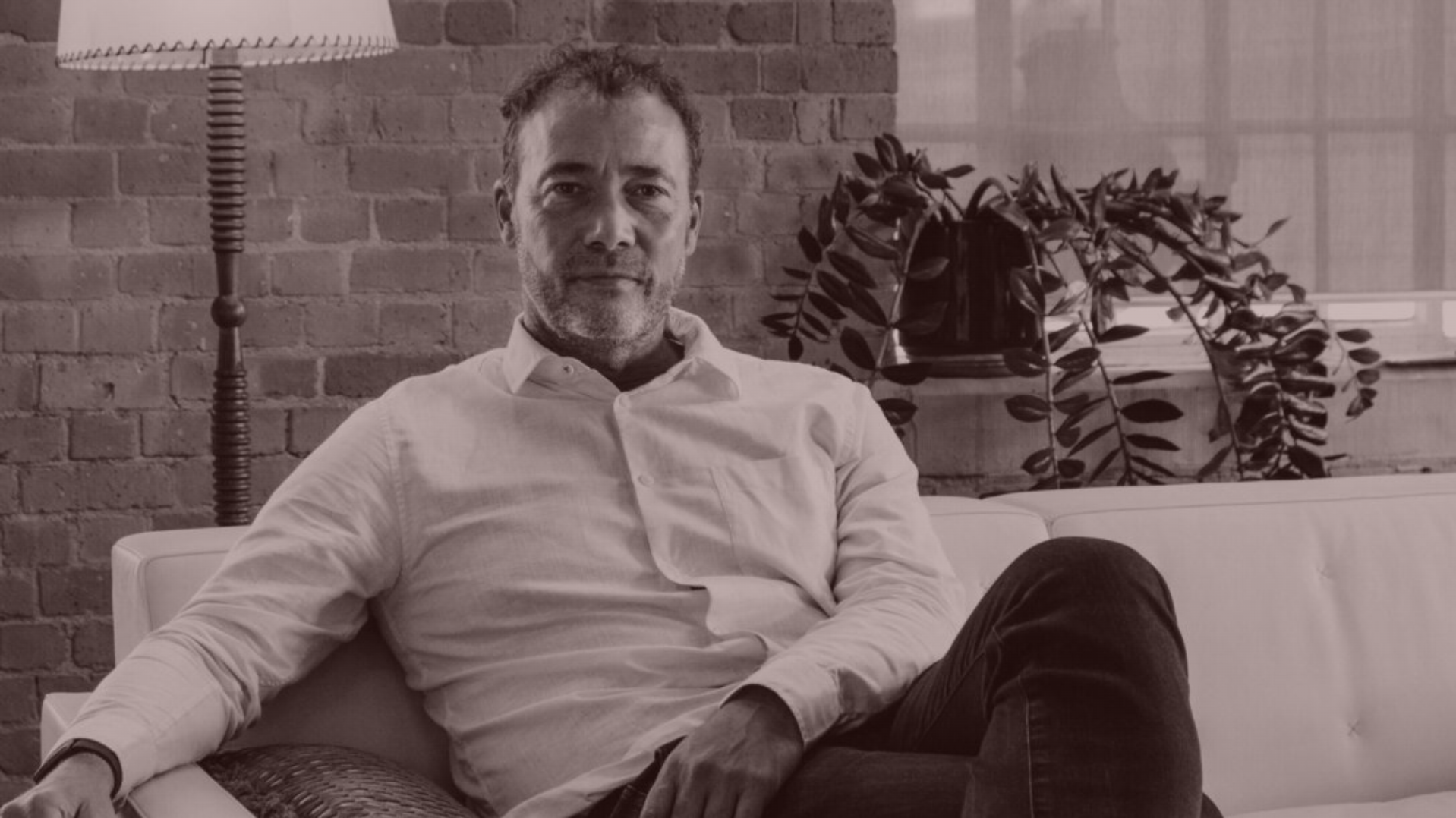 |
| The Will Lewis Forgiveness Tour |
| News and notes on two D.C. media anxieties of varying proportions: The Lewis redemption rodeo at the WaPo and Mark Thompson’s quiet rejiggering over at CNN. |
|
|
|
| On Tuesday, about 150 journalists gathered at The Yale Club in Midtown Manhattan for the annual Livingston Awards, one of those very earnest midweek fork-clinking ceremonies where journalists honor other journalists and, in this case, furnish winners with a $10,000 check from the University of Michigan’s Wallace House. Remnick and Amanpour each collected the award decades ago; more recent winners include Ronan Farrow and Emily Steel. Each year, a veteran of the trade is also honored for his mentorship. This year, that honor went to former L.A. Times editor Kevin Merida.
As you can imagine, the programming at such events tends to be rather sincere and unremarkable, lest a speaker take the liberty of the lectern to touch a third rail or poke a bear. This year, a couple of the winners made a few appeals to the Palestinian cause. But, for this crowd, the far more intriguing remarks came from Ken Auletta, the event’s host and veteran New Yorker media correspondent, and a Livingston judge for more than four decades. Rather than issuing the usual paeans to the profession, Auletta dedicated much of his speech to criticizing Will Lewis, the recently installed and already embattled publisher and C.E.O. of The Washington Post.
Last week, of course, Lewis very hastily and inelegantly pushed out executive editor Sally Buzbee—she resigned after refusing to accept what was effectively a demotion—and then came under significant fire, following an apparently Buzbee-placed Times story, for allegedly having tried to kill Post stories regarding his old role assisting Rupert Murdoch in the wake of the U.K. phone-hacking scandal. (Lewis denied having pressured Buzbee, and has denied any wrongdoing in the phone hacking affair). Another story, from NPR’s David Folkenflik, asserted that Lewis had offered him an exclusive interview if he dropped a story about the Murdoch saga. The Post newsroom, already anxious and quietly seething about his recent comments that he couldn’t “sugarcoat” the company’s deficiencies, quickly aligned against him. They had already circled the wagons on behalf of Buzbee, a mostly unremarkable editor who had been refashioned as a martyr.
Then Lewis went and made matters worse by being a little too characteristically frank with his feelings about the Post’s performance and the motives of his accusers. He could hardly conceal his resentment in his glib responses to Post reporters for a piece last Thursday. On Friday, recognizing that his Fleet Street candor had violated the etiquette and traditions of institutional Washington journalism, he apologized and committed himself to a listening tour—an attempted reset, or in Post corporate pablum, a chance to fix it.
In any event, Auletta seemed keen to turn the screws, perhaps in part because Buzbee is a fellow Livingston judge. In his opening speech, he called attention to a recent report in Alan Rusbridger’s Prospect highlighting the allegation that Lewis knew of, or was involved in, News Corp.’s decision to delete 30 million emails and discard nine boxes of potential evidence relating to the scandal. (In his prepared remarks, Auletta wrote that Murdoch did this to “cover his ass”; alas, that pithy locution didn’t make it into the actual speech). He then called attention to Lewis’s alleged pressure campaigns against Buzbee and Folkenflik, stating, “Lewis doesn’t get a pass.” (History rhymes, of course: More than a decade ago, Auletta’s New Yorker column had been the vehicle for Jill Abramson’s version of the events surrounding her own ouster from the Times under its then-new British C.E.O., Mark Thompson.)
The tone and tenor of Auletta’s critique conveyed the challenges now facing the Post’s publisher as he seeks to lead the paper out of its financial, editorial, and cultural morass. The man initially seen as the Post’s potential savior has now become its latest scapegoat—which, as I noted last week, may limit his ability to enact the strategic changes that are so obviously necessary. Indeed, a few beats later in his speech, Auletta actually commended Lewis for pressing his newsroom to “recognize” the “reality” of its current financial woes. (Here again, the written draft was more apt: He commended Lewis for injecting “a sense of alarm” into the newsroom.)
After last week, however, Lewis must now pull this off with the handicap of adhering to decorum and appeasing the Livingston set—those who, in a fit of magical thinking, expect Jeff Bezos to either fire Lewis (he won’t, not for this anyway) or at least formalize the separation of church and state between front office and newsroom. Alas, the tragedy here is that church and state need to work more closely together to close the $77 million hole on the Post’s P&L. But that’s not conventional wisdom in such circles. This week, former Post media columnist and New York Times public editor Margaret Sullivan called on Bezos to reinstate the role of the ombudsman—epitomizing the misalignment between journalists’ concerns and the existential business problems that actually bedevil the Post. This will not be the last such idea slipped into the public suggestion box, of course.
Regardless, Lewis got the memo. In an internal meeting earlier this week, he was described to me as being “more contrite.” In private conversations with staff, he is said to be choosing his words more carefully. He is, it seems, being less direct. And he is leaving more of the day-to-day interfacing with the newsroom to his newly installed executive editor, Matt Murray, a very affable guy and newsroom lifer whom reporters and editors seem to genuinely like and view as blameless for this shitshow. During these meetings, however, many staffers have expressed both concern over Murray’s successor, incoming editor Rob Winnett, and Murray’s future gig—running the third newsroom.
We’ll see if Lewis’s contrition is effective, but the whole penance tour raises a larger question. Inarguably, the challenges to existing business models call not for more decorum but for greater candor. Indeed, the urgency with which he had initially diagnosed the Post’s problems was actually his most refreshing characteristic. “People are not reading your stuff” may have offended some high priests in the newsroom, but it was also inarguably true. And perhaps the fact that it offended some people says more about the Post’s culture than it does about Lewis, himself.
Anyway, one of the more depressing elements of this endlessly depressing incident is that Lewis, who entered the company by calling for transparency (say it, fix it, etcetera), must now do what so many other media leaders have done in the past—pat his newsroom on the collective head while doing the ugly business of making the numbers work behind the scenes. It’s a recipe for mutual distrust and contempt, and it’s not like that $77 million hole is going to be plugged by a listening tour. |
|
|
| In a few weeks, I’m told, CNN C.E.O. Mark Thompson and his digital lieutenant, Alex MacCallum, will unveil to the staff their very long-awaited plan to transform the beleaguered 44-year-old global newsroom into a dynamic multiplatform business—one that will ostensibly deepen engagement among CNN’s large but transient online audience, introduce subscription offerings, and drive new revenue streams.
Needless to say, it can’t come soon enough. Last week, CNN averaged just 485,000 viewers in primetime (roughly equivalent to the Food Network) and 88,000 in the 25-to-54 demo (exactly equal to the Hallmark Channel). And while Thompson has long articulated the importance of prioritizing CNN’s post-linear future while giving his primetime anchors “time to bed in,” he no doubt also recognizes that linear continues to pay the bills—and, presumably, understands that he needs to manage the decline of his television audience in order to build a runway for growth on streaming and digital.
To that end, Thompson earlier this week announced the news I had reported late last week: Charlie Moore, the longtime executive producer for Anderson Cooper’s 8 p.m show, will be elevated to vice president of primetime programming, overseeing the hours between 7 p.m. and midnight. His move has led to all manner of speculation in the newsroom: Is Anderson leaving CNN? (No, his contract runs to 2026.) Is he going to scale back to a Maddow-style, once-a-week arrangement? (No, he doesn’t have that kind of following.) Is this a bad sign for Erin Burnett and her E.P. Susie Xu, who have long competed with Anderson and Charlie for bookings and will now ostensibly report to Charlie? (Yes, a little, but Erin’s show isn’t the problem, and they’ll be fine).
In fact, the Moore promotion signals something far more simple but also more significant: a recognition on Thompson’s part that the primetime strategy he inherited—and, specifically, the post-Anderson hours from 9 p.m to midnight—actually does matter, and that it really isn’t working and needs to be fixed. And, furthermore, that programming chief Eric Sherling is too busy with the CNN Max strategy and the election and the upcoming presidential debate (the one night that will rate, bigly) to give those hours the attention they deserve. Whether that portends changes in the lineup or merely a renewed effort to produce the existing talent is T.B.D.
Meanwhile, one thing I am certain about, unfortunately, is that there are more cuts coming at CNN. As part of Thompson’s grand transformation, department leaders have been asked to submit names of staffers who might potentially be cut, and certain areas like digital editorial and international are expected to bear an outsize share of the burden. It’s not clear exactly how many positions will be cut, and Thompson will likely make the cuts incrementally (and quietly) rather than all at once.
Asked about these impending cuts, a CNN spokesperson told me: “As Mark outlined this spring, we are undergoing a transformation to ensure CNN remains the global, multiplatform leader of news and information across television, digital, and streaming platforms for generations to come. Hundreds of people are involved in this process, and no final decisions have been made. Any reports to the contrary are inaccurate.”
Thompson and MacCallum won’t be getting into this sort of nitty-gritty, of course, as they present their vision. But these moves, uncomfortable as they may be, actually represent meaningful forward momentum. The Licht era (or Licht-Zaz-Malone era) was defined by screwing up stuff that had worked pretty well—moving Don Lemon to the mornings, changing the chyrons, mashing up the morning, etcetera. Now, after quarters of studying the business, Thompson appears ready to really dig in and correct the mistakes. |
|
|
|
| FOUR STORIES WE’RE TALKING ABOUT |
|
|
|

|
 |
|
|
|
Need help? Review our FAQs
page or contact
us for assistance. For brand partnerships, email ads@puck.news.
|
|
You received this email because you signed up to receive emails from Puck, or as part of your Puck account associated with . To stop receiving this newsletter and/or manage all your email preferences, click here.
|
|
Puck is published by Heat Media LLC. 227 W 17th St New York, NY 10011.
|
|
|
|