{{ 'now' | timezone: 'America/New_York' | date: '%b %d, %Y' }} |
|
|
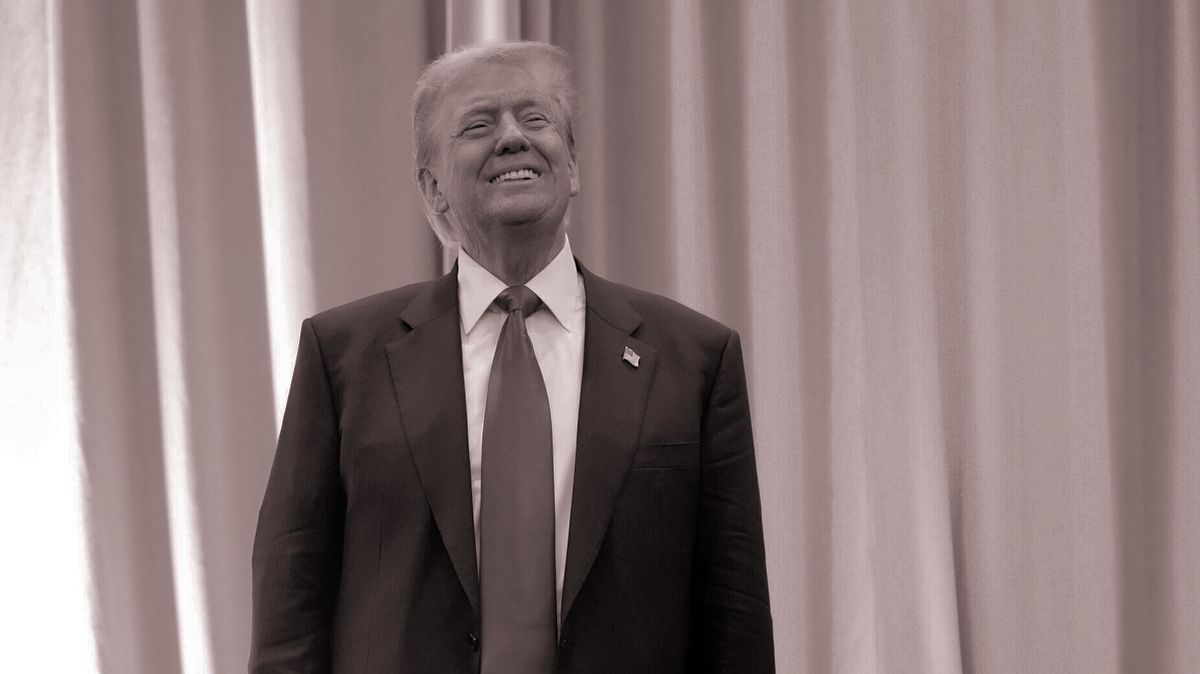
Welcome to Dry Powder. I’m Bill Cohan. Long before he was a reality TV host, and even longer before he was president, Trump was a fantastical invention of 1980s New York—a tabloid king for a tabloid town, who was notorious for pushing the boundaries of financial propriety with lenders and investors, and for getting himself blacklisted by various banks. Now, in his second term as president, that chip on his shoulder has become a weapon. And, as I
report below, Wall Street’s elite banks are bracing themselves for the worst. After all, they’ve done the math, tallying the president’s unchecked raids on Ivy League universities, Disney, CBS, and white shoe law firms—and figure, not without reason, that they might be next. But first… |
-
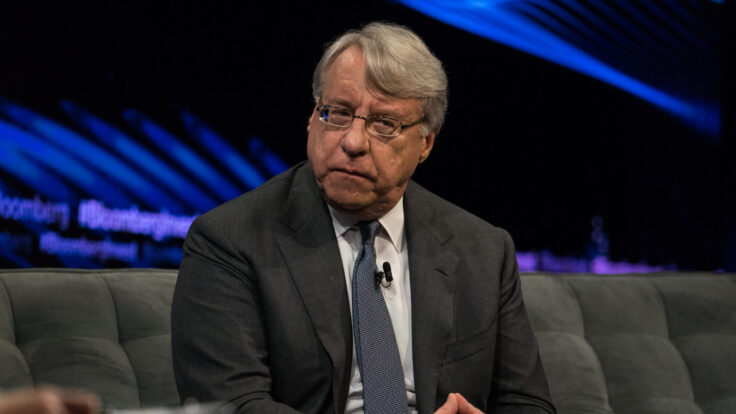
A little more on Chanos and Meta-skepticism: Whitney Tilson, the hedge fund manager and former Democratic primary candidate for mayor of New York (he received 8,079 votes), recently posted his thoughts about my
recent Jim Chanos piece on his Stansberry Research blog. Tilson, a big Meta bull, was interested in Chanos’s view that Meta has been inflating its earnings by depreciating its Nvidia A.I. chips too slowly, particularly in light of Meta’s phenomenal second quarter.
Tilson shared Chanos’s arguments with an investor who “still owns
shares from when he invested in Meta when it was a private company.” The investor was skeptical, which isn’t surprising. “I think the reason this is never a factor is because the tech has a longer useful life than accountant wonks think it does,” the investor told Tilson. “Also, these same wonks fail to properly understand the holistic benefits of these investments, and the growth in revenue they bring, which swamps the cost. At the end of the day, Meta is one of the highest-margin businesses
ever created, operating at a mind-boggling scale (it services almost the entire population of the world daily), and it has many levers to pull to create value. Depreciation is not going to bring it down.” (For his part, Chanos told me that tech bros tend not to focus on accounting until their favored bubble stock craters.)
Tilson also quoted hedge fund manager Angelo Martorell, who happens to be a former professional track cyclist. “Chanos’s argument is absurd,”
Martorell insisted. “Who cares if depreciation expense lags capital expenditure when the multiple is so cheap? I think you’re getting the core business at 10x 2026 earnings. Then you have Zuckerberg, who beat TikTok and Snap (SNAP) and went from nerd to cool. He just wins… Do you have any idea what will happen if he wins A.I.? Meta could be a five-bagger from here and become the world’s most valuable company.” Concluded Tilson, “Needless to say, I remain bullish on Meta.”
- Zaz, Dolan & Dorothy: The Wizard of Oz, one of the treasures of the Warner Bros. I.P. vault, is coming to the Sphere in Las Vegas on August 28. The original 1939 film will be shown on the Sphere’s massive, 160,000-square-foot screen. The Sphere, of course, is the publicly traded brainchild of James Dolan, the owner of the New York Knicks and Madison Square Garden. The company’s market cap is $1.4 billion these days, which
is less than the $2 billion it cost to build the Sphere in the first place.
The Sphere, so far, has been the venue of choice for certain mossy rock bands like The Dead—which Dylan Byers and I saw in May—as well as U2 and The Eagles. The Wizard of Oz is the third movie, after Darren Aronofsky’s Postcard From Earth, which the director made specifically for the venue, and a U2 concert film, to be shown there. Our analyst friend
Rich Greenfield, at LightShed Partners, asked Zaz about the production on Warner Bros. Discovery’s recent second-quarter earnings call. Zaz praised Dolan for working together with Warner Bros. to tap into the company’s library to give the film yet another life. “It feels really great,” Zaz said on the call. “It's very exciting. It's very innovative.” Could The Wizard work its magic to revive the tourism trade in Vegas, which has fallen off a cliff—down
11.3 percent in June 2025, compared to June 2024? Probably not, but given the personalities involved, I’m surprised it took this long to bring Dorothy and Toto to Vegas.
|
Briefly, an interesting update from the art world for the sophisticates among you… |
|
|

| Marion Maneker
|
|
- A deadpan
Deposition: I couldn’t help but smile reading Andrew Russeth’s great take on Richard Prince’s Deposition, from 2025. As part of a now-settled copyright infringement case, the artist sat through a notorious seven-hour deposition, which he has now turned into a work of video art in its own right. Russeth does a
great job summarizing the appeal and mystery of the work, which was screened at Gavin Brown’s exhibition space in Rome, Sant’Andrea de Scaphis, and gives some great one-liner excerpts. When the lawyer asked whether he thought commercial photographers were artists, Prince replied, “I never think about commercial photographers.” (You can watch it for yourself here. The password is
“prince”.)
Prince has had two major lawsuits brought by three different photographers (the second suit combined two different claims) who felt he was using their work unfairly. But that’s less important than the fact that Prince is taking his appropriation talents to new heights—appropriating a legal document about his own appropriation.
As Russeth puts it, the video “offers something for just about everyone: art historians, Prince aficionados, skeptics of
contemporary art, students hoping to learn about appropriation (or performance) art, copyright scholars, and plenty more.” Perhaps more significant is the fact that this deposition now exists as Prince’s own final statement (he’s 76 years old) on his art, why he does it, and what he thinks he’s doing. Surprisingly, that doesn’t really exist anywhere else. (Though you can try this podcast
interview with Rick Rubin.) And it is an important piece of the puzzle, especially since Prince has defied the odds in recent years—his work seems to get a lot of attention from the market, and there are shows at the Fondazione Prada and Museo Jumex in the works for next year.
|
|
|
And now, on to the conversation taking place from ’Sconset to Easthampton… |
|
|
The latest shots fired against JPM, BofA, and especially the zinger aimed at David Solomon,
have sent a chill up many a spine in finance. When will Trump come for Wall Street as he has for universities and law firms? |
|
|
Has Donald Trump effectively become the C.E.O.-in-chief, in addition to
commander-in-chief and president of the United States? To the annoyance of a lot of people on Wall Street, it’s starting to look that way, as the litany of convention-defying examples of overreach become de rigueur—from seemingly petty demonstrations of power, like excommunicating the Kennedy Center’s non-ideologically compliant board members and accepting a 747 from Qatar, despite laws designed to prevent that kind of thing, to more substantive power plays, such as relentlessly pushing
for the removal of Fed chairman Jay Powell. And then there’s the strong-arming of the Disney Corporation ($16 million), Meta ($25 million), a slew of Wall Street law firms (hundreds of millions), and the Ivy League (Columbia: $200 million; Harvard: likely $500 million). Most recently, of course, Trump pried $16 million out of CBS and its parent company, Paramount Global, for a bogus legal
claim, seemingly quid pro quo for the long-awaited approval of the company’s recapitalization and takeover by the Ellison family. Had Paramount Global tried to fight Trump on the payment, it’s safe to say that Brendan Carr’s F.C.C. would not have approved the transfer of the broadcast licenses, and hence the deal. And yet Trump keeps on finding new ways to flex.
In exchange for the approval of Nippon Steel’s $15 billion takeover of U.S. Steel, Trump extracted a so-called golden share that gives the U.S. government, without owning an economic stake in the merged company, veto power over future governance decisions. That reminded me of when late French Socialist president François Mitterrand nationalized the banks and other industries, including steel, in the early 1980s. Similarly, Trump recently decided, for whatever reason,
that he didn’t like the C.E.O. of Intel; he had to go, Trump insisted. (That hasn’t happened—yet. Trump decided he sort of liked him after an emergency meeting.) His meddling has even extended to the ingredients in Coca-Cola. Though famously a Diet Coke man himself, Trump announced on Truth Social in July that he had urged the company to use “REAL cane sugar” in regular Coke, and that the company had agreed to do it.
Then, earlier this week, in a deal that has been both well-covered and
yet underscrutinized, chipmakers Nvidia and AMD agreed to pay a 15 percent tax on the sale of certain products (Nvidia’s H20s, for instance) to the Chinese. Trump made the agreement a precondition to allowing the companies to resume exports to China—which had been halted due to “national security” concerns. “Regardless of whether you think Nvidia should be able to sell H20s in China, charging a fee in exchange for relaxing national security export controls is a terrible precedent,” former
Biden official Peter Harrell wrote on X. Is Trump turning into a socialist? Or just another strongman authoritarian? He now appears to be the police commissioner in D.C., too. These shakedowns have become an increasingly popular discussion topic among senior leaders in the finance crowd—belatedly worried that Trump, emboldened by his previous successes, is coming for the
big Wall Street banks next. And recent events back up their concerns. One of the president’s latest executive orders is based on the claim that banks discriminate against conservatives by not accepting their deposits. Of course, it’s personal. Trump says that after his first term, when he was looking to deposit over $1 billion,
neither JPMorgan Chase nor Bank of America would take his money—that he was, in his words, “debanked.” “The banks discriminated against me very badly,” Trump lamented on CNBC in early August. Perhaps the problem was that Trump stiffed the big banks on loans that they made to him and his businesses for years, proving himself a credit risk. (Both banks denied any discrimination or wrongdoing.)
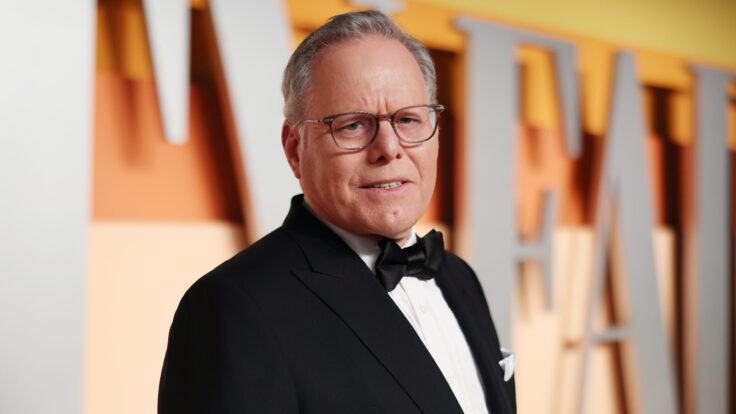
On Tuesday, Trump got even more personal, going after David
Solomon, the C.E.O. of Goldman Sachs, after Jan Hatzius, the bank’s well-respected chief economist, had the temerity to suggest that U.S. consumers are, so far, absorbing 22 percent of the increase in costs related to the Trump tariffs, and that the percentage would increase to 67 percent by October. Trump, who obviously disagreed with this assessment, suggested that David “should go out and get himself a new Economist”—his capitalization, not mine, as I’m sure you
guessed—“or, maybe, he ought to just focus on being a D.J.,” referring to the fact that Solomon used to spin records, as DJ D-Sol, as a hobby. (His last gig was Lollapalooza in 2022.) David didn’t take the bait, although Goldman economist David Mericle told CNBC that they stood behind the report. (A spokesman for Goldman declined to comment.)
|
What makes these incursions all the worse is that few have shown the guts or the gumption
to say enough is enough. In fact, the opposite seems to be happening. Tim Cook, the much admired C.E.O. of Apple, a company with a market capitalization of $3.4 trillion, resorted to giving Trump a glass plaque set on a 24-karat gold base while the secretaries of the Treasury and Commerce looked on, beaming. Cook announced that Apple would be investing another $100 billion in manufacturing in the U.S., on top of the $500 billion he’d announced previously. There was no need for
any of that, of course. Apple is a public company, owned by its shareholders around the world, and governed by an independent board of directors. A relationship with the president shouldn’t have any bearing on its investment strategy or stock price. And yet none of this seems to matter in this current political moment—one in which the mightiest Ivy League universities and law firms and impenetrable
Fortune 50 companies have had to dance, or worse, for the president in unprecedented ways. It’s all terribly disheartening, but it’s the realpolitik of Trump II. And if Trump gets more animated in his attacks on Wall Street, it could have global implications for the sanctity of the capital markets, and the irrational exuberance that once again has consumed our equity markets—or at least for the Magnificent Seven stocks that seem to be driving things ever upward. Our financial
system has always been a confidence game. If Trump, with his unchecked tendencies, undermines the already fragile confidence we instill in our banks and our capital markets, it could be a very long fall indeed.
Where does all this end? “Based on what I’ve seen so far, Trump may end up being the worst U.S. president in recent memory,” Peter Schiff, the outspoken financial commentator,
posted on X this week. “He is working to unconstitutionally expand the power of the federal government, in particular the executive branch, and to inhibit free market capitalism in ways not seen since L.B.J.” Thank you for your attention to this matter!
|
|
|
Join Puck’s chief political columnist, John Heilemann, as he roams the corridors of power and influence in America on this
twice-weekly interview show, taking you beyond the headlines with the people who shape our culture: icons and up-and-comers, incumbents and insurgents, moguls and machers in the overlapping worlds of politics, entertainment, tech, business, sports, media, and beyond. The conversations are rich and revealing, unrehearsed and unexpected… and reliably impolitic. A Puck-Audacy joint, new episodes drop every Wednesday and Friday. |
|
|
Puck’s daily political newsletter from Washington on what’s really happening in this town, from the White House to the Pentagon
to Capitol Hill, K Street, and the campaign trail. |
|
|
Need help? Review our FAQ page or contact us for assistance. For brand partnerships, email ads@puck.news. You received this email because you signed up to receive emails from Puck, or as part of your Puck account associated with {{customer.email}}. To stop receiving this newsletter and/or manage all your email preferences, click here. |
Puck is published by Heat Media LLC. 107 Greenwich St, New York, NY 10006 |
|
|
|