{{ 'now' | timezone: 'America/New_York' | date: '%b %d, %Y' }} |
|
|
Welcome back to The Best & The Brightest. I’m Leigh Ann Caldwell.
In
today’s issue, I’m handing the reins to my estimable colleague Bill Cohan, who authors Puck’s private email on finance, Dry Powder, with an update on why banking executives are increasingly worried Trump will turn his cannons on Wall Street. Plus, Dylan Byers has an update on an evolving situation at Politico, and Abby Livingston
is back to break down the latest drama emanating from Texas.
Speaking of Abby, on Tuesday, September 2, she’ll be in D.C. for our Puck Live event, presented by the Modern Ag Alliance, in which she’ll chat with the chair of the House Agricultural Committee, Glenn “GT” Thompson, in a special conversation beginning at 5 p.m. ET. Puck subscribers, of course, are invited to attend. We’ll release more information as the date draws near, but if you’ll be in town, you
can RSVP by clicking here. It should be great, and I hope to see you there.
But first… |
|
|

| Dylan Byers
|
|
- Where’s Jack?: “Am I the
only one who’s starting to think Jack Blanchard might never return to Playbook?” a D.C. public affairs strategist asked me this week, noting that it’s been more than a month since the Politico newsletter’s British author said he was “heading off for a little R&R, and to give the kids a chance to reconnect with their grandparents.”
It’s a reasonable question, and one I’ve received in some form or another from other D.C. sources. Of course, Jack only started the job back in
January, and quickly drew scrutiny for his lack of familiarity with the machinations of U.S. politics. (Playbook makes money as a B2B service for opinion leaders on Capitol Hill and K Street, of course, and not as a quasi-Tocquevillian examination of our nation’s strange political customs.) In mid-May, when Politico announced that Dasha Burns would become the newsletter’s chief correspondent, it seemed to signal an impending changing of the guard.
I am reliably told that
Jack is dealing with legitimate family-related matters, which warrant respect and discretion. Still, Politico might benefit from a more formal explanation of his absence, if only so the aforementioned D.C. insiders (and media reporters) don’t keep asking questions. As you may have noticed, this is a gossipy, navel-gazing industry with a strong penchant for cynical speculation.
|
|
|

| Julia Alexander
|
|
- Ellison, Ari & The Power of
CBS: In retrospect, it wasn’t entirely surprising when news broke on Monday that David Ellison was coughing up $7.7 billion for seven years of exclusive domestic rights to UFC fights on his new baby, Paramount+. After all, Ellison had appeared at multiple UFC events before the deal closed, sitting next to the likes of his father, Larry, President Trump, UFC C.E.O. Dana White, Mark Zuckerberg—and,
perhaps most tellingly, Ari Emanuel, an Ellison advisor and the C.E.O. of TKO, which owns the UFC.
Also, the two sides very much complement each other. Until now, Par+’s most engaging assets outside of the NFL had been the Taylor Sheridan-verse and SpongeBob SquarePants. But with the addition of UFC, we’re beginning to see a fuller picture of the streamer Ellison has in mind—a vaguely Trump-inflected mix of fight
nights, Sheridan’s cowboys, and CBS cop shows supplemented by popular reality fare (Survivor, Amazing Race) and studio hits. Indeed, research firm YouGov found that top overlapping interest for Paramount+ fans included Fox News and Jesus Christ. [Read more…]
|
|
|

| Abby Livingston
|
|
- Member-on-member violence in
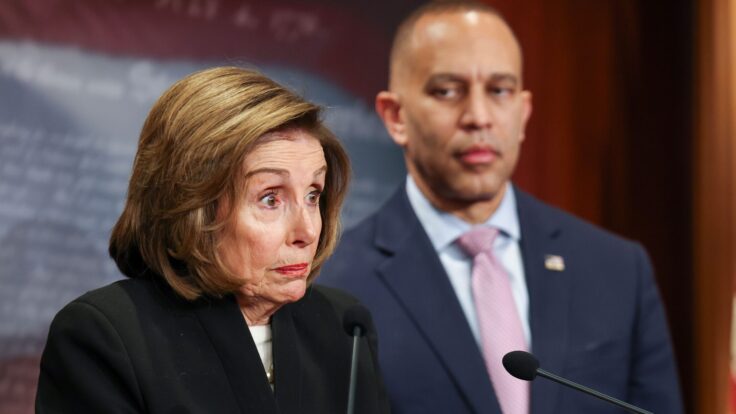
the Lone Star State: House Democrats are bracing for a post-Biden generational war in several upcoming primaries, and Texas has the first of the cycle. Among the member-vs.-member races likely to arise from Republicans’ proposed new congressional map would be a slugfest between 78-year-old Lloyd Doggett and 36-year-old Greg Casar, who would be forced to compete for a new Austin-area seat that combines their current districts. That brawl
could set the tone for challenges to other longtime incumbents next year.
Texas Republicans have spent the last 22 years trying to take Doggett out. He’s survived each time, and learned to keep millions in cash on hand as a safety net for potential redistricting threats like this one. The problem, in the eyes of some Texas Democrats, is that Doggett is moving too fast. On Sunday, he urged Casar to run in a new, Trump +10 district in the San Antonio area—before the
Republicans’ new map has even passed into law. But even though many considered Doggett’s preemptive strike a distraction from the map fight at hand, some moderate Dems are eager to see a Squad member like Casar run in the tougher district, if only to give the bloc a sense of how difficult general election fights might be. In any case, Doggett has $6.2 million in cash on hand, compared to Casar’s $450,000. The latter, meanwhile,
signaled that he would run for the Austin seat.
Of course, member-vs.-member races are excruciating because they force other members to take sides against colleagues. Casar is pals with Bernie Sanders and A.O.C., chairs the Congressional Progressive Caucus, and makes the rounds in next-gen media. But can he rely on his big buddies for
fundraising? Member endorsements mostly matter because they translate into campaign and leadership PAC donations. Doggett has so much banked that they might be unnecessary, but Casar may end up working the phones for cash infusions, which could convince members to side with him. Anyway, a delegation source was skeptical that many Texas members would publicly lean either way, although we may see Casar endorsements from the broader Democratic caucus—and the Congressional Hispanic Caucus
in particular.
Despite the miserable foxhole they’re all in together, the Texas Democratic delegation in the House had been enjoying a period of good will and coordination—at least before two of their members kicked off a fratricidal political battle. Now, whenever I call Texas Dems about this topic, they inevitably groan and request assurance that we’re strictly off the record.
|
|
|
The latest shots fired against JPM, BofA, and especially the zinger aimed at David Solomon,
have sent a chill up many a spine in finance. When will Trump come for Wall Street as he has for universities and law firms? |
|
|
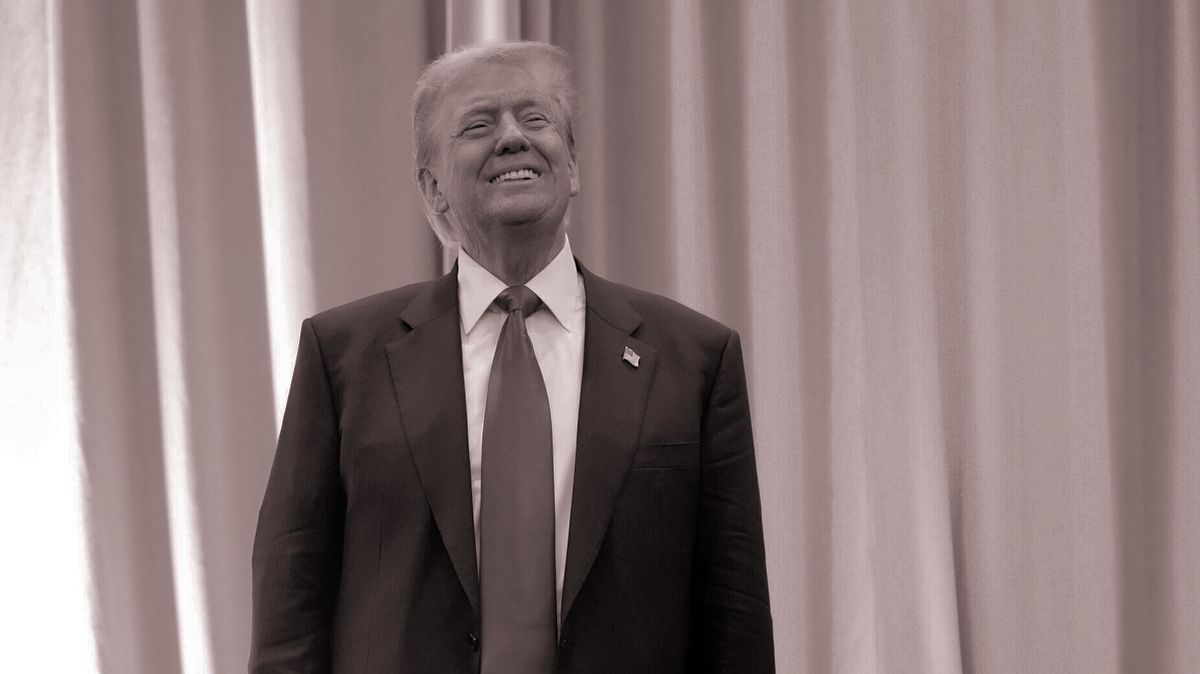
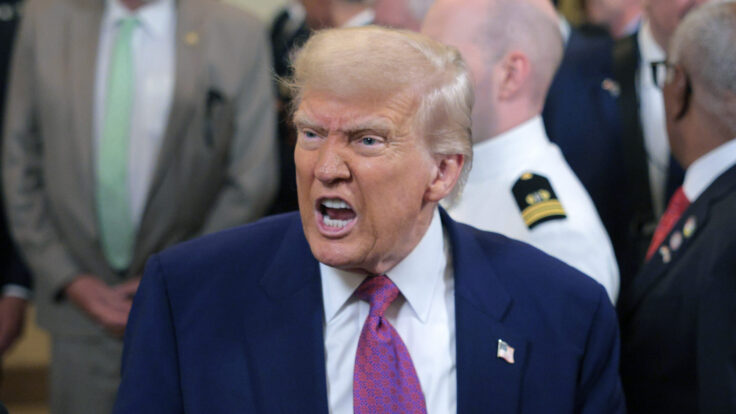
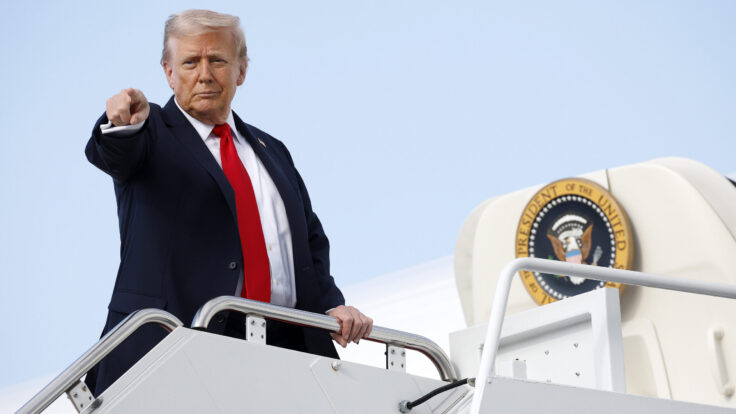
Has Donald Trump effectively become the C.E.O.-in-chief, in addition to commander-in-chief
and president of the United States? To the annoyance of a lot of people on Wall Street, it’s starting to look that way, as the litany of convention-defying examples of overreach become de rigueur—from seemingly petty demonstrations of power, like excommunicating the Kennedy Center’s non-ideologically compliant board members and accepting a 747 from Qatar, despite laws designed to prevent that kind of thing, to more substantive power plays, such as relentlessly pushing for the removal of
Fed chairman Jay Powell.
And then there’s the strong-arming of the Disney Corporation ($16 million), Meta ($25 million), a slew of Wall Street law firms (hundreds of millions), and the Ivy League (Columbia: $200 million; Harvard: likely $500 million). Most recently, of course, Trump pried $16 million out of CBS and its parent company, Paramount Global, for a bogus legal claim, seemingly quid pro quo for the long-awaited approval of the company’s recapitalization
and takeover by the Ellison family. Had Paramount Global tried to fight Trump on the payment, it’s safe to say that Brendan Carr’s F.C.C. would not have approved the transfer of the broadcast licenses, and hence the deal.
And yet Trump keeps on finding new ways to flex. In exchange for the approval of Nippon Steel’s $15 billion takeover of U.S. Steel, Trump extracted a so-called golden share that gives the U.S. government, without owning an
economic stake in the merged company, veto power over future governance decisions. That reminded me of when late French Socialist president François Mitterrand nationalized the banks and other industries, including steel, in the early 1980s. Similarly, Trump recently decided, for whatever reason, that he didn’t like the C.E.O. of Intel; he had to go, Trump insisted. (That hasn’t happened—yet. Trump decided he sort of liked him after an emergency meeting.) His meddling has even
extended to the ingredients in Coca-Cola. Though famously a Diet Coke man himself, Trump announced on Truth Social in July that he had urged the company to use “REAL cane sugar” in regular Coke, and that the company had agreed to do it.
Then, earlier this week, in a deal that has been both well-covered and yet underscrutinized, chipmakers Nvidia and AMD agreed to pay a 15 percent tax on the sale of certain products (Nvidia’s H20s, for instance) to the Chinese. Trump made the agreement a
precondition to allowing the companies to resume exports to China—which had been halted due to “national security” concerns. “Regardless of whether you think Nvidia should be able to sell H20s in China, charging a fee in exchange for relaxing national security export controls is a terrible precedent,” former Biden official Peter Harrell wrote on X. Is Trump turning into a socialist? Or just another strongman authoritarian? He now appears to be the police
commissioner in D.C., too.
These shakedowns have become an increasingly popular discussion topic among senior leaders in the finance crowd—belatedly worried that Trump, emboldened by his previous successes, is coming for the big Wall Street banks next. And recent events back up their concerns. One of the president’s latest executive
orders is based on the claim that banks discriminate against conservatives by not accepting their deposits. Of course, it’s personal. Trump says that after his first term, when he was looking to deposit over $1 billion, neither JPMorgan Chase nor Bank of America would take his money—that he was, in his words, “debanked.” “The banks discriminated against me very badly,” Trump lamented on CNBC in early August. Perhaps the problem was that Trump stiffed the big banks on loans that they made to
him and his businesses for years, proving himself a credit risk. (Both banks denied any discrimination or wrongdoing.)
On Tuesday, Trump got even more personal, going after David Solomon, the C.E.O. of Goldman Sachs, after Jan Hatzius, the bank’s well-respected chief economist, had the temerity to suggest that U.S. consumers are, so far, absorbing 22 percent of the increase in costs related to the Trump tariffs, and that the percentage would
increase to 67 percent by October. Trump, who obviously disagreed with this assessment, suggested that David “should go out and get himself a new Economist”—his capitalization, not mine, as I’m sure you guessed—“or, maybe, he ought to just focus on being a D.J.,” referring to the fact that Solomon used to spin records, as DJ D-Sol, as a hobby. (His last gig was Lollapalooza in 2022.) David didn’t take the bait, although Goldman economist David Mericle told CNBC that they stood
behind the report. (A spokesman for Goldman declined to comment.) |
What makes these incursions all the worse is that few have shown the guts or the gumption to say enough is
enough. In fact, the opposite seems to be happening. Tim Cook, the much admired C.E.O. of Apple, a company with a market capitalization of $3.4 trillion, resorted to giving Trump a glass plaque set on a 24-karat gold base while the secretaries of the Treasury and Commerce looked on, beaming. Cook announced that Apple would be investing another $100 billion in manufacturing in the U.S., on top of the $500 billion he’d announced previously. There was no need for any of that, of
course. Apple is a public company, owned by its shareholders around the world, and governed by an independent board of directors. A relationship with the president shouldn’t have any bearing on its investment strategy or stock price.
And yet none of this seems to matter in this current political moment—one in which the mightiest Ivy League universities and law firms and impenetrable Fortune 50 companies have had to dance, or worse, for the president in unprecedented ways. It’s
all terribly disheartening, but it’s the realpolitik of Trump II. And if Trump gets more animated in his attacks on Wall Street, it could have global implications for the sanctity of the capital markets, and the irrational exuberance that once again has consumed our equity markets—or at least for the Magnificent Seven stocks that seem to be driving things ever upward. Our financial system has always been a confidence game. If Trump, with his unchecked tendencies, undermines the already
fragile confidence we instill in our banks and our capital markets, it could be a very long fall indeed.
Where does all this end? “Based on what I’ve seen so far, Trump may end up being the worst U.S. president in recent memory,” Peter Schiff, the outspoken financial commentator, posted on X this week. “He is working to unconstitutionally expand the power of
the federal government, in particular the executive branch, and to inhibit free market capitalism in ways not seen since L.B.J.” Thank you for your attention to this matter! |
|
|
Join Emmy Award-winning journalist Peter Hamby, along with the team of expert journalists at Puck, as they let you in on the
conversations insiders are having across the four corners of power in America: Wall Street, Washington, Silicon Valley, and Hollywood. Presented in partnership with Audacy, new episodes publish daily, Monday through Friday. |
|
|
Unique and privileged insight into the private conversations taking place inside boardrooms and corner offices up and down Wall
Street, relayed by best-selling author, journalist, and former M&A senior banker William D. Cohan. |
|
|
Need help? Review our FAQ page or contact us for assistance. For brand partnerships, email ads@puck.news. You received this email because you signed up to receive emails from Puck, or as part of your Puck account associated with {{customer.email}}. To stop receiving this newsletter and/or manage all your email preferences,
click here. |
Puck is published by Heat Media LLC. 107 Greenwich St, New York, NY 10006 |
|
|
|