Hello, and welcome back to Dry Powder.
For today's column, I spoke to Bill Ackman, among others financial eminences, about how hedge funds and big banks, such as Goldman Sachs and JPMorgan Chase, are grappling with—or, perhaps, profiting from—the financial fallout of Russia's horrific and unprovoked war on Ukraine.
Plus, for more on how the Russian invasion is reshaping the global economy, do yourself a favor and read my partner Eriq Gardner's new reporting on the looming legal battle over all the multinationals pulling out of Russia—and the global insurance companies that cover them. As Eriq notes, the availability of insurance informs the willingness of financial institutions to lend on the front end for new projects. But you can't adequately price risk on a going-forward basis without an honest reckoning with the immediate past.
SPONSORED BY FACEBOOK 
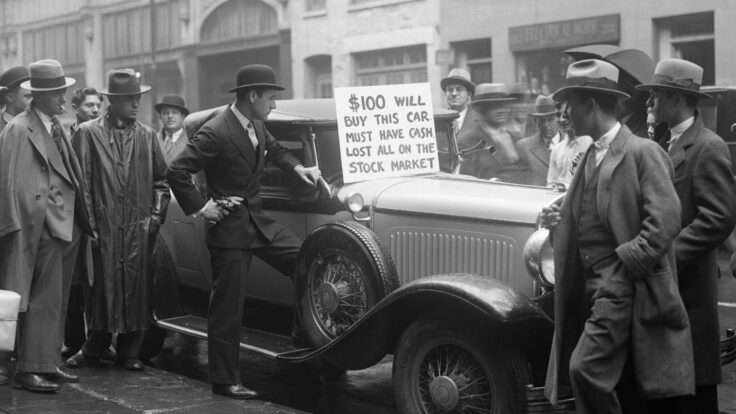
On Wall Street, the horror of Russia’s invasion of Ukraine has become a uniquely dark investing opportunity. One of my favorite Wall Street expressions surmises that the real action in the financial markets happens when “the lines of fear and greed cross.” That’s certainly where we are at the moment: The combination of the Russian invasion of Ukraine, the corresponding efforts by a number of Western nations to choke off the Russian economy, and the prospect of the Federal Reserve raising interest rates to slow down inflation in the United States has sent the stock and bond markets reeling so far this year. The S&P 500 index is down 13 percent year-to-date; the Nasdaq is down nearly 20 percent. The yield on the average junk bond is now 5.7 percent, according to the Federal Reserve Bank of St. Louis, up a whopping 31 percent from the start of the year. That means anyone who bought a junk bond at the beginning of the year is likely sitting on a substantial mark-to-market loss.
Even the supposed safe haven of Bitcoin is unreliable, down 12 percent so far in 2021. As I’ve been predicting for a while, we’ve clearly moved beyond the state of irrational exuberance in the financial markets to one of shock. We’ve transitioned from “risk on”—another one of my favorite Wall Street terms of art—to “risk off.”
Even the most sophisticated investors are freaking out, or are scared shitless. Take, for instance, Bill Ackman, the billionaire hedge fund manager, and his Sunday night Tweet thread essay. Ackman, who turned $27 million into some $3.6 billion during three weeks in early 2020 by betting correctly that the markets would crash (and then swiftly recover) with the onset of the Covid pandemic, is comfortable making bold, sweeping, public pronouncements in an effort to motivate policymakers to take action. His concern now is not the pandemic, but rather the Russian invasion of Ukraine. Like his previous comments about the pandemic that culminated in a 28-minute diatribe on CNBC, he isn’t holding back. Although this time, he tells me, he’s not making a special financial wager on the outcome. He has no bets for, or against, Russian securities, owns no credit default swaps, and has no shorts. He does own some interest rate and currency hedges (although not on the ruble). He’s just continuing to hold onto his multi-billion dollar equity portfolio of companies that includes Chipotle, Netflix, Canadian Pacific and the Universal Music Group, among others. “I’m long America,” he told me on Monday evening.
But Ackman is very worried. “In January 2020,” he tweeted on March 5th to his 424,000 followers, “I had nightmares about the potential for a pandemic, but everyone seemed to think I was crazy. I am having similar nightmares now. WWIII has likely started already, but we have been slow to recognize it. Putin has invaded Ukraine and it is not going well for Russia.” In his elongated thread, Ackman urged NATO to do more, including halting oil imports from Russia—something President Joe Biden announced Tuesday the United States would do—and supplying Ukraine with “our best weaponry” and our best intelligence. He advocated arming the Ukrainians, creating a no-fly-zone, and urging the Chinese to intervene to get Putin to relent.
Even when he’s worried, and sharing his existential concerns, Ackman has a way of seeming calm and matter-of-fact. He was driving himself around Newport Beach, California while we were talking, occasionally stopping the conversation to make sure he made the correct turn on the right road. He said Putin was the kind of person who would keep pushing his agenda, without regard to anyone’s opinion, until he was challenged forcefully. “I’m just raising the question,” he continued. “When is it time for us to confront him?”
While Ackman may not have made a financial bet this time around and his portfolio is suffering along with many others—he’s down 11 percent through February and probably more now—other hedge fund investors are reportedly doing what some hedge fund investors are prone to doing: Trying to make money from the misery of others, crossing the lines of fear and greed and plunging in. On Wall Street, of course, where capital must be put to work to make more capital, there is only making money or losing money, despite all the lip service being paid these days to E.S.G. As one longtime Wall Street pro told me, buying credit default swaps on Russian debt or betting against the Russian ruble are shrewd investments made by clever hedge fund managers. “Their job is to make money for their investors, or to protect their investors,” he said.
Nobody on Wall Street thought poorly of George Soros for making a killing in 1992—some $1 billion, real money at the time—betting against the British pound and bringing the Bank of England to its knees. Nor did they begrudge Jonathan Pollack and Jay Newman, at Elliott Management, for cashing in on Elliott’s 15-year struggle to get the country of Argentina to pay off its sovereign debt as it was obligated to do. In the end, Elliott received $2.4 billion, a return of nearly 400 percent on its investment. (Newman, by the way, just published his first novel, Undermoney, after leaving Elliott.) I’ll never forget—because I worked on the deal—the fortune that the billionaire Chicago financier Sam Zell, once known as the Grave Dancer of Wall Street, made by buying and selling out of bankruptcy what remained of the Revco Drug Store chain after Salomon Brothers overleveraged it in an early 1980s L.B.O. Zell saw value where others couldn’t.
Many of the largest financial institutions are already ferreting out investment ideas amid this humanitarian tragedy. According to Bloomberg, Goldman Sachs and JPMorgan Chase have been helping hedge fund clients buy the discounted debt of big Russian companies, such as Gazprom, its oil conglomerate; Evraz, the steel manufacturing and mining company; Russian Railways, the Russian vertically integrated railway company; as well as Russian sovereign debt, which was downgraded last week to CCC-, three notches above default, by S&P Global Ratings. In a statement to me, Goldman clarified that what it is doing in Russia on behalf of its clients is “permitted under current sanctions guidance” and that the firm was working with clients “to reduce their risk in Russian securities and achieve an orderly wind down of their exposure.” Goldman said it is not engaging in proprietary trading in the securities of Russian companies or in Russian sovereign debt nor is it advising clients to increase their exposure to these securities. Similarly, a JPMorgan Chase spokesman explained to me that its trading has been de minimis, on behalf of the bank’s customers, and only in the debt securities of non-sanctioned Russian companies.
ADVERTISEMENT 
We’re making investments in safety and security—and seeing results
Facebook has invested $13 billion over the last 5 years to help keep you safe. Over the last several months, we’ve taken action on:
We’ve been here before, of course, and it will be interesting to see how history judges the non-Ackmans: the Soroses and Zells of our current moment. Recall that it took a few years, but we managed to find a way to glorify, to some degree, the people who made a killing during the 2008 financial crisis by betting the mortgage market would collapse, rather than believing it would keep rising higher and higher. A few of these wildly successful investors were celebrated in Michael Lewis’ 2010 bestseller, The Big Short, and in Adam McKay’s movie based on Michael’s book. It’s easy enough to see that these hedge fund investors made money only because other people lost money and endured a great deal of suffering in the process.
This is a side of human nature we don’t really like knowing about. We can’t quite decide whether we admire people who make money in tragic situations, like war or financial crises, or whether we want to be reviled by them.
ADVERTISEMENT 
FOUR STORIES WE'RE TALKING ABOUT 
Russia’s horrific invasion of Ukraine is reshaping the global economy. For Hollywood, that means one thing: a torrent of future litigation. ERIQ GARDNER 
The anniversary of Stalin’s death last week was a cruel reminder inside Russia that history frequently repeats itself. JULIA IOFFE 
The latest inside reporting on Thiel’s political maneuvering—and Obama’s private visit with Laurene’s Emerson Collective. THEODORE SCHLEIFER 
A recent Twitter feud evidenced a new shift in digital media, from institutions to individuals and back toward the center. BRIAN MORRISSEY 
You received this message because you signed up to receive emails from Puck.
Was this email forwarded to you?
Sent to {{customer.email}}
Puck is published by Heat Media LLC.
For support, just reply to this e-mail. For brand partnerships, email ads@puck.news |


SHARE