 |
|
Welcome back to Dry Powder, I’m Bill Cohan.
|
|
And now for something completely different: In tonight’s edition, the remarkable inside story of the looting and restitution of a $10 million art world treasure, stolen by the Nazis during the Second World War, and then seized this month by Manhattan D.A. Alvin Bragg.
But first, a few words on the JPM-Epstein settlement…
- Staley’s Dirty Laundry: We learned this week that Jamie Dimon decided to settle the case against JPMorgan Chase, brought by the U.S. Virgin Islands, regarding the bank’s involvement with the infamous Jeffrey Epstein—quelle surprise. In fact, Jamie got off relatively cheaply by avoiding a trial: The litigation with the Virgin Islands ends for the minimal sum of $75 million, $20 million for legal fees, $30 million for the territory’s anti-human trafficking charities, and $25 million for an investment in its law-enforcement agencies.
That’s a pittance considering the island nation had sought a payout of at least $190 million from JPMorgan Chase. Yes, the details of the settlement between the bank and longtime executive Jes Staley, who worked there for some 30 years and reported to Jamie before leaving to eventually become C.E.O. of Barclays, is being kept confidential. And with this latest agreement, JPMorgan Chase has now paid some $365 million to settle lawsuits related to the fact that the bank had Epstein as a client until 2013, when JPMorgan sent him packing. But again, it’s a drop in the bucket for a bank that is making roughly $40 billion in net income each year.
Given the embarrassing emails, pictures, and documents that emerged in the discovery process, in the months leading up to the now-unnecessary October trial, it was inevitable that there would be a settlement. A public trial airing more JPMorgan Chase-Staley-Epstein dirty laundry was simply not in the cards, let alone in anyone’s interest. “In the hot tub with a glass of white wine,” is how Staley was described in one of the 1,200 or so emails between hin and Epstein that emerged in discovery. Of course, as part of the settlement, JPMorgan Chase also gets to declare victory… sort of. “While the settlement does not involve admissions of liability, the firm deeply regrets any association with this man, and would never have continued doing business with him if it believed he was using the bank in any way to commit his heinous crimes,” the bank said in a statement released to the media.
|
|
And now onto today’s main event…
|
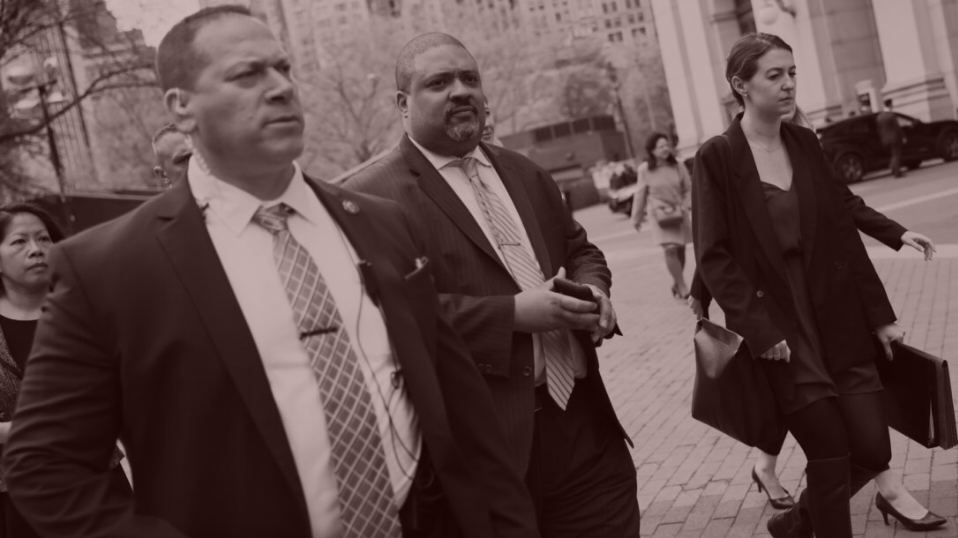 |
| Morgenthau, Bragg & a Manhattan Nazi Art Heist Saga |
| Nearly a century after a trove of Egon Schiele masterworks were stolen by the Nazis, District Attorney Alvin Bragg has seized them back. The story of their loss, and recovery, may be the most important development in the world of art restitution in a generation. |
|
|
|
| It has been a momentous month for the world of high-dollar artworks, the billionaires who trade in them, and the powerful and wealthy art institutions who are sometimes complicit in their wrongful acquisition. Two weeks ago, I broke the news that Manhattan District Attorney Alvin Bragg had obtained search warrants allowing for the seizure of three artworks by the late Austrian artist, Egon Schiele, which had originally been stolen from their murdered owners by the Nazis during World War II: Girl with Black Hair, which had been on display at the Allen Memorial Art Museum, at Oberlin College; Russian War Prisoner, at the Art Institute of Chicago; and Portrait of a Man, at the Carnegie Museum of Art, in Pittsburgh.
At the time, both the Carnegie Museum and the Art Institute provided me with statements claiming their ownership of the artworks was legitimate and lawful, and that of course they would cooperate with the authorities. (A spokesperson at the Art Institute noted that their Schiele is also the subject of civil litigation in federal court.) The Allen Museum did not respond to a request for comment.
As I wrote on September 13, however, Bragg’s seizure of the three artworks was part of a much larger story about the restitution of the estate of Fritz Grünbaum, the famous Jewish Viennese cabaret performer who was later murdered in a Nazi concentration camp in 1941. For more than a decade after the war, Grünbaum’s collection of Schieles had disappeared, only to reemerge in Switzerland, where they were auctioned off to an art dealer/collector and subsequently traded around the world, their original provenance masked.
Now, in addition to the three museums that did not cooperate with Bragg’s restitution efforts, five other museums and collectors have agreed—after some arm twisting (and after years of resisting)—to give up their Schieles, too. Bragg has since returned them to Grünbaum’s heirs, among them Tim Reif, a judge on the U.S. Court of International Trade and the son of the late Rita Reif, a former New York Times antiques columnist who died in June. (Tim Reif is the grandson of Grünbaum’s cousin.) “All seven drawings were seized and voluntarily surrendered by the holding institutions and estates after they were presented with evidence that they were stolen by the Nazis,” Bragg said on September 20, when he returned the artworks to Grünbaum’s heirs.
The five cooperating museums and collectors include the multi-billionaire Ronald Lauder, heir to the Estée Lauder cosmetics fortune and the founder of the Neue Galerie on Fifth Avenue; the Museum of Modern Art; the Morgan Library; the Vally Sabarsky Trust; and, in California, the Santa Barbara Museum of Art. These are not people and organizations that voluntarily relinquish valuable artworks very often, which speaks to the thoroughness and the diligence of the investigation performed by Bragg’s office and his partners at Homeland Security, including Assistant District Attorney Matthew Bogdanos, Chief of the Antiquities Trafficking Unit; Assistant District Attorney Edward Smith; Investigative Analyst Hilary Chassé; and Special Agents Megan Buckley and Robert Mancene.
The seven Schiele artworks, dating from 1910 to 1912, have a combined value of nearly $10 million, or more, according to Bragg’s office. They will be auctioned in November, at Christie’s in New York, with the total proceeds going to the Grünbaum Fischer Foundation, which supports underrepresented artists. “Fritz Grünbaum was a man of incredible depth and spirit, and his memory lives on through the artworks that are finally being returned to his relatives,” Bragg said at the September 20 press conference. “I hope this moment can serve as a reminder that despite the horrific death and destruction caused by the Nazis, it is never too late to recover some of what we lost, honor the victims, and reflect on how their families are still impacted to this day. We still have so much to learn from Fritz Grünbaum and these seven pieces that he found to be so beautiful.” |
|
|
| This important moment in the arcane, but important, world of art restitution was a long time coming. With the help of Otto Nirenstein, a Viennese Jewish art dealer, Fritz Grünbaum began collecting Schiele’s works after the artist’s death in 1918, from the Spanish flu, and by 1925, Grünbaum’s collection of 81 works was largely assembled. It was, for a number of years, a successful partnership. In September 1928, Nirenstein borrowed Grünbaum’s Schieles for an exhibition commemorating the tenth anniversary of the artist’s death, and in 1930, he published the first Schiele catalogue raisonné. Then, in the 1930s, Nirenstein changed his name—it means “kidney stone” in German—to Kallir. The Kallirs were permitted to emigrate, first to Paris and then to New York, where Otto opened Galerie St. Etienne, named after the famous Vienna cathedral. (His granddaughter Jane Kallir ran the gallery, on West 57th Street, until 2020, when it closed.)
Unlike Kallir, however, Grünbaum was not allowed to escape Austria. After the German Anschluss, in March 1938, he was sent to Dachau. On July 16 of that year, he granted his wife, Lilly, power of attorney to compile his Jewish Property Declaration and to make payments to the regime. These payments, for taxes levied against Jews, were their desperate, unsuccessful attempts to get out of harm’s way. Of course, this was essentially a charade obscuring a larger conspiracy to pillage centuries of Jewish wealth. On July 20, the prominent art historian Franz Kieslinger, an expert for the Dorotheum auction house in Vienna, made an “appraisal” of the art inside the Grünbaums’ Vienna apartment, before its seizure, pricing the collection at 5,791 reichsmarks, a pittance compared to its actual value.
The same day, Lilly was kicked out of the apartment. According to Fritz Grünbaum’s death certificate, which was not obtained until October 1962, he died of a “heart attack” in Dachau, on January 14, 1941, at the age of 60. On June 11, 1941, Lilly, his sole heir, wrote on an official form that “there is nothing left” of their estate. Both she and a notary signed the statement. On October 5, 1942, Lilly was deported “for racial reasons” from Vienna to a “work camp” in Minsk. Her date of death is unknown. She was declared officially dead in June 1963.
For 17 years, from June 1939 to September 1956, the whereabouts of Grünbaum’s 81 Schieles was unknown. Then, on September 8, 1956, the Gutekunst & Klipstein auction house and gallery in Bern, Switzerland, published a catalog offering 65 Schieles for sale, all from Grünbaum’s collection. The late Eberhard Kornfeld, a partner at the gallery and then later its sole proprietor, organized and supervised the sale. (Gutekunst & Klipstein was later known as Galerie Kornfeld; how Kornfeld obtained Grünbaum’s Schieles is a topic for another day.)
Kornfeld eventually sold the Schieles all around the world, including several that he sold back to Otto Kallir, who obviously knew they once belonged to Grünbaum but bought into the fiction spun by Kornfeld that Lilly’s sister had brought them to Kornfeld to be sold. Kallir eventually swapped some of the Shieles he bought from Kornfeld with a Vienese ophthalmologist, Rudolf Leopold, who amassed one of the world’s great collections of Schieles. In 1994, Leopold sold his collection of 5,400 works, including 250 Schieles, for about $175 million, to the Austrian government, which later built the flashy Leopold Museum, in Vienna’s museum district, and installed Leopold as director for life. (Leopold died in 2010.)
The Austrian government indemnified the Leopold Museum against restitution claims, though that didn’t stop Manhattan District Attorney Robert Morgenthau from trying to return stolen artworks to their rightful owners. In 1997, the Museum of Modern Art agreed to exhibit a group of artworks from the Leopold Museum, including two Schiele paintings, The Portrait of Wally (1912) and Dead City III (1911), that Morgenthau believed had been stolen by the Nazis. The day the exhibit closed, in January 1998, Morgenthau seized both paintings, setting off a legal fracas in which MoMA sued to get the paintings back, so that they could be returned to Vienna.
In the end, Dead City—which had once been owned by Grünbaum and then was sold by Kornfeld to Kallir in 1956—was returned to the Leopold Museum. The Portrait of Wally was later seized by Mary Jo White, then the U.S. Attorney in the Southern District of New York and a lawsuit was initiated to return the Schiele painting to its rightful owner. In 2010, as part of a legal settlement, The Portrait of Wally was returned to its owners and then sold, for $19 million, back to the Leopold Museum. |
|
|
| In any event, Bragg’s restitution of seven more of the 81 Grünbaum Schiele artworks was historic, and harked back to what Morgenthau had tried to do 25 years earlier. At a ceremony in lower Manhattan last week, Judge Reif, one of the Grünbaum heirs, praised Bragg and his team. “Their righteous and courageous collaboration in the pursuit of justice—unique among prosecutors and law enforcement in this entire nation, if not the world—shine a bright light for all to follow,” he said. “Their names, along with Fritz Grünbaum’s, will be forever inscribed in the book of history.” Ray Dowd, Reif’s attorney at Dunnington, Bartholow & Miller, told me, “District Attorney Bragg and Colonel Bogdanos, their collaboration with Homeland Security is unique. It’s powerful. And it has precedent in the American posse system of law enforcement collaborating across borders to get things done.”
In an interview, Reif was sanguine. He said he wished his parents had lived to see the artworks restituted to the Grünbaum family. “It is a victory for us,” he said. “It’s a victory for justice. It’s a victory for [Bragg’s] office. I think it’s also an important and a good day for those who did cooperate. All of the major religions, probably most of the minor ones, too, talk about atoning and this is especially a week to talk about that. That’s what we're supposed to do. So I’m very appreciative of that.” He also was hopeful that the case will set a new legal and ethical standard for returning artworks stolen by the Nazis during World War II.
Reif and Dowd aren’t done yet. Some 13 of Grünbaum’s Schieles have been restituted, or are being litigated over in order to return them to the rightful heirs. In December 2022, Dowd, on behalf of Reif and the other Grünbaum heirs, initiated a lawsuit against the Republic of Austria as well as two of its most important national museums, the Albertina and the Leopold, to force them to return another 12 Schiele artworks from the Grünbaum collection, including the famous Dead City III, which is back in the Leopold Museum.
The lawsuit is still in its preliminary stages, especially since the plaintiffs had to resort to using diplomatic channels to serve Austria with the legal papers. “The controversy over the Dead City is the most important art law controversy of the 20th century,” Dowd told me. “Morgenthau’s seizure of the Dead City led to the Washington Conference”—a December 1998 meeting of 44 nations that led to an agreement about how to handle artworks looted by the Nazis during World War II—“and the denouement of the Dead City saga is going to tell the world whether or not Nazi looted art will be returned. It’s that big.” |
|
|
|
| FOUR STORIES WE’RE TALKING ABOUT |
|
|
|
|
|
 |
|
|
|
Need help? Review our FAQs
page or contact
us for assistance. For brand partnerships, email ads@puck.news.
|
|
You received this email because you signed up to receive emails from Puck, or as part of your Puck account associated with . To stop receiving this newsletter and/or manage all your email preferences, click here.
|
|
Puck is published by Heat Media LLC. 227 W 17th St New York, NY 10011.
|
|
|
|