 |
|
Happy July 4th weekend.
|
|
Welcome back to Dry Powder, my biweekly private email about what’s really happening on Wall Street. It’s been an unusually busy summer holiday for the financial industry. In today’s email, notes on what Wall Street lawyers and former prosecutors are saying about last week’s stunning Jan. 6 testimony, Sam Bankman-Fried’s crypto buying spree, and a new competitive landscape for Elon Musk.
|
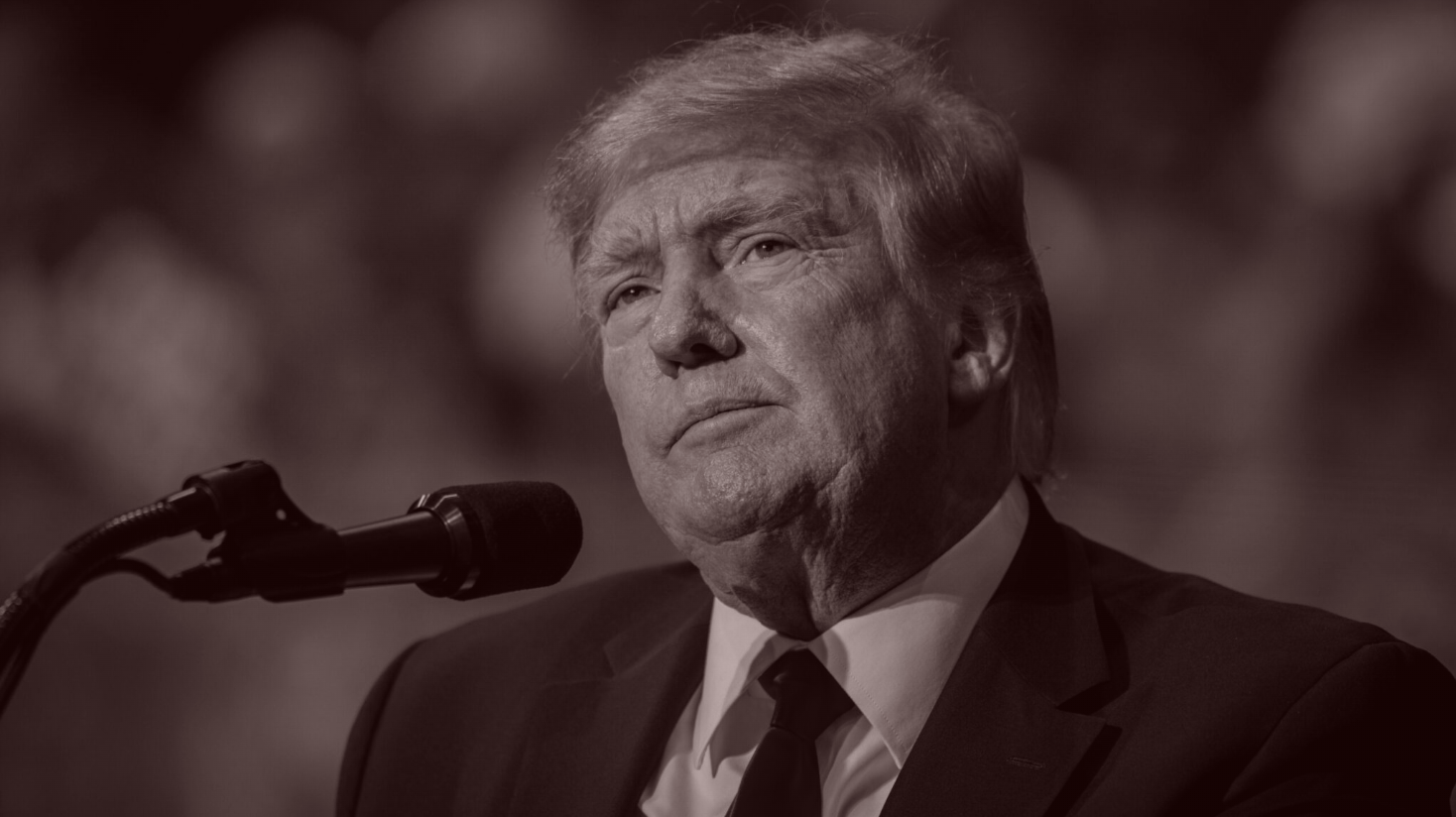 |
| Will Trump Get Indicted? |
| What the lawyers are saying. Plus notes on S.B.F.’s dip-buying moves and Elon Musk’s new competition. |
|
|
|
| There’s not a lot of love for Donald Trump on Wall Street, for obvious reasons. He’s notoriously poor at paying his debts and has stiffed major banks out of hundreds of millions of dollars over the years. Then there was his regrettable one term as president, during which he upended nearly every civic norm and managed to become the first occupant of the Oval Office to be twice impeached. If that weren’t enough, he followed that up with his pathetic and ungracious display of indignity in the wake of the 2020 election, culminating with his encouragement of the January 6 tragedy. Now, we’ve had weeks of congressional hearings that have revealed the gory details of Trump’s insurrection, including the riveting testimony of Cassidy Hutchinson, the 25-year-old aide to former Trump chief of staff, Mark Meadows. (Trump has vehemently denied the accusations made in her testimony.)
Is it time yet for Trump to be indicted by Merrick Garland’s Justice Department, and if so, for what? Are we any closer to that actually happening, or is that still too politically and legally hazardous? I put these questions recently to an elite group of attorneys and former prosecutors. “Yes,” replied one former prosecutor rather quickly, even though he was on a European sojourn and had just enjoyed “a good bottle of red wine.” He added, “A prosecutor with a pair of balls would indict him.” He then emailed back that even though that “legal analysis” came after the bottle of wine, “I stand by it.” Another former prosecutor agreed that “Yes, definitely” Trump was inching closer toward being indicted but it was “still not a done deal.” I asked what it would take at this point to push the Justice Department into an indictment. “Determination and courage,” he replied. “I think D.O.J. has both in this case.”
A managing partner at one leading Wall Street law firm surprised me with his answer to these questions. I was expecting a more equivocal response. Instead he came with the heat, like the two former prosecutors. “I think the politics/optics have worsened considerably for Trump over the past few weeks, culminating in this week’s testimony,” he wrote. “I also think you’ve seen much more aggressive tactics on the part of the D.O.J., executing search warrants on John Eastman and others, which certainly should be troubling to Trump.”
But another corporate lawyer on Wall Street was a bit more cautious about where we might be going from here. He said that while the hearings had damaged Trump “politically,” he was wary of pushing for an indictment, which would make him the first former president indicted for his behavior while in office—and therefore a bit of a martyr. He didn’t want that to happen. He feared that once this Pandora’s box was opened for the first time, the Republicans would eagerly try to find a way to retaliate for that decision by making Hunter Biden’s life a living hell. He said that as damaging as the testimony has been for Trump politically, he said he “hasn’t seen anything that will overcome a reasonable doubt” about Trump’s “specific intent” to commit a crime. Nor was he sure whether Trump’s desire to overturn the 2020 election was “a criminal offense, believe it or not.”
What about Trump’s desire to march with the insurrectionists to the Capitol? “I’m not sure that’s a crime because it never happened,” the corporate lawyer said. Fighting with his Secret Service driver? “If it happened,” he said, citing the conflicting reports about what really occurred. “The damage is political damage,” he cautioned. Indeed, he explained, for the first time he’s starting to hear some of Trump’s biggest supporters in New York City circles—real-estate developers, business cronies, people who two years ago would boast about how close they were to him—have started distancing themselves from him and talking about how the political damage may not be able to be overcome, finally.
It’s quite the conundrum. Would it be enough for Trump to be so politically damaged at this point to render moot his prospects for 2024? Or does he need to be indicted, tried, convicted, and sent to Otisville in an orange jumpsuit for a good long time for the demon Trump to be finally and fully exorcized from the political landscape? Some versions of these questions must be top of mind these days at the highest levels of the Justice Department. |
|
|
| Sam Bankman-Fried has been buying the dip in crypto, investing in distressed companies and deploying his capital aggressively to stabilize the sector and prevent further contagion. It’s the sort of high risk, high reward strategy that the original three-letter initialed wonder, John Pierpoint Morgan, played during the Panics of 1893 and 1907, before Wall Street was regulated by the Federal Reserve and the Securities and Exchange Commission. Back then, Morgan alone had the power to decide which banks and Wall Street firms lived and died. If Bankman-Fried’s bets pay off, he too could emerge from the present crisis as a latter-day Morgan with unparalleled wealth and influence—or, perhaps, he could go bust himself, along with FTX, his Bahamas-based crypto trading platform.
Sam is a smart fellow. He’s an M.I.T. grad and has some experience trading in distressed securities from when he was working at Jane Street Capital before founding FTX. You don’t get to be the wealthiest 30-year-old in the world, after all, without some street smarts. While it’s true, according to Bloomberg anyway, that his wealth has decreased nearly 50 percent in 2022 alone, to $8 billion, he and FTX still have plenty of cash and liquidity to play around with to try to pick up the gems that remain in cryptoland as the speculatory fever breaks and various levered crypto bets unwind.
FTX has extended a lifeline to BlockFi—providing a $400 million line of credit and obtained an option to buy the company for no more than $240 million, and perhaps as low as $25 million—and is reportedly exploring an acquisition of Robinhood, now that the brokerage is worth a fraction of what it was during its peak in 2021. (Bankman-Fried himself recently disclosed a 7.6 percent stake in Robinhood.)
Time will tell which of these investments might pay off. In late June, S.B.F.’s quantitative trading firm, Alameda Research, extended $500 million in financing to the digital asset brokerage Voyager Digital, a BlockFi competitor, and became the company’s largest shareholder. That may not be enough to save Voyager, or it may allow Alameda to take control of the company for pennies on the dollar. On July 1, after one of Voyager’s customers failed to make payments on a loan worth hundreds of millions of dollars, Voyager suspended all customer activity, including the ability to withdraw deposits, causing its stock price to fall 38 percent. (It is down 98.5 percent since its high last November.) The company is now seeking to recover a $670 million loan from crypto hedge fund Three Arrows Capital, which declared bankruptcy on Friday. What a crypto mess.
To me, this all makes some sense, as long as S.B.F. goes about picking up the distressed crypto assets in an intelligent way, meaning not paying equity holders, if he can avoid it, and buying debt at a discount. Or just buying assets out of bankruptcy. Or, as he did with BlockFi, obtaining an option to buy the company at a reasonable price, or with a wide enough range to protect himself. He also has to avoid going on a buying spree just for the sake of proving that FTX is a consolidator and a survivor. Where there is real value to be had from buying worthwhile crypto assets, I’d say go for it. But I’d also advise him to keep his ego in check and be clever about what he’s buying and why. (As usual, this is not investment advice.)
The good news from the perspective of FTX investors is that S.B.F. seems to have his act together. Here’s the stream-of-consciousness quote he gave Bloomberg TV when asked if he were creating a “moral hazard” by rescuing companies that should be wiped off the landscape: “What you’re getting at there is: Does that bail out a company that really should have failed? And teach the wrong lessons to that company? And I think what I would say to that is two things. First of all, I’m way more excited to bail out customers than shareholders. The focus of this is not how do we deliver as much shareholder value to troubled assets as possible, it’s how do we protect customers, and I think those imply pretty different things. One of those is way more important to the ecosystem and the other is the one that has the biggest moral hazard.”
The second point, he added, is “to find who were the responsible players who were building out the good business, had a sustainable model and could use short-term liquidity and that could protect customer funds, and fundamentally built a real, valuable, business that has something real to offer to customers, rather than which companies should never have existed, probably. And as of today, maybe we should just let them sort of die a quiet death.”
Seems like a guy with his head on pretty straight, despite being young and never having experienced a serious economic downturn—like the one we’re living through now—as an adult. |
|
|
| Competition is heating up in the electric vehicle market. GM announced it has a 77 thousand person waitlist for its electric Hummer. Ford is now rolling out an electric version of its best-selling F-150 pickup truck, which already has 200,000 orders. Meanwhile, Tesla, which just laid off 200 autopilot employees, announced slowing sales amid production problems in China. (Watch out for Tesla’s stock gyrations on Tuesday morning.) Elon Musk’s car maker remains the industry leader in E.V.s, of course, but it is steadily losing global market share over time. Not only was that inevitable, it will also turn out to be a good thing for the industry as well as for consumers.
As for Tesla, as faithful readers know, I have never been a fan of its ridiculous valuation, which twice in the last year hit something like $1.2 trillion, for a company that makes much of its money selling carbon credits. These days, Tesla stock is valued at a still-excessive $700 billion, a hard-to-justify number even during the best of times. With markets still correcting and investors in risk-off mode, well, look out below. (Again, this is not investment advice.)
Tesla’s EBITDA for the last twelve months ended March 31 was $12.7 billion, making its equity valuation, despite a decrease of 42 percent since its peak, a still-whopping 55x EBITDA over the last 12 months. There’s nothing modest about that. Indeed, I am not sure what investors see in Tesla that would make them want to buy at these levels, given the growing competition from nearly every other car maker, let alone from the new entrants such as Rivian and Lucid. And that’s even before investors grapple with whatever Elon is up to with Twitter and how that may or may not affect how much Tesla stock he ends up selling to get to the $20 billion equity he still needs to supply as part of his $44 billion deal. It seems to me that we’re still a ways away from anything like stability and transparency at Tesla. Caveat emptor. |
|
|
|
| FOUR STORIES WE'RE TALKING ABOUT |
 |
| WaPo Sweepstakes |
| Who will succeed the beloved Fred Hiatt? Plus: Cassidy Hutchinson's next moves. |
| TARA PALMERI |
|
 |
| How CAA Ate ICM |
| The merger reflects a new reality in which the representation ecosystem has split in two. |
| MATTHEW BELLONI |
|
 |
|
 |
|
|
|

|
|
|
| You received this message because you signed up to receive emails from Puck
Was this email forwarded to you?
Sign up for Puck here
Sent to
Unsubscribe
Interested in exploring our newsletter offerings?
Manage your preferences
Puck is published by Heat Media LLC
64 Bank Street
New York, NY 10014
For support, just reply to this e-mail
For brand partnerships, email ads@puck.news |
|
|