|
Good evening, I'm William D. Cohan.
Welcome back to Dry Powder. If you're receiving this private email, it means that you have subscribed to Puck, our new media company covering Washington, Wall Street, Silicon Valley, and Hollywood. Thanks again for joining our community.
You can read my latest work online, or in this email, below.

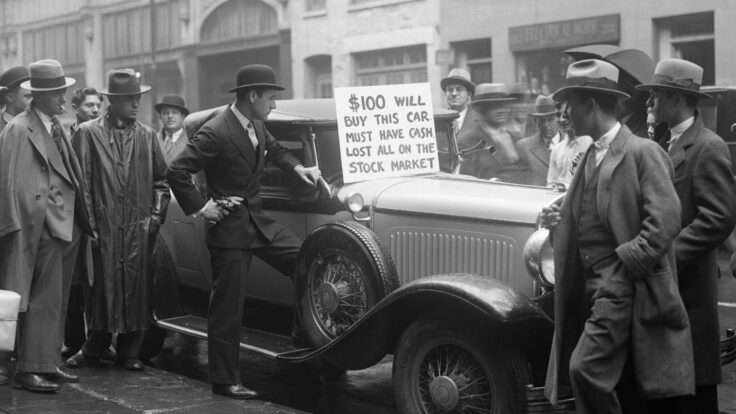
Bankers know in their guts, as well as in their brains, that the combination of the highest stock prices and lowest bond yields in recorded history is not sustainable. A massive correction is coming. What’s going to kill the party that has been raging on Wall Street since March 2009? That’s the question preoccupying many executives, bankers, and traders on Wall Street lately, especially since most of them agree that both the stock and bond markets are priced for perfection and that the circumstances on the ground are pretty far from perfect.
It’s a fascinating and precarious situation. People know in their guts, as well as in their brains, that the combination of the highest stock prices and lowest bond yields in recorded history is not sustainable and that a massive correction is coming. It has to. But no one can quite figure out what will become the catalyst for the inevitable decline in the financial markets.
Last week, it looked like the collapse of Evergrande—the Chinese real-estate conglomerate, with some $300 billion of debt—would send markets reeling around the world. There was a lot of chatter about how Evergrande would be China’s Lehman Brothers moment. Sure, there were a few wobbly days in the stock markets as a result of the fear of the (still unclear) Evergrande consequences, but the market quickly recovered after investors decided that Evergrande wasn’t the droid that people were looking for, or at least not yet.
“We could see a material slowdown in Chinese economic growth that will ripple through the rest of the world, but not necessarily through the banking system,” is how one senior Wall Street banker put it to me. Then, of course, there is the looming prospect that the Congress might fail to raise the debt limit, causing the U.S. Treasury to be unable to fulfill its obligations—interest payments, unemployment benefits, Medicare payments—as they come due. Even the Federal Reserve’s hint that it would begin to pull back in 2022 on its luscious Quantitative Easing program—the main reason the financial markets have been rollicking for so long—didn’t have a perceptible effect on the financial markets. So what will?
In case you have somehow been deeply mired in The White Lotus, or The Other Two and have missed what’s going on here, a quick reminder: All the major stock market indecises in the United States are at, or near, their all-time highs and have been since election night 2016, when Donald Trump won the presidency. If you had just held on to your stocks through the 2008 financial crisis, when the Dow Jones Industrial Average hit a relative low of around 6,600, in March 2009—if you didn’t do anything fancy like invest in hedge funds, or private equity or use “leverage” or buy options—you would have made some 430 percent on your money now that the Dow Jones is around 34,500. Thanks in particular to the Federal Reserve’s near zealous adherence for the past dozen years to its program of Quantitative Easing—during which time the assets on the Fed’s balance sheet have grown from $900 billion to nearly $9 trillion—the bond markets are at, or near, their all-time highs, and interest rates have never been lower. (There are signs that the bond market has reached an inflection point and that rates are ticking up.)
There are many pithy phrases that Wall Street has invented over the years to explain what’s going on here. There’s the evergreen “Don’t Fight the Fed,” the point being that as long as the Fed is determined to make money abundantly available and dirt cheap, you might as well back up the truck and keep borrowing and partying like it’s 1999. The other bit of Wall Street argot, courtesy of the economist John Maynard Keynes, that comes to mind is: “The market can stay irrational longer than you can stay solvent,” which means, depressingly, that you can know in your bones that a correction is coming, you can even construct an elaborate trade to benefit financially from the collapse—a.k.a., the Big Short—but that, sadly, the cost of paying for that insurance can drain your resources before the actual correction comes. The lesson that Keynes learned personally, from his own massive trading losses 100 years ago, is the situation investors, collectively, face today.
If you want to understand the conundrum of the financial markets these days, all you have to do is look at a chart of the effective yield on high-yield bonds at the moment. It fairly screams: Risk! Back in the glory days of February 2020, when Trump was still president and the pandemic seemed like China’s problem, the average yield on a junk-bond was 5 percent. I remember thinking how absurd such a low yield was for such a crappy bond, and how badly investors were mispricing risk.
When the pandemic hit our shores a few weeks later, and the lockdowns began, the average yield on a junk bond soared within days to as high as 11.5 percent. As painful as it must have been for anyone who bought a junk-bond yielding 5 percent when the yield had soared suddenly, this seemed right to me. Finally, investors were getting their heads screwed on straight and were demanding the appropriate compensation for the risks they were taking.
Back in the late 1980s and through much of the 1990s, junk-bond yields were typically above 10 percent and often included warrants—equity sweeteners offered to investors in order to goose the expected returns, a further way to induce investors wary of not getting properly compensated for the risks they were taking. Suddenly, for a few weeks there in March 2020, with the debt markets all but shut down, investors were finally getting things right. Then the Fed struck not once, but twice, in the next month with a clear message: We will be underwriting the credit markets, don’t you worry bout a thing, mama. Quantitative Easing was back and better than ever; the Fed would resume its torrid pace of buying all sorts of debt securities, including Treasuries, mortgage-related bonds, even junk-bond E.T.F.s. The cavalry was here.
With the light switch flipped, the financial markets responded almost immediately. The stock markets reversed direction and resumed their upward climb. In the high-yield market, the turnaround was particularly acute, which is why I use it as the best illustration for what has been happening. The effective yield on junk bonds plummeted precipitously, raising their price accordingly (bond yields move in inverse proportion to a bond’s price). These days, the average yield on a junk-bond is 4 percent, the lowest it has ever been, except for the few times over the summer when the yield actually had a 3-handle.
In my view, and in the view of many smart Wall Street types with whom I speak regularly, junk-bond investors have lost their minds. They are simply not getting rewarded for the risks they are taking in owning these bonds, risks such as the possibility of an economic slowdown, or that interest rates will inevitably rise, or risks of default—see Evergrande—or of bankruptcy. Junk-bonds, of all things, are priced for perfection. It’s as if they were no longer called “junk bonds.”
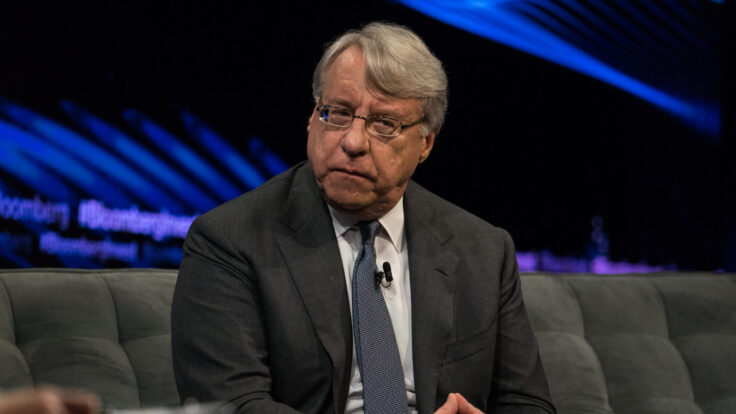
With interest rates at their lowest level in 4,000 years, I believe bonds are univestible at the moment. As my friend Jim Grant, the brilliant credit strategist and the longtime author of Grant’s Interest Rate Observer, often puts it: When your credit is rated AAA, there is only one direction it can go and that is down. There are no AAAA-rated companies. When the bond market is priced for perfection, as it is today, there is only one direction interest rates can go: up. And that means there is only one direction bond prices can go: down.
I sometimes get push-back when I point to the incredible risks investors are taking in the junk-bond market. If you look at the spread over Treasuries, I’m told, you will see that investors are actually being rational, that the reward they are getting for buying junk bonds, as opposed to Treasury bonds of similar maturities, is the same as it’s always been. Unfortunately, that argument is wrong these days: the difference between the yield on a junk bond (the riskiest bonds) and Treasuries (the safest bonds) of similar maturities—what Wall Street calls “the spread”—has rarely been smaller, at around 300 basis points, or 3 percentage points (1 percent versus 4 percent), according to data provided by the Federal Reserve Bank of St. Louis.
True, it was smaller in May 2007—at around 245 basis points—but I think people of a certain age will remember that by then we were already three months into what would become the 2008 financial crisis, although only the likes of hedge fund manager John Paulson, executives and traders at Goldman Sachs, and the investor Michael Burry, among a few others, had figured that out. The damage done to the investors who were buying junk bonds in May 2007, at those tiny spreads, was nearly existential, when the financial crisis revealed to them the risks they had actually been taking.
It’s no different right now. We’re at that similar inflection point where the danger is there but most people refuse to acknowledge it. (Of course that’s why hedge-fund managers such as Mark Spitznagel and Bill Ackman can clean up; they put themselves in a position to benefit from changes in market sentiment before most other people realize that a change in sentiment has occurred.) Then, there is the additionally unsettling fact that over the summer, according to Bespoke Investment Group, junk-bond yields fell below the rate of inflation for the first time ever, which could result in investors locking in a loss, unless the inflation rate moderates (as many economists think it will). Oh, and junk-bond issuance has never been higher—at nearly $800 billion so far in 2021, and counting—which makes perfect sense since investors are still willing to buy them at ridiculously high prices and low yields. That will change soon enough.
Barring further ramifications from the Evergrande collapse—or from another micro-catalyst such as the implosion of a company like Tesla, or the failure to raise the debt limit, or some such—the best bet for the next crisis-catalyst remains the Federal Reserve, and when it decides to pull the plug on Q.E. What worries my Wall Street sources most about that moment is what happens to the trillions of dollars of debt issued by companies with BBB-credit (on the edge of being rated junk debt) and those companies with debt that is already rated junk.
One Wall Street executive that I talk to worries that these “zombies,” as he calls them, have been kept alive only by the Fed’s low-interest rate policies. If and when the inevitable rise in interest rates commences—the yield on five-year Treasuries just touched the highest level since February 2020—these zombie companies, with trillions of dollars of debt outstanding, will only be able to refinance that debt at rates far above what that same debt yields today—say at 8 percent versus 4 percent—sucking up much more of the companies’ cash flow and putting them closer to the precipice of bankruptcy. “That’s the whole nine yards,” my friend said. In sum, not only will rising interest rates hurt financially the holders of the existing bonds but they will also potentially choke off access to capital, except at much higher rates, for a large swath of corporate issuers.
When the credit markets begin to freeze up like that, as they did in March 2020, as they did in September 2008, then investor confidence dries up like raindrops in the Sahara. The root of the word “credit” or “credere” is “to believe,” as in having the belief that you will get the money back that you lent. The financial markets are a confidence game. That’s it. When confidence is high, like right now, whether it’s warranted or not, investors will take all kinds of stupid risks that seem painfully ridiculous when the sentiment changes and confidence is lost in an instant. Of course we don’t know when that change will come. We can’t predict future events with any kind of precision. But we can know, deep in our bones, that the current level of confidence is both unwarranted and unsustainable and that it will change, and soon. The carnage will be massive. In case you’re wondering, that’s what we have to look forward to on Wall Street.
FOUR STORIES WE'RE TALKING ABOUT 
A surprise merger announcement underscores the new economic logic of Hollywood in the streaming era, where only the largest entities survive. DYLAN BYERS 
At 78, Woodward has become the ultimate Washington monument: a subject of public adulation and private eye-rolling, little different from the public figures he covers. JULIA IOFFE 
An unexpected turn in the spotlight underscores a fundamental truth about one of Silicon Valley’s prolific investors. It can feel like everyone knows Powell Jobs, and no one really knows her at all. THEODORE SCHLEIFER 
Robbins may not be indicia of the sad decline of Paramount, but rather a shrewd transition that positions its parent company for the future of the movie business. MATTHEW BELLONI 
You received this message because you signed up to receive emails from Puck.
Was this email forwarded to you?
Sent to {{customer.email}}
Puck is published by Heat Media LLC.
For support, just reply to this e-mail. For brand partnerships, email ads@puck.news |


SHARE