{{ 'now' | timezone: 'America/New_York' | date: '%b %d, %Y' }} |
|
|
Hi, and welcome back to Line Sheet. In today’s oh-so-special issue for Inner Circle members, I’ve got an
update on Anna Wintour, American Vogue, and the future of Condé Nast that you won’t want to miss. (Trade up
here.) You’ll also find a reflection on the recent spate of shows marking the end
of Fashion’s calendar year. Plus, some notes on today’s auction of the original Birkin bag at Sotheby’s in Paris. Finally, I attempt to answer the question: Will this J.W. Anderson rebrand work?
Programming note: My guest on Fashion People tomorrow is Hollywood royalty Liz Goldwyn—writer,
sex educator, collector of vintage, and more. Liz is one of those people who effortlessly pops into my life every couple of years, and I enjoyed this recent run-in the most. Listen
here and here.
Mentioned in this issue: Vogue, Anna Wintour, Condé Nast, Vanity Fair, Mark Guiducci, Si Newhouse, Chloe Malle,
Sara Moonves, Chanel, Demna, Glenn Martens, Margiela, Jen Rubio, Jonathan Anderson, the original Birkin bag, and many, many more… |
|
|
A MESSAGE FROM OUR SPONSOR |
The refined BMW 7 Series is all luxury. With the ability to define your design, the ultimate glamour is yet to be.
Learn more at BMWUSA.com. |
|
|
Three Things You
Should Know…
|
-
After the Couture: I’ll have more about the downturn in the luxury industry on Monday, but suffice it to say, things are really bad for now: Global sales for many of the world’s largest fashion brands are down anywhere from 20 to 40 percent this year. Most recently, a designerless Chanel delivered a truly bad collection that proved you still need someone who really knows how to cook—even if you’re using the best ingredients. The Cut’s Cathy Horyn had a great
time ripping the collection to shreds; she called it “lumpy,” “bland,” and “unflattering.”
From my comfortable perch on the West Coast, however, this Couture season gave me reason to hope. At his final Balenciaga show, Demna nailed what makes him such a special talent: To successfully break the rules of fashion, you also need to have
mastered the ability to follow them. While people were frequently up in arms about his couture sweatshirts and so forth, the reality is that his underlying skills were so exquisite that if you missed the mastery, that was your problem. With this final collection, he chose to simply show his skills rather than make you search for them. “I have come as close as possible to being satisfied in this endless pursuit of impossible perfection,” he said in the show notes. I loved that this compilation of
idealized looks was inspired by la bourgeoisie, the engine of the luxury industry. (He’ll be getting even better acquainted with them at Gucci.)
Meanwhile, Glenn Martens’ debut at Margiela on Wednesday night left everyone flying. It’s hard to really know when you’re not in the room, but the beautifully designed show notes, punctuated by red diamonds, were as vivid as the collection itself. Instead of waxing lyrical about his intentions for the house,
Martens simply documented, in stunning detail, each material, technique, and end result. You can tell Martens has both a high I.Q. and E.Q. in the way he presents. I can’t imagine what No. 11—“the draped (heart-shaped) skirt … crafted in aged-gold oscillating duchess woven with metal threads and printed with a pattern replicating (16th century Flemish hand-painted and embossed) floral leather wallpapers”—made you feel if you were there. See you in September. - $10.1 million in 10 minutes: Have we reached peak conspicuous consumption? Hardly, but we may have the latest data point that the ultra-rich have simply become too wealthy. There was something truly outrageous about Sotheby’s auction of the original Birkin bag in Paris, which sold for $10.1 million to a private collector in Japan. There were nine bidders over a 10-minute period, including former Away C.E.O. Jen Rubio, who’s in Sun Valley right
now with her husband, billionaire Slack founder Stewart Butterfield, according to Getty Images. There’s also speculation that rich wife of the moment, Lauren Sánchez—who’s also in Sun Valley, after attending Wednesday’s Balenciaga show—put in a bid, but I can’t confirm that.
Rubio’s intention, I’m told, was to donate the Birkin to the Met, and here’s hoping the
new owner has similarly philanthropic notions. After all, this auction broke a lot of records, and says plenty about the value that society lavishes on luxury goods in particular: Sotheby’s is calling it the “most valuable luxury handbag ever sold at auction.” (It was also the most anyone has ever paid for a luxury item up for auction at Sotheby’s Paris.)
Coincidentally, the sale occurred on the very same day that Challenges, the French business magazine, named the
Dumas family over the Arnaults as the wealthiest tribe in the country. Challenges reports that Arnault’s fortune dropped by 38 percent last year, back to 2020 levels. (Humorously, Arnault is a part-owner of Challenges…) These rich lists are pretty unreliable—they are compiled by using public data and talking to people who want to talk—and the Arnaults likely have a lot of unaccounted-for money. But directionally, it’s all of a piece.
Regardless, congrats to the lucky bidder. - Will the J.W. Anderson rebrand work?: In January, I reported that Jonathan Anderson’s 17-year-old brand, which has been generously underwritten by the Arnaults for more than a decade, was ramping up distribution. And that
is the case, although it’s going to temporarily pause some activities as it reboots the business to become a more accessibly priced, scalable version of Old Stone Trade, or Plain Goods, or any other incredibly specific lifestyle concept store that inspires a certain way of being.
Anderson shared with both BoF and WWD that, for now, he would be giving up on fashion shows and homing in on things that feel like home: “objects of elevated craftsmanship,” as he put
it. To present the concept, Anderson called on people who have been integral to his career, from the stylist Danielle Goldberg to Loewe comms and marketing head Julian Labagh, for a handmade-feeling lookbook campaign: Hailey Gates posed with a silver, 19th century decanter tag shaped like a bat; there are Irish linen tea towels printed with the words “craft” and “art,” a Wedgwood coffee cup and saucer in Wedgwood blue, and, of course, the
perfect Scottish cashmere sweater. I liked the Newspaper Coat, which is exactly what it sounds like: a coat you wear to grab the newspaper in the morning. Anderson plans to close his two operating stores in August, reopen with the new concept in September, and then continue to open more at a relatively steady clip.
Can it work? For many years, J.W. Anderson was growing, but losing
money for LVMH. I’m not sure the Arnaults will fund it forever, but they’ll certainly continue as long as Anderson is making them money elsewhere—after all, he has a big, €14 billion responsibility with Dior. This new format may mean that sales at J.W. Anderson shrink for a year or two, but it’s probably a more stable operation long-term. This also allows him to continue developing the J.W. Anderson brand without running himself and his team ragged by producing fashion shows that people might
enjoy, but which are ultimately not financially impactful.
|
|
|
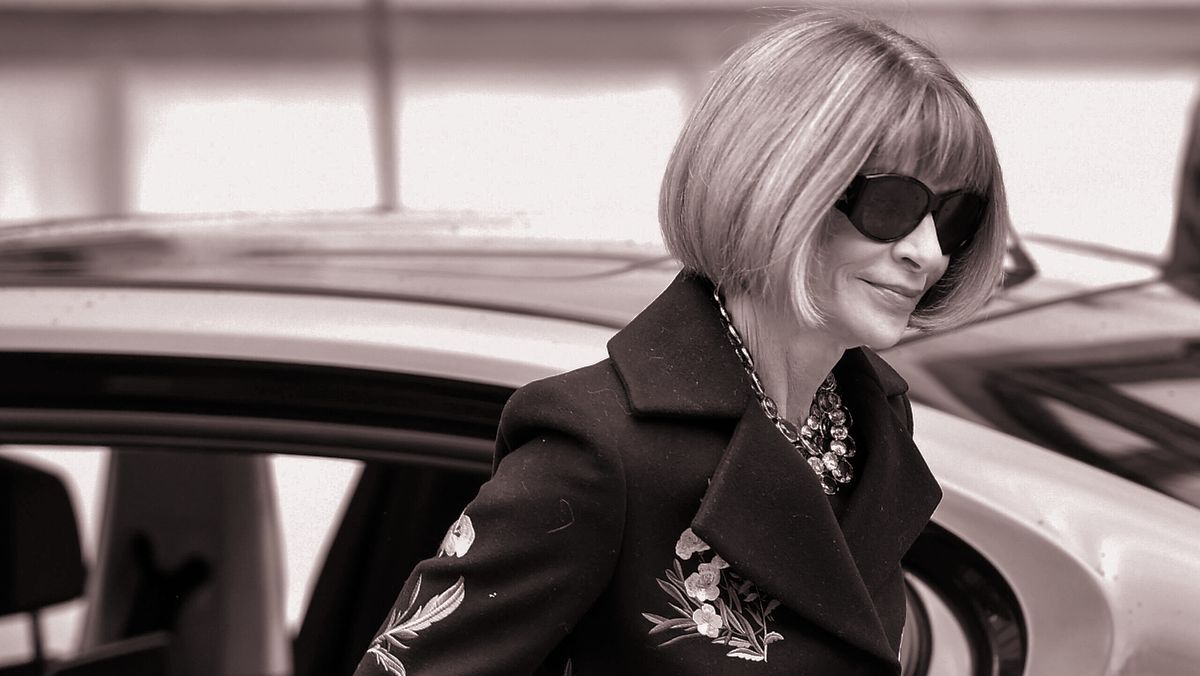
Anna Wintour is searching for her Vogue successor as Condé Nast embraces life as a
brand management firm, squeezing every drop of value from its once-mighty titles. But does Anna have a vision for the company, post-Anna? |
|
|
There’s been a lot less speculation around the succession process at American Vogue than,
say, the recent search for the new global editorial director at Vanity Fair. This is largely because the job is really the least significant of Anna Wintour’s myriad roles. Regardless of whom she selects, Wintour will still manage the global Vogue brand, remain the chief content officer of parent company Condé Nast, and retain her position as the key opinion-former in the fashion industry. Even at 75, she remains relentless, and has reassured
top advertisers and industry insiders that nothing is changing, really. On Sunday, she attended the Celine show for the first time in more than five years after being banned by former designer Hedi Slimane—presumably, an ad buy from the LVMH brand will follow soon.
Condé Nast tried to minimize the news, too. A couple weeks after Mark Guiducci was announced at VF, and that unforgettable Michael Bay–Marcel Proust
tongue-twister in the Times, the company opted against a press rollout or even a formal statement. According to sources familiar with the situation, the company’s board of directors—including (but not limited to) Steven Newhouse, Jonathan Newhouse, Advance’s chief legal officer Michael Fricklas, Advance’s group president Janine McGrath, and economist Dambisa Moyo—was only notified of the
decision on the day Wintour told her team. (A person close to C.E.O. Roger Lynch said that wasn’t true, but a rep for Condé Nast would not comment on the record.) |
|
|
A MESSAGE FROM OUR SPONSOR |
The refined BMW 7 Series is all luxury. With the ability to define your design, the ultimate glamour is yet to be.
Learn more at BMWUSA.com. |
|
|
Look, it’s possible that the board of this family-owned company is really vestigial rather than a governing
body. (Presumably Steven Newhouse and Lynch had long been read in.) Or, perhaps, key players worried that extending the circle of trust could facilitate a leak. Nevertheless, this quiet approach indicated to me that Wintour, Lynch, and H.R. head Stan Duncan were serious about the business of succession.
Since the announcement, I’ve heard most frequently that the company is searching for someone who has experience with live events, which is hardly a surprise given that
Vogue World, the VF Oscar party, and GQ’s Man of the Year tentpoles remain the company’s most visible touchpoints in the cultural landscape. (This certainly helped Guiducci…) If it’s simply a regional role with no clear path forward, it’ll likely be filled by a respectable Wintour workhorse, many of whom I mentioned previously, like Chloe
Malle. But if the intention is to set up the new American Vogue head to one day lead Vogue globally—a true Wintour successor—I suspect the pool of interested candidates will deepen significantly. Condé Nast may be playing it cool to ensure that this curiosity takes hold in the market.
But regardless of whether this is the first step in a larger succession scenario, a big part of the American Vogue job will undeniably be less glamorous. The new
top editor will be tasked with restructuring and eliminating costs. Condé Nast simply can’t afford to continue honoring legacy salaries, and Wintour has never been good at firing the people closest to her: Like many compassionate leaders in creative industries, she sometimes finds ways to keep paying them for one-off projects. I know of at least three Vogue staffers who have reduced their hours in recent weeks. In at least two of the cases, the staffers had genuinely wished to pare back
their commitments, but had been denied the opportunity previously. Suddenly, it was okay.
This has also been a tough year for advertising-dependent media, particularly businesses with exposure to the luxury industry. Booking the August issues was particularly tough, I’m told. It didn’t help that well-regarded luxury sales lead Susan Cappa quit in June after 15 years at the company. The downturn could result in further layoffs across the business, especially in Europe,
where regional head Natalia Gamero del Castillo Calleja recently left after five years in the role.
The skills needed to evolve a media property in this era are different than they were even a decade ago. But, most importantly, the forward-thinking Wintour needs to think about what Condé Nast becomes when she’s no longer there. And, certainly, the Newhouses do, too. |
As someone who has been covering this company intermittently for more than 15 years, I think the
ideal scenario would simply be to hire W editor and co-owner Sara Moonves. Ironically, of course, this would almost certainly necessitate some sort of partnership—an investment, acquisition, or joint venture—with a brand that Condé sold for an undisclosed price in 2019. The company never fully believed in the business potential of W
when it owned it. (W, after all, came over in the company’s acquisition of Fairchild, most of which it sold off to Penske a decade ago.) |
|
|
But Moonves, through her joint venture with Bustle Digital Group and funding raised from a group of investors
that includes Karlie Kloss and Jason Blum, has managed to build a commercially minded, reader-appreciated publication through rich, directional imagery, and a more flexible relationship with advertisers. She is doing far more with far less, and spending on the right things. There’s no true heir to Wintour, but she’s probably as close to a plug-in as you might find.
Moonves could run American Vogue and W simultaneously—she has a strong
circle of collaborators and, after working for Wintour for a decade, would understand how to service her needs while keeping W ticking. (Also, for what it’s worth, W never moved out of One World Trade Center.) Then, she could move into the global role in a year or two, when Wintour is ready to move on.
Regardless of what this job actually entails, I hope that, at some point, Condé executives choose to revive the editor-in-chief title. I’m not one to get hung up on
semantics, but the company’s insistence on calling these gigs head of editorial content suggests the belief that these entities don’t need to be edited so much as managed, and likely managed to decline. It’s a far cry from the days when Condé Nast positioned its editors as visionaries. Yes, Condé Nast brands like Vogue and GQ are more than ideas factories—they’re institutions. But these brands only exist because of the people who make
them.
During a recent recording of my podcast, Fashion People, I discussed some Condé history with Times journalist Michael Grynbaum, who is the author of the forthcoming Empire of the Elite: Inside Condé Nast, the Media Dynasty That Reshaped
America. As Michael noted, every generation of Condé employees believed that their forebears had it best. And they weren’t wrong. After the ’90s free-for-all, budgets were corrected and the good life that proprietor Si Newhouse wanted to depict in his magazines’ pages was no longer feasible for Condé employees who weren’t independently wealthy. In 2018, Advance hired Lynch to turn Condé Nast into a company that didn’t lose money for sport. In many ways, he’s achieved
that goal, but financial prudence has hardly defined the future strategy. Besides a marked effort to increase paid subscriptions, and the enduring success of The New Yorker, Condé Nast feels more and more like Authentic Brands Group. Maybe that’s the plan.
What does the current generation of Newhouses—and particularly Steven Newhouse, who remains in ultimate control—want from Condé Nast? It’s been widely thought that the Newhouses will never let go of the company: too much of a
pain to unwind, too much family history. But just as the company has changed, their desire to manage it might evolve, too. If they wanted to continue influencing culture through Condé Nast specifically, they would perhaps be thinking about it all differently. Remember that the Newhouses have been behind some of the smartest media investments in recent history, including Reddit, which made the family nearly $2 billion when it went public. Earlier this month, they sold roughly $1 billion in Warner
Bros. Discovery, citing in the S.E.C. filing that the cash would be used for various family matters, including estate planning. Maybe the future is here. |
And finally… Why is every character in every book and TV show suddenly a magazine editor?
Get with the times and make her a podcaster! (Or a newsletter writer.)
Until tomorrow,
Lauren
P.S.: We are using affiliate links because we are a business. We may make a couple bucks off them. |
|
|
The industry's go-to source for unflinching reporting on the trillion-dollar business of artificial intelligence - perhaps the single most
important technology of our time. Ian Krietzberg, the powerhouse journalist behind The Deep View, delivers twice-weekly insights into the latest dealmaking and breakthroughs in A.I., and how the intersecting worlds of finance, entertainment, media, and politics are being transformed in its wake. |
|
|
Join Emmy Award-winning journalist Peter Hamby, along with the team of expert journalists at Puck, as they let you in on the conversations
insiders are having across the four corners of power in America: Wall Street, Washington, Silicon Valley, and Hollywood. Presented in partnership with Audacy, new episodes publish daily, Monday through Friday. |
|
|
Need help? Review our FAQ page or contact us for assistance. For brand partnerships, email ads@puck.news. You received this email because you signed up to receive emails from Puck, or as part of your Puck account associated with {{customer.email}}. To stop receiving this newsletter and/or manage all your email preferences, click here. |
Puck is published by Heat Media LLC. 107 Greenwich St, New York, NY 10006 |
|
|
|