 |
|
|
|
Forward this email to a friend!
|
|
For our second anniversary, subscribers can share the benefit of Puck with an exclusive code (INSIDEACCESS) that gets your network 30% off.
|
|
|
|
|
|
Welcome back to The Best & The Brightest, I’m Peter Hamby. Tonight, reflections on last week’s G.O.P. debate, Vivek vs Nikki, and how the party’s onetime outsiders became today’s old news.
P.S. In celebration of our second anniversary, members can offer their network 30% off a Puck subscription (our biggest discount ever). Share this link with someone you think will love Puck or have them use code INSIDEACCESS at checkout.
But first, the latest talk around the Capitol from Abby Livingston…
|
| Gillibrand, Santos, & the Battle for New York |
|
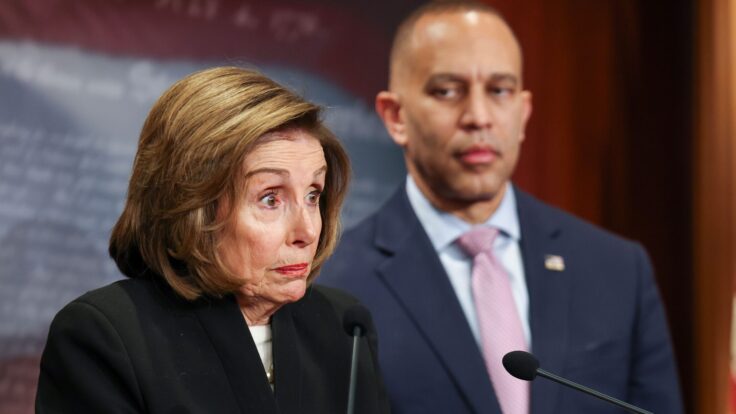
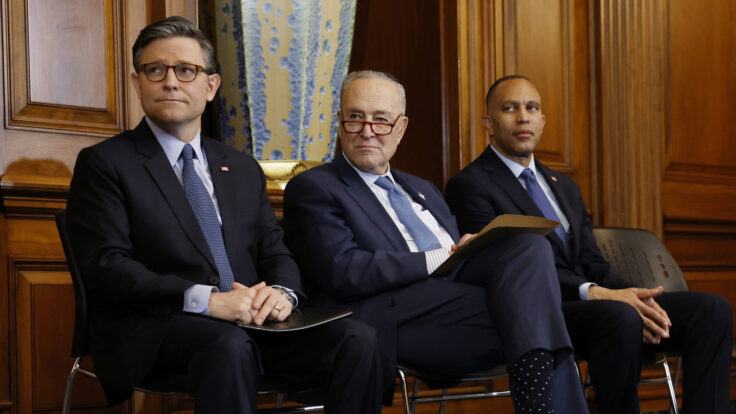
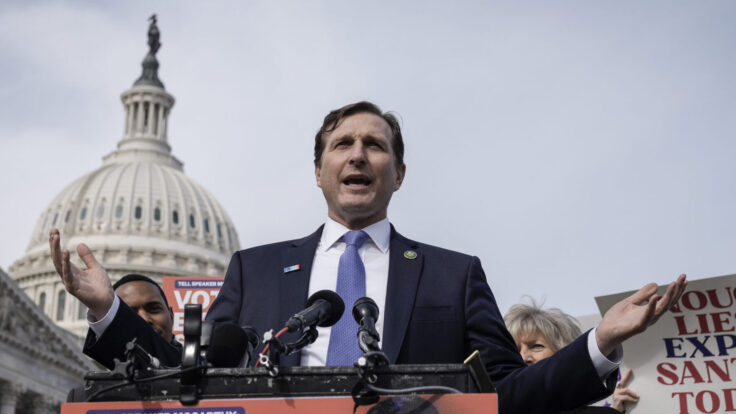
- The Gillibrand Wave?: The large number of competitive congressional seats in New York this cycle is setting the stage for an epic matchup in 2024 between Minority Leader Hakeem Jeffries, of Brooklyn, and G.O.P. Conference Chair Elise Stefanik, whose district is upstate. The outcome could determine control of the House, of course, as well as create a legacy-defining moment for one of the two most ambitious people in Washington.
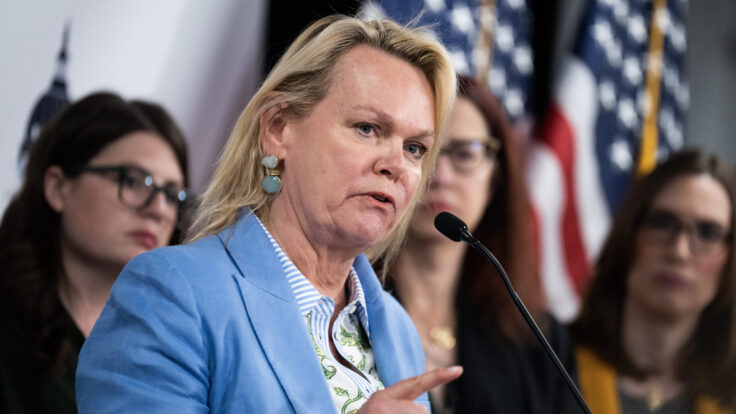
But it’s the state’s famously competitive junior senator, Kirsten Gillibrand, who plans to run up the score next year in her campaign for a third full term. As the only statewide official on the ballot, I’m hearing that she intends to run hard, even if she doesn’t face a strong Republican challenger, in order to help supercharge down-ballot House races across New York. She’s already gotten started, using part of her August recess on a 21-county tour through the state, Instagramming her way through county fair after county fair.
This sort of expansive strategic thinking is not always obvious to other senators, many of whom could not be less interested in House politics. But memories of Gillibrand’s 2020 flamout in the Democratic presidential primary cloud her previous reputation as a ferocious House candidate, prior to her Senate career. In 2006, Gillibrand stunned the political world when she snatched a reddish, off-the-radar Albany-area seat in that year’s Democratic wave, and then she held it in 2008. Which is all to say that, with so many political veterans entering this fight, Gillibrand’s influence could be decisive.
- Battle of Long Island: Elsewhere in New York, George Santos challenger Kellen Curry is picking up steam within the national G.O.P., providing the party with what might be a solid shot at deposing Santos while keeping his Long Island seat in Republican hands. Among his backers, Curry told me, is former congressman/current presidential candidate Will Hurd, who recently donated to his campaign and was eager to offer up campaigning advice.
Curry, who’s running for the Nassau County-based 3rd District (think Great Gatsby), has also picked up Susan Lilly & Company for his fundraising team—an intriguing development given that Lilly has long counted House G.O.P. leaders among her clients, who seem to be treating Santos’s electoral prospects with benign neglect.
Of course, Curry still has miles to go before making it to Congress. Democrats have high hopes that the New York redistricting maps in current litigation will bode better for them than the current lines, especially on Long Island. Moreover, a crowded Republican field has formed, which includes retired police officer Mike Sapraicone. Once the lines are set, this seat will be one of the most competitive on the entire map.
|
 |
| Band of Outsiders |
| One of the laughable tragedies about this crop of G.O.P. presidential also-rans is that they all still believe that they’re still the outsiders they were, decades ago—you know, before politics became a batshit crazy spectacle, and they started to look a lot like the people they once disrupted. |
|
|
|
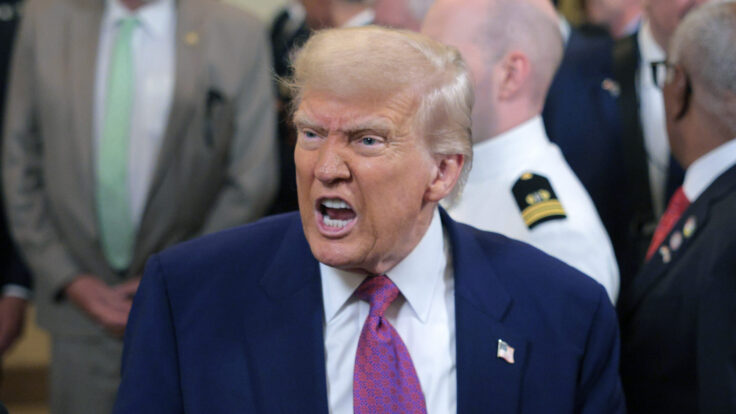
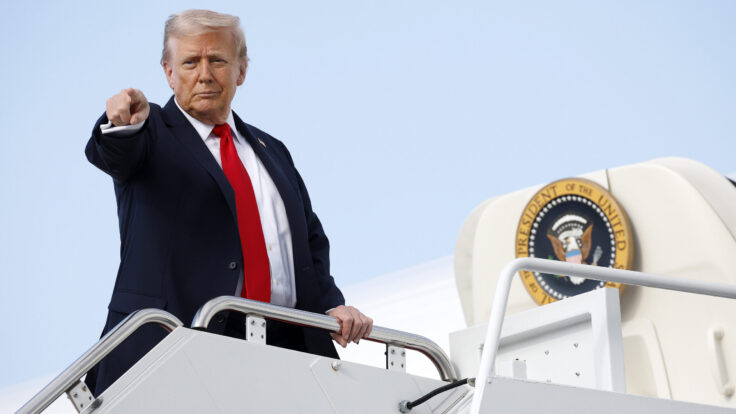
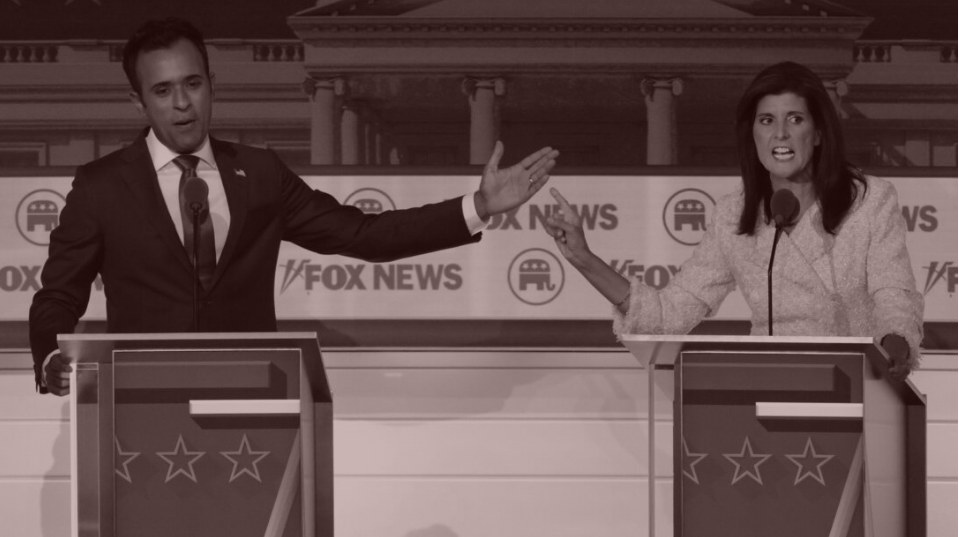
| Tucked in between the death of Yevgeny Prigozhin in Russia and the mugshot arrest of Donald Trump in Georgia, last week’s Republican presidential debate was appropriately downgraded in relevance. It was a third-tier news event, befitting a bunch of third-tier campaigns, with all but one candidate currently running for third place. It’s worth stepping back to point out that despite all the snap takes about who “won” the debate in Milwaukee—Ron? Vivek? Nikki?—there were really only two winners: Joe Biden and Donald Trump. Biden won because many of the Republican candidates staked out a range of hard-right positions that remain unpopular with much of the national electorate, like supporting a federal abortion ban. And Trump won because none of his challengers did much to cut into his exorbitant lead in the primary.
Yes, even without Trump on stage, people still watched. Presidential debates are still one of few mass tune-in events left on linear television, along with big sporting events and new episodes of Taylor Sheridan dramas. Almost 13 million Americans watched on Fox News, and many millions more probably saw clips circulating online after the fact. But what viewers witnessed was a sideshow, not the main event. There was no concerted effort to move the Republican Party past Trump, no figure possessing the kind of charisma or attentional power rivaling the frontrunner.
Instead, we got stasis. The debate embodied the very thing that anti-Trump forces in the G.O.P. have been fearing since the 2024 cycle began: A stage packed with many challengers, but sans a singular rival to Trump rising above the rest, scraping with each other and failing to offer any coherent worldview beyond a watered-down version of the Trumpism that animates the party’s base. Quality polls conducted after the debate showed the Republican primary race basically unchanged. According to Morning Consult, Trump had a 44-point lead over his closest rival, Ron DeSantis, among potential Republican primary voters. After the debate? Trump had a 44-point lead over his closest rival, Ron DeSantis.
The best case scenario for Republicans wanting a nominee other than Trump—the most optimistic, pie-in-the-sky case—is that the debate was only a first step toward winnowing the field down to that single, hypothetical opponent who can derail the Trump train. Whether Trump was there in Wisconsin or not, the central question of the debate was about who has the chops to be his main rival, even if that decision has to happen fast. Like, really fast. In the next four or five months, before the Iowa caucuses or immediately after. Looking at the debate in that sense, as part of the race for second place, there were at least some worthwhile signals that emerged in post-debate polling. |
|
|
|
|
| A survey from The Washington Post, FiveThirtyEight, and Ipsos found DeSantis, Vivek Ramaswamy, and Nikki Haley made the best impressions among Republicans. Almost 30 percent of Republicans who watched the debate said DeSantis “won,” which tracked with my first impression as well. Ramaswamy might have been the center of attention, but as I predicted before the debate, his rise in the polls and his know-it-all cockiness aggravated his opponents and took the heat off DeSantis, who needed to escape the debate unscathed.
DeSantis was mostly untouched and got plenty of speaking time, allowing him to talk directly to camera and play the hits, attacking the “deep state,” Covid lockdowns, the “corporate media” and so on. The poll found that more Republicans are now considering voting for him, and slightly more Republicans like him now than before the debate.
I have a little more on Ramaswamy’s confounding performance below, but the anti-woke business bro also capitalized on the moment and grew his support. It did, however, come at a cost. More Republicans are now considering him for the nomination, and his favorables jumped even more than DeSantis. But Ramaswamy’s unfavorable ratings jumped even higher. According to the Post, “Ramaswamy enjoyed a 10-point increase in the share of G.O.P. debate watchers who have a favorable opinion of him, bringing him to 60 percent, but he saw an even larger increase in the share who say they have an unfavorable opinion of him, up 19 points to 32 percent.”
This tracks with a sentiment I picked up from voters in Iowa a few weeks ago. Many I talked to said that while they were open to candidates other than Trump, they weren’t interested in candidates attacking each other. From what they told me, that would be a turn-off. Voters always say they don’t like negative campaigning, sure, but Ramaswamy’s strategy of attacking the other candidates partially backfired. His junior varsity Trump impression got him attention—Google searches for his name spiked dramatically during the debate—but it apparently repelled more G.O.P. voters than it gained him.
It was Haley, though, who saw the biggest growth in support. Before the debate, 29 percent of Republicans were considering voting for her, the Post poll found. After the debate, that number jumped to 46 percent, the biggest surge of any candidate on stage. Haley saw the effects on Monday in South Carolina, where she was met with big crowds during a campaign swing through her home state for the first time since Milwaukee. Haley has always been a strong performer under the klieg lights, going back to her come-from-nowhere win in the South Carolina gubernatorial primary back in 2010. She’s a feisty debater and a workhorse who isn’t afraid of a television camera.
Since launching her long-shot campaign, Haley’s two biggest assets were always going to be her debate skills and her gender. Her quip comparing herself to Margaret Thatcher—and her refusal to be lectured by the mansplainy Ramaswamy about Israel and Russia—clearly resonated with women. She juiced her support among Republican women by 19 points, the poll found. But, as with pretty much everyone else on stage, whatever gains she made were pretty much only among those Republicans considering candidates other than Trump. That’s still not anywhere close to a majority constituency in today’s MAGA-infected G.O.P. And of course, the fact that several Republicans in the debate can now claim some proof of momentum, however modest, only means they will continue to soldier on in the crowded race. A divided field of self-interested candidates is nothing but good news for Trump. |
|
|
| Whether or not Ramaswamy “won” the debate, he was clearly being cheered on by the Trump team. According to my Puck partner Tara Palmeri, Donald Trump, Jr. was fluffing the guy constantly in the post-debate spin room, which makes perfect sense. Ramaswamy has become a stalking horse for the frontrunner, refusing to lay a finger on Trump, instead taking obvious pleasure in messing with his other opponents.
In the debate, his policy views were almost incoherent, but that was beside the point. Ramaswamy either ignored or defended Trump at every opportunity, instead using his allotted time to unload on his rivals, making himself the center of attention by getting under their skin. It’s literally the ideal situation for both of them. Ramaswamy gets to be a Trump stand-in, reaping the rewards of celebrity and building up credibility in the modern Republican Party, possibly winning a spot in Trump’s cabinet down the road or running for another top-tier office in the next cycle. Trump, meanwhile, gets to sit back and watch someone else kamikaze the debate stage on his behalf and try to sully the rest of the paralyzed G.O.P. field.
In his Substack newsletter, former Barack Obama adviser Dan Pfeiffer called Ramaswamy “a chaos agent.” His act “works because chaos is the point. To amend a line from TheDark Knight, some voters just want to see the world burn,” Pfeiffer wrote. I’d add that Ramaswamy is the ideal chaos agent because his entire persona is completely galling—infuriating—to the other Republicans in the race. Pfeiffer is an NBA fan, so I’ll use a basketball metaphor here. Ramaswamy is Draymond Green, the star power forward for the Golden State Warriors, who is beloved by his fans but hated by rival teams and fandoms for picking fights, racking up technical fouls, and starting unnecessary trouble on the court. He’s a massively effective troll. Green doesn’t care if he gets tossed by the refs or fouls out in the fourth quarter as long as he’s delivered the kind of emotional punch needed to rally his team.
Like Green, Ramaswamy’s very existence gets under the skin of opponents. Haley, Mike Pence, Chris Christie, Tim Scott, Asa Hutchinson, even DeSantis—all of them came of age politically before Trump, at a time when old school political ladder-climbing was the path to accumulate power and influence in the Republican Party. You had to raise money the old-fashioned way, with fundraisers and phone calls. You had to impress legacy media power brokers. You had to kiss the rings of activist groups, religious leaders, party elders, talk radio hosts. You had to stamp your name on certain pieces of legislation and have at least the faintest whiff of expertise in some discipline usually required for higher office—law, foreign policy, economics, or maybe military combat. You needed endorsements to build momentum in a campaign. Most importantly, you had to be patient and wait for your turn.
Ramaswamy hasn’t done any of those things. He showed up to politics yesterday and is suddenly on national television, at the center of national politics, mocking Christie as a phony conservative and scolding Haley as a K-Street sellout. No wonder Haley couldn’t wait for her turn to tomahawk dunk on the know-it-all millennial when the topic of foreign policy came up. You can see it in their eyes: She and the other candidates would love to shove Ramaswamy into a locker.
Remember: There was a time, just a decade ago, when they were the outsiders. Today, they’re old news, bragging about their credentials at a time when few Republicans care about anyone’s resume. I was laughing to myself when Pence was bragging about standing up to George W. Bush’s No Child Left Behind, as if anyone cared or could remember a principled conservative fight over education policy from over 20 years ago. He was stuck in time.
When he was an undergrad, back in 2006, Ramaswamy gave an interview to The Harvard Crimson about his debating skills. “I consider myself a contrarian,” Ramaswamy affirmed. “I like to argue.” Roll your eyes, but that right there is exactly why he’s having his moment—and why Ramaswamy has a big future in Republican politics even if this campaign is just for fun. |
|
|
|
| FOUR STORIES WE’RE TALKING ABOUT |
 |
|
 |
|
 |
| CNN’s New Era |
| A streaming bet and Licht’s possible successor. |
| DYLAN BYERS |
|
 |
|
|
|
|
|
|
|
|
|
 |
|
|
|
Need help? Review our FAQs
page or contact
us for assistance. For brand partnerships, email ads@puck.news.
|
|
You received this email because you signed up to receive emails from Puck, or as part of your Puck account associated with . To stop receiving this newsletter and/or manage all your email preferences, click here.
|
|
Puck is published by Heat Media LLC. 227 W 17th St New York, NY 10011.
|
|
|
|