{{ 'now' | timezone: 'America/New_York' | date: '%b %d, %Y' }} |
|
|
Welcome back to Dry Powder. I’m Bill Cohan.
I guess we now know the price
of capitulation, at least for three Murdoch children. According to the surprise announcement on Monday, the long-running family feud has been settled for $3.3 billion, giving James, Prudence, and Elisabeth—three of the four Murdoch children by Rupert’s first and second wives—$1.1 billion apiece in cash to walk away from disputing the family trust.
The settlement is a huge victory for both
Rupert and his favored son, Lachlan, who is also the C.E.O. of Fox Corporation, the home of Fox News. Of course, there had been whispers in some circles that the liberal grown children might have eventually outvoted their brother and unloaded Fox News, or changed it dramatically after their 94-year-old father’s inevitable demise. It sure looks like neither of those things will happen now.
My partner Dylan Byers has the latest ruminations and rumblings on
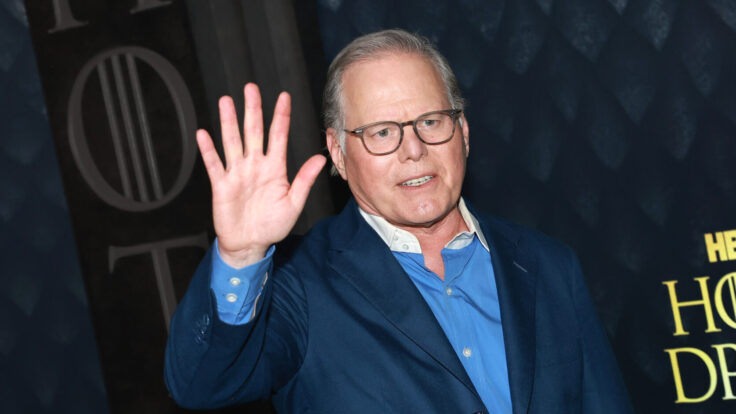
Murdoch world below. For the main event, I dig into what might happen to the two pieces of David Zaslav’s Warner Bros. Discovery when its separation is completed sometime around the middle of next year. A new research analyst’s report, in particular, tries to anticipate some of Gunnar Wiedenfels’s options as he takes charge of Discovery Global’s portfolio of cable networks, among other things.
But first… |
|
|

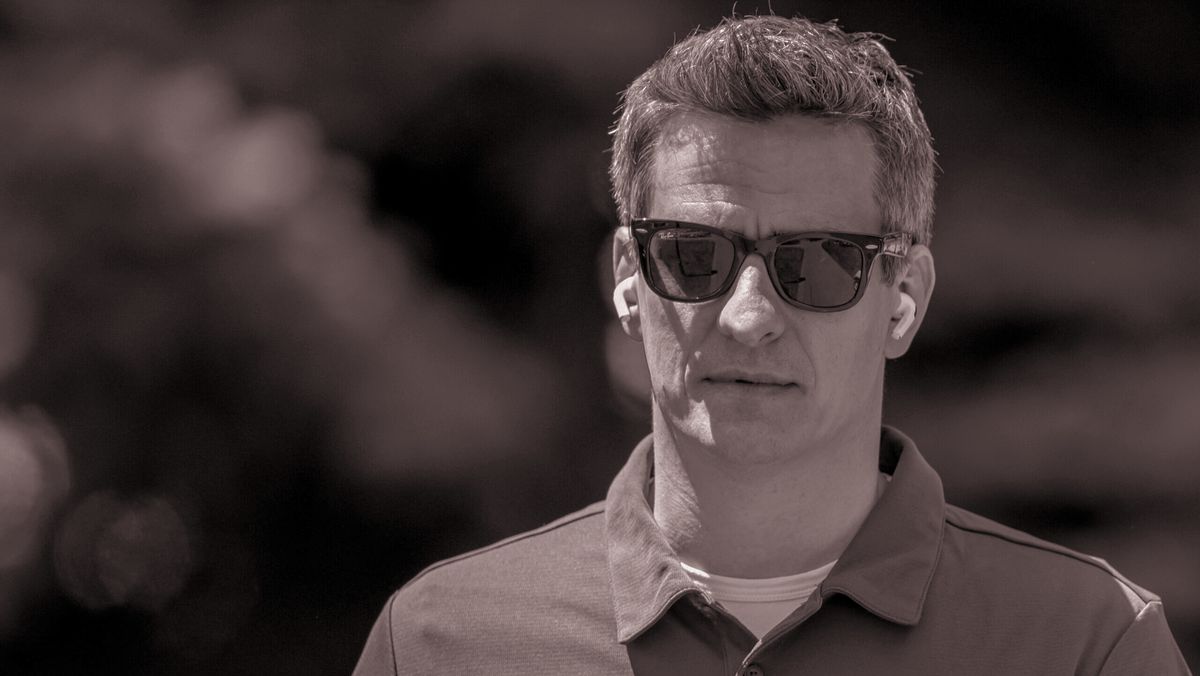
| Ian Krietzberg
|
|
- Altman’s cash burn: It’s
common knowledge that the cost of developing A.I. is outrageously steep. The latest data point comes from The Information, which reported on Friday that OpenAI now expects losses to hit about $115 billion through 2029, largely due to data center–related expenditures. That’s roughly $80 billion higher than OpenAI previously
expected. The Information did not cite a source for the report, and OpenAI did not return a request for comment.
Of course, virtually all heralded tech companies have come into the world profoundly unprofitable. Microsoft, the exception, became profitable almost immediately, and Apple took only two years to achieve profitability, but it took Amazon nearly a decade to get there. Uber was a famous cash incinerator until pretty recently.
Anyway, it’s difficult to predict OpenAI's financial trajectory—especially considering the remarkably fast depreciation of its expensive G.P.U. hardware, and its wildly high valuation. But its losses remain staggering. This
year, the company will reportedly burn more than $8 billion, which is around $1.5 billion more than expected, and about $3 billion more than last year. Next year, the company is reportedly projected to lose in excess of $17 billion—and, come 2027 and 2028, cash burn is expected to hit $35 billion and $45 billion, respectively. Needless to say, those numbers make Uber’s darkest days of
$9 billion annual losses seem downright modest.
|
|
|

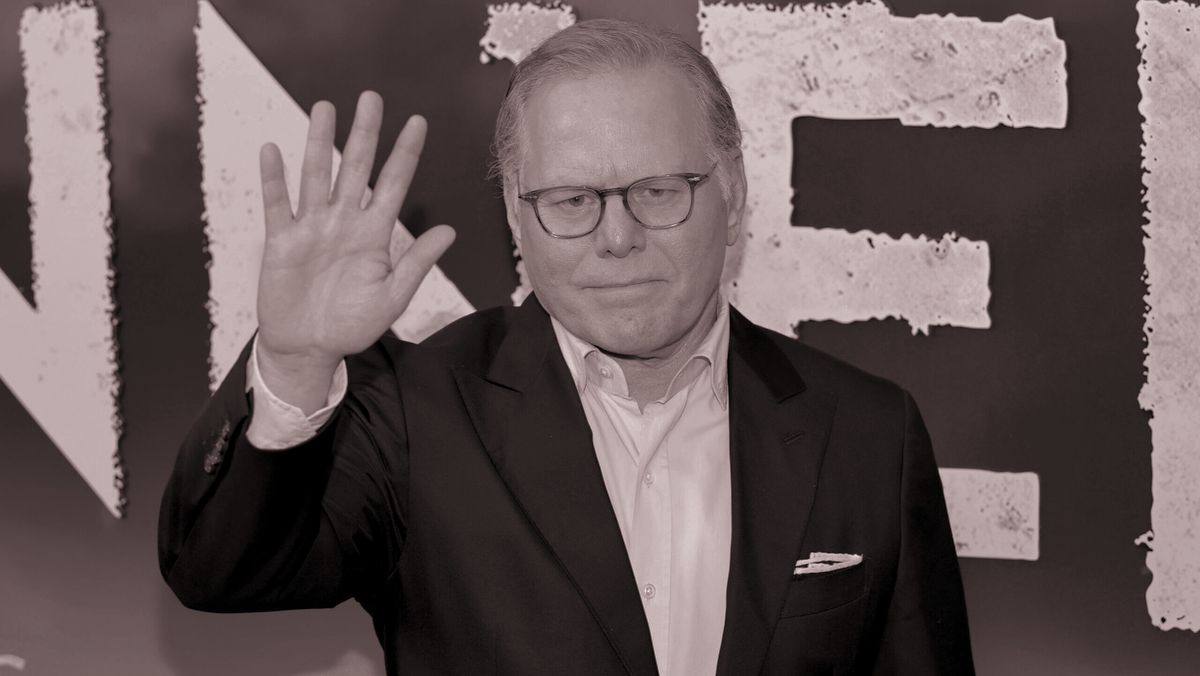
| Dylan Byers
|
|
- The Murdoch blood
sacrifice: Back in 2017, when Rupert Murdoch and Bob Iger met in Bel Air for the conversation that would ultimately beget the $71.3 billion sale of Fox’s entertainment assets to Disney—the famed “wine summit” now enshrined in the annals of media M&A history—Murdoch betrayed a candid and unsparing assessment of his sons Lachlan and James, both of whom had long been vying to inherit their father’s throne. According to two
sources, the then-86-year-old media baron told Iger, in no uncertain terms, that neither Lachlan nor James was really capable of running the business without him.
Obviously, Rupert determined that it was wiser to sell the assets to Disney at a premium—Brian Roberts helped drive up the price, as you’ll recall—than to pass them down to his progeny, despite the fact that they were running 21st Century Fox at the time. (James was the C.E.O., Lachlan the executive
co-chairman.) Other sources with insight into the negotiations believe that, were it not a violation of the F.C.C.’s “dual network rule,” which prohibits any company from owning multiple broadcast networks, Rupert would have tried to offload the entirety of the Fox assets, including Fox News. (Whether Iger would have wanted Fox News is a different story… Presumably the network, which doesn’t quite fit into Disney’s family-brand narrative, would have been offloaded in a subsequent
transaction.) Instead, Rupert was left with an even vaster fortune, a somewhat diminished (but arguably prescient) portfolio of broadcast and cable assets, and the News Corp business. His four adult children got $2 billion each and a smaller empire to fight over.
The Murdoch succession plot had long been a media preoccupation, and one that has endured despite the company’s declining stature. But in truth, the notion of a serious bakeoff between the two heirs belied deeper familial
dynamics. As one source with insight into the family’s relations once told me, “[Rupert] has always favored Lachlan and disapproved of James as a dilettante.” Indisputably, Rupert and Lachlan have long had the closer relationship, and the more-aligned politics, even well before James’s defection from his father’s orbit…
Continue reading online…
|
|
|
And now, the latest on Warner Bros… |
|
|
Wall Street is running the odds on what’s to become of Warner Bros. Discovery once it
finishes prying itself apart. Wells Fargo analyst Steven Cahall provides an intriguing menu of options. |
|
|
On Wall Street, one of the more popular parlor games is to speculate on who might acquire the spun-off
divisions of companies that investment bankers helped merge only a few years before. At the moment, for instance, intellectual bets are being placed on what’s going to happen to the two pieces of David Zaslav’s Warner Bros. Discovery when its separation is completed sometime around the middle of next year. Will Warner Bros., Zaz’s streaming and studio business, persist without a partner? Will Discovery Global, Gunnar Wiedenfels’s portfolio of
cable networks like CNN and HGTV, make it on its own, or must it be merged into another lonely TV bundle? Interested parties, of course, include the swath of investment bankers hoping to get in on the action.
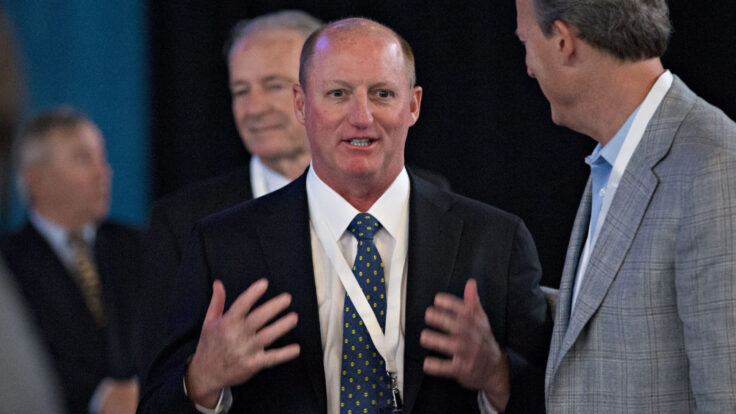
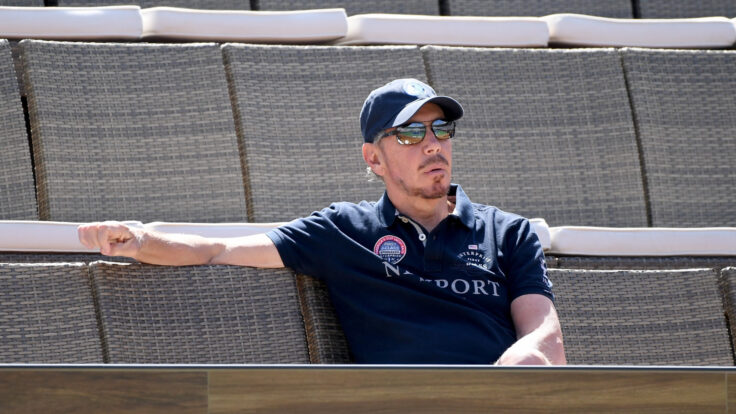
Will Paramount Skydance’s new owners join in the spin-and-merge fun? Or will the projected rightward shift of CBS News revive the broadcast network’s prospects sufficiently, as David Ellison and Jeff Shell are hoping after onboarding
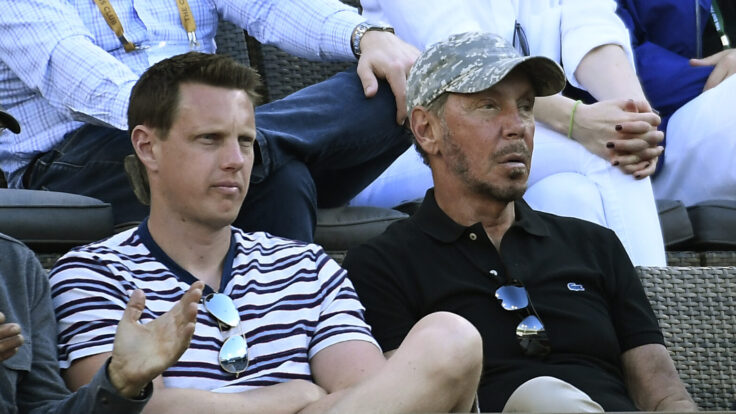
both Bari Weiss (as my partner Dylan Byers has reported) and Kenneth Weinstein, a pro-MAGA Republican, as ombudsman? After all, Larry Ellison’s net worth spiked more than $100 billion today after promising Wall Street extraordinary A.I.-fueled revenue growth for Oracle next year, making him the
wealthiest person in the world. That makes his son’s legacy media gamble look a lot smaller in the grand scheme of things—and, presumably, could unlock extra capital for David Ellison to do more deals. |
|
|
A MESSAGE FROM OUR SPONSOR |
|
|
Of course, bankers have dreams, too. And sometimes Wall Street shares a little insider conjecture along the
way, offering us a sense of what might happen, or could happen, or should happen. Steven Cahall, a longtime research analyst at Wells Fargo, recently published a comprehensive report, “The Linear Crystal Ball,” predicting the next moves on the linear TV chessboard. It’s great stuff, and I wanted to share it with you, even if it’s all pretty speculative. (As always, this is not investment advice.)
Cahall pondered a variety of scenarios, but his first and “most
logical” combination was also the most obvious: It called for Versant—the collection of Comcast’s soon-to-be-spun-off linear cable assets including MSNBC (rebranding as MSNOW), CNBC, USA Network, Syfy, and E!—to be merged with Gunnar’s Discovery Global. He envisioned it as a stock-for-stock merger creating a linear TV behemoth, one with more heft to negotiate affiliate fees and advertising pricing. The combination would also allow for duplicative costs to be erased. Without a merger, Cahall
predicted a slow and steady decline in EBITDA (and relevance) for Discovery Global. “Given the outlooks,” he wrote, “we think a merger between [Discovery Global] and Versant has strong industrial logic to improve scale, and will create significant synergies that improve EBITDA and [free cashflow].”
The combination of the two companies, based on his EBITDA projections, would be 40 percent accretive to shareholder value, Cahall wrote, compared to their stand-alone values, and would “provide
scope for deleveraging.” The combined company would have an equity value of between $15 billion and $20 billion, based on $5 billion of pro forma EBITDA. Alas, Cahall was using an anemic 3.5x multiple of EBITDA as the valuation metric—reflective of the fact that AMC Networks has been trading at about 4x EBITDA—and another hard reality: Even after a combination of Versant and Discovery Global, annual EBITDA would still be declining at low double-digits a year.
When I called him up, Cahall
reiterated that Discovery Global would have the “higher quality” linear assets—the “healthiest looking horse in the glue factory,” to use Paul Ryan’s recent epigram—while Versant would have the better balance sheet post-spin. That’s another reason Cahall thinks the combination makes a lot of sense: A combined entity would have better ability to pay down
the debt that Gunnar will be stuck with after the spinoff of Zaz’s business. Of course, that may be the precise reason that Versant would not be interested in the combination: Its balance sheet will be relatively debt-free after the spin. Why would Versant want that WBD debt hanging around its neck? |
To put some meat on these bones, Cahall predicted in his report that Gunnar’s business would generate $3.4
billion of EBITDA in 2027 (declining 43 percent by 2030 to $1.9 billion) and have some $14 billion in net debt. Using the 3.5x EBITDA multiple, he figured the enterprise value would be $11.8 billion, plus the 20 percent stake it will have in Zaz’s streaming and studio business—he figured that’s worth $7.5 billion in 2027—or a total enterprise value of $19.3 billion. Subtracting the $14 billion of debt, Gunnarco would have an equity value of $5.3 billion.
Meanwhile, Cahall
hypothesized that Versant would generate $1.8 billion in EBITDA in 2027 (declining 23 percent to $1.4 billion by 2030). Using the 3.5x multiple, he figured that Versant would be worth $6.2 billion, but would also have $1.5 billion in cash and no debt—giving the company an equity value of $7.7 billion in 2027. “It seems logical to us that WBD’s Global Networks and [Comcast’s] Versant will fall into each other’s arms,” Cahall wrote poetically.
A combined Discovery Global and Versant would
generate $5.6 billion in EBITDA in 2027, according to Cahall, declining a mere 20 percent by 2030, to $4.5 billion—in large part because he thinks the company will find synergies equal to 13 percent of its pro forma EBITDA. That, along with the 20 percent stake in Zaz’s business, would give the combined company an enterprise value of $27 billion, and an equity value of $15 billion, after subtracting $12 billion in net debt. In Cahall’s scenario, the equity value of the combined
companies would grow from $15 billion to $23 billion, a 53 percent increase, despite the falling EBITDA, because of the rapid debt service (down to just $2 billion) and growing value of the 20 percent stake in Zaz’s business (up to $9.7 billion). This prognosis would value all of Zaz’s business at nearly $50 billion, or 40 percent more than all of WBD is valued at now.
But that’s not enough, according to Cahall. To fulfill this dreamy scenario, he explained, the combined Versant/Discovery
Global would need more sports rights. The hypothetically combined entity would only have 8.2 percent of U.S. sports rights—an insufficient market share, in his view. “We think it logical that [Discovery Global and Versant], either stand-alone or together, look to add sports to their portfolio,” Cahall wrote. “This would provide de-risking to long-term cashflows, and likely justify a higher valuation.” |
|
|
A MESSAGE FROM OUR SPONSOR |
|
|
In particular, the combined company, he said, should buy the non–Fox News assets of Fox Corporation from the
Murdochs—specifically, the Fox broadcast network and the two Fox sports channels, FS1 and FS2. He pointed to the recent Financial Times report that Rupert Murdoch and John Malone had spoken over the summer about combining WBD and Fox as evidence of a desire for some strategic activity. It’s Lachlan’s decision now, of
course, following this week’s resolution of the family’s trust issues.
In any event, Gunnar will have to pay up for the Murdochs to sell these sports assets: $18 billion, or 10x their $1.8 billion in EBITDA, according to Cahall’s math. The sale would leave the Murdochs with Fox News, other assets, and a bunch of cash that he figures will add up to $70 a share, from the current $56 a share.
Needless to say, there are lots of moving parts here. But if Gunnar can pull this
off—and Cahall thinks he can, since Gunnar is a cost-cutter who worked at McKinsey and ProSieben once upon a time—then the combined Discovery Global/Versant/Fox Sports would trade at around a 5x EBITDA multiple, instead of 3.5x, given the higher 9x EBITDA multiple he attributed to the Fox Sports assets (post-sale). Cahall projected that this combination would have EBITDA of $8.2 billion by 2030, instead of $5.6 billion, and an enterprise value of $43 billion, instead of $20 billion without the
Fox Sports assets. Of course, paying $18 billion in cash for the Fox Sports assets would ratchet the debt of the combined company back up to $30 billion in 2027, but Cahall figures that debt would be reduced in half by 2030. |
It’s some beautiful alchemy, for sure, and through the magic of Excel, financial models make these kinds of
ideas look not only plausible, but also compelling. But as we all know, an Excel spreadsheet is not the same as the actual thing. Nevertheless, Cahall believes that the institutional investors he talks to will inevitably expect the management teams of both Versant and Discovery Global to contemplate these important strategic questions. “If enough time went by, and you didn’t see action from these companies, I think you’d have to wonder, as an equity holder, why would I want to own them if
they’re not taking those steps to improve the outlook for the business?” Cahall told me.
He continued: “Similarly, from a Fox shareholder perspective, would you be willing to sell at a high price if you’re holding the one card that everybody wants? You’re sitting on Park Place in Monopoly, and everybody wants it. What’s your price? And is there any reason not to sell it? So I expect those conversations to hopefully flow from this analysis.”
Cahall says he hasn’t heard
anything from Comcast or WBD in reaction to his proposals. Robert Gibbs at WBD did not respond to a request for comment. Both Jennifer Khoury at Comcast and Keith Cocozza at Comcast/Versant declined to comment on Cahall’s speculation. For his part, Mark Lazarus, the C.E.O. of Versant, has said publicly that Versant would be interested in making acquisitions of niche sports rights. In any event, it’ll be fun to watch if any of
this happens.
As for the speculation that the Ellisons’ newly recapitalized Paramount Skydance would somehow scoop up Zaz’s renamed Warner Bros., Cahall said that he doesn’t see that happening. PSKY’s equity value these days is some $7.6 billion, and Cahall puts Zaz’s equity value on day one at $37.5 billion—it’s too big of a bite for the Ellisons, he told me, at least at the moment. Unless, of course, Larry wants to write a big $50 billion check for Zaz from his now nearly $400 billion
fortune. |
|
|
A professional-grade rundown on the business of sports from John Ourand, the industry’s preeminent journalist, covering the
leagues, players, agencies, media deals, and the egos fueling it all. |
|
|
Finally, a media podcast about what’s actually happening in the media—not the oversanitized,
legal-and-standards-approved version you read online. Join Dylan Byers, Puck’s veteran media reporter, as he sits down with TV personalities, moguls, pundits, and industry executives for raw, honest, sometimes salacious conversations about the business of media and its biggest egos. New episodes publish every Tuesday and Friday. |
|
|
Need help? Review our FAQ page or contact us for assistance. For brand partnerships, email ads@puck.news. You received this email because you signed up to receive emails from Puck, or as part of your Puck account associated with {{customer.email}}. To stop receiving this newsletter and/or manage all your email preferences, click here. |
Puck is published by Heat Media LLC. 107 Greenwich St, New York, NY 10006 |
|
|
|