 |
 |
|
Welcome back to The Best & The Brightest. I’m Peter Hamby. Tonight, some notes on the presidential race as I try to make sense of the fast-moving news cycle we are living through—J.D. Vance emerging as Donald Trump’s running mate, what the polls really say about the state of the race, and what they might reveal about the assassination attempt on Trump, and whether the Democratic family feud over Joe Biden’s candidacy is actually over.
I also have a scoop on some brand-new research on the youth vote, coming from a brand-new organization that’s launching this week with the goal of reimagining how campaigns approach Gen Z and young millennial voters. They’re sour on politics and government, sure. But has the political class been thinking about young voters in the wrong way? I got my hands on some fascinating insights that could dramatically change the way campaigns talk to the kids. Read it here.
All that and more, below the fold. But first, here’s Tara Palmeri with a dispatch from the convention floor in Milwaukee…
|
|
|
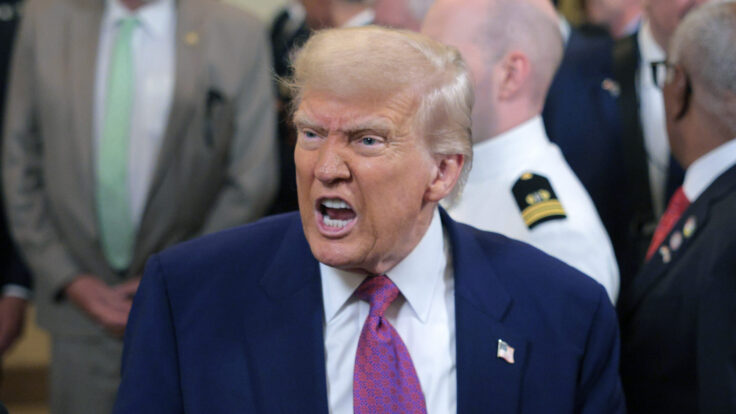
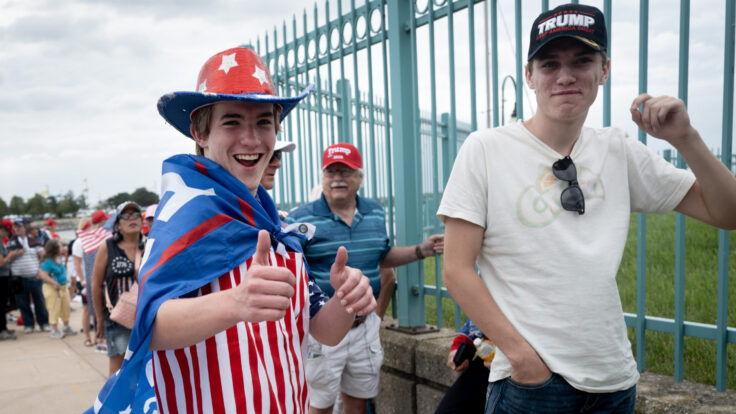
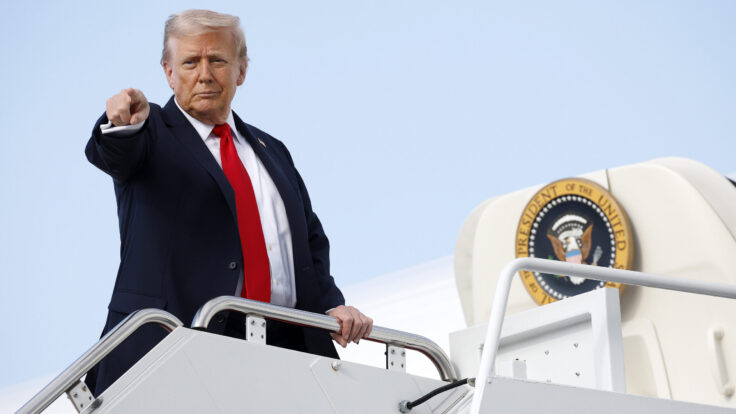
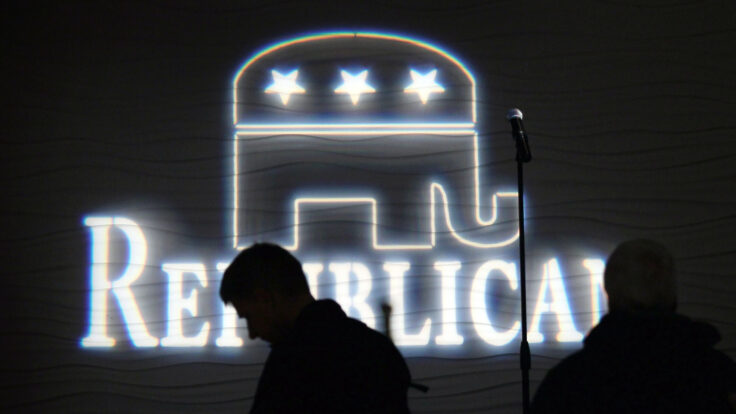
| Perhaps unsurprisingly, the Republican National Convention feels like a victory party, with a powerful feeling of party unity pervading the corridors of the Fiserv Forum in downtown Milwaukee. And Trump, no longer the barbarian at the convention, is feeling magnanimous—at least with former Republican antagonists he’s hoping to bring into the tent. To wit: After nearly being killed at a rally in Pennsylvania, the former president decided to invite Nikki Haley to speak at the convention. (As I wrote on Thursday, she was waiting to be asked, but wouldn’t dare make the outreach herself. I was told it was “the big guy” who made the call to invite her.) He also announced his V.P. pick would be J.D. Vance, the Ohio senator who once referred to Trump as “America’s Hitler.” All water under the bridge, now. Still, it wasn’t all Kumbaya. Mitch McConnell was booed when he announced the Kentucky delegation.
Of course, it’s easy to go high when you can afford to—and Trump, according to recent polling, is decidedly ahead. In my latest episode of Somebody’s Gotta Win, I discuss his new, upbeat posture with The Atlantic’s Tim Alberta, whose recent piece from inside the Trump campaign has become required reading among the Beltway crowd because of his team’s extreme confidence. Trump’s campaign manager Chris LaCivita declared that they could win 320 Electoral College votes before the debate. In our conversation, Tim and I also unpack what an isolationist, “America First” Vance vice presidency might portend for a second Trump term—and why Trump views the 39-year-old senator as someone who could be his successor. Has Trump, after his brush with death, abandoned his ethos of “Who cares about legacy when you’re dead?” a phrase he’s often uttered, according to a longtime advisor? We’ll see.
And here’s Abby Livingston with the latest chatter from Capitol Hill… |
|
A MESSAGE FROM OUR SPONSOR
|
 |
| bp added more than $130 billion to the US economy over the past two years. We did it by making investments from coast to coast – like building grid-scale solar in Ohio and producing natural gas with fewer operational emissions in Texas.
See all the ways we’re investing in America. |
|
|
|
|
| Late Saturday afternoon, the Democratic world was consumed with the latest micro-update regarding Bidengate—a testy Zoom exchange between Rep. Jason Crow of Colorado, among a few other members, and the president, who tried to put the topic to bed by semi-shouting “I don’t want to hear that crap.” Then, of course, came the Trump assassination attempt in Butler, which stunned the nation and made any sort of intraparty war games seem myopic and inappropriate. Over the weekend, meanwhile, the national public polling seems to have validated part of the pro-Biden argument that the country’s extraordinary polarization may limit the downside of his numbers, despite the debate debacle.
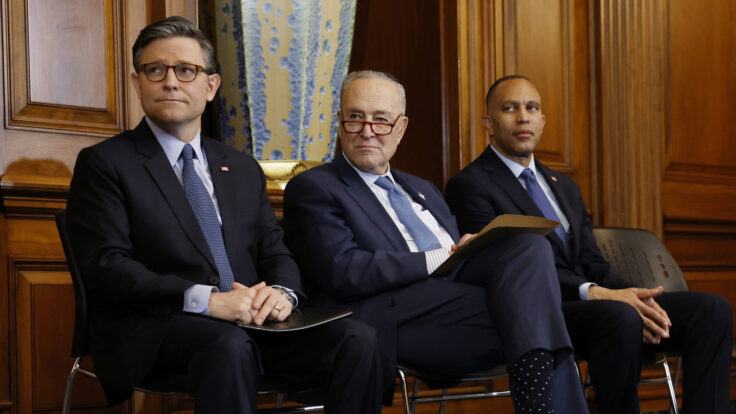
And yet, it seems unfathomable that the Democratic Party would challenge the authority of their president so volubly, even if in a quasi-private fashion after the events in Butler, as my partner John Heilemann noted, and risk shifting the polls even further toward Trump. Hakeem Jeffries, Nancy Pelosi, Charles Schumer, and many other power players across the party spectrum have gone awfully quiet since the end of last week. The most noteworthy development over the weekend was a Schumer-Biden meeting in Rehoboth, just prior to the shooting. “It’s quiet and weird, given that the fundamentals of the concerns with Biden haven’t changed,” a Democratic operative who’s close to a senior member of the party texted me.
Meanwhile, it seems everybody is frantically deploying polls in the field. One Virginia Democratic operative—remember, Virginia was not supposed to be a swing state—relayed a story about a voter receiving three polling calls on Friday, alone, testing the viability of Kamala Harris. Campaigns and media organizations are particularly discerning when it comes to commissioning live phone surveys, which cost in excess of $30,000 a pop, underscoring the serious consideration around Harris, and the notion that Virginia is actually in play. This round of polling mostly wrapped up on Saturday, and is now memorialized as a snapshot of the political landscape before the shooting. Even so, operatives are sharing the results early and trying to glean a path forward.
Of course, polling can only reveal so much. One smart Republican stressed to me, over the weekend, how foolish predictions are in this volatile environment—even with an event of Saturday’s magnitude. While the consensus seems to be that the race is Trump’s to lose, there are credible Republican and Democratic operatives who still say Biden can win. |
 |
| Welcome to the Jungle |
| News and notes on J.D. Vance, the Republican convention, the mood inside Bidenworld, and why the election is far from over. |
|
|
|
| This election cycle went from boring to bananas in just a few weeks, punctuated with a bullet this weekend when a 20-year-old shooter attempted to assassinate Donald Trump in Pennsylvania. The aftermath of the shooting, and Trump’s instinctive bravado before the assembled cameras, has been met with some hyperventilating assessments from pundits and from anguished Democrats who now believe the election is gone, fumbled by Joe Biden in the debate and run back for a go-ahead touchdown by Trump in the days since. As one “senior House Democrat” told Axios over the weekend, in a now-viral quote: “We’ve all resigned ourselves to a second Trump presidency.”
Is it already over? Well, according to the polling, Biden has been losing the presidential race all year, even before the debate, and now finds himself in an even deeper hole, dug by his own stubborn mistakes and also events beyond his control (including the inexorable march of time). Democrats are still deeply concerned about his candidacy. But it’s July—the race is definitionally not over. In an effort to help make sense of the fast-moving news cycle we’re living through, here are some news and notes based on my conversations with Democrats and Republicans over the last few days, and also some larger perspective on the presidential race, having covered many of these carnivals before. |
|
A MESSAGE FROM OUR SPONSOR
|
|
| bp added more than $130 billion to the US economy over the past two years. We did it by making investments from coast to coast – like building grid-scale solar in Ohio and producing natural gas with fewer operational emissions in Texas.
See all the ways we’re investing in America. |
|
|
|
|
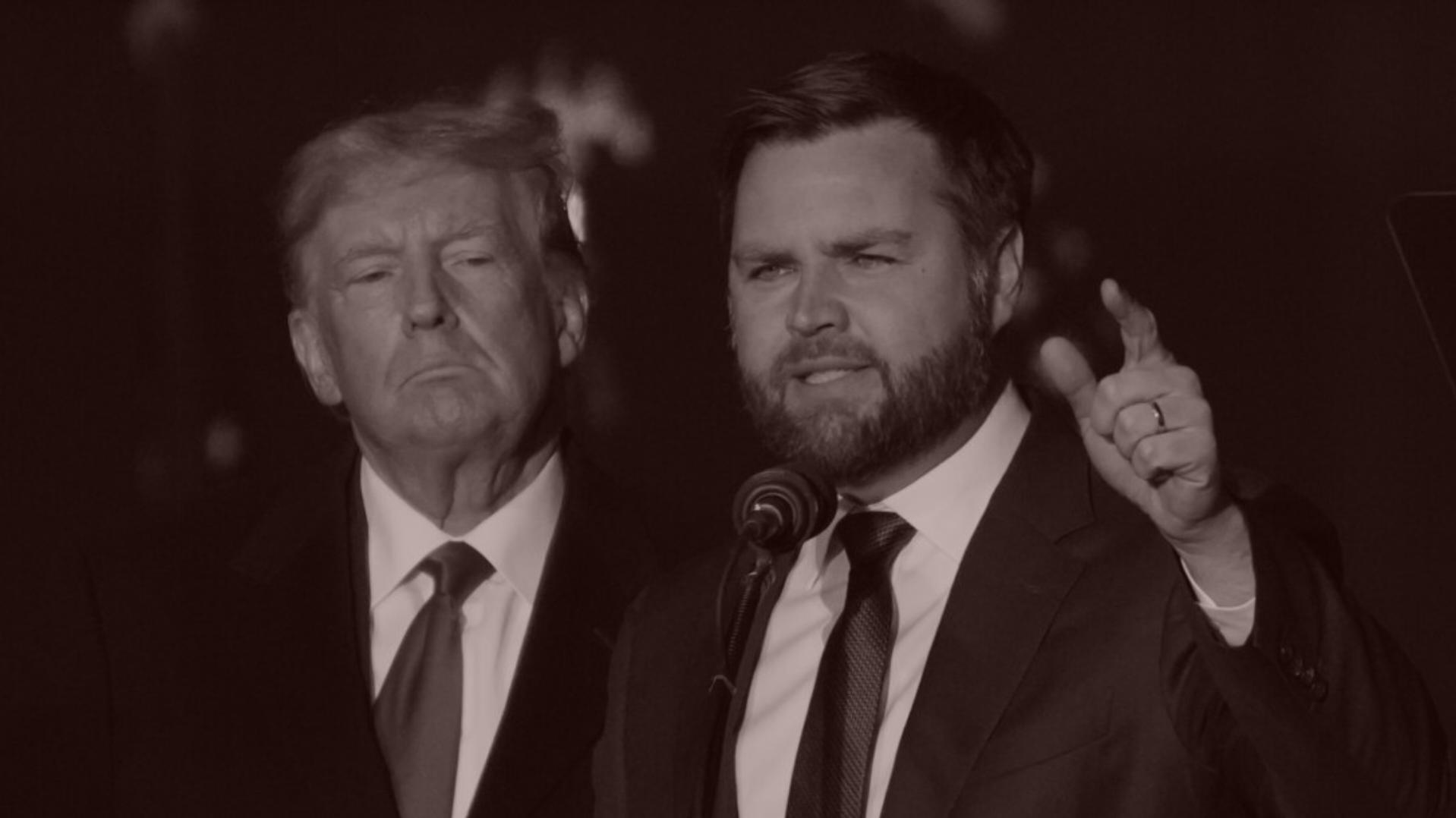
| With the benefit of hindsight, of course, it feels like it was always going to be Senator Vance. Trump trusts him, he’s a loyal Mar-a-Lago supplicant, and the fact that he’s close with Donald Trump Jr. made it a sure thing down the stretch. Despite his genuflection to Trump over the last eight years, Marco Rubio was never fully trusted in Trumpworld. Doug Burgum was well-liked—Trump loves a fellow rich guy, and I’m told Trump got along quite well with both Burgum and his wife, Kathryn—but the North Dakota governor didn’t bring a lot of heat to the election.
Everyone on cable news this week will game out—and likely overhype—how Vance helps or hurts Trump in the election. But keep in mind: A running mate selection ultimately doesn’t matter much in a campaign. Rarely do they have a meaningful impact on polling. They can have a base-rallying effect, sure, and Vance will no doubt be dispatched on the Hillbilly Elegy circuit in Pennsylvania, adjacent to his home state of Ohio, and the other Upper Midwest battlegrounds that could kill off Biden’s campaign. He’s also a savvy media personality, who won’t be afraid to savage Biden or Kamala Harris on television and social media.
But people ultimately vote for the presidential nominee, not the vice presidential nominee, and Vance will be an afterthought until the vice presidential debate against Harris, barring some major gaffe or stumble on the campaign trail. Attention moves elsewhere. And as we have learned so acutely in recent weeks from the high drama on the Democratic side, the most consequential aspect of a running mate isn’t that they will dramatically alter the nature of the campaign—it’s that they one day might actually become president! In that sense, whether Trump wins or loses, the 39-year-old Vance has a bright future in the MAGA-fied Republican Party.
I’m also looking at the Vance pick in the context of what happened Saturday in Butler, Pennsylvania. It’s obvious that Trump is cocky, unbowed, and completely on offense. The showman wants to strut into Fiserv Forum in Milwaukee with the electricity of The Beatles walking onto the field at Shea Stadium. More than the other V.P. possibilities, Vance is going to help rile up Republican activists and delegates in the room. The crowd will go wild. If it wasn’t obvious, Vance was not brought onto the ticket to win over fence-sitting suburbanites outside Milwaukee and Richmond. (In polls, independent voters are already with Trump, anyway.)
The other important angle here, of course, is Vance’s role in a second Trump administration. Despite his criticisms of Trump back in 2016—he once called him “cultural heroin”—it’s hard to see Vance as anything other than a true America First believer at this point. Matthew Boyle, the Washington bureau chief for Breitbart News, told me why he loves the Vance pick—and why the MAGAverse does too. Boyle described the pick as a giant, unfurled middle finger aimed at “donor-class scumbags.”
Vance, of course, is very much a product of the donor class—a Yale-educated former venture capitalist and New York Times best-selling author who spent years social-climbing in the same circles he now demonizes. But that’s also what makes him such a cunning avatar for the grievance politics that Trump perfected. “J.D. Vance deeply understands the plight of the American working class,” Boyle told me. “He’s a favorite son of the Rust Belt, the Appalachian home of the forgotten man and woman in America. The elites have long misunderstood Donald Trump and his appeal to union workers dating back to 2016, and the collective freak-out right now similarly misses the mark on why Trump and Vance are both so popular: They represent fairness for the little guy when it comes to matters of national significance on everything from economic policy to immigration policy to war.” Vance will be an ideological governing partner for Trump—and work to implement the wishes of the Breitbart, Heritage Foundation, and Turning Point USA forces working to reshape the federal government in their image. |
|
|
| As with the V.P. choice, conventions these days don’t move the needle when it comes to public opinion. It’s baked into punditry that we can expect a “bounce” in the polls for the chosen nominee after a convention. You’ll hear that a lot this week. But with political polarization in full effect, that really isn’t the case anymore. The last cycle that saw a meaningful post-convention swing was 2008. Barack Obama saw a four-point shift in his direction, and later that summer, John McCain benefited from a six-point swing—although baked into that bump was his selection of Sarah Palin as his running mate, which helped bring home the G.O.P. base.
More recently, though, conventions don’t have much impact on the polls. Trump and Clinton saw modest shifts inside the margin of error, and in 2020, post-convention polls showed almost no movement at all for Biden or Trump. |
|
|
| I’m more interested to see how the assassination attempt on Trump impacts the polls, and that data will be hard to parse from the G.O.P. convention given the near-simultaneity of the events. I can see a modest bump for Trump in horse race polls against Biden, but nothing massive, given how divided the electorate is. Trump is still reviled by most Americans—54 percent have an unfavorable opinion of him—but there might be slight movement in his direction among some sympathetic independents or Republicans rallying to him as he unifies the party even more than he has.
What’s almost certain is that he will maintain his lead over Biden nationally and in the battleground states, where Trump has a decisive Electoral College advantage. It’s got to sting Democrats, too, that the shooting happened in Pennsylvania of all places: the tipping-point state of this election, where Trump already had a 4.8 point lead in the RealClearPolitics average before he narrowly dodged death on Saturday, positioning himself as an all-American badass in the immediate aftermath. Biden simply can’t win the White House without Pennsylvania. How does he claw back five points with just four months to go? |
|
|
| Politically, the assassination attempt on Trump has helped Biden quiet the voices in his party calling on him to step aside. Since the incident, Biden has been, well, presidential. He placed a phone call to “Donald”—as he called him in remarks on Sunday—to touch base. Biden pulled his campaign ads, he urged Americans to cool their political rhetoric, he met with his senior officials to ensure Trump’s safety in Milwaukee and elsewhere, and the administration even extended Secret Service protection to third-party candidate Robert F. Kennedy Jr., an unrequited demand of Kennedy’s going back to last year.
The attempted murder forced the press to shift their attention back to Trump and muzzled most Democrats from raising more public concerns about Biden’s reelection chances or calling on Harris or someone else to replace him on the ticket. “The assassination attempt has created further instability, so it’s best to stick with a ‘steady’ hand,” said one Democratic elected official, who is worried about Biden’s chances in November but is nevertheless standing by him. “Who would dare ask the president to step aside now? That’s what I hear.”
Make no mistake, though: While Biden might once again have the upper hand over his critics, especially after a rousing campaign event in Detroit last Friday, his party remains in a state of existential paralysis. For many, the shooting also cemented their dread that Trump is running away with the race. Trump is now dominating the news cycle, on his terms, after two weeks of Biden getting dragged through the mud by his own party. Even Biden’s public statements as president, right now, are about Trump’s well-being.
The fatalism deepened on Monday when Judge Aileen Cannon dismissed the federal case against Trump for mishandling classified documents. “Trump has to be the luckiest S.O.B. in the world,” one Dem texted me. The Biden campaign is stressing that national polls remain within the margin of error, but that’s what losing campaigns say. Since the debate, the national polls have moved, modestly but decisively, in Trump’s direction. Remember: Biden probably has to win the national popular vote by 2 to 4 points to pull off a win in the Electoral College. As it stands, he is not close to that. Even small national shifts in Trump’s favor can juice his already steady lead in battleground states.
Biden is losing in too many states, and his situation has deteriorated since the debate, a shift his campaign admitted in a memo last week saying that Biden’s path to 270 has essentially narrowed to Michigan, Wisconsin, and Pennsylvania. Making matters worse, under the hood from those horse race numbers, more and more Democrats now say Biden is too old to be president. And contrary to the campaign’s bluster about Black voters sticking with Biden, a Morning Consult poll found Monday that more Black and Hispanic voters are now saying Biden should be dropped from the ticket.
I was also struck by a pair of high-quality state polls out Monday from The New York Times and Siena College—one from Pennsylvania, where Trump is winning, and one from Virginia, where Trump is suddenly within striking distance, losing by just 3 points. The poll found that among registered voters, 58 percent of Democrats in Virginia wanted Biden to drop out and make way for a different Democratic candidate. That number was lower among Democrats in Pennsylvania (46 percent). What’s the difference? Well, there are more Democrats in Virginia with college degrees, and people follow politics more closely. Those Democrats—the ones paying a lot of attention to the race—are more likely to want Biden out.
All these Democratic anxieties didn’t suddenly vanish after Thomas Matthew Crooks fired those bullets at Trump. Last Thursday, I’m told, when Biden strategists met privately with Senate Democrats to hear their concerns and share data about the state of the race, at least two senators in the room were openly crying. That was only five days ago. Party strategists, members of Congress, senators—for now, they’re biting their tongues. And who knows, they might continue to for the rest of the year. For worried Dems, the silver lining right now is this: The last three weeks have demonstrated that politics can change overnight, in an instant, even for a campaign as lifeless as this one was back in June. Democrats just have to hope Trump does something to help them climb back from the emotional abyss they currently inhabit, and that Biden can keep up if the tides shift. |
|
|
|
| FOUR STORIES WE’RE TALKING ABOUT |
 |
|
 |
|
 |
| Sun Valley Notes |
| Chronicling the very public Thiel-Hoffman showdown. |
| DYLAN BYERS |
|
 |
|
|
|

|
 |
|
|
|
Need help? Review our FAQs
page or contact
us for assistance. For brand partnerships, email ads@puck.news.
|
|
You received this email because you signed up to receive emails from Puck, or as part of your Puck account associated with . To stop receiving this newsletter and/or manage all your email preferences, click here.
|
|
Puck is published by Heat Media LLC. 227 W 17th St New York, NY 10011.
|
|
|
|