 |
|
Hello, and welcome to The Best & The Brightest, your daily political dispatch. It’s foreign policy Tuesday and I am, as ever, your host, Julia Ioffe.
If you missed it, my partners Peter Hamby and Tara Palmeri were on The Powers That Be pod this morning, gabbing out the latest turmoil in Mar-a-Lago and Bedminster as the Trump campaign struggles to define Kamala Harris or take the edge off her breathtaking fundraising. Listen here or here.
Before we get to the subject of today’s letter—what the hell is going on in Kursk?—here’s Abby Livingston on the burgeoning campaign ad wars…
|
| The Down-Ballot Battle Royale |
|
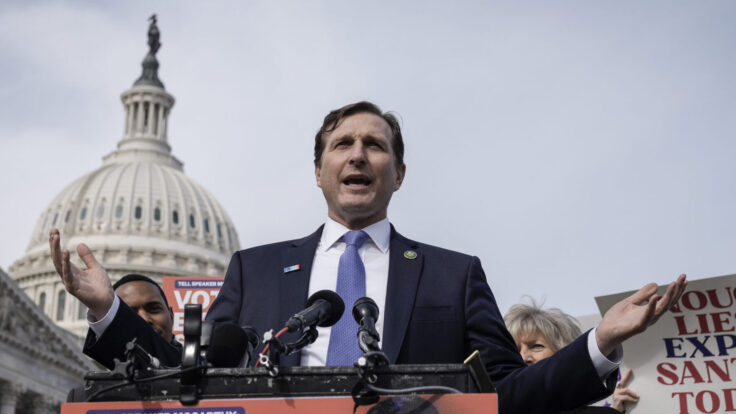
The ad wars are officially on in down-ballot races. Halfway through August, we’re now long past the airing of gauzy biographical ads that introduce candidates to voters. It’s attack season: Rates are skyrocketing, and each day brings a new slate of ads focused on abortion, the border, and inflation. Herewith, how the dynamic presidential race is impacting House and Senate maps…
- Harris existentialism: One interesting theme coursing through the new Republican ads is an assumption that the American public is simply not that familiar with Kamala Harris—and that Joe Biden remains the more potent boogeyman. Sure, numerous ads attempt to tie Democratic incumbents to Harris, but she’s almost never depicted as a stand-alone figure. To wit: A new ad from Michigan G.O.P. House candidate Paul Junge blames Democratic rival Kristen McDonald Rivet for the “Biden-Harris open border policy.” Others feature a narrator attacking Biden, with flashing images of the president and veep together. Even Rick Scott’s new spot—which includes the “We did it, Joe” video of Harris congratulating Biden after their 2020 victory, includes the plural “They did it.”
The ads in Montana take a different tack, and reveal how poorly Bernie Sanders likely polls in the state. A recent N.R.S.C./Tim Sheehy joint attempts to tie Democratic Senate incumbent Jon Tester to Harris and Sanders—no sign of Biden. However, the president does make a cameo in an ad linking Tester with Harris, Sanders, Biden, and Chuck Schumer. It’s worth remembering that it took Republicans no fewer than four election cycles and hundreds of millions of dollars to finally turn Nancy Pelosi into their 2010 villain.
- Sticker shock: The scuttlebutt from media buyers is that they’re feeling sticker shock over TV ad rates in several markets where statewide, presidential, and House races overlap. Obviously, Michigan features the most action, with at least three competitive House seats, along with the Senate and presidential races. Grand Rapids, Lansing, and Flint are becoming prohibitively expensive. Raleigh, North Carolina’s largest market, is also feeling the squeeze from the intensely competitive and expensive Josh Stein-Mark Robinson gubernatorial race, and Democrat Don Davis’ competitive bid for a second House term. This jump is also indicative of North Carolina reasserting itself as a player on the presidential level.
Meanwhile, Vegas is living up to long-held expectations of high ad rates, featuring the federal trifecta of House, Senate, and White House ads. And then there’s Missoula. Clearly, the Senate race is the main source of this hot market, but it’s worth noting that the Montana 1st District race has two well-funded candidates: Rep. Ryan Zinke, who had $3.1 million in cash on hand in July, and Democratic challenger Monica Tranel, who had $2.1 million.
- The counterattack: Naturally, both parties are going full bore on defense. Many, many Democrats are running ads boasting about their support for the failed bipartisan Senate border proposal that Trump shot down in February. At the same time, Republicans like David McCormick are trying to get ahead of the abortion issue, stressing their moderate credentials. But one ad in particular caught my attention: New Mexico Republican Senate candidate Nella Domenici (daughter of the late Sen. Pete Domenici) is running an ad calling for abortion to be “safe, legal, and rare.” It’s strange to hear Clinton-era triangulation rhetoric from a time when Democrats were increasingly on the defensive on abortion.
|
 |
| Ukraine’s Guns of August |
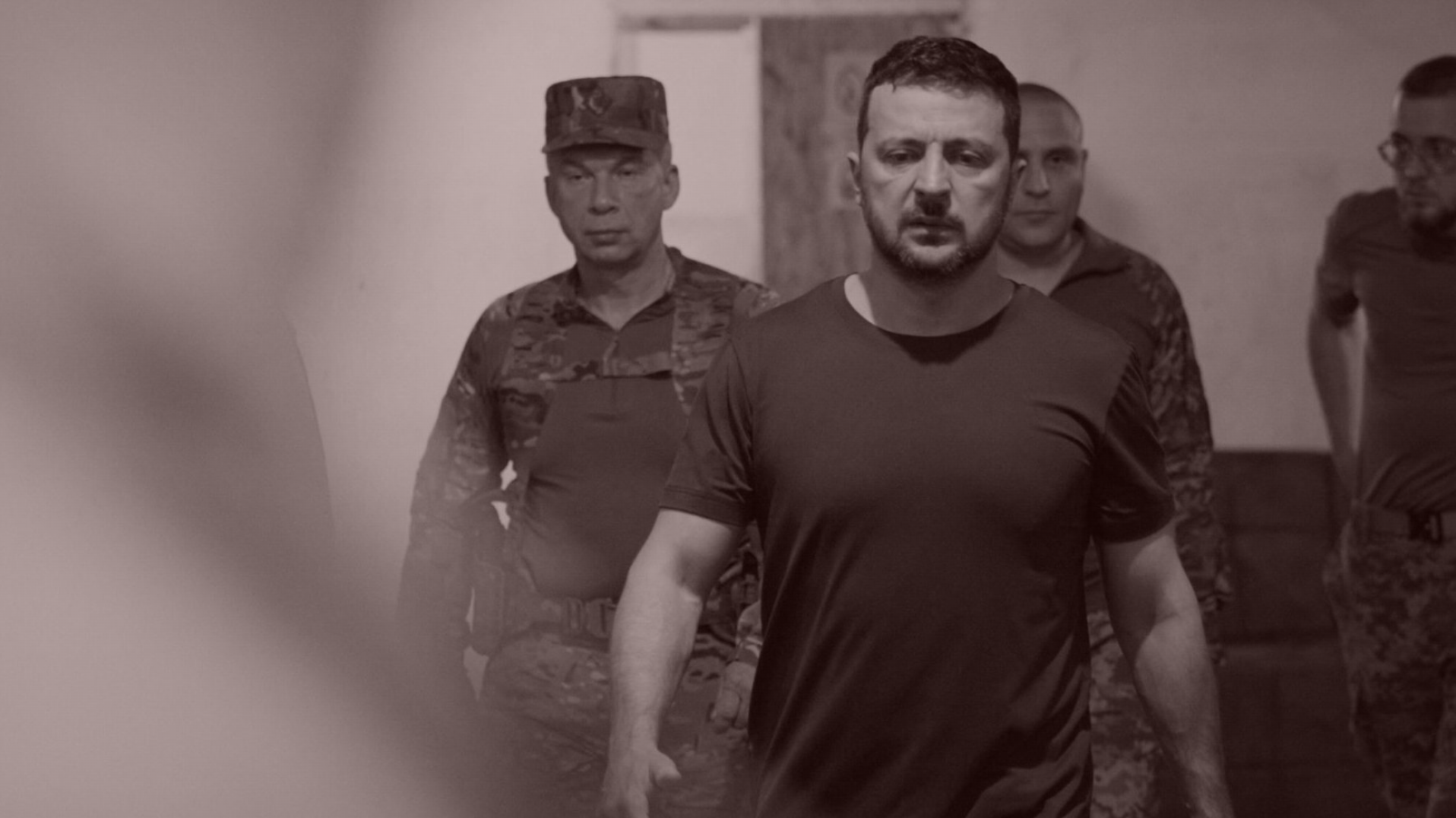
| The surprise Kursk offensive caught Putin and the Russians off guard, but no one, not even the Ukrainians, seems to know what happens next. I spoke with military analyst Michael Kofman about Ukraine’s likely motives, the expected retaliation from Moscow, and where things go from here. |
|
|
|
| One week ago, Ukrainian troops stunned the world by pouring across the border into Kursk, part of the western Russian heartland. This wasn’t a raid like the Free Russia Legion incursion in the nearby Belgorod region of Russia last year. This was a real military operation designed to capture and hold Russian territory. What’s more, the Ukrainian troops went into Russia facing little initial resistance, like a hot knife through butter.
The blitz recalled Yevgeny Prigozhin’s “March of Fairness” in June 2023, when his mercenary Wagner troops took over Rostov, the southern Russian city from which much of the war against Ukraine was being run, and made it halfway to Moscow without Russian government troops putting up much of a fight. (Prigozhin, you’ll remember, conveniently died in a plane crash last August, most likely after a bomb exploded on board.) So it was shocking to see, this time around, how little the Kremlin and the Ministry of Defense seem to have learned from that caper, and how much arrogance seems to underlie some of the decisions to fortify—or not fortify—the Russia-Ukraine border.
A week later, the situation is still very much in flux, with neither the Russian or Ukrainian sides saying too much about it. (What they have said, though, is fairly predictable: glee from the latter and fury from the former.) Ukrainian forces now control somewhere shy of 300 square miles of Russian territory. But from everything I’ve read and heard, no one seems to know what the plan is—or if a plan even exists. On some level, it seems that this is a new chapter in the same book we’ve been reading since February 2022: the Ukrainian military, ever the underdog, does something daring that surprises and dazzles the West and looks amazing on social media; the Russian military is caught off guard and unprepared, which leads to an embarrassing loss; but the law of large numbers gradually catches up, Russia learns from its mistakes, adjusts, and begins to overwhelm Ukraine once again through sheer numerical advantage.
Are we seeing the same thing play out in Kursk? Or is this time different? Will it help Ukraine change the trajectory of the war, or even the narrative? I called my friend Michael Kofman, a military analyst with the Carnegie Endowment (who also happens to have been born in Kyiv), to find out. Our conversation, which I hope you enjoy, has been edited for length and clarity. |
|
|
| Julia Ioffe: It’s been exactly a week since Ukrainian forces invaded the western Russian region of Kursk. Can you catch us up on what the hell is going on there?
Michael Kofman: Here’s what I think we know. And to be clear, the situation is still quite dynamic, so all the information you have is, at best, a day old, if not several days. So in terms of evidence you need for understanding what’s going on, as analysts we are unfortunately always a day behind. But we know it is a sizable operation involving elements of at least six to eight Ukrainian brigades.
Which is how many troops?
Unclear, but it’s likely 10,000 troops or more. It’s certainly much larger than any previous incursions, and it does not appear to be a raid. My sense is that the Ukrainian forces were able to easily break through the initial defensive lines, manned by Russian border guards and backed by conscript units. The Russian military had not anticipated the operation, and defenses there were thinly manned, if at all. Ukrainian forces therefore quickly advanced and broke out after crossing the border, bypassing several towns along roads in at least four or five directions.
That said, the rate of advance seems to have slowed significantly after the fourth day of the operation, and the Russian military appeared to be moving reserves into the area. It’s also clear that the first Russian units that responded were likely rear echelon troops, and some of them were destroyed in columns along the roads and some were captured by Ukrainian elements. So the initial response on the Russian side was chaotic, given that they were unprepared for this operation and they didn’t have forces readily available to counter it. But over the past week, the Russian military has been redeploying forces from both within Russia and from several other fronts.
What is the quality of the Ukrainian forces that have pushed into Kursk and the Russian forces that are being redeployed to this area? How do they stack up against each other?
We don’t really know. On the Ukrainian side, it seems to be a composite grouping of units they pulled off the front in Kharkiv and from Donetsk. These are some of Ukraine’s better troops, including special forces, air assault brigades, mechanized brigades, and other supporting units. It’s sizable, but not a large force, in the sense that it’s not clear if Ukraine has the reserves to hold a significant amount of terrain in Russia, or to sustain this operation.
What do you think were the objectives of the push into Kursk?
My own sense of it is that Ukraine likely hopes to raise its troops’ morale and to change both internal and external perceptions of the war by conducting a daring and bold offensive of this kind into Russia. At the very least, it would help change the narrative—and it clearly has, at least for a few weeks—of what has so far been an overall negative trajectory for the war over the past year.
I suspect the actual objective of this operation is to hold some amount of territory in Kherson and hope to trade that for territory Russia is currently occupying—for example, the buffer zone they’ve taken in Kharkiv. Or alternatively, at the bare minimum, to entrench and use this buffer in order to pull in Russian forces from Kharkiv and other parts of the front inside Ukraine. Russian political leadership is clearly going to be furious over the prospect of a prolonged occupation of Russian territory, which ideally will divert some significant percentage of the Russian forces currently pressing the Ukrainian military along the front in Donetsk. The idea here, I think, is to create perhaps a larger but more successful version of the battle in Krynky—when Ukrainian forces crossed the river and held this lodgment for quite a long time in Kherson—a forced, attritional battle.
Do you think, by doing this, that the Ukrainians risk thinning their own lines in places where it really matters right now?
Absolutely. Any operation like this comes with the risk of overextension. Of course, it depends on how ambitious they will be. The Ukrainian military did thin out its lines and pull from reserves to conduct this operation and they have visibly taken on risk across the front line. The upshot is that it may pull a much larger Russian force to counter the Ukrainian incursion. The downside is if the Russian military is able to stabilize the front lines without substantially affecting its current offensive operations. Ukraine may end up in a difficult situation, where it is holding additional frontage of territory in Russia while struggling to hold its defensive lines across Donetsk. Those lines are already buckling, especially over the past week, because Ukraine’s military is badly stretched and has a long way to go to recover from its manpower issues.
And while it is true that the Russian military has pulled some units from parts of the front, unfortunately there’s been no evidence of a halt to Russian advances in Pokrovsk, Toretsk, or Chasiv Yar or near Kupyansk. Absent major changes, I suspect that the Russian military, while being forced to redeploy units to counter at Kursk, is not going to halt its offensive operations. Much depends on the coming days, but I’m not sure this can lead to a lasting change in the overall initiative in this war. |
|
|
| I’ve heard several explanations for why the Ukrainian military is doing this: They want to go for that gas transit point in Sudzha. They want to take the nuclear plant. They want to take territory for future negotiations. What do you make of those theories?
They don’t make sense to me. The transit point for the gas that runs through Ukraine? So you’re invading Russia to take control of a gas transit point that goes to Ukraine in the first place? The problem with that theory is pretty obvious, I think.
Second, the nuclear power plant is a Chernobyl-style plant that’s not well shielded. But the plant is 60 kilometers in. The idea that Ukrainians will hold a narrow road running at least 90 kilometers deep into Russia and one power plant? All right, say they took it, then what? The day after, what happens? Makes very little sense.
To me, the likeliest scenarios are: First, try to see if this operation could be turned into anything significant in terms of leverage, perhaps getting Russian forces to withdraw from Kharkiv. Second, if there are no prospects for this kind of deal, then to use this operation to pull in Russian forces to halt offensive operations elsewhere in Ukraine and to give Ukrainian forces a respite on the front. There is still the option that Ukraine might turn it into a prolonged raid, but there are already signs of entrenchment, suggesting they intend to occupy Russian terrain for some time.
Do you think that’s realistic?
It’s an interesting proposition. The challenge with negotiations on the basis of short-term leverage is that short-term leverage is not leverage if you have no means to compel negotiations on your preferred timeline. If Ukraine can only occupy Russian territory for some period of time, there’s absolutely no reason why Putin would have to negotiate. If anything, this incursion makes negotiations much less likely.
Why?
In past cases, when Putin was handed those kinds of embarrassing defeats, Moscow’s preference had been to escalate and actually increase its investment in the war. Remember Kharkiv 2022, or Kherson, or the Belgorod incursions? Second, given that, structurally, nothing has changed in the overall balance of forces or material advantage between Russia and Ukraine resulting from this offensive, it’s not clear why Moscow will choose to negotiate at a time of temporary weakness or disadvantage when the long-term trends, the structural trends of this war, remain fundamentally unaltered.
So how do you think Russia will respond? You mentioned that they tend to escalate. What we’ve seen with the Kerch Bridge and with the Belgorod incursions is that the Russians escalate in part by inflicting more attacks on civilian infrastructure.
At this point, Russia has destroyed most of Ukraine’s non-nuclear power generation. It’s unclear what else Russia could actually do. The reality is that Ukraine faces a very difficult winter. Much of the damage has already been done, and the West has not addressed Ukraine’s minimal air defense needs. There’s an argument to be made that it’s not clear what Ukraine had to lose really by trying this gambit. And there’s not really much else [Russia] can do to escalate, certainly not in Ukraine. That’s the reality. A lot of those conversations have been strangely notional. Russia expanded the front by reinvading the Kharkiv region. They’ve been launching waves of strikes this year against infrastructure. Like, What’s Russia going to do? What can Russia do? And the answer is, Not much… other than what it’s currently doing.
I don't think people appreciate the growing significance of Russian strikes against Ukraine’s civilian critical infrastructure. Much the same could be said of Ukraine’s growing ability to strike deep into Russia. The front line is important, and is one indicator of how the war is going, but the strike campaigns are strategically more significant. And over time, this may overshadow what's happening at the front line. |
|
|
| That’s all from me this week, friends. I’ll see you back here next Tuesday, when the Democratic National Convention will be in full swing. Until then, good night. Tomorrow will be worse.
Julia |
|
|
|
| FOUR STORIES WE’RE TALKING ABOUT |
|
|
|

|
 |
|
|
|
Need help? Review our FAQs
page or contact
us for assistance. For brand partnerships, email ads@puck.news.
|
|
You received this email because you signed up to receive emails from Puck, or as part of your Puck account associated with . To stop receiving this newsletter and/or manage all your email preferences, click here.
|
|
Puck is published by Heat Media LLC. 227 W 17th St New York, NY 10011.
|
|
|
|