Welcome back to The Varsity. I’m John Ourand, writing
from Puck’s sun-splashed, well-hydrated Tribeca offices after a whirlwind couple of weeks in sports media.
I’m in New York for CBS’s annual pep rally for the upcoming NFL season (complete with a Marchand sighting). There’s not much change, year to year, in the way networks produce NFL games. But today’s event had a much different, dare I say joyful feel, coming less than a week after the Skydance-Paramount merger finally, mercifully closed. In fact, Jim
Nantz and Jen Sabatelle left the event early to fly to L.A. and meet with David Ellison. For the record, CBS described the NFL ad sales market as frothy, and said they’re not seeing any effect from the on-again, off-again tariffs.
Much of the discussion, of course, centered on yesterday’s stunning $7.7 billion deal for UFC media rights. And tonight, in another of her brilliant pieces, Julia Alexander explains the
benefits for both sides. As you know by now, Julia’s stories are available only to Puck’s Inner Circle, so click here to upgrade. Plus, as of last week, Inner Circle members can also listen to Puck stories with our new text-to-speech feature, which you can find at the top of articles on our website. Give it a spin and let me know what you think.
🎟️ We’ve officially sold
out our first tranche of tickets for In the Arena, our sports media conference on October 16, which we’re hosting alongside the geniuses at MoffettNathanson. The event is almost entirely booked, but we’ll release one more block of tickets for Inner Circle members next week, also with preferred pricing,
so keep an eye out for that.
🚨 Finally, before diving in, a reminder that Julia will host a panel this Thursday, August 14, in Los Angeles, featuring the talented casting directors behind a handful of Apple TV+’s Emmy-nominated shows. There’s only a few seats left, so click here to RSVP.
Now, here’s Julia… |
Stat of the
Week: 13.7 Percent
|
If you’ve felt like you’re paying more for streaming services, it’s probably because you
are. The average amount that Americans are spending on subscription entertainment products has increased by nearly 14 percent year over year, according to the Labor Bureau’s C.P.I. report from June. And the hikes are still coming: The price of a Peacock subscription will increase 40 percent next week, while Fox and ESPN’s new bundle will drain an additional $40 from sports fans’ accounts each month. And it’s only a matter of time before Paramount+ announces an “adjustment” to help cover
that $7.7 billion UFC deal. |
|
|
A MESSAGE FROM OUR SPONSOR |
Forever at the top of its game, the trailblazing BMW 7 Series. Engineered to win. Learn more at
BMWUSA.com |
|
|
- The
Athletic’s podcast play: These days, talent, rather than titles, is the media ecosystem’s center of gravity. Individual stars command the most attention—and the ad dollars flow from there. That’s why ESPN decided to ink a huge deal with Pat McAfee, and Fox Sports with Dave Portnoy. But companies can also pursue lower-cost, lower-risk efforts. To wit: The Athletic has partnered with Pablo Torre, and The Sports Gossip Show’s
Madeline Hill and Charlotte Wilder, for two new podcasts that will exist under the New York Times banner—without explicitly being New York Times products.
Licensing is an economical play for media companies amid strong demand for sports podcasts—a category that is up 41 percent since 2019, per a 2024 Nielsen Scarborough study. The New York Times is investing heavily in its audio and video business, but building up a podcasting
ad network doesn’t necessitate spending buckets of cash to bring talent in-house.
Similarly, Netflix is reportedly interested in licensing video podcasts from top creators to generate new formats for advertisers. The company already has a biweekly sports podcast with former NFL Network host Kay Adams. Meanwhile, Fox acquired Red Seat Ventures, a creator network that company executives specifically called out for its ability to find opportunities to expand
into sports podcasting, original or licensed. Would The Ringer ever license some of its shows back to ESPN, reuniting Bill Simmons with Jimmy Pitaro but giving Simmons more leverage than ever before? Maybe that’s a bridge too far for Spotify and the parties involved… - Caitlinsanity by the numbers: Let’s be real, Caitlin Clark currently is the WNBA. While
Clark was out with a quad injury earlier this season, viewership for all national WNBA broadcasts dropped by 55 percent, according to Nielsen data, as reported by USA Today. Viewership for national Fever games dropped 53 percent in the same period, suggesting that the overall drop was either a suspiciously timed anomaly, or the Clark halo effect is near-total. But either way, it’s safe to say that not having Clark on TV hurts the league.
Clark recently opened up about
the pressure to stay healthy on Sue Bird and Megan Rapinoe’s A Touch More podcast, saying that she feels a “huge responsibility” to show up, considering that everyone from fans to sponsors “spends so much time, money, and resources to come and watch you play.” Sure, the WNBA’s success as a league doesn’t hinge on Clark missing a couple of games, and with more money being poured into the sport, we’re presumably entering a new era for up-and-coming
players. But the key woman risk is larger than the league wants to admit. - Will Comcast and Paramount respond to the Disney-Fox bundle?: None of us can feign surprise about Fox and ESPN’s new streaming bundle, even if Bob Iger played coy on the earnings call. Opting for the safety of bundling over trying to outspend your competitors is only natural given our current, lower-revenue reality for sports. For $40 a month, fans can
now access both Fox and ESPN’s suite of live sports content, which will help monetize a cohort of cord-nevers.
Of course, this puts Paramount’s David Ellison and Comcast’s Brian Roberts in an interesting position. Do they create their own combined offering between Paramount+ and Peacock? Do they go it alone? All I know for sure is that if Venu was supposed to cost $43, and this Venu-lite offering is just three dollars cheaper, Lachlan Murdoch
and Jimmy Pitaro are essentially confirming what we knew all along: Warner Bros. Discovery and David Zaslav were bringing pretty much nothing to the table… and remember, Venu was announced back when Zaz had the NBA.
|
And now, on to the main event… |
|
|
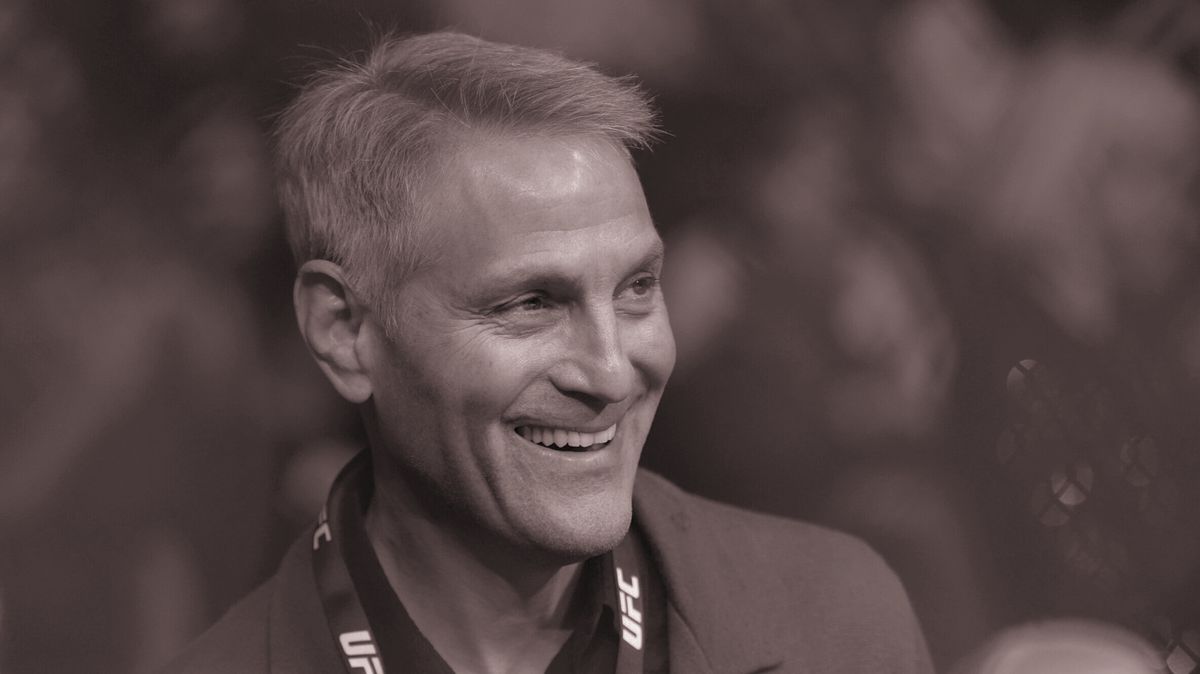
Paramount’s seven-year, $7.7 billion UFC deal gave David Ellison a more
compelling pitch for Par+ users, while Ari Emanuel’s UFC now has exposure far beyond the ESPN+ app and pay-per-view’s walled garden. But who got a better deal? |
|
|
In retrospect, it wasn’t entirely surprising when news broke yesterday that
David Ellison was coughing up $7.7 billion for seven years of exclusive domestic rights to UFC fights on his new baby, Paramount+. After all, Ellison had appeared at multiple UFC events before the deal closed, sitting next to the likes of his father, Larry, President Trump, UFC C.E.O. Dana White, Mark Zuckerberg—and, perhaps most tellingly, Ari Emanuel, an Ellison advisor and
the C.E.O. of TKO, which owns the UFC.
Also, the two sides very much complement each other. Until now, Par+’s most engaging assets outside of the NFL had been the Taylor Sheridan-verse and SpongeBob SquarePants. But with the addition of UFC, we’re beginning to see a fuller picture of the streamer Ellison has in mind—a vaguely Trump-inflected mix of fight nights, Sheridan’s cowboys, and CBS cop shows supplemented by popular
reality fare (Survivor, Amazing Race) and studio hits. Indeed, research firm YouGov found that top overlapping interests for Paramount+ fans included Fox News and Jesus Christ.
Meanwhile, the UFC is hungry for viewers, no matter their party affiliation. With the Paramount deal, the league can now lean on not only a major streamer, but also a
broadcaster—at minimum, 13 of the 43 yearly events will simulcast on CBS—to expand an audience that, until now, has been restricted to pay-per-view and a streaming app that practically no one in the United States used. (ESPN+, which streamed the vast majority of fights, accounts for less than 1 percent of all TV viewing in the U.S., per Nielsen, putting it on par with niche streamers like Crunchyroll.) |
|
|
A MESSAGE FROM OUR SPONSOR |
Forever at the top of its game, the trailblazing BMW 7 Series. Engineered to win. Learn more at
BMWUSA.com |
|
|
Of course, that $7.7 billion price tag is substantial, and any future
analysis of this deal’s success or failure will start there. Yes, ESPN+ has a much smaller audience than Par+, and Disney was paying a relatively modest $550 million a year for the rights, but even so, there have been some concerning signs regarding the league’s popularity. Disney reported that the UFC recorded “lower average buys per event” in its most recent quarter. (Ellison plans to drop the pay-per-view, uh, paywall.) And it may be difficult for Paramount to make back the amount they’re
spending, though that’s true for most sports rights deals. But for Ellison, the high price point, and willingness to be the sole UFC partner, are clear signals to other leagues, media operators, and A-list talent that he’s in it to compete, and his checkbook is open. |
With 77.7 million subscribers, Paramount+ is the third-largest general entertainment
streamer in the U.S., behind only Netflix and Prime Video (Disney+ and Hulu are larger combined). Still, Paramount+ saw a 4 percent decline in direct-to-consumer advertising this quarter, and a loss of 1.3 million subscribers. As Brian Roberts has learned with Peacock, having the NFL is good, but plenty of customers are still going to cancel each year after the playoffs. UFC’s action is year-round.
With a deal of this magnitude, Ellison is signaling his
belief about which sports are the right bets for his advertisers and customers. And, as everyone reading this knows, not every sports league is created equal. Jimmy Pitaro and Bob Iger spent the past several years working on the NFL media partnership, giving up a 10 percent stake in ESPN, and welcoming a more co-dependent relationship with the league, because the only competition for football on Sundays is God, who tends to wrap things up by noon. Other leagues,
like Major League Baseball, are increasingly seen as not worth top dollar, even though attendance at ballparks is up 2 percent year over year, viewership is on the rise across every major network, and MLB TV’s streaming viewership is up 27 percent year over year. But the potential for super growth is more enticing than established incremental increases. So even if Ellison overpaid for access to the whole suite of fights, the numbers around UFC specifically are strong, which is
why they’re a key part of his master plan.
As of last year, nearly three-quarters of a billion people in roughly 170 countries considered themselves UFC fans, per YouGov. This audience is mostly young and male—although TKO president Mark Shapiro has claimed that 38 percent of UFC’s audience in the States is female. The median age of a UFC fan in the U.S. is 37, lower than the NBA (39), NASCAR (41), and the NFL (46), per The Economist. About half of American UFC
fans fall within the 18 to 34 demographic, appealing to advertisers who have struggled to reach this cohort while fights have been locked up behind paywalls on ESPN+.
Paramount doesn’t release age demographics for Paramount+, but considering the popularity of the Sheridanverse, and CBS’s overall age demo—the median age of their primetime viewers was a rusty 67.8 in 2024—you can probably guess at one of the big reasons that UFC appealed to Ellison. Perhaps most importantly, roughly 61
percent of UFC fans are willing to pay a monthly fee for access to those fights, higher than NASCAR (44 percent) and about in line with the NFL (65 percent), per Ampere Analysis.
In many ways, Ellison’s live sports strategy seems to mimic Netflix’s approach of seeking out both events and concepts that will entice advertisers. As you undoubtedly recall, December’s depressing Jake Paul vs. Mike Tyson spectacle brought in more than 60 million
concurrent viewers (38 million in the U.S.), and 108 million total viewers globally, and certainly checked both boxes. |
Just a couple of hours after Paramount and TKO announced the deal, Shapiro and Emanuel
sat down with CNBC’s David Faber. Notably, during the interview, the TKO executives seemed to be more interested in CBS than Paramount+. CBS, a decaying but still important part of the content distribution system, has been the most-watched broadcast network for 17 years in a row. It averaged about 5 million primetime viewers in its most recent broadcast season (excluding sports), up about 14 percent year over year. “We checked the box on the financial part of this, but in terms
of the brand, it was important for us to have CBS play a big part of it,” Shapiro told Faber, with Emanuel adding that, for Ellison, having UFC “is [important] to drive things to Paramount+, but for us, we wanted the reach of CBS.”
As the streaming wars give rise to the more practical hybrid era, finding a partner with a growing streaming service and an established broadcast channel is an increasingly important target for almost all major leagues. The NBA signed a deal with
Comcast that gives NBCUniversal access to nearly 100 games, with just about half exclusive to Peacock, and marking the most NBA games available on broadcast ever. Roger Goodell has reiterated that having access to broadcast partners, including more games simulcast between ABC and ESPN’s streamer, is a core component of his business.
Broadcast will never replace streaming—its share of total TV viewing dropped below 20 percent for the first time in June, per
Nielsen—but those audiences are still sufficiently different that there are opportunities to max out audience reach, advertising sales, and draw larger shares of attention… at least for a few years. It’s precisely why select MLS games are still sublicensed to linear partners like Fox, instead of keeping every game locked up on a paywalled app that reaches less than 1 percent of U.S. TV viewers. Streaming is the future, but after five years of being relegated to a niche app with a zombie
audience, you can understand why access to CBS was appealing for Endeavor. |
Thanks, Julia. This is a deal that we’re going to be writing about for a long time. See
you all on Thursday.
John |
|
|
Ace media reporter Dylan Byers brings readers into the C-suite as he chronicles the biggest stories in the industry:
the future of cable news in the streaming era, the transformation of legacy publishers, the tech giants remaking the market, and all the egos involved. |
|
|
Join Emmy Award-winning journalist Peter Hamby, along with the team of expert journalists at Puck, as they let you in
on the conversations insiders are having across the four corners of power in America: Wall Street, Washington, Silicon Valley, and Hollywood. Presented in partnership with Audacy, new episodes publish daily, Monday through Friday. |
|
|
Need help? Review our FAQ page or contact us for assistance. For brand partnerships, email ads@puck.news. You received this email because you signed up to receive emails from Puck, or as part of your Puck account associated with {{customer.email}}. To stop receiving this newsletter and/or manage all your email preferences, click here. |
Puck is published by Heat Media LLC. 107 Greenwich St, New York, NY 10006
|
|
|
|