 |
|
Happy Wednesday, and welcome back to Dry Powder.
|
|
It should come as no surprise that just as the dust is beginning to settle amid the rubble of Silicon Valley Bank, the rumor mill is kicking into overdrive. In today’s issue, a close look at the circulating theories about what actually precipitated one of the largest bank failures in U.S. history—and who stands to benefit from the reconstruction of its business.
|
 |
| Two Days in the Valley |
| A postmortem of an abbreviated financial crisis, and a look ahead to the next one in our social media age. |
|
|
|
| Now that the fever at Silicon Valley Bank appears to have broken, a clearer picture is emerging. SVB, despite its more than $200 billion in deposits, was not a traditional retail bank. It only had around 27 bank branches scattered around NorCal, Texas, New York, Atlanta, Washington D.C. and in Boston, where it had acquired a private bank. Instead, it was at the center of a very unique financial ecosystem, based in Silicon Valley, and composed of tech bros, venture capital firms and their portfolio companies. It also acted more like an investment bank than a commercial bank, taking risks that much more conservatively run banks would never have assumed. (It actually owned an investment bank too, SVB Securities, that still specializes in underwriting and advising tech and healthcare companies.) But when your clientele is part of the FOMO, fast-money crowd, I guess you have to cater to them, or someone else will.
SVB went whole hog into servicing them. After the dot-com crash, in 2000, most banks would no longer loan against illiquid private shares in tech start-ups. Silicon Valley Bank did. Most banks wouldn’t make unsecured loans to start-ups that had no assets or positive cash flow. Silicon Valley Bank did. Most banks wouldn’t make super generous loans to founders, both for their own personal and professional uses. But Silicon Valley Bank did, as long as they agreed to keep their cash balances, or most of them, in their vaults. Silicon Valley Bank also gave venture capital firms very low interest-rate loans to allow the firms a way to juice their returns. “SVB would provide venture debt for companies that sometimes don’t have revenues or millions in revenue at a very good price,” Jai Das, co-founder of Sapphire Ventures, once said. “There was a lot of trust involved.”
The bank’s balance sheet expanded wildly, especially during the pandemic. According to the bank’s own financial presentation to investors, from January, SVB banked nearly half of U.S. venture-backed technology and life-sciences companies and 44 percent of recent public technology and health-care companies. Its creativity and flexible credit standards made it the bank of choice for founders and investors putting capital at risk in the innovation economy. In 2009, SVB’s on-balance sheet deposits totaled $9 billion, according to its January presentation. By the end of 2022, its on-balance sheet deposits had swelled to $186 billion, and to around $215 billion by the time it was taken over by the FDIC last Friday. “It was a one-way bet on tech mania,” one Wall Street executive told me. He did not mean it as a compliment. Or as Michael Cembalest, the guru-like chairman of markets and investing at JPMorgan Chase, put in a note to clients on Friday, SVB “carved out a distinct and riskier niche than other banks.”
What to do with all those deposits building up on its balance sheet? Normally, of course, SVB would lend the money out to whomever needed it and could pay for it: companies, individuals, universities, municipalities, the usual bouillabaisse of borrowers. But, it seems, SVB could not keep making loans fast enough to keep up with the growing stream of deposits. It could have just kept the deposits in cash, of course, which would have meant that it would be available to depositors whenever they needed it. But, as I wrote on Sunday, that’s not how things work in a fractional banking system. Banks make money from money, especially when the money is inexpensive or free. If the deposits are still at the bank, in cash, then banks are going to have a tough time making money, especially when the Federal Reserve is in the midst of a 13-year easy-money fugue.
When interest rates are so close to zero, it’s going to be challenging for banks to make a spread—the difference between what they pay us for our deposits and what they can make by lending that money out to borrowers—unless they take unusual risks. And as a public company, with Wall Street research analysts clamoring for higher and higher net income and a rising stock price, there was probably enormous pressure on SVB to invest its growing deposits into securities that would provide higher yields. Sadly, the pursuit of higher-yields, what I like to call the Yield Hunger Games—an extra 100 basis points here and there—cost SVB its life, all in a matter of days. |
|
|
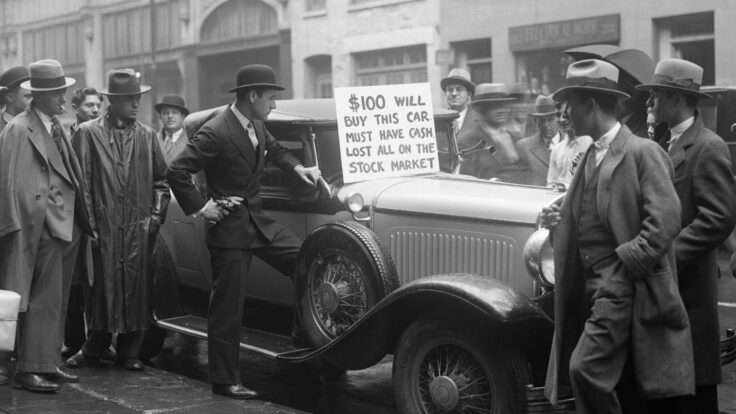
| In pursuit of those higher yields on its idle cash, SVB invested something like half of its depositors’ money in long-term mortgage-backed securities and long-term Treasuries at the peak of the bond market, and at the peak of the Fed’s easy-money policies. So SVB’s problem wasn’t that the company invested in risky debt securities—Treasuries shouldn’t be risky, unless the morons in Congress fail to raise the debt ceiling—but rather that it had invested in long-dated securities at the top of the market, essentially making two bets: one that the Fed wouldn’t reverse policy anytime soon and start raising interest rates and, two, that its customers wouldn’t want their money all at the same time. Obviously, in retrospect, it colossally misjudged the latter and was totally fucked when the former occurred, especially when it actually had to sell a big chunk of its bond portfolio—to Goldman Sachs, of course, which, according to The New York Times, pulled in a fortune on the trade—in order to try to meet the demands of depositors wanting their money back. A classic bank run.
Betting that the Fed wouldn’t start raising interest rates after a decade-plus Zero Interest Rate Policy was, of course, colossally stupid: to buy $80 billion worth of long-term debt at the top of the market and to think it wouldn’t decrease in value over the hold period is a rookie mistake. Everyone with half a brain knew that the Fed had no choice but to raise rates, and fast. Somehow the brain surgeons at SVB missed that memo. And failed to hedge that interest-rate risk to boot. So they compounded a risky business model, catering to the Silicon Valley start-ups and their V.C. backers, with an absolutely negligent decision to invest the bank’s exploding deposits into overpriced debt securities at the top of the market.
And that would have been stupid enough, but probably not fatal, unless a third thing happened. And that was something that nobody can anticipate, or imagine, largely because people aren’t wired to imagine the unimaginable. This is the Asshole Theory. For whatever reason, rumors started circulating in the Silicon Valley ecosystem that SVB was in financial trouble and that depositors needed to get their money out of the bank immediately. There was a total meltdown of confidence in the bank.
What caused the sudden loss of confidence in SVB is the stuff of rumors. The made-for-Twitter rumor with the most staying power posits that the iconoclastic Silicon Valley billionaire Peter Thiel decided the gig was up at SVB and that he, or one of his executives, urged his portfolio companies at his Founders Fund to take their money out of the bank. Did he also buy short-dated puts on the SVB stock, or short it, to help make the whole thing a self-fulfilling prophecy? Who knows? (His spokesman, Jeremiah Hall, at Torch Communications, did not respond to a request for comment. But his partner, Trae Stephens, all but confirmed to Bloomberg that Founders Fund initiated the stampede.) Further speculation has it that both Sequoia and a16z then followed Thiel’s lead and urged their portfolio companies to get their money the heck out of SVB. There have also been reports that as early as December, Fred Wilson, the dean of New York’s venture capital industry, at Union Square Ventures, began telling its portfolio companies to flee SVB. On the other hand, why two big Silicon Valley V.C.s would want to deep-six a bank that bent over backwards to service them and that long had a symbiotic relationship with them is hard to fathom. I’ve also been told that a16z had $1 billion on deposit with SVB at the time it failed, and that its chief operator officer, Scott Kupor, was determined to keep the funds at the bank. (As usual, the crotchety folks at a16z did not respond to a request for comment.) Either way, by Thursday, it seemed that every Tier 1 investor in the Bay Area was urging portfolio companies to quickly stand up relationships with other banks, and stat. Hello, JPMorgan Chase.
In the end, it almost doesn’t matter how the wildfire got started, or who started it. What matters is that it did start and that nearly everyone headed for the exits at once as the panic spread through the valley. |
| The Crowded Billionaire Theater |
|
| With the panic underway, and seemingly nearly everyone wanting his or her money back, the bank sold some $21 billion of its long-term bond portfolio. It soon discovered, however, that in a rapidly rising interest rate environment, bonds that yield nearly nothing had lost a lot of value and could only be sold at a severe discount. SVB perfected a $2 billion loss on the sale of the debt to Goldman and more losses were probably on the way if it needed to continue to sell down its portfolio of bonds.
It then tried to raise another $2 billion in equity to fill the hole. It hired Goldman Sachs for that assignment, too. Some people think Goldman screwed up the underwriting because General Atlantic, the private equity firm, had agreed to invest $500 million of the $2 billion needed. But I suspect that underwriting was never going to happen in the middle of a bank run and after the bank suffered the big loss on the sale of the debt securities. “I’d love to throw Goldman under the bus and say they completely fucked it up,” one of Goldman’s Wall Street competitors told me, “but the company was broken.” In any event, the equity sale did not happen and General Atlantic can count its lucky stars it didn’t: the firm would have lost a cool $500 million in record time. Of course, the combination of the bank run, a threatened downgrade on SVB’s debt, the perfected loss on the bond portfolio and the failed equity deal (plus the inane communication from SVB’s management around all of those things) spelled the end of the line for SVB. The FDIC took it over on Friday, in the middle of the day, without waiting for the weekend, which is often when bank failures occur in order to buy some extra time.
With the FDIC takeover, it looked like there was finally some accountability underway. The idiotic management of the bank, which included Joe Gentile, the former chief financial officer of Lehman Brothers, of all places, got canned, and deservedly so. The shareholders and bondholders also got wiped out, again deservedly so. If you make the mistake of investing in a bank that so recklessly flaunts the rule of not borrowing short and lending long, and compounds that mistake by not hedging the interest rate risk after buying bonds at the top of the market, then you should lose that investment. The FDIC, per its rules, agreed to insure every depositor with $250,000 or less in their SVB bank account. In a more typical bank, a more retail-oriented bank, only a small percentage of depositors would not be covered under the $250,000 limit.
But, as discussed earlier, SVB was not a typical retail bank. It was more of a wholesale bank, more like an investment bank, that catered to well-heeled corporate clients, in a variety of obsequious ways, including demanding that the V.C. firms and their portfolio companies keep their cash at SVB in return for SVB’s largesse, like loans to start-ups without positive cash flow and below-market-rate mortgages. It turned out that more than 90 percent of SVB’s customers had more than $250,000 in their bank accounts, including the well-heeled and powerful V.C. firms like a16z and Kleiner Perkins. And then some rather extraordinary things started happening. As in 2008, an entire ecosystem—the world of tech superstars and tech superstar wannabes—appeared to be on the verge of failing; the blast zone was bigger than just SVB itself.
Suddenly, there was a disturbance in the force. Wealthy, powerful venture capital firms and their portfolio companies quickly realized that they would have to wait in a long line to get their money out of SVB, if at all. These are people who are used to getting their way, in business and politics. Yesterday, my Puck partner Teddy Schleifer published an excellent piece detailing Silicon Valley godfather Ron Conway’s powerful and persuasive behind-the-scenes political campaign to ensure that the deposits were returned. Conway worked privately but most other powerful voices in finance turned up on Twitter to advocate for a bailout-but-without-being called-a-bailout: Among them, Bill Ackman, Gary Cohn, Dan Loeb and the billionaire hedge fund manager Kyle Bass, who tweeted, “They must stop the bank runs by assuring depositors that they will be paid.” People used to getting their own way, usually do.
Were the billionaires stoking illegitimate fears of a 2008 rerun to ensure that they and their pals got refunded? Some saw what was happening and seemed appalled. Among them was my friend Stephanie Ruhle, the anchor of The 11th Hour on MSNBC and a former Wall Street trader. She might have been conceivably sympathetic to the pleadings of the plutocrats, but she wasn’t. “Watching a group of dudes who normally preach from Ayn Rand’s book of philosophy suddenly demand Biden rescue depositors while simultaneously doing everything possible to cause more panic in [markets] and around regional banks…it’s a whole other level of hypocrisy,” she tweeted on Saturday night. Added the inimitable Kara Swisher, “What’s the SV equivalent of yelling fire in a crowded theater? Not satisfied to wreck democracy via toxic social media, the rage techies—who never met anything they didn’t slag—are moving onto the banking system. I mean, why not? They have their escape pods and prepper plans.” |
|
|
| It’s hard to disagree with Bill Ackman, who tweeted, somewhat defensively, in the aftermath of the FDIC’s decision, that the government did the right thing. “This was not a bailout in any form,” he wrote. “The people who screwed up will bear the consequences. The investors who didn’t adequately oversee their banks will be zeroed out and the bondholders will suffer a similar fate. Importantly, our [government] has sent a message that depositors can trust the banking system. Without this confidence, we are left with three or possibly four too-big-to-fail-banks where the taxpayer is explicitly on the hook, and our national system of community and regional banks is toast. Our government did the right thing for the country. We are very fortunate it did so.”
Bill is right, but where has that left us, even if the lifting of the limits on deposit insurance ends up being temporary? (It is scheduled to end after one year, unless extended.) It has allowed a bunch of sophisticated investors to get bailed out of their failure to adequately diligence the bank at the epicenter of their ecosystem. And it has put the FDIC on the hook for all bank deposits, at least for the moment. If that’s the case, that sounds more than a bit like bank nationalization to me. And that may or may not be fine if that’s where we’re heading. But if that is the case and the banks are to be nationalized, or “federalized,” as one wag put it to me, then we certainly don’t need to be paying bank executives the tens of millions of dollars they get paid to manage the risk at banks where risks are no longer being taken.
In the old days, before Sunday, those bankers who were the better risk managers got rewarded for their differentiated abilities. If that’s no longer going to be the case, and the federal government is going to absorb the risks in the banking system, an outcome we’ve been heading toward since the aftermath of the 2008 financial crisis, then maybe bankers can get paid more like the order takers they are becoming. |
|
|
|
| FOUR STORIES WE’RE TALKING ABOUT |
 |
| Hulu Hunger Games |
| Poking holes in the oversimplified narrative surrounding Iger’s Hulu headache. |
| JULIA ALEXANDER |
|
 |
| Ron’s China Dreams |
| Politicians are veiling their lust for a China confrontation behind anti-Ukraine posturing. |
| JULIA IOFFE |
|
 |
|
 |
|
|
|
|
|
 |
|
|
|
Need help? Review our FAQs
page or contact
us for assistance. For brand partnerships, email ads@puck.news.
|
|
|
|
Puck is published by Heat Media LLC. 227 W 17th St New York, NY 10011.
|
|
|
|