 |
|
Happy Sunday, and welcome back to Dry Powder.
|
|
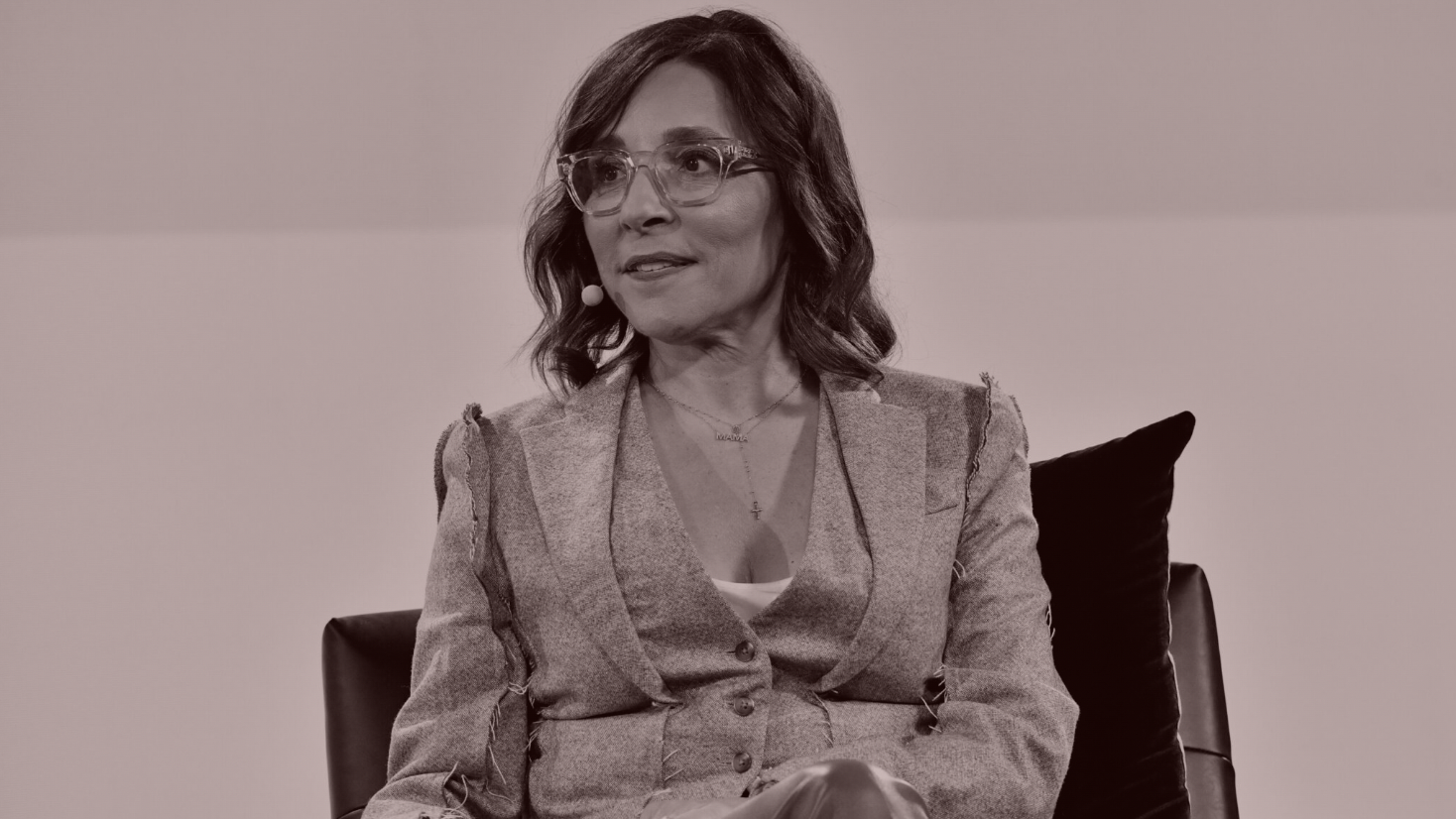
In today’s issue, a look ahead at the October 5 summit between Twitter/X C.E.O. Linda Yaccarino and the seven banks white-knuckling $13 billion of the company’s debt. Plus, some thoughts on an eye-catching vignette from Walter Isaacson’s new Elon Musk book about a clash between Elon and Bill Gates.
|
 |
| Twitter’s Debt Time Bomb & Linda Alarms |
| A meeting between C.E.O. Linda Yaccarino and seven Wall Street banks could decide whether investors can finally sell off the company’s debt without losing their shirts in the process. Plus, notes on the fallout from Bill Gates’ Tesla short. |
|
|
|
| On October 5, Twitter/X C.E.O. Linda Yaccarino will reportedly meet with representatives of the seven banks that are still white-knuckling $13 billion of Twitter’s debt, in what is easily one of the most important Wall Street summits of the year. The value of this debt, after all, is wholly dependent on the likelihood that Elon Musk will be able to pay it back and make it money good, which he is currently doing by forking over quarterly interest payments totaling around $1.2 billion a year—so no small feat, even for the world’s richest man, when Twitter has lost users, lost advertising, hasn’t turned a profit since 2019 and prospects for turning it all around look dim, at best.
Even though the Twitter debt is senior, and mostly secured by Twitter’s assets, it has always been a risky piece of paper. At the time Elon took over, just before last Halloween, Twitter’s EBITDA was around $1 billion a year, making for an EBITDA/interest ratio of barely 1:1—not great by any standard. Then there was the fact that, at 13x EBITDA, Twitter’s debt load is gargantuan, even for a leveraged buyout. The saving grace, the banks must have thought when they committed to the deal in April 2022, was Elon himself, who was investing $24 billion of his own money, alongside the $7 billion that his friends (among them, Larry Ellison, Saudi Prince Al Waleed, the always self-assured Andreessen Horowitz, the Qataris, etcetera) were also investing in the Twitter equity. All together, of the insane $44 billion purchase price for Twitter, at least $31 billion, or 70 percent, was equity. That had to be comforting to the banks.
But that was before Elon took a sledgehammer to the company’s employees and its revenue, warned that Twitter might have to file for bankruptcy, unbanned bigots, and chased off advertisers. That $1 billion of EBITDA dissolved. Elon stopped paying landlords. He stopped paying for cloud services. He stopped paying the severance he owed his fired employees. (He did pay the banks the interest he owed them so far this year, by all counts.) He rebranded one of the best-known companies to “X” and swapped out the business model, eliminating verified accounts in lieu of a pay-for-play system that boosts posts from anyone willing to pay $8 a month. He’s thinking about charging everyone to use X, even though it has always previously been a free service.
At the Code conference last week, Linda Yaccarino made it sound like X’s financial picture was improving. “From an operating cash flow perspective, we are just about break even,” she told Julia Boorstin. “It looks like in early 2024 we will be turning a profit.” Indeed, she told the Financial Times that X was “no longer in danger of running out of cash.” But that is hardly good news, at least for the banks. Barely breaking even is not a recipe for creating value for the debt, let alone for the company’s equity.
That’s what makes Yaccarino’s meeting with the banks next Thursday so important. If the X projections she’s going to share have any credibility to them—a big if, especially after Yaccarino’s evasive performance at Code—it could well determine whether the big Wall Street banks can finally sell off the Twitter debt without totally losing their shirts in the process. |
|
|
| I remain highly skeptical. Despite Yaccarino’s canned observations, I don’t see any evidence that things are improving either operationally or financially at X, and that is before Elon tries to put a full paywall around X, as he has said he will do. Let’s be clear: If he tries that, he will kill the company. Very, very few people will be willing to pay for X, in my opinion. It’s not clear yet whether Elon will go through with that plan and Yaccarino didn’t shed any additional light on the topic at Code, despite claiming that she and Elon “talk about everything.”
All of which means that the seven big Wall Street banks, including Morgan Stanley, Bank of America, and Barclays, remain in peril of suffering big losses on their X debt. Despite Elon having made three interest payments on the debt, given the awful financial performance of his company, the debt is probably still only worth around 50 cents on the dollar these days, which is a value consistent with what my Wall Street sources have said they have offered for the debt, so far without any luck. (The FT reported that the banks had received offers as high as 65 cents on the dollar late last year, which maybe they should have taken while they had the chance. That number seems fanciful these days.)
For the sake of argument, let’s say that debt is now worth 50 cents on the dollar. Not only does that mean the Twitter equity is worthless—that giant sucking sound you hear is the $31 billion of Twitter equity being reduced to zero—and that the $13 billion of Twitter debt is probably only worth $6.5 billion. In fact, Twitter itself may only be worth $6.5 billion these days, and that is pretty generous for a company not making any money. What a financial disaster. The Twitter deal is probably one of the worst in Wall Street history, right up there with the AOL/TimeWarner deal at the turn of the millennium. (Not that it has affected Elon’s net worth one iota, which at $229 billion, is up $92 billion in 2023, or nearly four times the equity he stands to lose in the Twitter deal.)
For reasons that I don’t fully understand, the Federal Reserve, the prudential regulator for the big Wall Street banks, has not made them sell the debt, even after a year of holding it. That’s a bit of a head-scratcher. After the passage of the Dodd-Frank law in 2010, re-regulating the big Wall Street banks, they were said to be in the “moving business” not the “storage business,” meaning that any risky loans they booked had to be syndicated, or sold off, as quickly as possible, or require more capital to be put up against them. A loan as risky as the Twitter debt should have come in for additional scrutiny by regulators. And yet, there have been no reports that the Twitter debt has been sold off the balance sheets of the original seven underwriters. Why the heck not?
It’s also not clear that the banks have taken their hits on the Twitter debt, even though it hasn’t been sold. I suspect the banks have written the debt down to the 50-cent level and taken the collective $6.5 billion hit throughout the course of the year, hiding the losses in their income statements and balance sheets because they consider the losses immaterial. But the losses are real and have got to hurt. More profoundly, perhaps, the losses will affect the bonus pools at these banks. So whether the banks sell the loans or not, or whether they announce the write-offs or not, the consequences will be deeply felt. |
|
|
| At this point, it could go either way. If Yaccarino’s projections for X are to be believed and her presentation next week goes well, then the banks will try to use those projections to sell the debt into the market and get it off their balance sheets. Of course, they will argue the bank debt is money good—and should sell for 100 cents on the dollar. It’s going to be a tough argument, alas. Elon’s Twitter has no financial or operational credibility left on Wall Street and Yaccarino is not exactly inspiring confidence after the Code fiasco. (You need to watch it, if you haven’t already, to see what I mean. I was feeling pretty good about her after the FT profile came out—also this past week—but then I saw her in action at Code and I cringed.)
Could Yaccarino pull off a turnaround on Thursday? Sure, she could. Maybe the new X projections will make sense, or maybe Elon’s plan will start to show up in the numbers. It’s not likely, I don’t think. The rebranded Twitter seems only to be getting worse, not better, although Boorstin and Yaccarino disagreed on how things are going at the company. Boorstin cited data that claimed engagement at X is declining precipitously; Yaccarino said pretty much the opposite was happening at the company.
But what’s bad news for Elon and Yaccarino and the banks could be good news for the vulture investors who have been circling Twitter/X for the last year. If Thursday’s meeting is a bust, then the original Wall Street banks will be even more anxious to hit some of the bids for their Twitter debt, I suspect. And I have got to believe that distressed investors such as Apollo Global Management, and others, would salivate at the chance to pry the company from Elon’s hands by buying the debt at a discount, and then working away to get control of the company through some sort of debt restructuring or bankruptcy proceeding. Apollo, for one, is poised to make a killing on Yahoo, having picked it off from Verizon, which never should have owned the company in the first place, for $5 billion and then resurrected it. The same thing could happen at Twitter too, in the hands of the right owner, which obviously Elon Musk is not.
On the other hand, as I’ve suggested for months now, Elon himself could be the buyer of the Twitter bank debt, at 50 cents on the dollar, using his petty cash. If he did that—and he should, assuming he still wants this ball of string to play with—then he wouldn’t have to worry about his creditors, or their interest payments, or anyone or anything else at Twitter/X ever again.
And if all that fails, my friend Bill Ackman, the hedge fund manager, reportedly stands willing to merge his new version of a SPAC—called a SPARC—which just won regulatory approval, with Elon’s Twitter/X and take it public again. It’s highly unlikely to happen anytime soon, of course, since X is closer to bankruptcy than to an I.P.O., but Ackman, who has a small equity investment in Elon’s Twitter and is an avid user of the service and a big fan of Elon’s, tweeted on Friday that he’s looking for a deal for his spiffy new Pershing Square SPARC Holdings: “If your large private growth company wants to go public without the risks and expenses of a typical IPO, with Pershing Square as your anchor shareholder, please call me. We promise a quick yes or no.”
For what it’s worth, I reached out to Elon to get his reaction to recent events—the new biography, the Yaccarino interview, the coming meeting with the banks, Ackman’s offer. But he must have a new policy for journalists these days: I didn’t even get a poop emoji. Just nothing. |
|
|
| As part of Linda’s bizarro-world 38-minute appearance at Code, she twice talked about how X’s mission is to promote freedom of speech and freedom of expression. As we have also heard repeatedly from Elon himself, one of the main reasons he bought Twitter for $44 billion nearly a year ago was to ensure the platform’s “public square” would be a forum for free speech. “I believe free speech is a societal imperative for a functioning democracy,” he wrote in his offer letter to take Twitter private, way back in April 2022. He still talks about “freedom of speech” on Twitter but “not freedom of reach.”
That’s why I was baffled by the anecdote Walter Isaacson told about Elon and Bill Gates, starting on page 436 of Isaacson’s new biography of Musk (which I am quite enjoying by the way). It seemed to run directly counter to Elon’s professed love of free speech. “Hey, I’d love to come see you and talk about philanthropy and climate,” Bill told Elon, in early 2022, when they happened to be at the same meeting. These topics are, of course, two of Gates’ favorites and I’m sure he was eager to get Elon to become more philanthropic and to consider signing the “Giving Pledge,” Gates’ baby, designed to get the world’s wealthiest people to agree to give the vast majority of their vast wealth to charitable causes. Who better to sign the Giving Pledge than Elon, the world’s wealthiest (and historically philanthropy-averse) person?
Bill and Elon agreed to meet at Tesla’s new Gigafactory, in Austin, on the afternoon of March 9, 2022. Alas, as Elon showed Bill around the facility that day, the differences between the two strong-willed men became readily apparent. Gates was impressed by the factory and the tour, but he shared with Elon his doubts that batteries could ever power large trucks. He questioned the idea that solar power would solve the climate crisis. He told Elon he wasn’t keen on the idea of going to Mars. (“I’m not a Mars person,” he told Isaacson.)
At the end of the factory tour, Bill began talking about philanthropy. Elon responded that most of it was “bullshit” and that he could do more for climate change by investing in Tesla. Gates responded by offering to share five projects of $100 million each that could make a difference in the world, using money from wealthy donors—hopefully including Elon. Gates promised to send Elon “a super-long description of the ideas,” which of course would no doubt have bored him to tears.
Of course, there was another “contentious issue that they had to address,” Isaacson wrote. It turned out that Gates had been shorting Tesla stock, and, like many Tesla short-sellers, had been proven wrong time and time again, as Tesla shares kept defying gravity.
“Musk had heard about it and was seething,” Isaacson wrote. Gates apologized to Musk, even though he didn’t have to. “Once he heard I’d shorted the stock, he was super mean to me,” he told Isaacson. Elon could not understand Gates’ way of expressing his feelings about Tesla’s valuation. “How can someone say they are passionate about fighting climate change and then do something that reduced the overall investment in the company doing the most?” he told Isaacson. “It’s pure hypocrisy. Why make money on the failure of a sustainable energy car company.” (Elon’s logic made no sense; Gates wasn’t betting Tesla would go out of business, only that its stock was overpriced and would fall. In fact, had Gates been right, the pool of money to support the fight to reduce climate change may actually have increased, given Gates’ devotion to the cause.)
Shorting stock, in many ways, is akin to an expression of free speech. If you believe a stock is overvalued and will trade lower, shorting it allows you to express that opinion in the marketplace by putting your money where your conviction is. Obviously, short-sellers can end up being right or wrong. Regardless, the ability to set up a short-trade, to express that opinion, is one of the cornerstones of the success and high reputation of our capital markets. Gates thought he would make money on the trade, given how overpriced Tesla was and how quickly competition from nearly every other car company was increasing. But he was wrong. By the time of the Gigafactory tour, Gates had lost $1.5 billion shorting Tesla stock.
Elon might have taken a victory lap, but instead he was fuming. Shorting Tesla’s stock was one aspect of free speech he could not tolerate from Bill Gates. When Gates followed up in April 2022 with his promised essay on philanthropic options for Elon, Elon clapped back, “Do you still have a half a billion dollar short position against Tesla?” According to Isaacson, Gates was with his son Rory at the Four Seasons Hotel in Washington when he got Elon’s text. Rory suggested his father answer truthfully that he was still short Tesla “and then change the subject quickly.” Gates tried that. “Sorry to say I haven’t closed it out,” he texted. “I would like to discuss philanthropy possibilities.”
Elon replied quickly, “Sorry, I cannot take your philanthropy on climate seriously when you have a massive short position against Tesla, the company doing the most to solve climate change.” Elon got mean. He tweeted out a fat picture of Gates. “In case u need to lose a boner fast,” he wrote. He told Isaacson about Gates, “At this point, I am convinced that he is categorically insane and an asshole to the core. I did actually want to like him (sigh).”
Apparently, it wasn’t enough that Gates had lost a small fortune betting against Tesla—meaning of course that Elon, as Tesla’s largest shareholder, had made much, much more money than Gates had lost betting against him. He needed to belittle Gates—something I suppose that few other people would dare to do—and to also reject the thoughts Gates had about ways Elon could be more philanthropic. One man’s freedom of speech is another man’s insult and personal affront, I guess. This whole freedom of speech thing can get pretty sticky, it turns out. |
|
|
|
| FOUR STORIES WE’RE TALKING ABOUT |
|
|
|
|
|
 |
|
|
|
Need help? Review our FAQs
page or contact
us for assistance. For brand partnerships, email ads@puck.news.
|
|
You received this email because you signed up to receive emails from Puck, or as part of your Puck account associated with . To stop receiving this newsletter and/or manage all your email preferences, click here.
|
|
Puck is published by Heat Media LLC. 227 W 17th St New York, NY 10011.
|
|
|
|