{{ 'now' | timezone: 'America/New_York' | date: '%b %d, %Y' }} |
|
|
Hello and welcome back to The Best & The Brightest. I’m Leigh Ann Caldwell, here
in Washington. It was great seeing so many of you at our latest Puck Power Breakfast, this time featuring Republican Whip Tom Emmer, presented in partnership with Solana Policy Institute. My partner Marion Maneker also hosted our first annual Art of Influence conference in Manhattan last week.
Want to attend events like these? Don’t miss your last opportunity to lock in our special anniversary sale subscription rate—the perfect gift for your favorite lobbyist or congressional staffer. Or email Fritz@puck.news to inquire about our group rates. Trust me, it’ll pay for itself.
Today, I’m delving into the free speech debate currently roiling Capitol Hill. Democrats are justifiably furious about Trump’s increasingly aggressive efforts to
leverage the power of his government to stifle speech and prosecute critics. Republicans I talk to don’t love it either, but few intend to say anything publicly and many view the president’s actions as justified. There’s a lot of pent-up anger on the right after years of feeling as if their conservative beliefs have been silenced and censored—and, of course, plenty of hypocrisy too. This isn’t going to resolve itself anytime soon.
But first… |
- Letters
from the Kirk tribute: President Trump and Vice President J.D. Vance were among the many Republican dignitaries who packed the State Farm Stadium in Glendale, Arizona, today to pay their respects to Charlie Kirk. Speakers honored the conservative activist’s legacy and told stories about how he influenced them, but mostly the event was a call to action for Republican organizers intent on saving “Western civilization.” Stephen Miller, the top
Trump advisor and architect of much of White House policy, brought his typical fury, saying, “You have no idea how determined we will be to save this civilization, to save the West, to save this republic.” Vance, a close friend of Kirk’s, called the service a “revival” and said Kirk “changed the course of American history.” His widow, Erika Kirk, offered a tearful remembrance and recounted his gruesome death. She urged people to go to church and find a spiritual life following
Jesus.
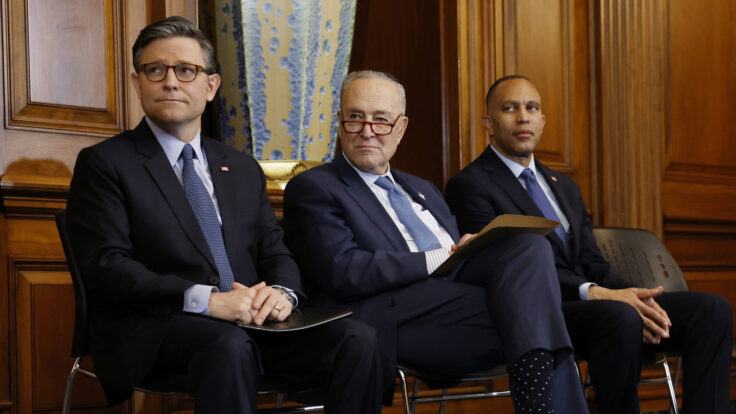
- Shutdown odds skyrocket: Congress is no closer to funding the government than when members left town on Friday after Senate Democrats, joined by Republicans Lisa Murkowski and Rand Paul, blocked a seven-week stopgap spending bill. Other than John Fetterman, the lone Democrat to vote for the measure, Senate Democrats are united behind Chuck Schumer’s demand for Republican
concessions on healthcare before they agree to fund the government.
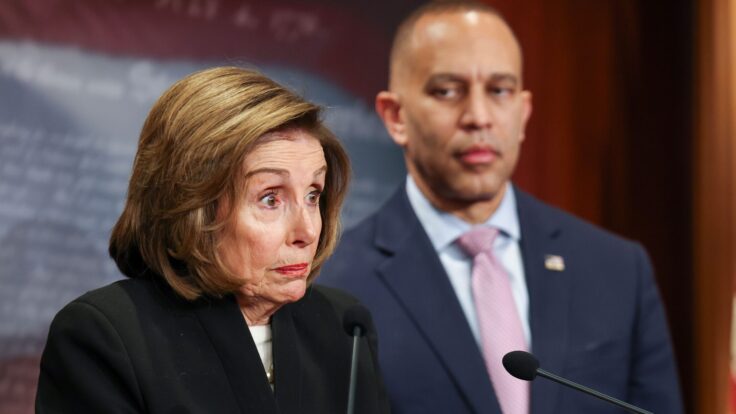
After the stopgap bill failed, Schumer and House Minority Leader Hakeem Jeffries released a letter that they’d also sent to the president demanding a meeting to discuss their terms. “We are ready to work toward a bipartisan spending agreement that improves the lives of American families and addresses the Republican healthcare crisis,” they wrote.
Trump was asked by reporters if he would meet with
the Democrats. “I will, but they don’t care about crime. They want to keep men in women’s sports,” Trump said, bringing up two issues that are wholly unrelated to government funding, but which poll better for Trump than for Democrats. “I’d love to meet with them, but I don’t think it’s going to have an impact.”
The Senate has the week off for the Jewish high holidays, giving the upper chamber only two working days to find an off-ramp before the September 30 deadline. Barring any major
changes, it seems we’re headed for a shutdown.
|
|
|
A MESSAGE FROM OUR SPONSOR |
Hospitals are here when you need us most – but hospitals across America are at risk of closure. |
|
|
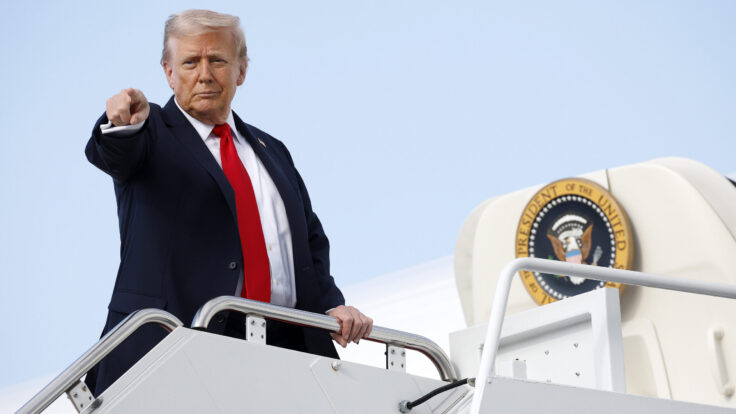
- Trump
tightens his control: Jimmy Kimmel was not the only voice that the administration attempted to silence last week. In just the last few days, the Pentagon barred reporters from publishing unsanctioned information; the E.P.A. instructed some scientists to stop publishing research; the Bureau of Labor Statistics
delayed a key inflation report without explanation; the administration canceled an annual study on American food insecurity; and the Justice
Department removed a report on the threat of right-wing extremism from its website. Studies on racial and socioeconomic health disparities have also been canceled, and so has air quality
monitoring of ozone and particulates at national parks.
Meanwhile, Erik Siebert, the U.S. attorney for the Eastern District of Virginia, resigned amid reports that Trump was planning to fire him for not following through on demands to bring charges against New York Attorney General Letitia
James and former F.B.I. director James Comey. He then publicly called on Pam Bondi, his attorney general, to find a way to prosecute James and Comey, as well as Senator Adam Schiff. “We can’t delay any longer, it’s killing our reputation and credibility,” Trump posted Saturday on social media. “They impeached me
twice and indicted me (5 times!), over nothing. Justice must be served, now!!!” Trump has appointed yet another one of his former attorneys, Lindsey Halligan, who has never served as a prosecutor before, to replace Siebert.
|
And speaking of the weaponization of government… |
|
|
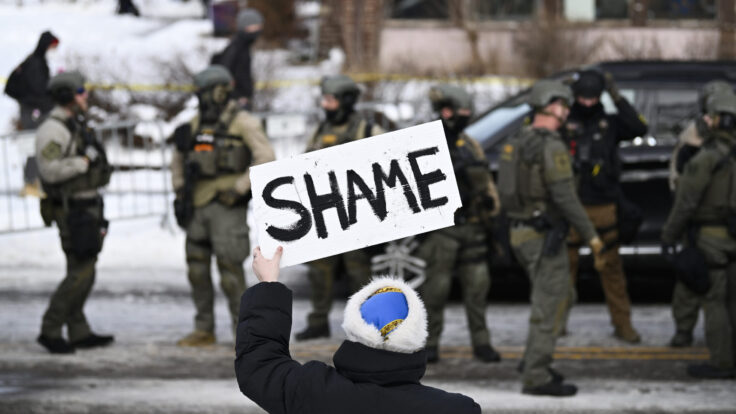
With a few notable exceptions, Republicans on the Hill are avoiding talking about Trump’s
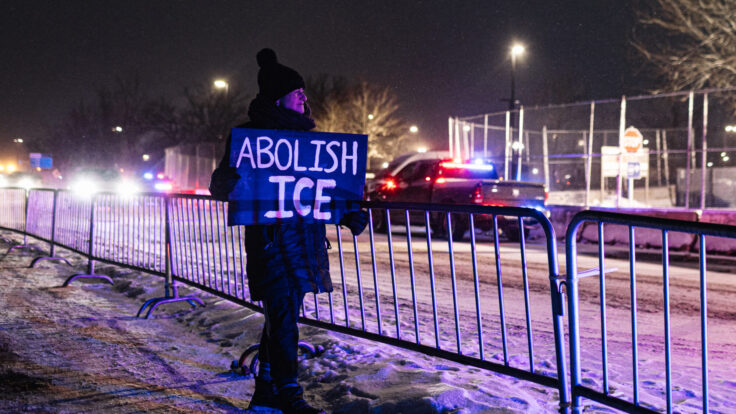
demands to shut down broadcast networks, cancel comedians, imprison protesters, investigate Democratic nonprofits, sue newspapers, and prosecute speech. “We don’t love it,” one senior aide said. But mostly they’re just waiting to see if things get worse. |
|
|
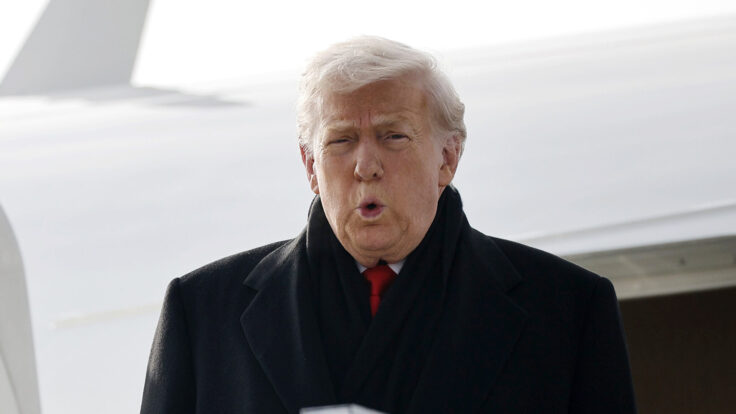
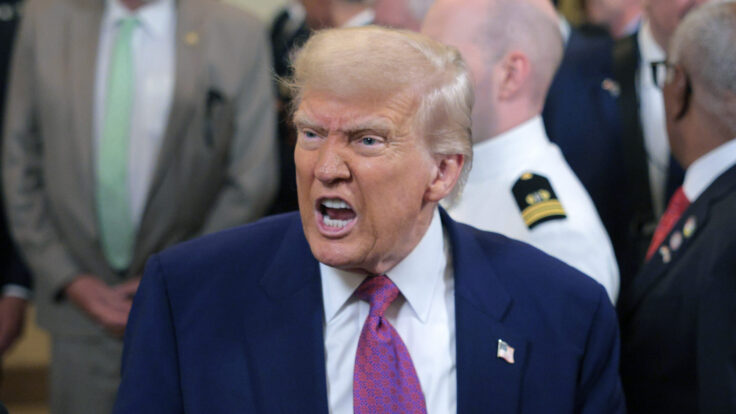
Throughout 2024, as he pitched a weary American electorate on his return to power, Donald
Trump promised repeatedly to put an end to the censoriousness of the Biden era. “We’re going to restore free speech, and we will really, truly restore it,” he said in Michigan, a few months before the election. It was a message that resonated with millions of people who might not otherwise have voted Republican, from MAHA moms to the Manosphere. I heard the complaints constantly on the campaign trail, from Uber drivers, parents, Walmart shoppers, country club
types: Political correctness was out of control.
It’s become clear that Trump was never interested in ending cancel culture, per se, but rather in inflicting cancellations of his own. Last week, seizing on the tragic murder of Charlie Kirk, Attorney General Pam Bondi said the Justice Department “will absolutely target you, go after you, if you are targeting anyone with hate speech.” Bondi later walked back her comments after Sen. Ted Cruz
noted, correctly, that hate speech is “absolutely” still protected under the First Amendment. But Trump himself went further: In just the last few days, he sued The New York Times for $15 billion (the case has already been thrown out by a Florida judge, but Trump will likely refile), suggested that protesters should be imprisoned, threatened to prosecute Democratic nonprofits, and argued, not for the first time, that broadcast networks that allow critical commentary of his
administration are breaking the law and should lose their licenses.
On Wednesday, F.C.C. chair Brendan Carr growled that Disney-owned ABC could do things the “easy way” or the “hard way” after Jimmy Kimmel seemed to (incorrectly) suggest that Kirk’s assassin was MAGA. Within hours, Disney had suspended Kimmel indefinitely. Afterward, Carr boasted on CNBC, “We’re not done yet.” Meanwhile, Trump gloated on Truth Social and suggested that NBC should get rid
of its two late-night hosts—Jimmy Fallon and Seth Meyers—too. |
|
|
A MESSAGE FROM OUR SPONSOR |
Hospitals need your help to stay. Protect 24/7 care—because when the doors close, it is too late. |
|
|
The administration’s mafioso tactics are causing some heartburn on Capitol Hill. Many Republicans
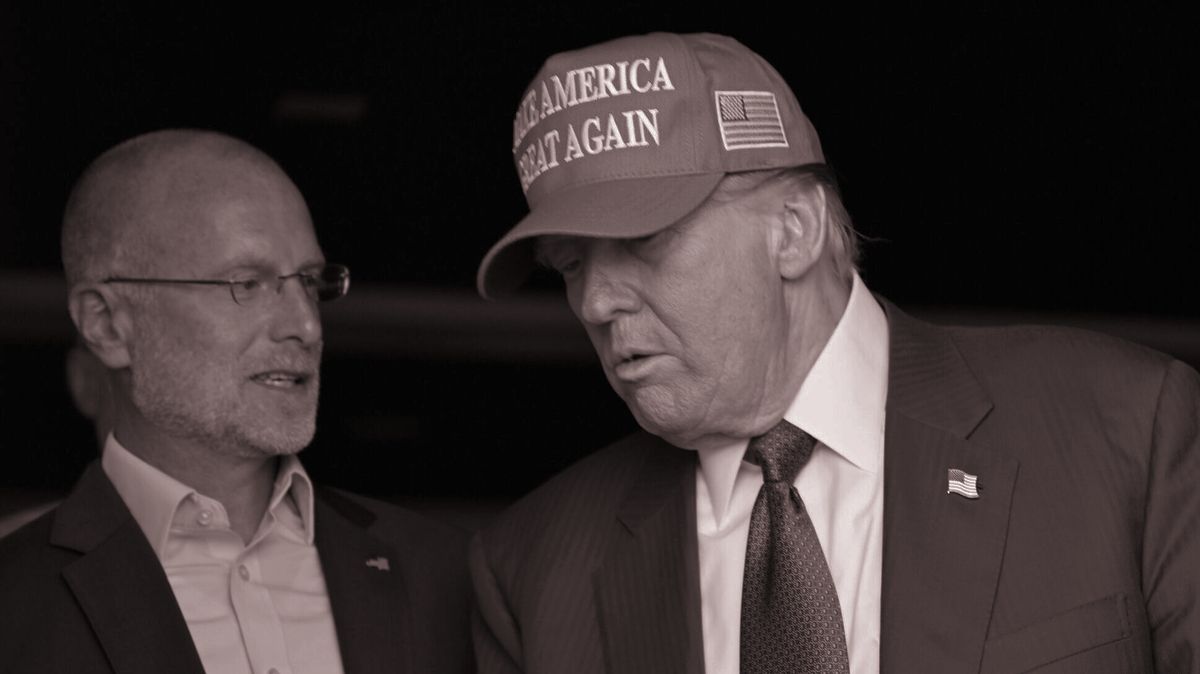
are sidestepping the issue and blaming Kimmel’s ouster on his ratings. When I asked House Republican Whip Tom Emmer for his opinion last week, he said Carr is “doing a great job” and dodged questions about whether the F.C.C. should be threatening broadcast licenses. Sen. Josh Hawley of Missouri told me that the F.C.C. didn’t have anything to do with the decision to fire Kimmel. “We’re not talking about an F.C.C. proceeding and coercive authority. We’re talking
about a private corporation making a decision,” he told me.
A handful of Republicans have publicly condemned the crackdown. Cruz, the chair of the Senate Commerce Committee, said on his podcast this week that it’s “unbelievably dangerous for the government to put itself in the position of saying we’re going to decide what speech we like and what we don’t like, and we’re going to threaten to take you off air if we don’t like what you’re saying.” But Cruz was hailed as an outlier, with
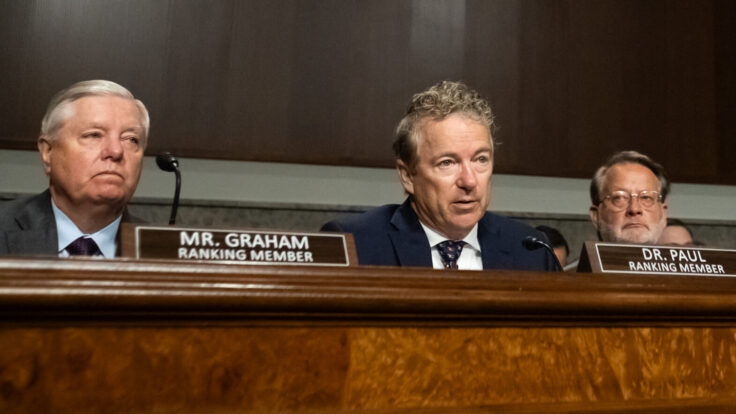
The Wall Street Journal editorial board calling the senator’s commentary his “finest hour.” A few other Republican critics made the point that if the F.C.C. is allowed to police speech, conservatives could be the victims when the balance of power switches. “I don’t want the government to be involved with policing speech,” Sen. Rand Paul told me and other reporters this week.
Within Republican congressional offices, however, the prevailing mood seems to
be silent wariness. “Well, we don’t love it,” one senior Republican aide told me. Many of the top Republican aides I spoke with said they are watching to see if Trump pushes the issue further. But there doesn’t seem to be any reason to think that last week’s assault on free speech was a one-time thing. |
The muted response here is due to more than the usual Trump obedience. Many Republicans I’ve spoken to feel
legitimately angry, even vengeful, over a culture that they feel has muzzled and ostracized conservative voices for years. They point to the #MeToo movement, Black Lives Matter, corporate boycotts, LGBTQ activist campaigns, and even Biden’s criticism of Georgia’s new voting rights law—which resulted in Major League Baseball moving the All-Star Game from Atlanta—as escalations in a culture war that reached its apotheosis during the pandemic.
In last week’s House Judiciary Committee hearing
with F.B.I. Director Kash Patel, Chairman Jim Jordan asked if the agency was “still spying on parents at school board meetings” or “still targeting Catholics.” (Patel said the agency was not.) Republicans with long memories still hold a grudge against former I.R.S. commissioner Lois Lerner, who resigned in 2013 amid allegations that the agency had delayed or denied tax-exempt status to conservative groups. (It’s worth noting that no evidence
ever emerged that the I.R.S. acted on the direction of the Obama administration, and at the time Obama called the agency’s conduct “outrageous.”) |
|
|
Trump has identified similar targets for the next wave of his retribution campaign. In the aftermath of
Kirk’s murder, the president said that groups on the left should be investigated, prosecuted for RICO violations, or even be labeled as terrorist organizations. (Antifa is a top target, although it’s not an organized group. There is also no evidence that Kirk’s killer, Tyler Robinson, was associated or working with any organization.) When Vice President J.D. Vance hosted Kirk’s podcast this week, he specifically named liberal donor George
Soros’s Open Society Foundations and the Ford Foundation as two nonprofits that should be investigated. Stephen Miller, who joined the memorial episode as a guest, told Vance, “With God as my witness, we are going to use every resource we have at the Department of Justice, Homeland Security, and throughout the government to identify, disrupt, dismantle, and destroy these networks.”
The Republican thirst for payback has been growing on the Hill. Rep. Chip
Roy wrote a letter to House Republican leadership last week asking them to create a new committee to investigate “the money, influence, and power behind the radical left’s assault on America.” (Roy is also running for attorney general of Texas and he would love Trump’s endorsement.)
The idea isn’t totally new. Sen. Cruz introduced legislation in 2019 to investigate Antifa. But this time, it appears to be part of a broader and more aggressive effort to ramp up pressure on more
moderate, establishment Democratic groups while providing a counternarrative to the idea that most political violence emanates from the right. Earlier this month, Speaker Mike Johnson staffed a new January 6 select subcommittee to investigate the “predetermined narrative the former January 6th Select Committee crafted to hurt President Donald J. Trump.” Democratic Sen. Tim Kaine, the former vice presidential nominee, rolled his eyes. “Why are
they such babies?” he asked me. “They say we’re snowflakes, but they also say we are like violent commandos. Which is it?”
Indeed, it’s not hard to imagine that Republicans’ blunt-force efforts to punish their enemies and reshape media narratives will backfire. It’s one thing to take over the Kennedy Center and declare that Washington’s cultural institutions will be a little less woke and a lot more Cats. It’s another to gloat about canceling the former co-host of The Man
Show and calling for NBC to fire the mostly non-political Jimmy Fallon. Sure, plenty of conservatives have been longing for this sort of retribution campaign. But the Gen Z men who listen to podcasters like Joe Rogan or Andrew Schulz have never heard of Lois Lerner.
Overreach is a real thing in politics, even if Republicans don’t yet feel they’re in danger of fomenting a mass cultural pushback of their own. Pressure campaigns to name and shame people
for speech may be effective in the short term. But cancel culture didn’t work out well for liberals. When I asked Sen. Hawley if he worries about the political ramifications of Trump pushing too hard to silence critics and “end wokeism,” he replied emphatically, “No. I mean, because, no. No.” |
|
|
Join Emmy Award-winning journalist Peter Hamby, along with the team of expert journalists at Puck, as they let you in on the
conversations insiders are having across the four corners of power in America: Wall Street, Washington, Silicon Valley, and Hollywood. Presented in partnership with Audacy, new episodes publish daily, Monday through Friday. |
|
|
Unique and privileged insight into the private conversations taking place inside boardrooms and corner offices up and down Wall
Street, relayed by best-selling author, journalist, and former M&A senior banker William D. Cohan. |
|
|
Need help? Review our FAQ page or contact us for assistance. For brand partnerships, email ads@puck.news. You received this email because you signed up to receive emails from Puck, or as part of your Puck account associated with {{customer.email}}. To stop receiving this newsletter and/or manage all your email preferences,
click here. |
Puck is published by Heat Media LLC. 107 Greenwich St, New York, NY 10006 |
|
|
|