|
Welcome back to The Best & The Brightest. I’m Tara Palmeri, wishing everyone in Los Angeles safety and good health. I ended up on the Westside of the city for an extended trip and had to evacuate, like many others, but unlike them I’m not leaving a home behind. I’m devastated for the people who have lost their homes and communities, and I’m keeping you all in my thoughts and prayers.
In tonight’s issue, I dig into the topic that is keeping K Street up at night: TikTok, the Chinese-owned company that has hired pretty much anyone with proximity to power in the Biden White House or incoming Trump administration to lobby on their behalf. The platform is set to go dark next week if the Supreme Court doesn’t grant Trump’s request for a stay of the law that would ban the app if it’s not sold—a petition he filed via amicus brief when confronted with the devastating prospect that hundreds of
millions of viewers might miss his inauguration. One thing is for certain: Trump is now sold on the app he once called a national security threat and sees it as a place to groom young MAGA converts. More on TikTok’s years-long Trump charm offensive, below.
But first…
|
- Florida men: Congressman Byron Donalds is making some major moves as he eyes the 2026 race for the governor’s mansion in Tallahassee. Donalds is a popular two-term member of Congress who’s in good standing with Donald Trump, the Freedom Caucus, and more-establishment Republicans. He had a prime speaking spot at the Republican National Convention and is a familiar face on Fox News. Notably, he was quick to endorse Trump over his friend Ron DeSantis in the primary, even after DeSantis picked Donalds to introduce him after his gubernatorial reelection in 2022. Now, Donalds has hired Tony Fabrizio, Trump’s top pollster, as Peter Schorsch reported on his Florida Politics blog. Of course, Donalds isn’t the only one with designs on the governor’s office. Matt Gaetz, too, says he plans to run, and he’s polling surprisingly well. (Welcome to Florida…)
|
|
|
 |
Abby Livingston |
|
Thune’s Confirmation Calculus
|
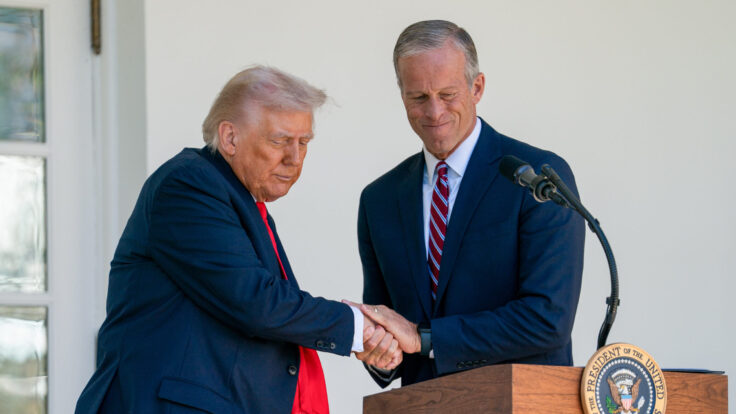
In recent days, as Senate Majority Leader John Thune grappled with the purpose of his chamber’s “advice and consent” role for executive-branch nominees, he left open the possibility of letting Trump bypass confirmation votes altogether via recess appointments. Of course, doing so would deal a dramatic blow to what remains of congressional power, and neuter one of the upper chamber’s levers of influence over the incoming administration. But the current controversy over confirmation comes down to something more prosaic: paperwork.
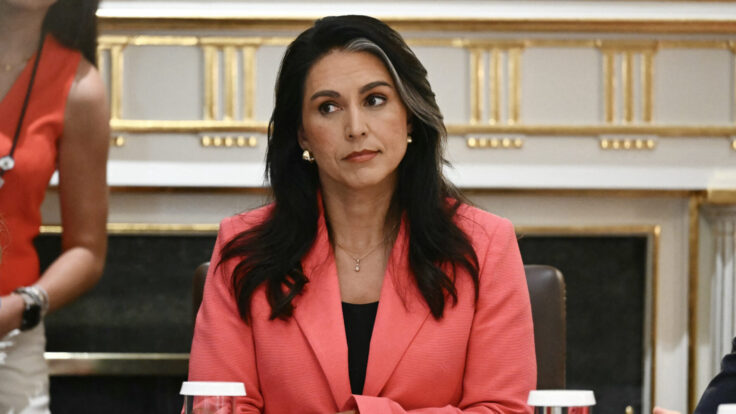
While Trump continues to demand confirmations on day one, many of his cabinet nominees haven’t even submitted basic vetting materials, like financial disclosures, to the relevant Senate committees, and the F.B.I.’s background checks have been delayed. Whether or not the Senate will follow through on requiring final background checks is a live issue within the Republican conference, according to Politico. Such a situation puts every senator in the shoes of a hiring manager: If you hire a candidate without due diligence, you’re responsible for whatever misfortunes result. To wit: Judiciary Chairman Chuck Grassley postponed the committee’s hearing with A.G. nominee Pam Bondi over a delayed F.B.I. check. Meanwhile, education secretary nominee Linda McMahon has yet to turn in her paperwork, and aspiring D.N.I. Tulsi Gabbard has yet to furnish a pre-hearing questionnaire.
For a senator, perhaps the most benign outcome of an irresponsible “yes” vote is looking, ahem, stupid if new revelations about, say, Pete Hegseth or Gabbard surface after they’ve already been confirmed to top national-security posts. (Certainly, in Hegseth’s case, Trump’s team was reportedly “blindsided” by allegations of sexual assault, which the appointee has vigorously denied.) And the electoral consequences might be minimal anyway—after all, who remembers which senators voted “yes” to confirm James Mattis or Mark Esper at the top of the Pentagon?
But there are, of course, worse scenarios: In the event of a terrorist attack or a fumbled government response to some act of God (think former FEMA director Mike Brown, who was widely blamed for bungling the Bush administration’s response to Hurricane Katrina), every senator who voted for that official without due diligence will have to own their decision at the ballot box. And if senators can’t be bothered to comb for potentially compromising information on national security nominees now, America’s adversaries will be only too happy to do it themselves later.
Indeed, this highlights one of the major differences between the modern House and Senate. These days, House Republicans tend to do whatever is necessary in order to survive, which usually means avoiding the wrath of Trump. But on the other side of the Capitol, there are still Republicans who think long and hard about their legacy. Why would they maneuver to protect
their advice-and-consent role for nominations, just to rubber stamp unvetted and unqualified candidates?
|
|
|
|
Now, on to the main event…
|
|
|
|
Seduced by a lobbying charm offensive and fearful of losing a
powerful new media platform, the man who once called TikTok a national security threat has become its most important advocate—stirring wannabe buyers, back-channeling with the app’s C.E.O., and entranced by the prospect of the ultimate deal.
|
|
|
|
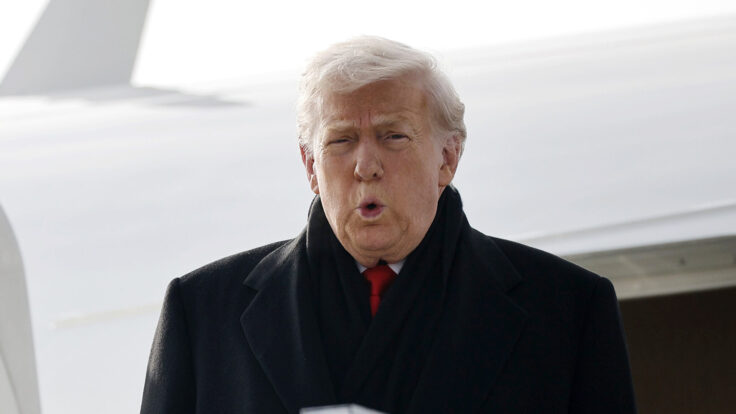
While Washington braces for Inauguration Day, when Donald Trump will take the oath of office on the Capitol steps, Trump himself has become fixated on the day before: January 19, the deadline for TikTok to find a U.S. buyer or face a countrywide ban. Trump, who previously led the charge to ban the app, himself, has recently become enamored with the idea of saving it—preserving a platform that has developed a sizable MAGA-friendly audience and doing a solid for the growing number of friends and allies who have an
economic interest in keeping TikTok alive. With the Supreme Court scheduled to hear arguments on Friday regarding whether to overturn or delay the law—which provides the sitting president with the ability to institute a 90-day freeze if he’s in the process of facilitating a “qualified divestiture”—Trump perceives a golden opportunity to swoop in and consummate the ultimate deal.
Just as importantly, perhaps, postponing the TikTok ban would give Trump yet another channel on which to simulcast his triumphant return. It’s a pitch that TikTok executives and its lobbyists and emissaries—including Trump allies Kellyanne Conway, David Urban, Johnny McEntee, Brian Ballard, and Charlie Kirk—have made directly and explicitly to the president-elect in recent weeks. “They’re spoon-feeding this to Trump,” said a source involved in the lobbying effort. “They’re highlighting to him just how big TikTok is for him and his people, and how if TikTok is shut down on January 19, none of the views will be on the inauguration. That resonated with him.” Among the suitors has been Shou Zi Chew, the C.E.O. of TikTok, who met with the president-elect on December 16 bearing charts showing Trump’s popularity on the app (“36 billion total views of #trump,” etcetera). Trump loved them so much that he Truthed them.
The pro-TikTok brigade has been appealing to Trump’s vanity in other ways, too. Trump and Chew spoke again by phone on December 27, according to a source with knowledge of the call—the same day Trump filed an amicus brief calling for a 90-day stay. According to the argument filed with the court, “President Trump alone possesses the consummate dealmaking expertise, the electoral mandate, and the political will to negotiate a resolution to save the platform while addressing the national security concerns expressed by the Government.” Notably, Trump’s attorney John Sauer—who also argued his criminal immunity case before SCOTUS—didn’t really address the First Amendment question. Instead, he writes that the court should “stay the statute’s effective date” to “allow his incoming Administration to pursue a negotiated resolution.” In other words: I alone can fix it.
|
Even before Joe Biden signed the April 2024 law requiring the app be banned or sold, TikTok argued that its platform was fairer to Trump than Meta or Twitter, both of which had blocked him after the Capitol riot on January 6, 2021. But a more curated charm offensive began last spring, when TikTok officials started publicizing numbers showing that the app hosted twice as much pro-Trump as pro-Biden content. The campaign to win over Trump, who’d previously declared TikTok a national security threat, began to yield dividends. Trump joined the app in June 2024, in the heat of the presidential race. His account has 14.7 million followers, nearly twice as many as Kamala Harris’s.
Where Trump once viewed the app as a Chinese Trojan horse, he now sees it as another virtual home for his base and a tool to convert the Trump-curious. “I’m now a big star on TikTok,” he posted on Truth Social in September. “We’re not doing anything with TikTok but the other side’s going to close it up. So if you like TikTok, go out and vote for Trump. If you don’t care about TikTok—and other things like safety, security and prosperity—then you can vote for a Marxist who’s going to destroy our country.”
In conversations with six sources close to Trump, the consensus was that he wants to save the app, but hasn’t settled on how to do it. That’s keeping TikTok executives and potential buyers up at night. “Trump is solution-agnostic,” said an incoming senior Trump official. If the Supreme Court delays the ban, the executives are hopeful Trump could save the app by executive order—something I’m told Trump’s legal team is investigating. Another, more nuclear option would be for Trump to order his attorney general not to enforce the ban.
The more permanent, ByteDance-friendly alternative would be to devise a new ownership structure that allows the Chinese to keep their financial stake in TikTok while adding a U.S. corporate partner. Since 2022, TikTok has been routing all its U.S. user data through Oracle’s cloud infrastructure in an attempt to reassure lawmakers who are concerned about China’s access to private information. TikTok executives are hoping Trump could take that arrangement a step further by reviving “Project Texas,” a deal first proposed in 2020, which would give Oracle and Walmart a combined 20 percent stake in TikTok. ByteDance would keep the TikTok algorithm and 80 percent of the company, while the newly constituted “TikTok Global” would promise to go public, hire 25,000 U.S. workers, and pour $5 billion into the U.S. Treasury. So far, however, members of Congress are unconvinced this sleight-of-hand would address concerns about Beijing’s access to U.S. user data.
|
“Peacockers & Masqueraders”
|
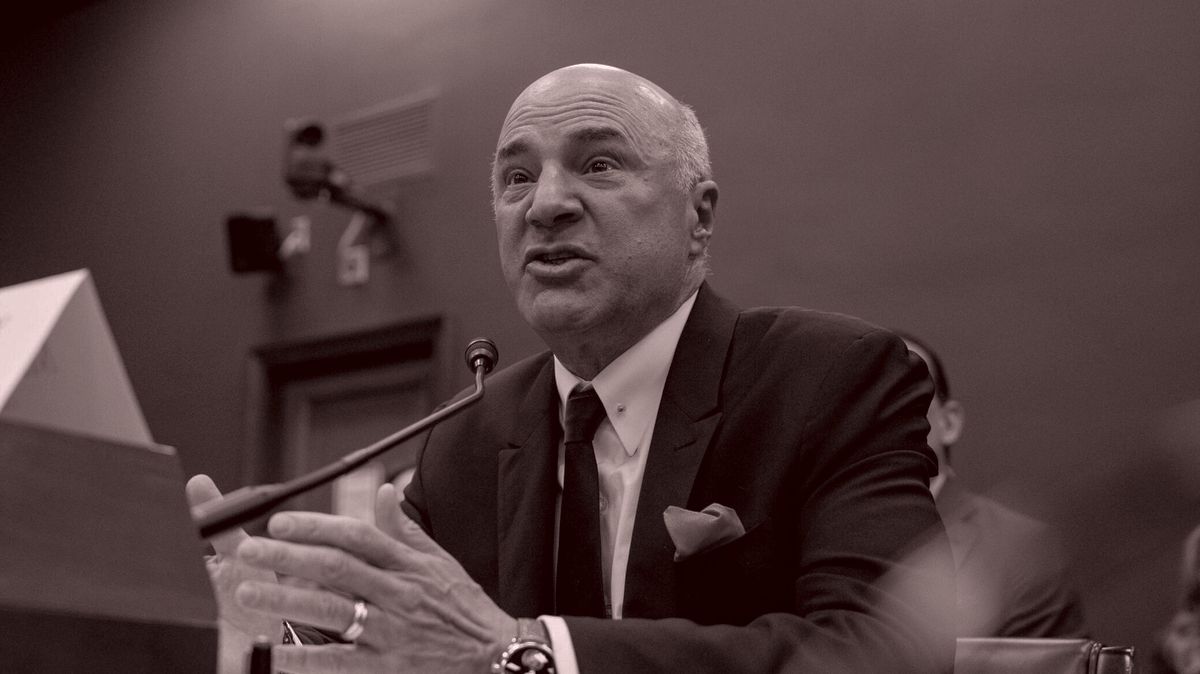
Of course, the best outcome for potential buyers would be if ByteDance could be induced by Trump to sell the company to a U.S. consortium, delivering TikTok and its immense financial value into American hands and securing its growth on the bedrock of Delaware law. Another pitch being made to Trump—by a handful of billionaires including former Dodgers owner Frank McCourt and Mr. Wonderful, Kevin O’Leary—is that a group of American investors should buy the company outright from ByteDance, with Trump’s backing, as part of a trade deal. Under this proposed solution, Trump would use the threat of tariffs to pressure China to sell, an approach in line with Trump’s international negotiating technique and already a subject of discussion with Trump’s nominee for treasury secretary, Scott Bessent. (Bessent, too, has met with Chew.) One source with knowledge of this thinking described the advantage for Trump this way: “Trump will say, ‘I will help find an American buyer.’ He can be the hero and say he helped an American find the money.”
Farfetched? Maybe. President Xi Jinping faces his own domestic pressures not to be seen capitulating to a foreign rival, especially amid sluggish economic growth and a rising hypernationalist mood. But other U.S. trading partners including Canada and Mexico have already responded to Trump’s tariff threats with performative gestures designed to appease, distract, or offer up quick and cosmetic wins. A proponent of this route who has knowledge of the discussions told me: “The chances of China doing a deal was at 0 percent, and now we think it’s at 30 percent,” in exchange for Trump offering “less punitive economic agreements on tariffs.”
Meanwhile, potential investors are trying to reach Trump through the press—which explains why Shark Tank co-host O’Leary was on Fox this week speaking directly to the president-elect. “Trump will be who we have to work with to close the deal in the months ahead,” he said. “So I wanted to let him know, as well as others in his cabinet, that we’re doing this, and we’re going to need their help.” (The last time O’Leary was at Mar-a-Lago, he was talking up the fantasy of making Canada the 51st state.)
Today, McCourt and O’Leary announced “ The People’s Bid for TikTok,” calling it a “a once-in-a-generation opportunity for Americans to reclaim a voice, choice, and stake in the future of the internet.” McCourt has supposedly secured about $20 billion in commitments from private equity, but at the end of the day, it’s unclear what the platform is worth without its vaunted algorithm—the secret sauce that has made the app so addictive. And not all of McCourt and O’Leary’s peers think they are particularly serious contenders, even if the two men are clearly serious about the bid, themselves. “No one in the incoming administration is talking to us about a sale,” a source working for TikTok told me. “These billionaires who are going around saying they are going to buy TikTok are nothing but peacockers and masqueraders.”
|
|
|
|
Join Emmy Award-winning journalist Peter Hamby, along with the team of expert journalists at Puck, as they let you in on the conversations insiders are having across the four corners of power in America: Wall Street, Washington, Silicon Valley, and Hollywood. Presented in partnership with Audacy, new episodes publish daily, Monday through Friday.
|
|
|
|
Unique and privileged insight into the private conversations taking place inside boardrooms and corner offices up and down Wall Street, relayed by best-selling author, journalist, and former M&A senior banker William D. Cohan.
|
|
|
Need help? Review our FAQ page or contact us for assistance. For brand partnerships, email ads@puck.news.
You received this email because you signed up to receive emails from Puck, or as part of your Puck account associated with . To stop receiving this newsletter and/or manage all your email preferences, click here.
|
|
Puck is published by Heat Media LLC. 107 Greenwich St, New York, NY 10006
|
|
|
|