Good afternoon, I'm William D. Cohan.
Welcome back to Dry Powder. If you're receiving this private email, it means that you have subscribed to Puck, our new media company covering Washington, Wall Street, Silicon Valley, and Hollywood. Thank you.
As a reminder, you can always manage your newsletter settings on the Puck website. My colleague Dylan Byers has a new offering, In the Room, about what's really going down in the corner offices of the most important media companies. If you're interested in the technology and entertainment industries, I highly recommend adding it to your subscription.
Today, I'm digging through my inbox and opening my reporter's notebook to answer some of the most pressing questions on Wall Street this week. As always, you can read my reporting online, or in this email, below.
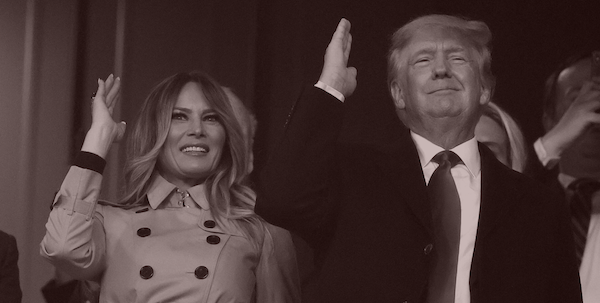
Since I began writing my column for Puck, I’ve been inundated with feedback about Wall Street’s biggest characters and concerns. I’ll be engaging with some of those questions here—in addition to a few observations of my own. DWAC, the blank-check vessel for Donald Trump’s nonexistent media venture, has tumbled from its meme-stock highs to settle at about $70 a share, still more than a 570% return for early investors. The total windfall for the SPACs obscure financiers could stand at about $440 million, according to the WSJ—what is it about the structure of this SPAC that is so remunerative for its sponsors?
With the notable exception of a SPAC put together by hedge fund manager Bill Ackman—which remains, at $4 billion, the largest SPAC I.P.O. to date and that has yet to be de-SPACed (i.e. that has found a merger partner)—most SPAC sponsors tend toward the greedy side of things. They literally pay pennies on the dollar for the stock they receive as they are setting up the SPAC. Their first windfall comes when the SPAC goes public. Their second windfall comes when they announce a deal to merge with a private company (assuming, of course, that investors react positively to the announced deal).
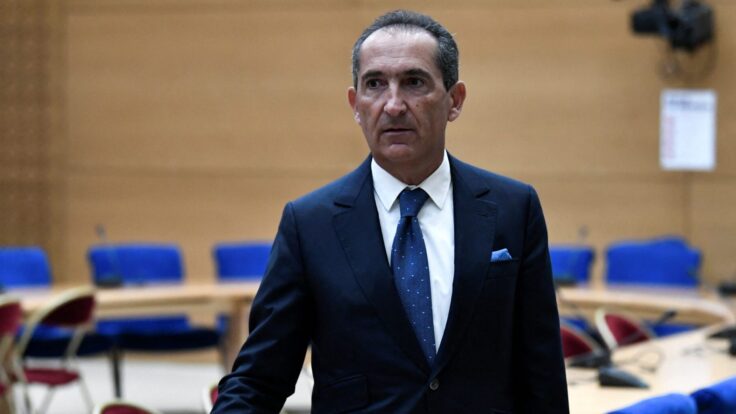
So, in the case of the aforementioned DWAC, its principal sponsor, Patrick Orlando, an erstwhile Wall Street trader, paid all of $25,000 for his 8.6 million DWAC shares. When DWAC went public, at $10 a share in September, Orlando’s 8.6 million shares were worth $86 million, an increase of only 343,900 percent. (That is not a typo.) When Orlando announced the merger with Trump’s “nonexistent media venture” a few weeks ago, the DWAC shares climbed as high as $175 a share for no other reason than lunatic investors piled into the stock because Trump was involved. That made Orlando’s DWAC stock worth—briefly—$1.5 billion.
Lloyd Blankein, a longtime liberal, seemed sullen in his interview with Bloomberg that he may never get his shot at serving as Treasury Secretary, given the new politics of the Democratic Party. Are the days of big bankers like Rubin and Paulson taking a spin in Washington over?
No, I don’t think they are over, but they may be over for Lloyd in an administration that throws bones to its progressive wing through its cabinet appointments, and may not want to deal with the politics (or at least the optics) of making the former Goldman C.E.O. the next head of the Treasury. And he wouldn’t be the first Wall Street C.E.O. frustrated at being passed over. Steve Schwarzman, the co-founder of the Blackstone Group, must have been immensely annoyed that Trump—despite Schwarzman’s ongoing public support—stuck with Steven Mnuchin at Treasury for a full four years.
But Treasury is one of those positions that will always go to someone who knows more than a little something about banking, finance or business. As it should be, to some extent, or else it would become too friendly to the private sector. Janet Yellen, the current Treasury Secretary, is a brilliant economist, and the former chairman of the Federal Reserve, who also happens to not be a billionaire white guy, which makes her a perfect choice, professionally and politically.
In their recent earnings, Apple and Amazon cited challenges with the global supply chain and rising labor costs, respectively. Are these potential data points in your correction thesis?
I don’t think so, no. My “correction thesis,” to use your term, is not about a diminishment of corporate profitability on a relative basis. If Apple is only making $75 billion a year in net income versus $80 billion a year in net income, it might ding the stock a little bit. (In fact, on Friday, Apple’s stock fell 1.8 percent as a result of reduced quarterly earnings due to the “global supply chain” and “rising labor costs”.) We rarely can predict what will cause a Market Meltdown but my bet is that it will be caused by interest rates that rise faster than the markets expect and that the Fed is unable to control.
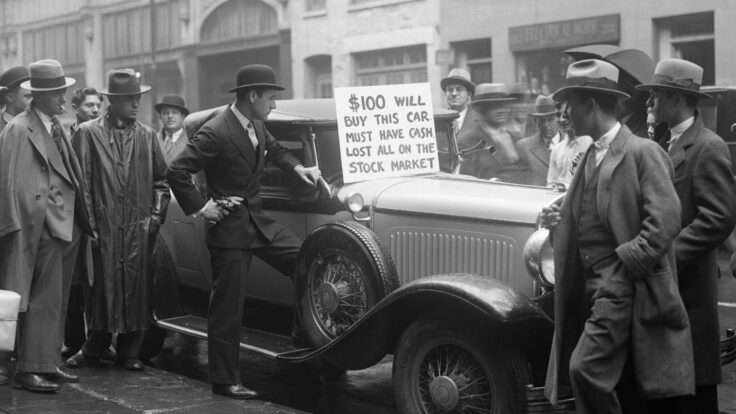
For instance, back in March and April 2020, as the full impact of the pandemic began to register, the yield on the average high-yield bond shot up to 11.5 percent, from around 5 percent, in three weeks. That kind of rapid and seemingly uncontrolled rise in interest rates was a sign of unmitigated fear among bond investors. For a full month, in March 2020, there were no high-yield bond offerings, as issuers and investors could not come to terms on what issuers would pay investors to buy their paper. Of course, that time, as it did in 2008, the Fed stepped in and announced that it would buy bonds in a massive way, signaling that, in effect, it would underwrite the bond market when others wouldn’t. Major financial corrections occur when the debt markets freeze up, when companies can no longer borrow in the loan and bond markets, regardless of what interest rate issuers are offering to investors.
The credit markets are a confidence game—the word “credit” is derived from the word “credere,” to believe, as in to believe you will get paid back. Once that confidence is gone, it can be gone for years, as we have seen many times before. But the trigger for that loss of confidence won’t be temporary supply chain problems or even rising wages. Most corporate income statements can handle that at this point, especially those such as the earnings juggernauts Apple and Amazon. What companies can’t tolerate, though, is not being able to refinance their debt when they want to; that’s when the shit really hits the fan.
The explosion of fintech startups shows Silicon Valley ratcheting up the pressure on Wall Street. But look under the hood, and most of these flashy, banking-as-a-service companies still rely on traditional banks to hold money and power transactions. Is this bullish for the Big Banks, which could neutralize the competition with a few smart acquisitions, or is there a real danger that JPM et al., which face greater regulation under Dodd-Frank, could lose market share?
As I wrote a few weeks back, Wall Street banks are enjoying a new Golden Age: they are making money hand-over-fist; their serious competitors are far and few between; their stocks hit one new high after another; their cost-of-good sold—money—is virtually free; and, their most vociferous regulators are focused elsewhere, on technology companies, not on them. So, it’s never going to get any better than this. And I really don’t see how some under-capitalized DeFi companies are going to rock the boat.
Yes, some segments of Wall Street’s business do face meaningful competition—for instance, in credit cards and payments—from the likes of American Express, Visa, MasterCard, Stripe, and Ant, among others. But, by and large, Wall Street is as big, powerful and dominant as it’s ever been, despite being re-regulated in 2010, in the wake of the 2008 financial crisis. What’s more likely to happen is that the DeFi crowd will force Wall Street to innovate and update its technology offerings or will end up becoming fodder for the Wall Street M&A mill. DeFi and other cryptocurrency competitors to the Big Banks have been around for years now, at least since Satoshi Nakamoto dropped his Bitcoin bomb exactly 13 years ago. In that time, Wall Street, with fewer competitors than ever and more robust balance sheets than ever, has just become more and more powerful.
Thanks for reading. I'll be back in your inbox on Wednesday with more Dry Powder. Bill
FOUR STORIES WE'RE TALKING ABOUT 
With the Chappelle uproar, Netflix has become an unwitting signpost in the culture wars. Some believe it may presage a turning point. MATT BELLONI 
Members of the intelligence community are increasingly convinced that the Russian government is behind the "Havana Syndrome." JULIA IOFFE 
In the middle of perhaps the most consequential scandal of his career, Mark Zuckerberg unveils his new vision for the metaverse. DYLAN BYERS 
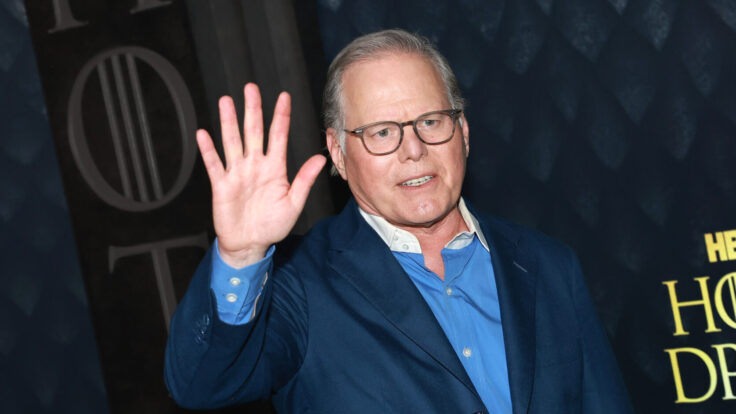
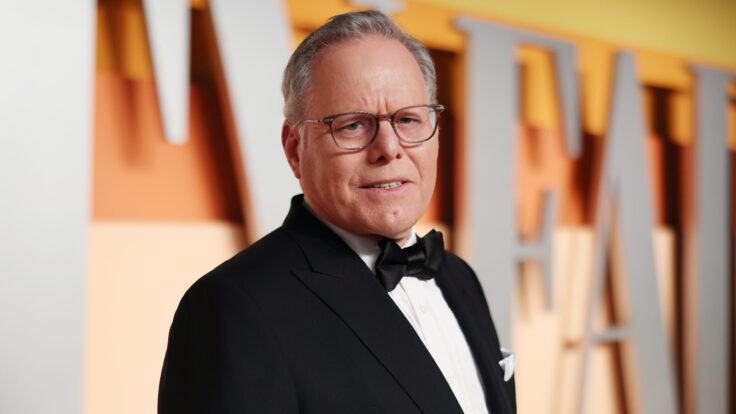
The formative years of David Zaslav's career explain as much about the history of cable as they portend about the future of streaming. WILLIAM D. COHAN 
You received this message because you signed up to receive emails from Puck.
Was this email forwarded to you?
Sent to {{customer.email}}
Puck is published by Heat Media LLC.
For support, just reply to this e-mail. For brand partnerships, email ads@puck.news |


SHARE