{{ 'now' | timezone: 'America/New_York' | date: '%b %d, %Y' }} |
|
|
|
Hello, and welcome back to The Best & The Brightest. I’m Leigh Ann
Caldwell.
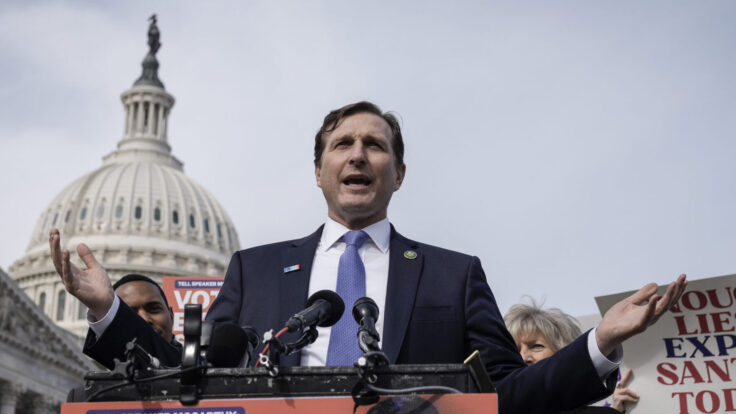
This morning, Rep. Kevin Kiley, the Republican turned independent whose California district was carved up in Gov. Gavin Newsom’s mid-decade gerrymander, told me that the N.R.C.C. has shown little interest in helping his reelection bid since he left the party. “I haven’t had any conversations with them about that,” Kiley told
me for a segment on 535 News. Democrats view the seat as one of their top pickup opportunities—Kamala Harris won the newly drawn district by eight points.
In tonight’s issue, former federal prosecutor Andrew Weissmann, of Mueller investigation fame, joins my colleague John Heilemann to argue that Todd Blanche’s retreat from Trump’s $1.776 billion slush fund wasn’t much of a
concession—the real prize is the deal Trump got for I.R.S. immunity. Plus, Marianna Sotomayor has fresh reporting on Speaker Mike Johnson’s efforts to persuade the president to break the Bill Pulte/FISA impasse. And Peter Hamby calculates the Trump endorsement depreciation in Iowa and South Carolina.
Also mentioned in this issue: Marine Le Pen, Morris Dees, Randy
Feenstra, Pam Evette, Jair Bolsonaro, Kash Patel, Jim Comey, Joe Biden, Henry McMaster, Alan Wilson, and more. |
|
|
|

| Marianna Sotomayor
|
|
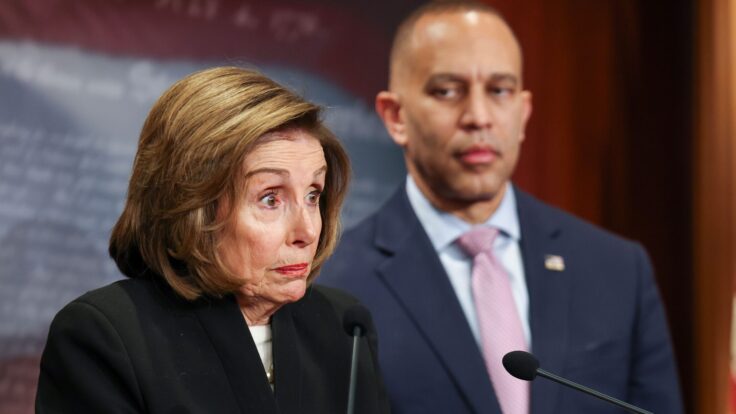
- A Pulte sort-of
compromise: Speaker Mike Johnson helped convince Trump to abandon his much-derided “anti-weaponization fund,” but he’s having less success persuading the president to drop his support for Bill Pulte to serve as acting director of national intelligence. Pulte, of course, is despised by Democrats for using his perch at the Federal Housing Finance Agency to investigate Trump’s enemies—and almost equally distrusted by many Republicans who note
he has zero national security experience. Democratic votes are crucial this time to extend Section 702 of the Foreign Intelligence Surveillance Act, which expires on Friday, and their support hinges on Trump nominating someone else.
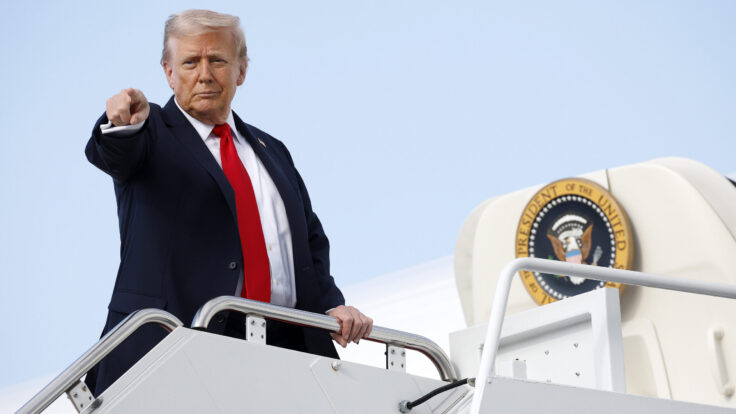
Trump did offer a minor compromise after Johnson visited the White House on Tuesday and Wednesday, signaling in a Truth Social post that he’d be willing to nominate another mystery candidate if Congress first passes another short-term extension of
Section 702 to prevent any lapse as the World Cup kicks off. In the meantime, he intends to keep Pulte as acting D.N.I., starting June 19, for at least several weeks.
Hill Republicans have noticed that it’s Johnson, not majority leader John Thune, being summoned to the White House to solve Senate logjams. But even Johnson can’t convince Democrats: He announced the House will attempt to pass an extension until July 2 tomorrow morning, but Democrats are expected to vote
against it. Both Senate and House Democratic aides tell Leigh Ann and me that Trump’s vague promise to appoint “a permanent O.D.N.I. nominee with experience in National Security” at some future date has done nothing to persuade their bosses to extend the government’s surveillance authority. I’m told the White House is moving quickly to find a nominee that the Senate could confirm, but it’s not clear that will happen by Friday.
|
|
|
|
Investment in agriculture fuels farmers' ability to grow healthy, abundant food. Bayer is working with farmers across the country to advance regenerative agriculture that will help increase their yields. With innovations in plant breeding, soil health, and digital technology, US farmers are set up for success. At Bayer, we succeed when farmers succeed. Learn more. |
|
|
|

| Peter Hamby
|
|
- The waning power of a Trump
endorsement: Just one week after Trump-backed candidate Randy Feenstra lost his Republican primary bid for governor in Iowa, the power of the president’s endorsement was put to the test again Tuesday night in South Carolina. And boy, was it a dud.
In the state’s Republican primary for governor, Trump endorsed Lt. Gov. Pam Evette,
mostly as a favor to Gov. Henry McMaster, one of his earliest political supporters. But Evette didn’t even crack 30 percent of the vote on Tuesday, forcing her into a runoff against State Attorney General Alan Wilson. Not exactly the field-clearing lightning bolt that Republicans have grown used to. Sure, it was a crowded field. But can anyone out there recall a Republican with Trump’s endorsement not even cracking 30 percent in a G.O.P. primary? Maybe
it’s a sign of Trump’s eroding political power. But to me, the result just feels like the logical outcome of a transactional and perfunctory endorsement. Trump put his stamp of approval on a lackluster campaigner with only the whiff of a statewide reputation—someone he barely knows. We’ll see how much Trump plays ball in Evette’s runoff race against Wilson after her weak showing. - Overheard on the (literal) Acela corridor tonight: Former first lady
Jill Biden receiving a phone call that her new memoir, View From the East Wing, has topped the bestseller list. Dr. Biden sounded thrilled.
|
|
|
|
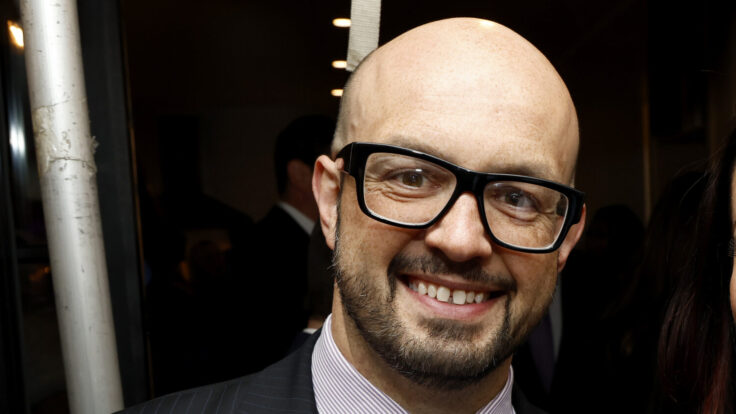
An extremely candid conversation with Andrew Weissmann, the former lead prosecutor in the
Mueller investigation, about Trump’s slush fund, the Comey indictment, and a man for whom he has special loathing: acting Attorney General Todd Blanche. |
|
|
|
This week, acting Attorney General Todd Blanche, President
Trump’s former personal attorney, finally got his heart’s desire: an official nomination for the job. Blanche had worked hard for it, after all. He was a central figure in promoting and defending Trump’s $1.776 billion slush fund for supposed victims of Biden-era “weaponization”—including duly tried and jury-convicted January 6 rioters—in addition to being one of the brains behind Trump’s efforts to wriggle out of the Epstein mess, as
new details in The New York Times make clear.
The slush fund now appears to be dead, according to the D.O.J.’s own court filings—despite Trump calling it a “beautiful thing” and
G.O.P. senators beating back Democratic efforts to kill it. What remains, though, is another provision embedded in the same agreement—the one ostensibly designed to settle Trump’s bogus lawsuit against his own I.R.S. That provision terminates any ongoing audits involving the president, his sons, or his company, and bars future prosecutions or enforcement actions arising from those matters.
To make sense of all of it, I turned to Andrew Weissmann, who not only
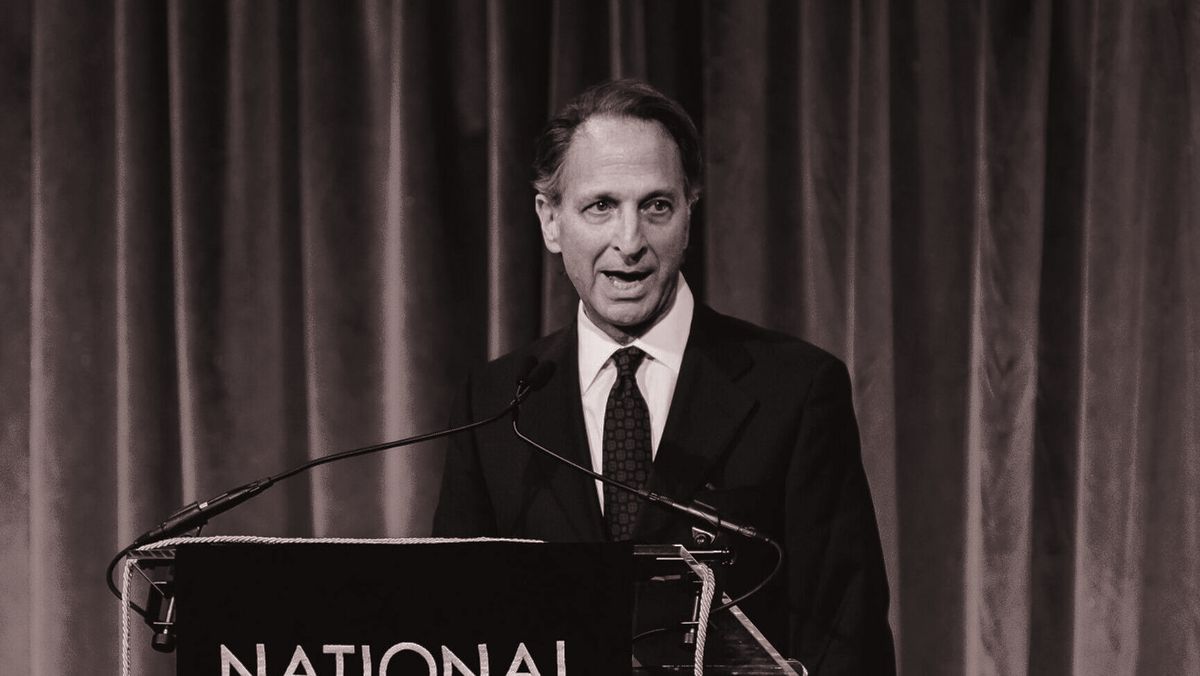
served as a lead prosecutor in Robert Mueller’s special counsel investigation into Russian interference in the 2016 election, but also harbors a particular loathing for Todd Blanche. Weissmann held senior roles at both the F.B.I. and Justice Department, and is now a law professor at NYU. He’s one of the country’s most prominent legal analysts, and the author of the instant New York Times number one bestseller Liar’s Kingdom: How to Stop Trump’s Deceit and Save
America. He joined me from Paris for a recent episode of my Impolitic podcast. We spoke about the slush fund, the I.R.S. settlement, the indictments of Jim Comey and the Southern Poverty Law Center, and Andrew’s proposed fixes for a justice system under strain. As usual, this excerpt has been edited and condensed. You can listen to our full conversation here. |
|
|
|
Innovation is at the heart of modern agriculture.
Regenerative agriculture is helping farmers produce more high‑quality food for the nation. Not only does this work help safeguard crops and reduce risks to harvests, but it also improves soil health, conserves water, and increases biodiversity. At Bayer, we succeed when farmers succeed.
Learn more. |
|
|
|
John Heilemann: Todd Blanche told the House
Appropriations Subcommittee last week that the administration is “not moving forward with the fund,” and D.O.J. has since said as much in court filings. You’re not thinking this is a big concession. Why not?
Andrew Weissmann: A New York minute ago, Donald Trump had brought a $10 billion claim
against the I.R.S., saying that’s how much he was owed, and we were supposed to believe that was a legitimate lawsuit. Then we were supposed to believe there was a legitimate negotiated settlement. The agreement was: I have this great $10 billion claim, but I am willing to take $1.776 billion, but I’m going to use it for this fund for people who are victims like me—and I’m going to get a broad civil release for me, my family, my companies. Those are the two things: money, and the civil
release.
Now, fast-forward 10 seconds. Donald Trump is, as announced by the Department of Justice—which is supposed to be the adverse party—getting zero. We’re supposed to believe that this is vanishing, but that’s because it wasn’t a settlement. They styled it that way so they could tell the government and the people, Oh, I’m not stealing this money from the Treasury, I’m resolving a real lawsuit. But they’re obviously not. It’s just so obvious that it’s a
fiction.
It also clarifies what actually mattered more to Trump—not the money, but the civil release, basically the immunity from any kind of tax penalties that he’s supposed to pay.
This wasn’t his money to begin with. His lawsuit was worth zero. It wasn’t filed in time, and it would have been dismissed on that basis alone. So he’s going, This was some money that was going to go to these weaponized people. We can still dribble it out in different ways, but I
want the part that’s protecting me… This is like, I’m just going to give you a general release because some contractor leaked part of your tax returns. In exchange, you, your family, and your companies are absolved of all tax liability. That’s the remedy?
Blanche insisted in a House Oversight hearing last week that this is not immunity—that Trump and related parties are basically immune from now looking back, but suggested that he
could be audited in the future.
You cannot give immunity for future crimes. You don’t get to say, You can commit murder in the future. So let’s just leave that aside. Donald Trump said that his tax returns were leaked by a contractor—and they were. The remedy, if the case had been filed on time, could be some compensation to the extent that he could prove real harm from that. Certainly, it’s not going to be billions of dollars.
It could be a nominal amount.
This is what it is not. Let’s say you have $100 million of liability because you haven’t been paying your taxes. Just because somebody committed the crime of releasing your tax returns, that may offset some damages, but these are apples and oranges. It is true that if you had a tax audit, and as part of that there is a negotiation, and you agree, Okay, I want to resolve everything now, and yes, I will pay, but we need to know that we’re done—as part
of that resolution, you get a release saying, The I.R.S. is done with that, unless you don’t pay your taxes in the future. That’s a different thing. But that’s not what happened here. |
The claim of the Comey indictment was that he was threatening to kill the president with a social
media post of seashells spelling out “86 47.” Yet they waited nearly a year after the post to indict him. My understanding is that, when there are credible threats to the life of the president, people are in jail the next day. Doesn’t that timeline give the lie to the whole thing?
Todd Blanche was asked about that when this was brought. For obvious reasons, if there’s a threat you want to—
Killer on the loose!
Years ago, when I was clerking
for a judge, there was somebody who was mentally unstable, who’d made a purported threat, and they were immediately brought in to see if we would order a psychological evaluation to assess the situation—because it’s serious. When people said, How are you going to prove this? There’s no way this is Comey’s intent, and you have to prove it beyond a reasonable doubt, Blanche said, Well, we were investigating and there’s more to this. And then didn’t say what it was. I find that
just so hard to believe. No pun intended, but I don’t think they have a smoking gun. Or a smoking seashell. |
|
|
|
The Southern Poverty Law Center was founded by one of the heroes of the Civil Rights Movement, Morris
Dees, in 1971, and has done heroic work over the decades. In April, Todd Blanche and F.B.I. director Kash Patel put out an indictment alleging they funneled money to the very hate groups they exist to fight. When you first heard it, did you wonder whether the SPLC had gone rotten?
The allegation, which I think the Southern Poverty Law Center agrees with, is that they had a program where they would pay informants to get information about these hate groups, and some of these
informants were members of those hate groups, because that’s usually how you get information. The F.B.I. does that all the time. For a private group to do that is unusual. We could have a very healthy debate about whether that is a good thing or not a good thing. I would want to know a lot more. Now, if you are doing it, there’s a reason you would keep it secret—you’re not going to say, Listen, we’re paying informants, and this is who it is—because then it’s not going to work. So I
don’t jump at that and go, Oh, they’ve lost their way.
At one point in that press conference announcing the indictment, Patel lists the groups the SPLC is accused of funding—the Ku Klux Klan, Unite the Right, Aryan Nation, the American Front. D.O.J. is claiming a group dedicated to stamping out the Klan had somehow become Klansmen without us noticing over the past 20 years.
Yes, the theory is that they wanted to promote hatred as part of a Ponzi
scheme—enriching themselves by defrauding donors who thought they were giving money to combat hate groups. Here’s the problem: The Southern Poverty Law Center has publicly revealed that the information they were getting was being given to the F.B.I., so the F.B.I. could take action against these groups. Kash Patel ended that program when he became F.B.I. director.
Todd Blanche goes on Fox News and says there’s no information whatsoever that the government ever got from the Southern
Poverty Law Center. So the Southern Poverty Law Center files a motion in court saying that’s a lie, and asks the judge to order a correction. So Todd Blanche goes back on Fox News and says, Oh no, of course no one ever said they didn’t give us information—but that’s not what they’re charged with. It is so awful to do this for a civil rights group that’s got a storied legacy on something this flimsy and seemingly just completely false. |
“It’s Going
to Happen Again”
|
You’ve been an enemy of the administration—not at the Jim Comey level. You’ve not been indicted as
yet, as far as I know. You’ve been a target of calumny and invective. And now you’ve written this book, Liar’s Kingdom, which is more personal than your earlier work, and it’s a book of advocacy. What drove you into the reform business?
It’s so hard in my area to see what’s going on and not want to think about, how do you make it harder for this to ever happen again? How can we make the systems better, so that it’s harder for the next
Donald Trump–like person? Because it’s going to happen again. He is going to provide a model for people that has been successful.
One of your proposals is the Truth in Elections Act. Tell us about where it comes from and what it would do.
One [reform] is criminalizing election lies by candidates or people in office. If you lie about your grades in school, or your crowd size, you could leave that to one side. But if you lie about fraud in the election, that could be
criminalized. I focused on a lot of other countries to give models, so that people don’t think this is crazy: England, Brazil, France, an example from Germany. One is criminalizing, the other is disqualifying. In France, Marine Le Pen currently cannot run for office. She’s been disqualified because she was convicted, after due process and trial, of engaging in a massive fraud. And Brazil has the same thing: [Jair] Bolsonaro, before he was
convicted of insurrection, was disqualified because he lied about having won the election, and they could show that it was intentionally false. Could it happen? Currently in Congress, not a snowball’s chance. I think if this is going to be done, it would happen more at the state level—the famous phrase, the laboratory of democracy. |
|
|
|
Unique and privileged insight into the private conversations taking place inside boardrooms and corner offices up and down Wall
Street, relayed by best-selling author, journalist, and former M&A senior banker William D. Cohan. |
|
|
|
Need help? Review our
FAQ page or contact us for assistance. For brand partnerships, email ads@puck.news.
You received this email because you signed up to receive emails from Puck, or as part of your Puck account associated with {{customer.email}}. To stop receiving this newsletter and/or manage all your email preferences, click here.
|
Puck is published by Heat Media LLC. 107 Greenwich St., New York, NY 10006 |
|
|
|
|