Greetings! As you can probably tell, today’s newsletter looks a little different. After three years, we’ve redesigned the look and feel of our private emails, and want to know what you think. If you have any feedback, please click here to take a brief survey.
|
|
Welcome back to The Best & The Brightest. I’m Tara Palmeri. I hope you’re enjoying the day after Christmas, or Boxing Day, as it’s known in Canada—a future 51st state, if Trump has his way…
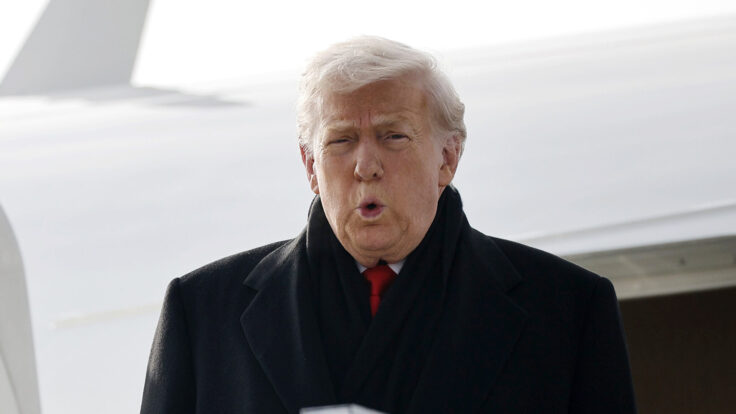
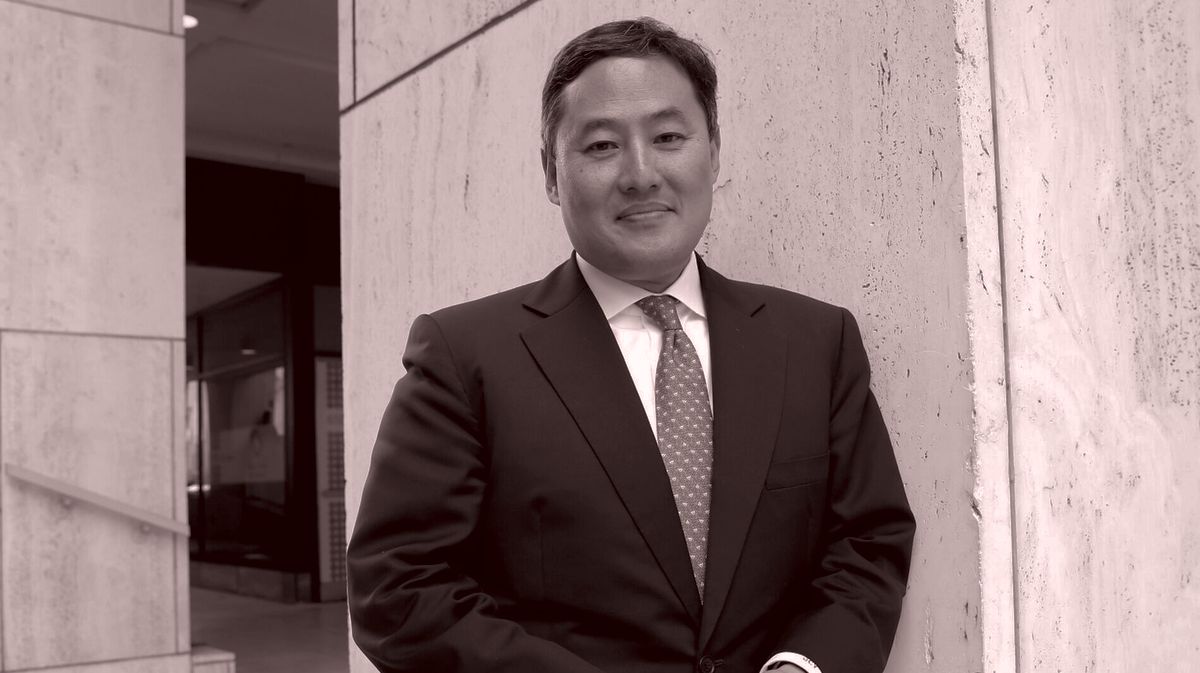
In tonight’s issue, my conversation with conservative legal scholar John Yoo, who is known for taking an expansive view of presidential power. We talk about what Trump can and cannot do—including when it comes to building the wall, pulling out of NATO, and targeting people on his “enemies list.” Yoo, who has advised Trump, warned that some of his ambitions, like unilaterally withdrawing from NATO, could cause a “constitutional earthquake.” (Alas, we didn’t get to annexing Canada.)
|
|
|
Open Source AI: Available to all, not just the few
Meta’s open source AI enables small businesses, start-ups, students, researchers and more to download and build with our models at no cost.
When AI models are open source, they’re available to all. And when AI models are available to all, everyone benefits.
Learn more about open source AI.
|
|
|
Also, in case you missed it, my partner John Heilemann talked to Democratic Senator Chris Murphy on Friday’s episode of Impolitic. Murphy has been very critical of how his party (and the media) has responded to—or rather, has abstained from engaging with—some of the more alarming aspects of Trump’s recent legal maneuvers. Here’s his view on how the early innings of the new administration might unfold…
|
|
|
 |
John Heilemann |
|
John Heilemann: During Trump’s campaign, there were some people who couldn’t believe he was serious when he suggested using the National Guard or the military to deal with his political opponents—and now here we are. I saw you basically make the point last week where you were kind of like, I guess he was serious…
Chris Murphy: Yeah, he’s serious. He was serious in the fall; he’s serious now. The second term is not going to be anything like the first term. He’s setting up democracy for a giant crisis, and I don’t understand why people don’t see it. You have this criminal referral of Liz Cheney—it’s all bullshit, it’s all bogus—and Trump’s applauding that referral next to his decision to pack the D.O.J. and F.B.I. with individuals who are even more maniacal than he is about locking up Democrats. I think it’s a very real possibility—probably now a probability—that in January and February of next year, you will see Democrats, and people who have historically politically opposed Donald Trump, on a conveyor belt to criminal prosecution. And if that happens, then our democracy is over as we know it.
I know you can’t live in other people’s heads, but you do spend a lot of time with Democratic colleagues in the Senate and other people at every level of government. Why is it that everyone doesn’t see it? What do you suspect is going on?
I don’t excuse it, but I think I understand some of the reasons why. First of all, these campaigns are bruising, and if you’re in the middle of it, you’re giving every ounce of your being trying to win. So it’s natural that after a campaign like this, especially one in which you lose, to take some time to lick your wounds. Second, there’s governing that needs to happen right now.
But then I think there’s an even deeper psychological phenomenon at play: It’s a lot easier to convince yourself that this is all bluster, and it mostly has been bluster in the past. It was more rhetoric than action in his first term. I worry that by not protesting at a louder level, we’re not signaling to the country that what he’s doing now—between putting Kash Patel in the F.B.I., suing The Des Moines Register, celebrating a criminal referral of a political opponent—is normal. None of that is normal.
If he gets all these people in the F.B.I. and D.O.J. and elsewhere, there’s not a lot you can do in the Senate about that, right? Is there anything else the Democrats can try to do?
Well, we’re not in power. We are about to be the minority power. We’re not going to be in the White House. So we’re not going to solve these problems by passing a bill. We’re going to solve these problems by organizing the American public so that what he tries to do—destroying our democracy in order to pass his tax cut for billionaires—is very unpopular. If it’s really unpopular, then maybe we will eventually be successful in convincing a couple of Republicans to stand up to it if they see they are on a pathway to defeat. We should also be raising money for legal efforts. He will control some of the courts, but not all of the courts, so the legal system is still a means of redress.
And then I think we can be stronger in the way that we talk about the great big media fold that is happening here. It was stunning and super scary to me how the criminal referral of Liz Cheyney got played so straight by the mainstream media. Most stories didn’t even attempt to do an analysis. I had to sift through six or seven of them to see if anybody actually came to a conclusion as to whether the criminal referral had any basis. Of course, it doesn’t. It’s literally premised on lies, but the media didn’t play it that way. They made it look really normal.
Of the four big cabinet nominations that the upper chamber is going to take up—Pete Hegseth, Tulsi Gabbard, Kash Patel, and R.F.K. Jr.—who do you think poses the greatest danger to the republic if they get confirmed?
Kash Patel. I think he will have enormous influence on the White House beyond just the powers that exist at the F.B.I. I think Pam Bondi is going to do whatever Donald Trump tells her to do. And I think much of what Trump will do will be driven by people like Kash Patel and Stephen Miller, who wake up every morning legitimately believing that every opponent of Donald Trump is an existential threat to the country, and thus the ends justify the means.
Kash Patel literally wrote a book about that and that’s why he was picked to run the F.B.I. And I think we will very likely be in a world next year where his belief that opposing Donald Trump is akin to treason will be driving the decisions of law enforcement. And as you know, it doesn’t take 100 political prosecutions to cut in half the number of people who are willing to show up to a rally to oppose Donald Trump. All you have to do is give the hint that political opposition leads you to jail, to cause millions of people who don’t support him, to just stay home.
Listen to the full conversation here.
|
|
|
|
A sobering conversation with conservative legal scholar John Yoo about what the president-elect can and cannot do on his first day in office, from imposing tariffs to pulling out of NATO, pardoning insurrectionists, targeting people on his “enemies list,” and finally building that wall.
|
|
|
|
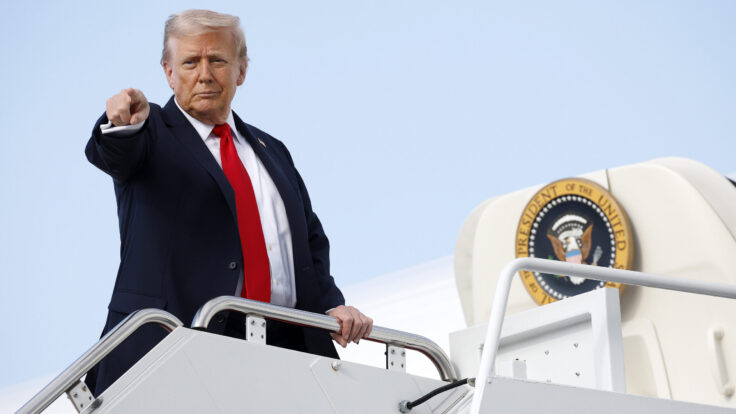
Donald Trump has promised to do many things on Day One: launch the biggest mass deportation in American history; tariff the daylights out of Canadian and Mexican imports; end birthright citizenship and all foreign wars; etcetera. Clearly, he can’t do this all by himself, and during his first term, we saw how his executive orders—for instance “closing the border” or the so-called Muslim ban—got tied up in the courts. Congress, meanwhile, can barely pass a budget these days, let alone amend the Constitution’s plain guarantee of birthright citizenship.
But there’s a lot Trump can do with just a “pen and a phone,” to borrow Barack Obama’s executive power coinage. And to calculate the magnitude of the earthquake that’s coming on January 20, I spoke to the conservative legal scholar John Yoo, who is known for taking an expansive view of presidential power. You may remember Yoo from the George W. Bush D.O.J., where he famously argued that the “enhanced interrogation techniques” of the war on terror did not constitute “torture.” More recently, he authored the book Defender in Chief: Donald Trump’s Fight for Presidential Power, and he has advised the president-elect.
|
|
|
Open source AI helps more people build amazing things.
Meta’s open source AI is available to all, not just the few. Which means more people can build amazing things.
It enables small businesses, start-ups, students, researchers and more to download and build with our models at no cost.
Learn more about open source AI.
|
|
|
|
In this excerpt of our recent conversation, which first appeared on my podcast, Somebody’s Gotta Win, Yoo is forthright about the limits of the president’s powers as he analyzes what the Trump can and cannot do—including when it comes to building the wall, targeting people on his “enemies list,” and pulling out of NATO, which Yoo warned could cause a “constitutional earthquake.” This conversation has been lightly edited and condensed for clarity.
|
Tara Palmeri: Back in 2017, you wrote a New York Times article in which you said that a lot of Trump’s executive orders were too much of a reach. But in 2020, you wrote a book in which you argued that he actually didn’t use enough of his presidential power. So tell me about your evolution from being concerned about the way that Trump was wielding his executive power to now, where you think he can go even further.
John Yoo: If you put aside the political rhetoric for and against Trump, in his first term, what did he actually do in office and how did it comport with the way past presidents have used their own executive powers? I wrote that first piece, for The New York Times, when Trump started out in office because I think the things he was saying he wanted to do were at odds even with a very broad understanding of the presidency. For example, he said he was going to take money out of the Treasury and spend it himself on building a border wall. Civics 101 says that you need to get Congress to authorize funds to build a border wall.
So basically, if he does another executive order to build a border wall, should we assume that’s just a messaging, agenda-setting memo, and there’s no way he can do that unilaterally?
Yes, not without money from Congress. I’d like to think that the second Trump term will hopefully be like the first Trump term. There will be a lot of rhetoric about doing things which the president can’t actually do. But then when it comes down to actually governing, Trump will try to stay within the guardrails. I covered national security, I covered law enforcement, and I’d been in the Justice Department—that’s where Trump is talking the most about doing things. So who knows what’s going to happen in the second term, but the action will be at the point of executive orders, and how the courts will treat them.
If Trump comes into office with an enemies list and passes it to his D.O.J., can they investigate those people? Does he even have to do it by executive order, or can he just give his team the list and tell them to go for it?
The idea of an enemies list worries everybody. Past presidents have had enemies lists—the phrase comes from Richard Nixon, who had an enemies list and gave it to the I.R.S. You could say Trump is testing the limits that we’ve had on the presidency since Watergate. No, you don’t need an executive order. The president is actually in charge of enforcing the law. So the head prosecutor under our Constitution is the president; the attorney general and every single prosecutor in the Justice Department under the Constitution is just the president’s assistant helping him or her enforce the law. So nothing stops the president from telling them to investigate people on his enemies list.
The problem for Trump, or any president, is that the courts can always stop you. So yes, the president can have the attorney general look into people, but for it to become really serious, you have to actually go to a court. You have to go to a grand jury and explain why you have probable cause. There’s a limit, even on this greatest of presidential powers.
What if he goes to one of his favorable courts, like a lower federal court with a judge that he appointed?
Ultimately, you’re right. There are judges who give out search warrants and don’t even read them. You can cause people a lot of emotional turmoil and financial pain simply by investigating them at all. Ultimately, this is one of the greatest protections of our Constitution: you cannot take someone’s liberty away without the approval of a jury.
What if the jury is afraid of retribution?
That’s always possible; the jury is the last barrier. You could say the whole thing is biased against certain individuals and biased against Democrats now that Republicans are in charge. I like to think our system doesn’t have that kind of bias; we haven’t really seen it before in our history.
Trump can name cabinet nominees, but if they don’t do what he wants, he can remove them. But you’ve said in the past, in reference to when Trump tried to fire Sally Yates for being “weak on borders,” that might be considered a misconception of the president’s authority of removal because it was based on “irrelevant ad hominem accusations.” Can you speak to that?
There’s a difference between the constitutional power of the president and then the tradition and norms we follow in using those powers. So under the Constitution, the president has the right to remove any cabinet officer—basically anyone down to the assistant secretary level. The Supreme Court actually made this clearer than when I wrote the article. Over the past few years, they’ve actually been steadily broadening the power of the president to fire people beyond what it had been before Trump took office. But even though presidents have had that power, they’ve been very careful in using it. They generally have only used it to fire people when there’s a conflict over the president’s policy and subordinates who didn’t want to follow the policy. Presidents sometimes want parts of their government to show independence, because then the public will have more faith in what’s happening.
|
A More Energetic Executive Branch
|
|
You’ve previously called for Trump’s impeachment, so why do you think that Trump needs to now expand his executive power?
I don’t know if he needs to expand it, but I think he should use it to the greatest extent that we have allowed past presidents to use it. I think a lot of the challenges our country is facing are going to be rooted in national security and foreign affairs, and that’s where our Constitution does shift a lot of the power to the president. I think, given the pressures on the country, we’re going to see a more energetic executive because our system demands it.
How can Trump expand his powers?
He’s going to start issuing executive orders. The early flashpoint is going to be immigration. He’s going to try to continue building the border wall. He’s going to have to find money for it in existing accounts, and he’s going to try to expand enforcement of the immigration laws. I assume he’s going to try to reverse the priorities that the Biden administration had in effect.
But I think the biggest fight in the courts and in public will be figuring out how to get the states and cities to cooperate. That’s an area where Congress and the Constitution have given the president a lot of power to enforce immigration laws. If Trump takes the more cautious route that’s more within our norms, I think he’s going to cut off funding to the cities and states that don’t cooperate.
|
|
|
|
Is he allowed to do that?
We don’t know, but Congress could do it for sure. Congress can do all of these things, but what has really characterized our government for the last 50 years—and more so now—is that Congress doesn’t act. For the most part, Congress has been passive in the face of a lot of national issues. That creates this vacuum where presidents step in.
They can use their power at the border to try to set their own agenda. Obama did this more than anyone else with the Dreamer program, where he basically said, Millions of people who are here in the country illegally are not going to be removed. I know the law says they should be deported. Congress is clear, but I choose. I happen to support the idea of the Dreamer program, but I think Congress ought to do it rather than a president. But presidents can because our system allows them to do it.
I first reported that Trump had drafted an executive order to pull out of NAFTA, which you can’t pull out of by executive order… But it was a signal to Congress that it was what he wanted to do—to renegotiate a deal.
That’s another area where you’re going to see a lot of presidential power. Congress has given the president a lot of power to impose unilateral tariffs and trade restrictions. Congress enacted NAFTA as a statute, and the president can’t undo a statute. But Trump hasn’t only been talking about undoing trade agreements; he’s been talking about pulling out of NATO—maybe one of the most important treaties we have.
Can he do that without Congress?
The Supreme Court has never ruled, but the lower courts have said that presidents can break out of treaties. But it’s never been done with an important treaty like NATO. Congress has tried to stop him. I think they’ve tried to put appropriation riders on defense bills saying you can’t pull out of NATO. So that would spark an enormous constitutional battle. Is Trump really going to follow through on all these things he’s saying he’s going to do? To pull out of NATO not only would be a fundamental change in our foreign policy, but it would raise the question you’re asking, and it would get to the Supreme Court I think for the first time: Can presidents break treaties on their own?
Trump will do this in the environmental area, too. He’s going to re-pull us out of the Paris Accords, which he tried to pull us out of before. I think we’re going to pull out of a series of global warming and environmental agreements, too, which will raise questions.
|
|
What are people going to expect on Day One? Is it going to feel like there are a bunch of eruptions because of Trump’s executive orders, or is it just going to be shock-and-awe psychological warfare?
The areas where you’re going to see Trump have more success are going to be pure foreign policy areas. So if Trump wants to drop a bomb on Tehran, if Trump wants to start intervening in Ukraine and trying to produce a peace agreement, those are areas where the courts have generally let presidents have a free hand. The president’s power of foreign affairs, national security, intelligence, espionage, surveillance—those are all areas where the courts have not really gotten in the president’s way. In other areas, like finding illegal aliens and removing them, you’re going to see the courts get involved. But outside of our borders, that’s where you’re going to see the biggest changes immediately on Day One. If Trump were to say, “We’re withdrawing from NATO,” that would be earth-shattering for foreign policy, but he would be able to do it.
I want to go through some of the executive orders Trump has proposed and for you to let me know if you think they’re toothless or if they have any chance of survival, starting with ending birthright citizenship…
Immediately going to court. He’s pushing a big rock up a steep hill on that one. I think he’s going to lose.
He wants to pull us out of the Paris Climate Agreement. Can he do that?
Obama and Biden made that easier because they’re not even treaties. They’ve never been submitted to the Senate for ratification, so they’re just promises by the United States. So yes, Trump can terminate that on Day One.
Can he impose tariffs on Mexico on Day One?
Yes, it’s possible because Congress has actually given the president the power to impose retaliatory tariffs on other countries in response to unfair trade practices.
On Day One, can he pardon everyone who took part in the January 6th insurrection?
Unfortunately, yes. The pardon power only has two exceptions: You can only pardon people for federal crimes, and you can’t pardon people for impeachment. He can even pardon people who haven’t been convicted yet.
Do you think everyday people are going to feel the impact of the Trump presidency on Day One?
Yes. And I think the area they’re going to see it is with tariffs, because prices are going to go up. And immigration, because I think you’re going to see an effort to remove illegal aliens, many of whom are part of our communities—I think that’s going to disrupt a lot of the towns where we live.
|
|
|
|
Puck senior political correspondent Tara Palmeri grapples with the aftermath of what may be the most chaotic and consequential presidential election cycle of our lifetime. With 15 years covering politics, Tara speaks with the smartest political minds to discuss what’s happening behind the scenes in Washington, D.C., from the campaign trail to the Capitol.
|
|
|
|
Ace media reporter Dylan Byers lets readers into his notebook as he reports on the biggest stories (and egos) in the industry.
|
|
|
Need help? Review our FAQ page or contact us for assistance. For brand partnerships, email ads@puck.news.
You received this email because you signed up to receive emails from Puck, or as part of your Puck account associated with . To stop receiving this newsletter and/or manage all your email preferences, click
here.
|
|
Puck is published by Heat Media LLC. 107 Greenwich St, New York, NY 10006
|
|
|
|



_01JEBMRCHB4835PM0AT4DQ83QA.jpg "Meta")
_01JEBMRTVXP3K52FH8Q040XBK0.jpg "Meta")
_01JFD4TK1DF0V8EEXXG9RFE76C.gif "Meta")