|
Welcome back to The Best & The Brightest. I’m Peter Hamby.
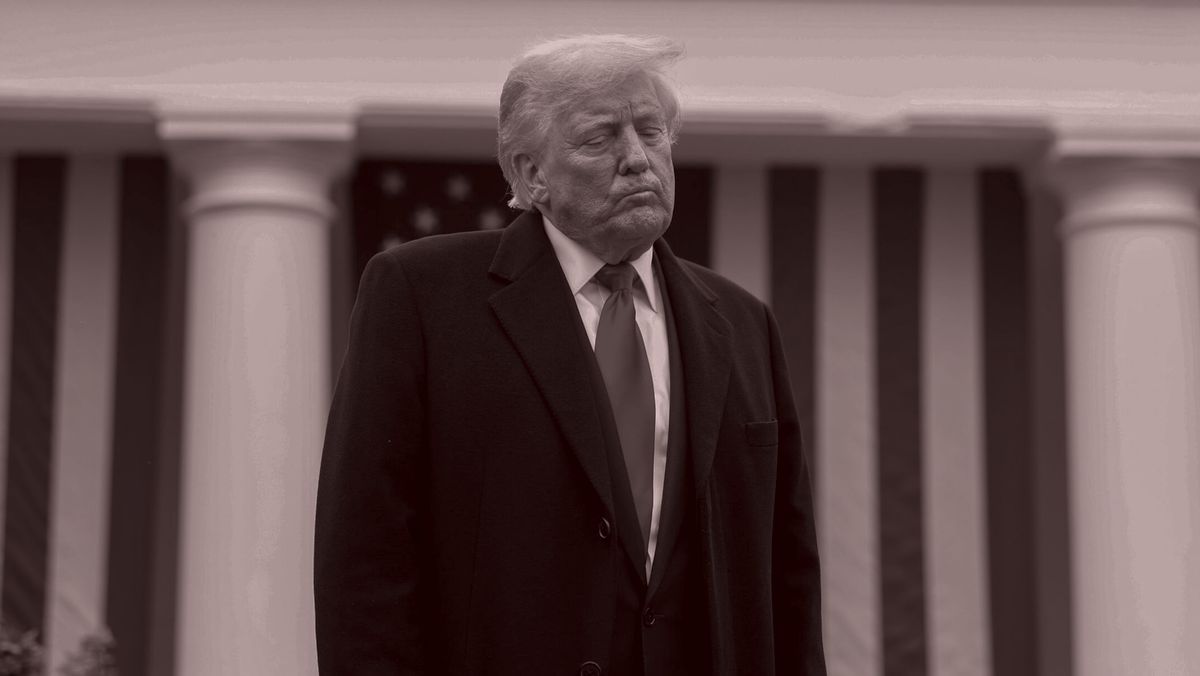
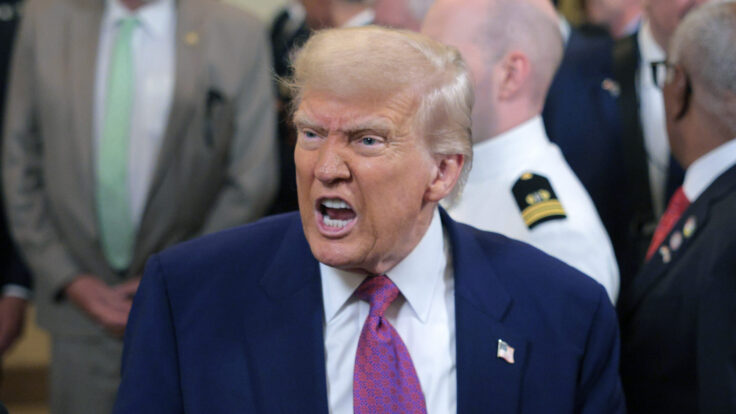
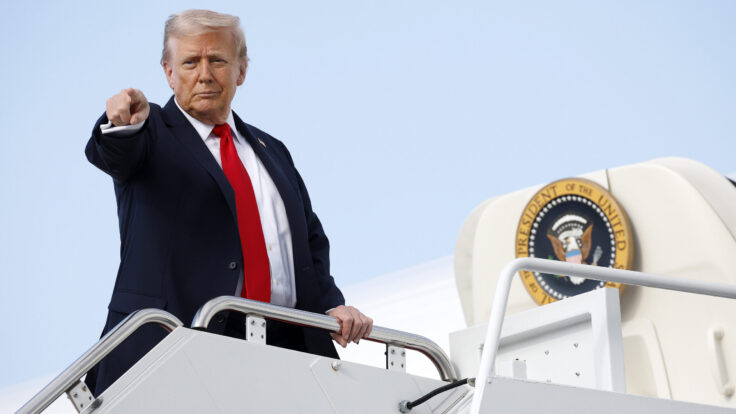
Tonight, a brutally honest look at Donald Trump’s poll numbers on the economy. Don’t let the White House fool you: Voters are recoiling from Trump’s economic agenda, and his tariff crusade is taking his poll numbers from bad to worse, potentially invalidating the core promise of his second term—to make American bank accounts great again. Also, John Heilemann checks in with a few Wall Street bigwigs on the performance of the Trump economic geniuses responsible for carrying out the tariff policy.
But first, here’s Abby with the latest readout from the Hill…
|
|
|
 |
Abby Livingston |
|
The Dems’ Premature Blue Wave-gasm
|
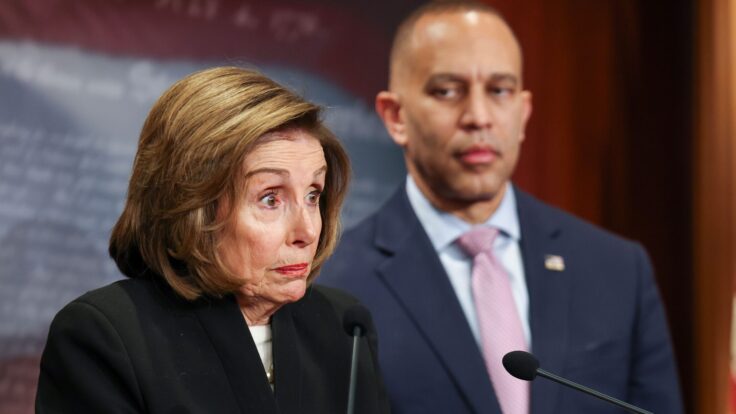
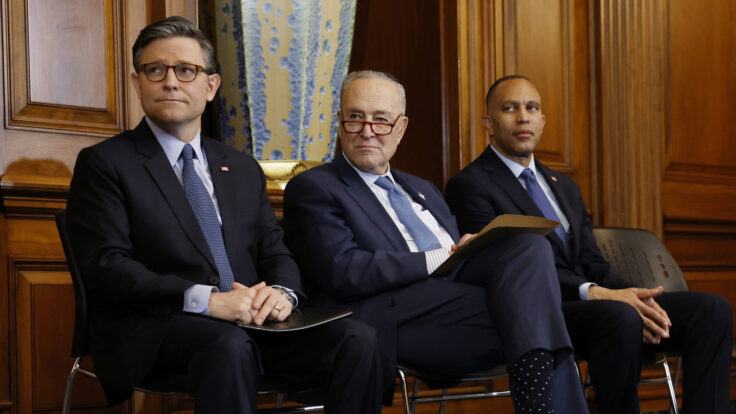
Today we got our first formal notice of the Democrats’ posture for the midterms, and it’s… aggressive. To wit: This morning, the D.C.C.C. released its House Republican target list, or what it called an “expansive offensive map” targeting 35 Republican-held seats—not just the predictable swing-district survivors like California’s David Valadao, Nebraska’s Don Bacon, and New Jersey’s Tom Kean Jr., but seemingly much safer incumbents such as Florida’s Cory Mills (who won his last race by 13 points); Ohio’s Mike Turner ( 18 points); and Kentucky’s Andy Barr ( 26 points).
Democrats, in short, seem at this early stage to be preparing for a wave. (We’ll know for sure when they start spending money on ads, which won’t be for another year or so.) D.C.C.C. chair Suzan DelBene insisted in the announcement that Republicans “are running scared” and have “lost the trust of their constituents,” which will “cost them the majority.” N.R.C.C. chairman Richard Hudson responded by calling the list “a political fantasy” and added: “They’re pouring resources into deep-red Trump territory while ignoring the clear reality: The battlefield in 2024 is in our favor. These districts aren’t trending blue, they’re getting redder.”
Republicans offered their own view of the midterm battlefield in March, with the N.R.C.C.’s list of 26 Democrat-held target seats including some usual suspects—North Carolina’s Don Davis, New York’s Tom Suozzi, Washington’s Marie Gluesenkamp Perez—but also some reaches of their own. For instance, Republicans see potential in challenging Florida’s Darren Soto and Jared Moskowitz, who are not “frontliners” on the Democrats’ incumbent protection list. How competitive these races will ultimately be depends on candidate quality (many of them don’t even have challengers yet) and the future political environment—the nature of which, considering the turbulence of just the past three months, is anyone’s guess.
|
|
|
|
And now here’s John with some fresh reporting on Trump’s economic brain trust…
|
|
|
 |
John Heilemann |
|
The Committee to Crash the World
|
In February 1999, a trio of economic policymakers graced the cover of Time magazine for the first and almost certainly last time. The three men were Federal Reserve chair Alan Greenspan, Treasury Secretary Robert Rubin, and Rubin’s deputy, Larry Summers—all wearing dark suits, white shirts, staid ties, and expressions of infinite self-satisfaction. Having just engineered a series of maneuvers to prevent a metastasizing financial crisis in Asia from infecting the worldwide economy, thereby extending the longest U.S. expansion in history, they were widely seen as super-wonky superheroes. The cover line beneath their portrait read “The Committee to Save the World.”
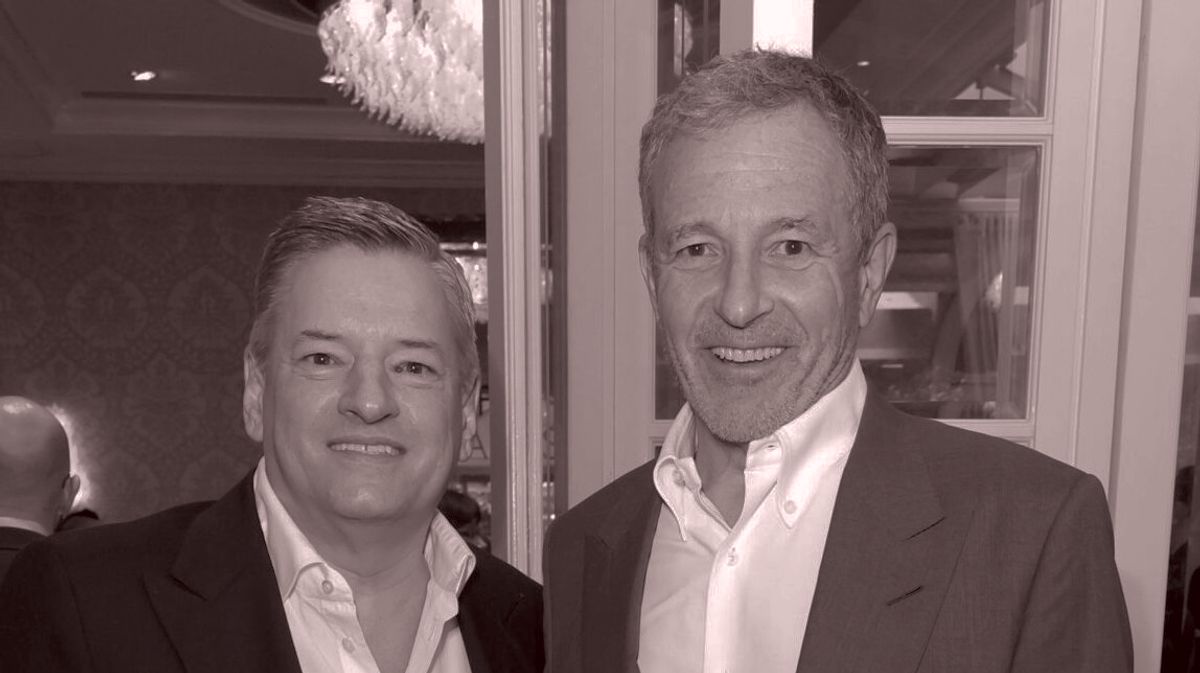
Since late last week, when financial markets began their post-Liberation Day meltdown, that Time cover and the moment it epitomized—in hindsight the high-water mark of the age of globalization and the free-market, free-trade Washington consensus that bolstered it—hasn’t been far from my mind. Not just because it’s a stark and vivid reminder of the long, strange trip our politics have taken over the past two and a half decades. But because of the contrast between the dudes advising Bill Clinton from the commanding heights of economic policy and the crowd that sits there now, which one C.E.O. described to CNBC yesterday as “an incompetent cadre of yes-men and women unable or unwilling to offer [ Donald Trump] cogent counsel.”
Among the two dozen current or former business bigwigs and financial wizards, Republican and Democrat alike, to whom I’ve spoken since Trump unleashed his sweeping tariff plan, this dim view of his economic brain trust was pervasive. Many also tossed adjectives such as “gutless” and “phony” into the mix. And that was before yesterday, when emerging fissures and fault lines among Trump’s advisors spilled out into the open; when Wall Street traders and C.E.O.s began seeing signs that, rather than talking him off the ledge or otherwise reducing the risks of his inchoate and intemperate agenda, Trump’s team was making a horrendous situation even worse.
Read more here…
|
|
|
|
While most presidents enjoy a post-inaugural boost to their popularity, the early post-Liberation Day polling shows Trump’s support on the economy collapsing rapidly. “These economic numbers to me scream red flag,” said polling analyst Lakshya Jain. “Honeymoons don’t end in April.”
|
|
|
I couldn’t help but laugh on Tuesday as I scanned the latest news about Donald Trump’s tariff crusade, examined the gurgles of the slumping stock market, and read another round of dismal headlines about the global economic order. (A jarring one from today’s New York Times: “Trump’s Tariffs Are Already Reducing Car Imports and Idling Factories.”)
First, I shot a note to James Carville, who earlier this year urged fretful Democrats to “roll over and play dead,” predicting that Trump and Republicans would inevitably collapse under their own incompetence even without any kind of organized opposition. “I assume all this is what you were talking about?” I asked. Carville responded yes, but joked that he was off by a few months: “Thought it would be Memorial Day. Turns out it was April Fools’ Day!”
My next laugh was more caustic: Playbook, charging headlong into new frontiers of credulity, reported that “Trump’s inner circle” is feeling “ebullient” about the tariff mayhem. These White House background sources cited “private polling” (that they wouldn’t share with Playbook, natch) showing their economic agenda doing better than expected among working-class voters who agree with Trump. “I thought we were getting clobbered,” one of the “insiders” told Politico, “but we’re not.”
Let me correct the record here: Trump’s economic agenda is very much getting clobbered in the polls. In public polls we can all read, not private ones we aren’t allowed to see. Even before last week’s “Liberation Day,” Trump was already fumbling the public’s trust on the economy, choosing to focus on DOGE and D.E.I. orders rather than lillerowering prices. “If you reduced 2024 to one core thing, that thing was inflation,” said Kevin Madden, a former strategist for John Boehner and Mitt Romney who is now a senior partner at Penta Group, where he advises clients on trade issues. “Voters wanted inflation tamed, and they wanted more certainty, more growth, more jobs. If you shake the confidence of voters across all of those core concerns, especially this early, both the downside and long-term risks should be obvious. Ya gotta make the main thing the main thing. The main thing was inflation.”
I wrote about this trend a few times last month, before Trump’s tariff crusade: His support among young men on the economy started to veer downward in February, and a slew of high-quality polls have demonstrated that voters increasingly do not have faith in Trump’s management of the economy, even if his overall approval rating remained mostly steady. Since his inauguration in January, the national average cost of gasoline has started to tick up, wage growth has stalled, inflation continues to hang around, interest rates remain high, and consumer confidence has declined. And now, the tariffs, and the possibility that Americans will soon be paying even more for sneakers and coffee and whatever supplies they pick up this weekend at Home Depot, will be directly attributable to President Trump. (On that note, Home Depot founder and G.O.P. megadonor Ken Langone this week called the new tariffs “bullshit.”)
All of this is happening in tandem with the decline in major stock indexes—and every major cryptocurrency—erasing all the gains they made since Trump moved back into the Oval. BlackRock C.E.O. Larry Fink is already talking about a recession, and Jamie Dimon is close to saying the same. Can you feel the ebullience?
|
This week, we got even more data showing that Trump is inflicting enormous damage on his own presidency, threatening the administration’s political capital even before we’ve reached the 100-day mark. A poll from Navigator Research released Tuesday, conducted entirely post-Liberation Day, found that a clear majority of Americans—55 percent—now disapprove of Trump’s handling of the economy, his worst net approval rating on that issue in the history of Navigator’s tracking. Trump’s economic numbers are even worse among independents: 60 percent now disapprove of his handling of the economy, a huge drop since his inauguration, and 55 percent of independents now have an unfavorable view of tariffs.
Here’s a dagger: 42 percent of Republicans now say they feel “uneasy” about their personal financial situation, up 12 points since December. And a decisive majority of Americans now say the economy is getting worse, up more than 20 points since Trump’s victory last year. It’s taking a serious toll on Trump’s overall approval rating, which was never great, and is now down five points since February, the poll found.
Yes, Navigator is a progressive polling outfit, so let’s look at a different survey. How about new research from Morning Consult, also released post-Liberation Day? Their poll found Trump with a –3 net approval on the economy, down from +16 in January. That’s very bad. In Morning Consult’s consumer sentiment index, which tracks how Americans feel about their personal finances and the business climate, they recorded an eight-point drop in consumer confidence over two days between Saturday and Monday. According to Morning Consult, “This is the second-largest two-day drop since tracking began in 2018. The only larger drop occurred at the onset of the Covid-19 pandemic in March 2020.”
Here’s one more poll for good measure, which arrived last week from The Wall Street Journal and was conducted in part by the polling outfit Fabrizio, Lee & Associates, which advised Trump’s 2024 campaign: Most voters (51 percent) say Trump isn’t focused “on issues that are priorities for you.” Big majorities oppose tariffs and think they will make prices higher. Half of voters (52 percent) say the economy is getting worse, up from 37 percent in January. A larger majority (55 percent) disapprove of the job Trump is doing on prices and inflation. And here’s a really bad statistic: The WSJ poll found that a massive 83 percent of voters believe Trump’s policies “will create economic difficulties,” even if a minority think there will be some long-term gain.
All of these numbers would be absolutely terrible—fatal, calamitous, pick your dramatic Beltway adjective—for any modern president. They are the kind of poll numbers that ruin presidencies. And yet, the D.C. hive mind continues to view Trump as some kind of invincible figure. “These economic numbers to me scream red flag, red flag, red flag,” said polling analyst Lakshya Jain, a partner at Split Ticket. “This is supposed to be Trump’s honeymoon! Honeymoons don’t end in April. If he is underwater now, by June, July, August, people are going to run out of patience. Here’s the thing. Not everyone cares about immigration. Not everyone cares about trans
kids or whatever social justice issue of the day. But everyone cares about the cost of living, and everyone cares about a recession. In that Navigator poll, more than a quarter of Republicans, Trump’s own voters, disapprove of tariffs. Any way you slice it, it’s terrible.”
|
“Whose Throat Do I Get to Choke?”
|
|
Republicans in Washington have long thought Trump to be bulletproof because he’s weathered so many scandals over the years—the Access Hollywood tape, impeachments, indictments, January 6—and yet he’s still here. That’s why they’ve stuck with him, even as they’ve lost their own elections down ballot.
But Jain pointed out, correctly, that there are many Americans who just don’t follow news cycles in the same way they follow their bank accounts. The economy is, and always has been, a singular issue in American politics. “Trump’s first term, if anything, showed that people were willing to excuse scandals and personality issues if the president doesn’t make their living conditions worse,” Jain said. “That changed with Covid, but Republicans still keep coming back to this idea that nothing hurts Trump. Well, for the first time people are really saying they don’t like how Trump is handling the economy, including a lot of his own voters.”
Trump doesn’t have to face the pressure of re-election. He’s also a frozen-in-the-’80s true believer in tariffs and protectionism. Maybe that’s why he doesn’t seem to care about voters recoiling from his economic program. It’s worth watching members of his own party, though, as my partners Leigh Ann Caldwell and Abby Livingston have reported from Capitol Hill this week. Especially anxious are Republicans who must face the consequences of Trump’s agenda at the ballot box next year. They’re definitely looking at the polls. Even if many of them are only expressing their concerns about tariffs privately or tepidly, cracks are already starting to show. North Carolina Sen. Thom Tillis, who is up for re-election next year, grilled U.S. Trade Representative Jamieson Greer about the tariff mayhem in a hearing on Tuesday. “Whose throat do I get to choke if this proves to be wrong?” Tillis asked. “I wish you well, but I am skeptical.”
Also on Tuesday, I called up a voter I met last year in Ohio, a 23-year-old union carpenter in Cleveland named Tyler Louis. He was a unicorn of sorts: a ticket-splitter who voted for Trump but also voted for Democrat Sherrod Brown in the Ohio Senate race. I asked Louis if he had any early regrets about his vote for Trump. He told me something the CNBC crowd probably wouldn’t like to hear: That part of him hopes the markets keep sinking so he can finally buy up some stocks he hasn’t been able to access. “Tariffs might bring some jobs back, but it also probably does accelerate us into recession,” he said. “That might bring the costs down for everything but it also costs some jobs, too. It could be like 2008 again, depending on how the Fed and the world reacts.”
Despite those worries, Louis said he is sticking with Trump—for now—but worries the president is being “too rash” and possibly losing sight of his campaign promise to quickly bring down everyday costs for working people. “Trump talks out of his ass, to put it blunt terms,” Louis told me. “He probably wasn’t being realistic when he said he would bring prices down right away. Look, it’s not what he promised yet, but I think he has a year, realistically, to figure that out. If he’s not delicate enough, this could be a larger problem.”
|
|
|
|
Join Emmy Award-winning journalist Peter Hamby, along with the team of expert journalists at Puck, as they let you in on the conversations insiders are having across the four corners of power in America: Wall Street, Washington, Silicon Valley, and Hollywood. Presented in partnership with Audacy, new episodes publish daily, Monday through Friday.
|
|
|
|
Unique and privileged insight into the private conversations taking place inside boardrooms and corner offices up and down Wall Street, relayed by best-selling author, journalist, and former M&A senior banker William D. Cohan.
|
|
|
Need help? Review our FAQ page or contact us for assistance. For brand partnerships, email ads@puck.news.
You received this email because you signed up to receive emails from Puck, or as part of your Puck account associated with . To stop receiving this newsletter and/or manage all your email preferences,
click here.
|
|
Puck is published by Heat Media LLC. 107 Greenwich St, New York, NY 10006
|
|
|
|