|
Welcome back to a Super Sunday edition of Dry Powder. I’m Bill Cohan, and I don’t have any “carried interest” of my own in tonight’s game since the Patriots are in a half-decade dry spell. Nevertheless, I’ll be watching our former star quarterback and current Las Vegas Raiders minority owner, Tom Brady, in the Fox booth tonight and exchanging texts with some owners, current and perhaps future.
Meanwhile, let’s pour one out for David Rubenstein, the newish owner of the Baltimore Orioles and my fellow Dukie. (Indeed, Cameron Indoor is now a veritable anteroom for his beautiful gift, the Rubenstein Pavilion, among his other endowments to the university.) David, a co-founder of the Carlyle Group, whose philanthropic largesse extends far beyond his beloved alma mater, is suddenly, it turns out, the outgoing chair of the Kennedy Center for the Performing Arts. You may have missed the announcement Friday night, but Donald Trump has decided that the Kennedy Center needs to be Made Great Again, too, and so abruptly replaced Rubenstein as the center’s chairman, with—you guessed it—himself. (I suppose it could have been worse. He could have picked Kid Rock, and he still might.) As far as I can tell, David has handled his defenestration with muted grace. But I’m curious to watch this continue to play out.
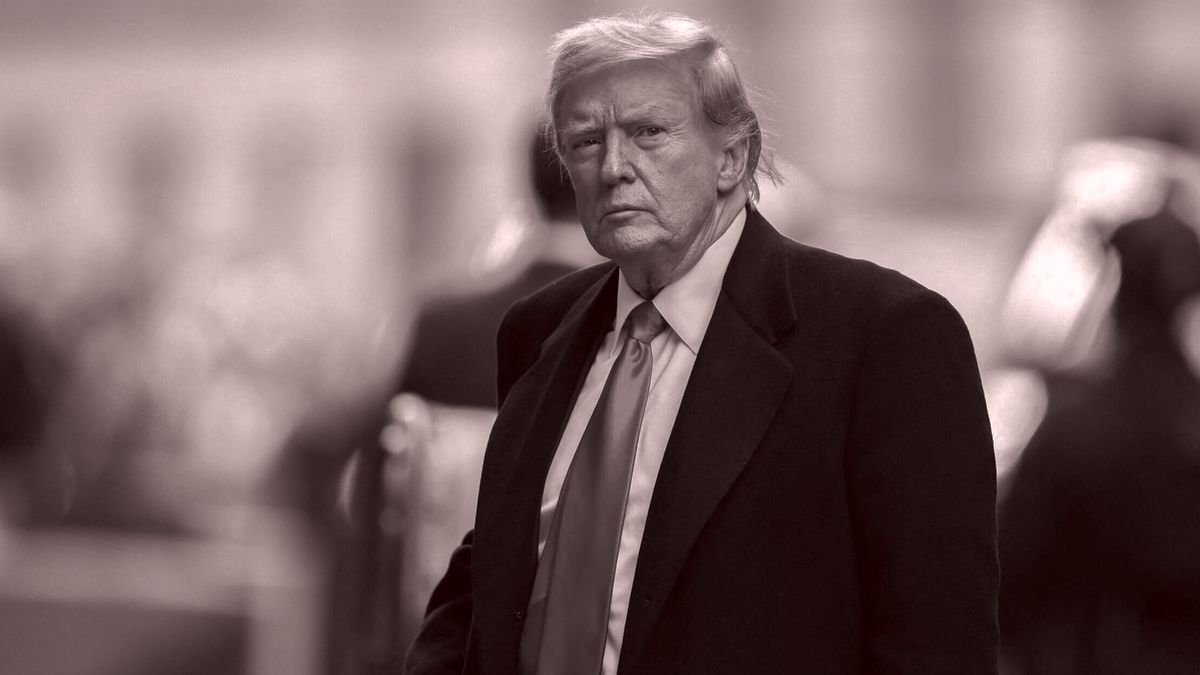
The new president’s antics provide the leitmotif for tonight’s email. As loyal readers will recall, the .001-percent crowd on Wall Street has been generally happy with Trump II, save for the whole January 6 mass-pardon affair and the post-DCA jet-helicopter collision presser filled with stream-of-consciousness nonsense about D.E.I. But on Thursday, a third beef entered the picture: Trump’s unexpected attack on the coveted carried interest loophole, the part of the U.S. tax code that has, over the past few decades, turned the private equity industry into a billionaire factory. I surveyed my most esteemed private equity sources and friends, however, and you’ll be very surprised about what they confessed.
But first…
|
- Trump enters the E.T.F. game: Trump Media and Technology Group, the company that runs Truth Social, is getting into finance, it seems, taking a page from Elon Musk, who has promised to turn X into a payments platform. (Trump and his unofficial co-president seem to be having a mind meld these days.) Is this market pivot an indication that subscale social media companies have dim prospects as purely ad-funded concerns? That’s sure what it seems like. X, for instance, has also moved into subscriptions and integrated A.I., through Musk’s xAI and its Grok chatbot—a move that seems to have boosted the company’s on-paper valuation via xAI’s $50 billion valuation.For its part, Trump Media announced on Thursday that the company had applied to register trademarks for brand names connected to the launch of customized exchange-traded funds, among other financial products. The hoped-for offerings of “Truth.Fi” apparently include a Made in America E.T.F., a U.S. Energy Independence E.T.F., and a Bitcoin Plus E.T.F.—all in keeping with MAGA themes and priorities. The company seems to be pledging $250 million toward its new fintech effort. Financial wizard Devin Nunes, the former rabble-rousing congressman and C.E.O. of Trump Media and Technology Group, said in a statement, “We aim to give investors a means to invest in American energy, manufacturing, and other firms that provide a competitive alternative to the woke funds and debanking problems that you find throughout the market. We’re exploring a range of ways to differentiate our products, including strategies related to bitcoin. We will continue to fine-tune our intended product suite to develop the optimal mix of offerings for investors who believe in America First principles.” How lovely.
On Thursday, when the news surfaced, the Trump Media stock was up nearly 7.5 percent. But on Friday, it recessed nearly 4 percent. Still, by some miracle, Trump Media has a market value of $6.75 billion—down nearly 10 percent since the inauguration, but up nearly 22 percent in the past six months. The company lost more than $100 million last year. What a great country…
|
|
|
|
Wall Street hasn’t had much beef with Trump 2.0 thus far, outside of the J6 pardons and his misguided response to the midair collision over DCA. But now that he’s taking on the carried interest loophole, things may change.
|
|
|
Last week, I shared a conversation with one of my most faithful Wall Street correspondents, who relayed the surprisingly bipartisan support that Donald Trump appeared to be enjoying among the top machers of the financial services industry. Other sources confirmed that the banker and investor class is pretty much happy with the first three weeks of Trump II, save for a few offenses, including the blanket pardoning of January 6 insurrectionists and Trump’s bizarre decision to blame the deadly plane-helicopter collision above the Potomac on D.E.I. policies. The dismantling of USAID and other parts of the federal bureaucracy, the alleged tampering with U.S. Treasury payment systems—these issues elicited little more than a shrug.
Now, however, it appears the president has crossed the line by targeting the most sacred cow in the roughly $6 trillion private equity industry: the carried interest loophole. On Thursday, Trump proposed eliminating the provision in the tax code that allows the “alternative assets” crowd to enjoy a luxurious 23.8 percent capital gains tax treatment on by far the biggest part of their compensation, rather than the ordinary top income tax rate of 40.8 percent or so.
Private equity investors have benefitted from this preferential treatment since the leveraged-buyout bonanza started 40 years ago. As most of my readers know, “carried interest”—or “carry,” tout court—accrues to the general partners of a private equity fund and is, generally speaking, 20 percent of a fund’s profits after a minimum return is met. (The other 80 percent of the profits go to the limited partners, who actually put up most of the capital for the fund.) The simple brilliance of the P.E. deal structure—one in which investors make lavish returns on borrowed money and then enjoy highly discounted tax treatment on their windfalls—explains how the industry became one of the greatest wealth-creation vehicles in modern history. One Oxford University professor has described the private equity industry as a “billionaire’s factory.” Indeed, Steve Schwarzman, the co-founder of the powerful Blackstone Group, is worth around $55 billion these days. The duo who founded KKR are worth around $20 billion each. The three co-founders of Apollo Global Management are each worth more than $10 billion.
Usually, it’s the Democrats who bang the drum for the repeal of the carried interest benefit. And every time, the powerful private equity lobby in Washington, generally led by the American Investment Council, manages to save it. Trump, however, proposed closing the loophole once before, in 2017, but the lobbyists won that fight as well. (There was a compromise of sorts, with asset managers agreeing to hold their investments for a longer period of time in order to get the more favorable tax treatment.)
But despite the events of Trump I, the idea seemed to come out of the blue on Thursday. Trump didn’t mention “carried interest” or “private equity” during the 2024 campaign, and the denizens of K Street seemed surprised that he raised it again last week. This time, however, Trump might have their number, since the Republicans in Congress seem disinclined to stand up to him on anything, and Democrats have long favored abolishing the provision. Democratic senator Tammy Baldwin of Wisconsin introduced legislation on Thursday to eliminate the benefit. That same day, Democratic House members Marie Gluesenkamp Perez of Washington state and Don Beyer of Virginia introduced similar legislation. Could the day of reckoning be nigh?
|
|
As you might imagine, this latest attack on carried interest hasn’t gone down well with everyone. One retired private equity executive, who I found down in Palm Beach, seemed to be at a loss for why Trump would suggest biting the hand that feeds him. Another private equity founder also had no explanation why the president would propose this kind of reform. “All I know is, I’m getting the worst of both worlds if this happens,” he said, given that he didn’t support Trump. “Schwarzman and all his other P.E. backers have to be a little pissed.” However, a longtime Wall Street lawyer who often works with “alternative asset” firms surprised me by saying that Trump is “right on carried interest.” But won’t the “donor class” be angry? I wondered. Yes they would, he agreed, “but fuck them.”
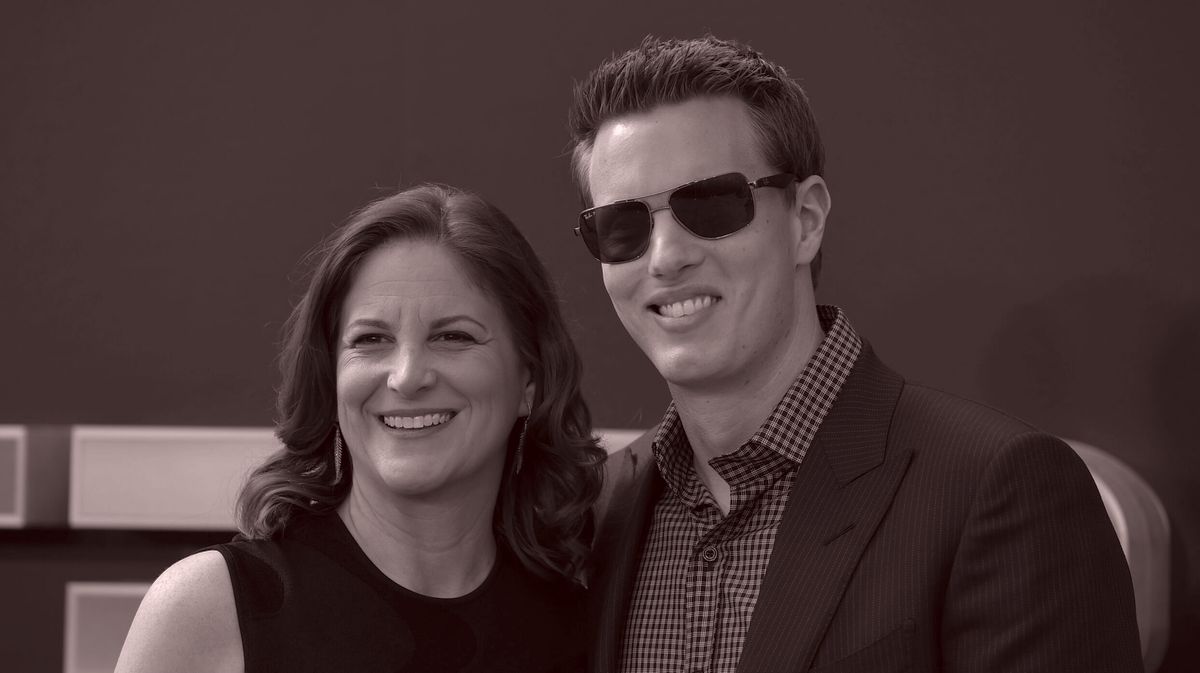
For the moment, as you might imagine, the big guys are lying low. A spokesperson for Blackstone said the firm would have no comment on Trump’s proposal. A spokesman for Apollo co-founder Josh Harris, who faces a double whammy as both a private equity investor and the owner of several sports teams, including the Philadelphia 76ers and the Washington Commanders, also did not respond to a request for comment. (Also on Thursday, White House Press Secretary Karoline Leavitt said Trump wants to eliminate the amortization tax break for owners of pro sports teams.)
A spokesman for Marc Rowan, the C.E.O. of Apollo, did not respond to a request for comment. But Marc did tell me, during an interview in September 2023, “Why do you think the carried interest tax comes up every time there’s an election? Because the Dems know it’s good for the unions and the Republicans know it’s good for squeezing money out of private equity. And the last thing they want to do is actually solve the issue because, God forbid, they wouldn't be able to fundraise off of it. Why solve anything? Why not just have emotional issues that you can perpetuate?”
Indeed, my survey of elite private equity executives dredged up similar sentiments—no one wanted the loophole closed, obviously, but they felt that Trump was being Trump, appealing to his base, and they are perfectly happy to be pilloried as long as the president doesn’t actually follow through and pick their pockets. Of course, closing the carried interest loophole isn’t quite going to satisfy the budget-balancing appetites of Elon Musk and his DOGE droogs. According to the Congressional Budget Office, eliminating the carried interest provision would only raise about $14 billion in new tax revenue over the next decade—a pittance, perhaps, given the nearly $2 trillion federal budget deficit. “After the president’s historic tax reform, the private equity industry invested over $5.6 trillion in the American economy—supporting over 36,000 small businesses,” Drew Maloney, the C.E.O. of the American Investment Council, said in a diplomatically worded statement. “We encourage the Trump Administration and Congress to keep this sound tax police in place.” In other words, please don’t rock the boat, Donald.
Another private equity founder, who also did not support Trump, told me that the proposal to repeal the provision was “smart politics,” and while he was surprised by Trump’s move, he wasn’t all that surprised. Trump “really doesn’t like Wall Street types” because “they didn’t support him”—although many did, in fact, due to their abject hatred of the Biden-Harris administration—“and they are classic elitists,” he said, adding: “But let’s see if Schwarzman goes to work on him.”
I wouldn’t yet bet against the Schwarzmans of the world being able to reorient Trump on this issue, especially because Trump loves tweaking these guys when he can, only to watch them bend a knee when he gives them what they want. Meanwhile, there’s plenty of schadenfreude elsewhere on Wall Street. Another of my faithful correspondents, who is not in the alternative asset space, seemed positively giddy about the suggestion that the loophole could be closed. “There is a god!” she wrote. “All those assholes who voted for Trump will have to pay more in taxes without the carried interest deduction. I can’t wait to see Ackman’s whiny tweets.”
For the record, so far, Bill Ackman has been silent on the topic. On Friday, he tweeted to his (now) 1.6 million followers that he’d acquired 30.3 million shares of Uber as his hedge fund’s latest big bet. “I have been a long-term customer and admirer of Uber beginning when Edward Norton showed me the app in its early days,” he wrote. Uber’s stock was up almost 7 percent on the news, giving Bill a one-day profit of roughly $140 million. So far, all good.
|
|
|
|
Join Puck’s chief political columnist, John Heilemann, as he roams the corridors of power and influence in America on this twice-weekly interview show, taking you beyond the headlines with the people who shape our culture: icons and up-and-comers, incumbents and insurgents, moguls and machers in the overlapping worlds of politics, entertainment, tech, business, sports, media, and beyond. The conversations are rich and revealing, unrehearsed and unexpected… and reliably impolitic. A Puck-Audacy joint, new episodes drop every Wednesday and Friday.
|
|
|
|
Puck’s daily political newsletter from Washington on what’s really happening in this town, from the White House to the Pentagon to Capitol Hill, K Street, and the campaign trail.
|
|
|
Need help? Review our FAQ page or contact us for assistance. For brand partnerships, email ads@puck.news.
You received this email because you signed up to receive emails from Puck, or as part of your Puck account associated with . To stop receiving this newsletter and/or manage all your email preferences, click here.
|
|
Puck is published by Heat Media LLC. 107 Greenwich St, New York, NY 10006
|
|
|
|