{{ 'now' | timezone: 'America/New_York' | date: '%b %d, %Y' }} |
|
|
|
Happy Sunday and welcome back to The Best and The Brightest. I’m
Leigh Ann Caldwell, celebrating my daughter’s 11th birthday party this weekend. I was also on Meet the Press, talking about my piece last week on Senate G.O.P. anger and angst, Graham Platner’s latest liability, and Democrats’ ongoing attempt to move past 2024.
Congress is filtering back into town
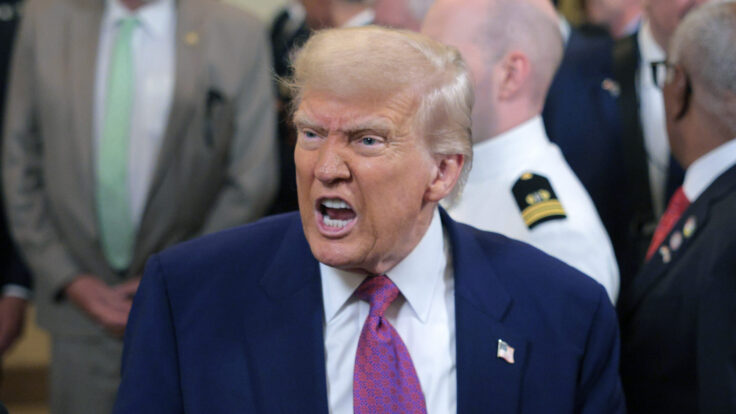
after a weeklong Memorial Day recess, but time hasn’t healed the rift between Senate Republicans and Donald Trump after the president helped take down Sen. John Cornyn and unveiled his $1.8 billion “anti-weaponization” slush fund. On the contrary, one senior Republican aide told me, Congress’s return “is going to be a real shit show.” And this aide is on the Trumpier side of the spectrum. Buckle up…
In tonight’s issue, the latest twists in the G.O.P. cold
war on the Hill, and why the president’s Office of Legislative Affairs—the White House unit that’s supposed to be omnipresent on the Hill—is stuck in the middle. Plus, my partner Marianna Sotomayor has the backstory on Trump’s last-minute endorsement of Rep. Randy Feenstra in the Iowa gubernatorial race and why Dems in D.C. have had it with Zohran Mamdani.
Still not subscribed to Puck? You’re missing out! Please don’t be that person who asks me to forward the email or send you a PDF. I love you, but read the room.
Also mentioned in this issue: James Blair, James Braid, John Barrasso, Darializa Avila Chevalier, Adriano Espaillat, Linda Sánchez, Hakeem Jeffries, Nydia Velázquez,
Ashley Hinson, Zach Nunn, Mariannette Miller-Meeks, Dusty Johnson, Larry Rhoden, Toby Doeden, Pamela Evette, Ralph Norman, Nancy Mace, Todd Blanche, Shuwanza Goff, Louisa Terrell, and many more. |
|
|
|

| Marianna Sotomayor
|
|
- The Mamdani
“betrayal”: On Thursday evening, New York City Mayor Zohran Mamdani shocked the Congressional Hispanic Caucus when he appeared on MS NOW to endorse democratic socialist challenger Darializa Avila Chevalier over sitting Upper Manhattan Rep. Adriano Espaillat. Mamdani, after all, had privately pledged that he would support Espaillat, the five-term incumbent who was one of the first former Andrew Cuomo
supporters to support him. Making matters worse, Mamdani credited Avila Chevalier for having “secured the release of our neighbors from undue ICE custody.” But it was Espaillat, the chairman of the Hispanic Caucus, who drafted legislation to rein in the agency, and even joined a lawsuit to force the administration to give Congress access to federal detention facilities.
The endorsement was repeatedly described to me as a “betrayal” by lawmakers, aides, and campaign strategists. “To
diminish the record of the first formerly undocumented member of Congress is offensive,” said Rep. Linda Sánchez, who chairs the C.H.C.’s campaign arm. Members of the New York delegation were equally frustrated by Mamdani’s decision to support another D.S.A. candidate, Claire Valdez, over Rep. Nydia Velázquez’s chosen successor, Antonio Reynoso, in Queens. Yes, Mamdani is a socialist, but there had been some hope that he might
play the inside game instead of the rabble-rouser.
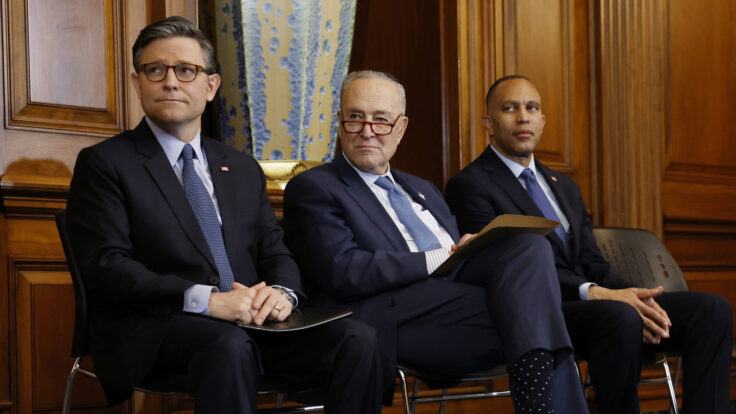
Democrats are circling the wagons: Espaillat has been endorsed by the Congressional Progressive Caucus, and Minority Leader Hakeem Jeffries, who is very close to Espaillat, plans to go to bat for him, I’m told. (His future speakership will rely on allies, and Avila Chevalier, who took part in pro-Palestinian student protests at Columbia University, is considered a potential headache.) But some Democrats acknowledge that
Espaillat may have taken his incumbency for granted and had to be urged to campaign more aggressively. Now, with Mamdani stepping into the race, an Avila Chevalier victory is not unthinkable.
|
- Feenstra finally gets
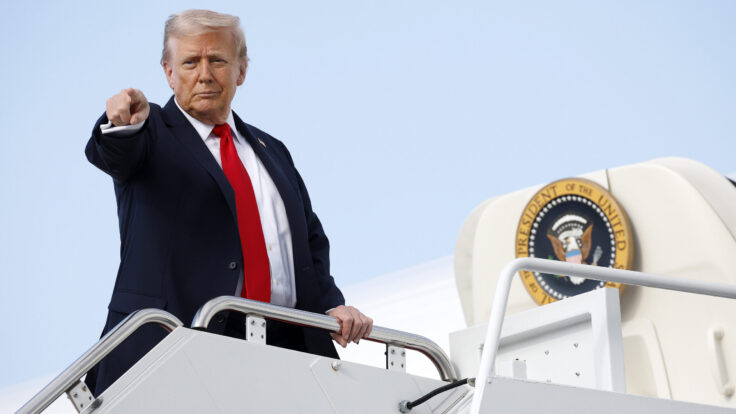
the Trump nod: Meanwhile, G.O.P. strategists are breathing a sigh of relief after President Trump endorsed Rep. Randy Feenstra’s gubernatorial bid days before the Iowa primaries, a move they believe will put him over the top in a crowded race. Strategists tell me and Leigh Ann Caldwell that they were worried that Feenstra’s anti-establishment, MAGA opponents could have dragged down Republican Rep. Ashley Hinson in
her Senate race, as well as Reps. Zach Nunn and Mariannette Miller-Meeks in their reelection battles.
But Trump, who said last week that he doesn’t “care about the midterms,” hasn’t been consistent about doling out endorsements this cycle—and his unpredictability is becoming a problem. The president has yet to get involved in South Dakota’s gubernatorial primary, where attack ads battering frontrunner Rep. Dusty Johnson (and Gov.
Larry Rhoden, who took the reins from Kristi Noem) may give an opening to the less-qualified MAGA outsider Toby Doeden. Granted, even this wouldn’t risk flipping the governor’s mansion in the solidly Republican state. But as two strategists pointed out, even loyal G.O.P. lawmakers risk being rejected by primary voters without the president’s help.
Trump, meanwhile, knows how to hold a grudge. Like Rep. Chip Roy, both
Feenstra and Johnson initially refrained from endorsing Trump in 2024. In the South Carolina governor’s race, Trump made abundantly clear on Friday that he was endorsing Lieutenant Gov. Pamela Evette over Reps. Ralph Norman and Nancy Mace because she was the only candidate to endorse him “as soon as I launched my 2024 presidential campaign.” Good luck to all those who dragged their feet!
|
|
|
|
And speaking of Trump grudges… |
|
|
|
After the president helped end the careers of two of their own, many in the Senate
G.O.P. feel he’s broken their political contract. Now, instead of constantly bowing to the executive branch, they’re agitating to fight, or at least stand up for themselves. |
|
|
|
Senate Republicans, after years of unblinking deference to Donald Trump,
are returning to Washington this week with a newfound spirit of resistance. It’s not just that the president blindsided them by announcing his $1.8 billion “anti-weaponization” slush fund. It’s also a sense that Trump effectively broke their political contract when he took out two of their own: Sen. Bill Cassidy, who voted to convict Trump on impeachment charges after January 6, and especially Sen. John Cornyn, who had the temerity to suggest, in 2023, that the
party should find a new standard bearer.
This realization comes a bit late, of course. Senate Republicans stood by as colleagues including Sens. Jeff Flake, Bob Corker, and Mitt Romney retired in previous cycles rather than face the president’s wrath in a primary, and as more than a half-dozen House incumbents—including Liz Cheney and Tom Rice—have been deposed by Trump-backed challengers. Yet many
Republicans continued to believe that they occupied a different category. Cassidy voted to confirm Robert F. Kennedy Jr. despite his reservations as a physician, and Cornyn even introduced legislation to name a highway after Trump—a nice touch. Yet the president cavalierly ended their careers anyway.
Cornyn, who lost his primary after Trump endorsed Ken Paxton, summed up the mood inside the Republican conference by invoking the fable of the
scorpion and the frog as he publicly processed the betrayal. It’s a variation of the cautionary tale that Trump often told on the campaign trail: The scorpion asks the frog to carry him safely across the river; then, halfway across, the scorpion stings the frog, condemning them both to drown. When the frog asks why, Cornyn
wrote on X, the scorpion replies, “It’s my character.”
In many ways, the parable may foreshadow Trump’s own fate in Washington. With the most competitive primaries behind them and multiple Senate Republicans leaving next year, there are fewer reasons than ever to acquiesce to the president’s demands. And though the midterms are still months away, many are already reading the
polls that herald the beginning of Trump’s lame duck era. “Stabbing Republican senators has put them in a place where these people could destroy their agenda, and there’s nothing the White House can do,” said one senior Republican Senate aide.
Republicans are now refusing to move on ICE and Customs and Border Protection in order to extract concessions from the White House over the proposed anti-weaponization fund. According to aides, senators have no intention of relenting unless the
administration accepts meaningful guardrails. Senate G.O.P. proposals include judicial review of payments, congressional input on appointments to the five-person panel that decides who has been the victim of “weaponization,” and clear eligibility requirements.
But in the 10 days since senators stormed out of a meeting about the fund with Acting Attorney General Todd Blanche—which one aide described as downright funereal—the administration has neither offered concessions
nor entertained those proposals, aides have told me. The result is a stalemate, and the Senate sees little reason to surrender. Even a federal court decision on Friday halting the creation of the fund failed to break the impasse. “Until there’s clarity on that issue” from the Justice Department, “we’re going to have to hold,” one senior Republican aide told me, noting that the opposition is coming from “more than a small group.”
The prospects for other Republican priorities are similarly
grim. The party is already divided on an extension of Section 702 of the Foreign Intelligence Surveillance Act, which expires in two weeks. If Trump continues to demand that it be paired with the SAVE America Act—the voter ID and proof-of-citizenship bill that didn’t have the votes even before Trump angered the Senate—the bill’s prospects are even worse. The National Defense Authorization Act, which Congress prides itself on having passed each year for more than six decades, is looking
increasingly daunting as well. “What used to be easy things are no longer easy,” another senior G.O.P. aide said. “I don’t know how we’re going to get any of this stuff done.”
Republicans have been known to cave under pressure, but aides tell me this time is different. Don’t expect Cornyn to push his proposal to designate a stretch of interstate between Texas and Montana “I-47,” for Trump, the 47th president. As for Trump’s face on a new $250 bill? Not a chance. |
The discontent has cast a shadow on the Office of Legislative Affairs, the White House team that
coordinates with Capitol Hill. Not only is Trump disengaged from Congress, but Republicans also don’t perceive O.L.A. as having much influence with him, according to multiple aides I spoke with. “Senators and staff don’t have anything against them, but know they don’t speak for the president and don’t really seem to be in the know or have the ability to make any sort of deals on anything,” one senior Republican aide told me. To be fair, O.L.A. has the unenviable task of trying to implement the
wishes of a president who changes his mind on a whim.
In more-traditional administrations, the office serves as a bridge to lawmakers in both parties: During the Biden years, House Republicans swooned over Shuwanza Goff, while Senate Republicans maintained good relations with her Senate counterpart, Louisa Terrell. Those cross-party relationships were so productive, in fact, that they sometimes frustrated
congressional Democrats. But Trump’s legislative affairs operation has, unsurprisingly, engaged Democrats far less than its predecessors, even on bipartisan legislation.
Multiple senior Republican aides got wind of this story and called to tell me that their relationship with the office is great—that the staff is responsive and works to address members’ needs. Numerous people said O.L.A. is especially good at interfacing between federal agencies and senators, and one senior leadership
aide told me that the office has been able to help hold the conference together during tough votes and defeat politically damaging Democratic amendments. “We are always pushing in the same direction whether [or not] we agree on every strategy or every play call,” Senate G.O.P. Whip John Barrasso said in a statement. “The Senate’s record speaks for itself. We have not lost a single consequential vote.” White House spokesperson Abigail Jackson sent me a statement
asserting that “President Trump—and his entire White House team, including O.L.A.—have enjoyed working closely with the House and Senate to deliver on many important promises to the American people, including the largest tax cut for working Americans in history.”
But Republicans are floundering, and O.L.A. is unable to address the root cause of their problems: the president. And the job is going to be even harder now that a growing number of Republicans feel no obligation to help Trump.
Meanwhile, James Blair, who currently leads the office and enjoys clout with both senators and the president, is transitioning out of the White House to focus on the midterms. His deputy, James Braid, will be left to lead the staff amid mutually growing frustration on both ends of Pennsylvania Avenue.
The contrast with last year is striking, I’m told. During the legislative maneuvering around the One Big Beautiful Bill, both Blair and Braid and their
staffs, as well as Treasury Secretary Scott Bessent and senior advisor Kevin Hassett, were constantly on the Hill. They attended senators’ meetings, worked directly with staff, and engaged Republican lawmakers relentlessly. But when I recently asked one aide what O.L.A. had been doing lately, the response was laughter. “That’s a great question,” the aide said. |
|
|
|
Join Emmy Award-winning journalist Peter Hamby, along with the team of expert journalists at Puck, as they let you in
on the conversations insiders are having across the four corners of power in America: Wall Street, Washington, Silicon Valley, and Hollywood. Presented in partnership with Audacy, new episodes publish daily, Monday through Friday. |
|
|
|
Unique and privileged insight into the private conversations taking place inside boardrooms and corner offices up and
down Wall Street, relayed by best-selling author, journalist, and former M&A senior banker William D. Cohan. |
|
|
|
Need help? Review our FAQ page or contact us for assistance. For brand partnerships, email ads@puck.news. You received this email because you
signed up to receive emails from Puck, or as part of your Puck account associated with {{customer.email}}. To stop receiving this newsletter and/or manage all your email preferences, click here. |
Puck is published by Heat Media LLC. 107 Greenwich St., New York, NY 10006 |
|
|
|
|