{{ 'now' | timezone: 'America/New_York' | date: '%b %d, %Y' }} |
|
|
Welcome back to The Best & The Brightest, I’m Peter Hamby.
Tonight,
exclusive new poll numbers on the Trump administration’s ICE raids, which are capturing the country’s attention—and not in a good way for the president. Voters might continue to trust Republicans more than Democrats on immigration issues, but our new poll with Echelon Insights shows that support for ICE is wearing thin as core groups of voters, including women and independents, revolt against their tactics.
We had a few spots open up for our monthly Power Breakfast series
on Thursday morning at The Riggs, in Washington D.C., where my colleague Leigh Ann Caldwell will be interviewing South Dakota Sen. Mike Rounds about how A.I. is reshaping policy, politics, and power on the Hill. Want to attend? Email Fritz@puck.news. Seats are limited, and they’re first come, first served. |
|
|
A MESSAGE FROM OUR SPONSOR |
Hospitals are here when you need us most – but hospitals across America are at risk of closure. |
|
|
Now, here’s Abby Livingston with some news and notes as Election Day beckons… |
|
|

| Abby Livingston
|
|
- The surrogate
circuit: The stalemate in Washington continues, but it’s been a busy few weeks on the grip-and-grin circuit amid the final days of the country’s marquee off-year elections: gubernatorial contests in Virginia and New Jersey, and the redistricting referendum in California. There have been plenty of cameos by old familiar faces: Barack Obama already cut an ad for the California initiative and will hit the other two states soon, and the Clintons hosted a
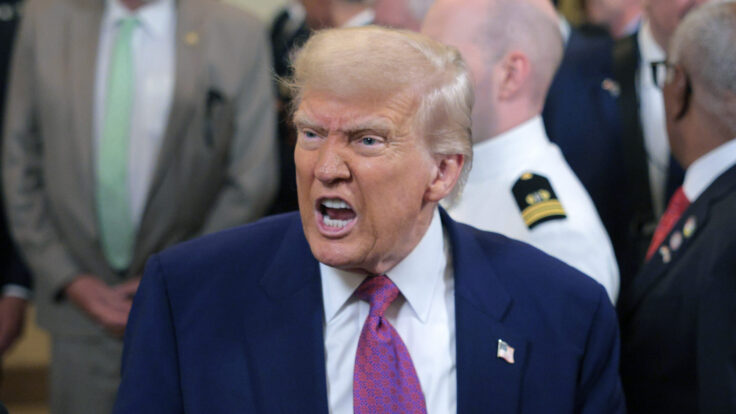
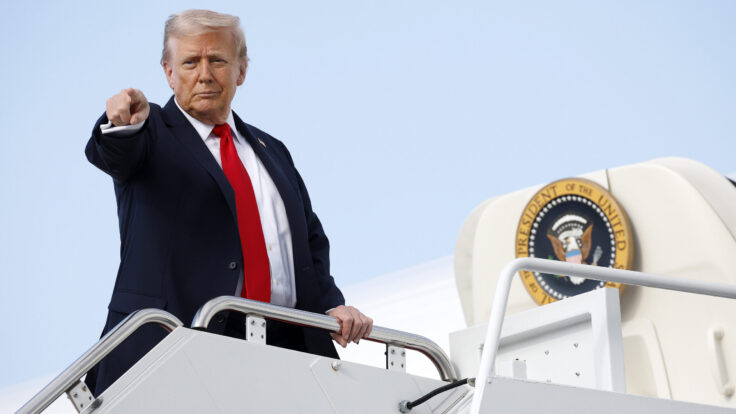
fundraiser for Virginia’s Abigail Spanberger this month. Donald Trump sort of soft-endorsed Virginia’s “Republican candidate” yesterday as “excellent” in contrast to the “disaster” Democratic candidate, and has thrown his weight behind New Jersey gubernatorial hopeful Jack Ciattarelli, who is taking on Mikie Sherrill.
Meanwhile, some ’28 contenders are taking the opportunity to position themselves as party
leaders. Michigan Gov. Gretchen Whitmer came through Jersey to campaign for Sherrill yesterday. Gov. Josh Shapiro of neighboring Pennsylvania and former South Bend mayor and Transportation Secretary Pete Buttigieg will fundraise for state Democrats at separate events there in the coming days, per the
New Jersey Globe. Maryland Gov. Wes Moore is also campaigning in New Jersey as well as Virginia. On the Republican side, outgoing Virginia Republican Gov. Glenn Youngkin is hunkered down there campaigning for the statewide slate, which is led by his own Lieutenant Gov. Winsome Earle-Sears. Sen. Ted Cruz campaigned and fundraised for Earle-Sears in Fairfax County on Monday.
Campaign surrogacy is a delicate art,
involving both the work ethic and the intuition to actually help candidates in states with different political dynamics. A surrogate can be effective in one place but toxic in another. Alexandria Ocasio-Cortez cut a TV ad for the California initiative, for instance, but she’s yet to lend her services to the more narrowly divided, albeit still Dem-favoring, races in Virginia and New Jersey. (So far, it appears she’s failing the “Virginia test” that a senior Dem
explained to Peter back in the spring—a sign that she’s still perceived as too liberal to pose a real threat in a general presidential election.) Gov. Gavin Newsom won’t be appearing in the East Coast races either, though for a different reason—he’s wholly occupied with the fight in his own backyard.
|
|
|
New data from Echelon Insights suggests that Trump’s ICE raids have actually broken through
with voters, unlike any other storyline in the current political moment. But as the president doubles down on unpopular arrest and deportation tactics, he may come to regret it. |
|
|
As a founding member of the Twitter isn’t real life crowd—annoyingly, I’ve been wagging my finger about the topic going back to 2012—one of my top obsessions is figuring out what stories actually do resonate with normies who don’t make politics their entire personality. I’ll admit it: Like a lot of political journalists, I sometimes make assumptions concerning what the electorate cares about without having the data to back it up. Which is why it’s a treat that Puck has
partnered with people who do: Echelon Insights. In their monthly surveys, Echelon scratches a bit deeper than most polls to figure out what voters are really hearing and seeing in their feed and on their screen, where they’re getting their news, and how they feel about it.
A very newsy October makes for a good showcase. In their latest poll, out today, Echelon found the ceasefire and hostage release deal in Gaza was breaking through in a major way—60 percent of Americans have heard either a lot or some about the ceasefire deal recently, however shaky it may be. Donald Trump, too, is getting very real credit for the deal: 53 percent of voters approve of the president’s handling of the war, a number that’s shot up a remarkable 12 points since Echelon asked the same question about Trump last month. |
|
|
A MESSAGE FROM OUR SPONSOR |
Hospitals need your help to stay. Protect 24/7 care—because when the doors close, it is too late. |
|
|
Another story that’s resonating: Bad Bunny’s Super Bowl halftime gig and the
backlash of joyless right-wing nerds who are cranky about it. This storyline has reached 56 percent of Americans this month. Beyond that, only fractions of American voters have heard about the big stories consuming the D.C. crowd lately: those videos of Katie Porter losing her shit at a reporter and staffers (29 percent), Virginia attorney general candidate Jay Jones texting about wishing death on a political opponent (26 percent), and Free Press
founder Bari Weiss becoming editor-in-chief of CBS News (25 percent). |
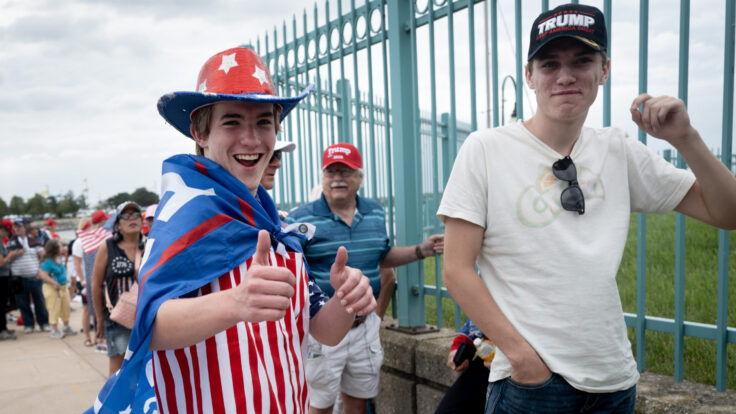
The story that’s breaking through the most, however, is the heated saga of the ongoing ICE raids, which are
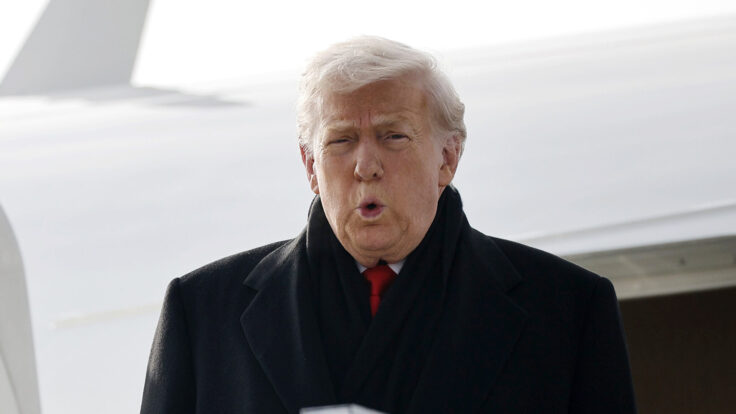
targeting immigrants across the country who may or may not have committed any crime. Some 72 percent of respondents told Echelon that they have “seen, read, or heard about Immigration and Customs Enforcement (ICE) arrests and immigration enforcement recently.” Not only has Trump made these operations a centerpiece of his agenda from Washington—by talking about deportations regularly in front of the White House cameras, for instance—but the drama is playing out on videos elsewhere, worming its
way into social media feeds in a way so many other Trump-focused stories do not.
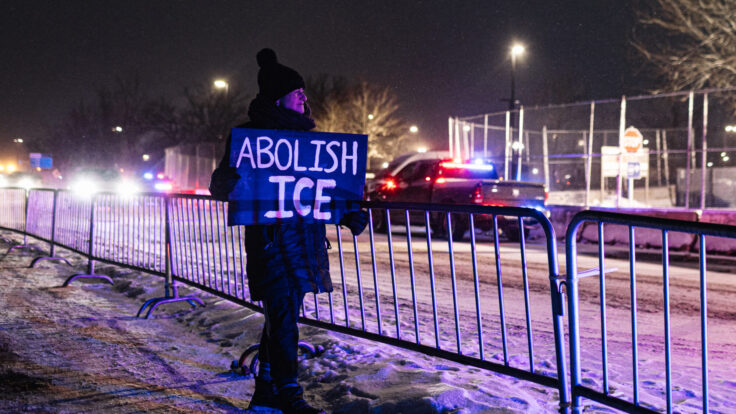
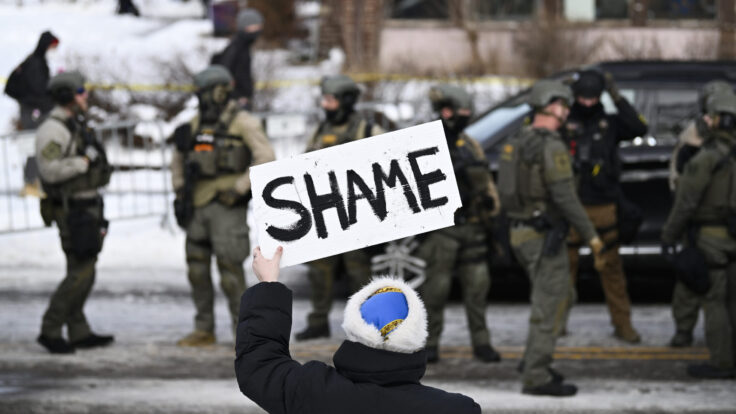
The first-person videos of masked agents arresting immigrants—often in broad daylight, in public spaces, at times separating zip-tied parents from children howling in anguish—have reached escape velocity across social media platforms. And the political chain reaction sparked by these clips—which have been followed by protests and defiant Democratic governors and mayors, which in turn have been followed by
Trump’s threats to send the National Guard into various cities—has fed an endless loop of video and commentary magnifying the fight.
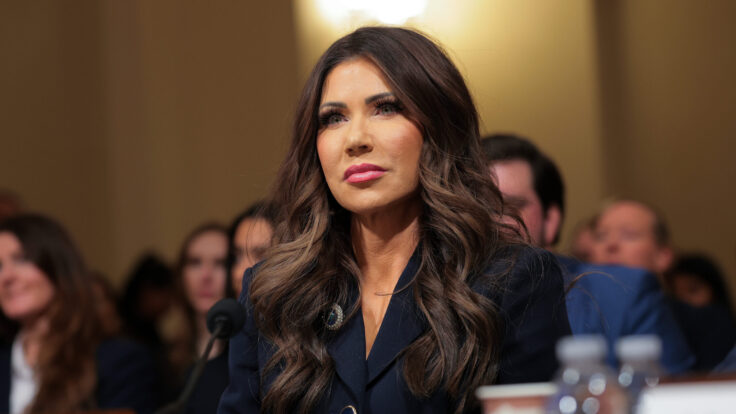
It’s usually the case that an attention war favors Trump, especially against spooked Democratic politicians who still think that any immigration conversation is a political loser for their party. Given all the tedious braggadocio from the White House—including Stephen Miller’s priggish finger-wagging, those Ghibli-fied arrest memes,
Kristi Noem’s touring photo-op circus, etcetera—the MAGA crowd seems to believe the public is firmly on their side when it comes to ICE and its tactics. Or maybe—and this would be on brand for Trump 2.0—they just don’t care what the public thinks. Democrats, after all, are barely trusted on immigration matters in almost every poll.
But Echelon found that ICE is simply not very popular with Americans these days, and the public is increasingly concerned about their
behavior. In the poll, voters are generally split on whether they support (47 percent) or oppose (45 percent) ICE’s immigration enforcement efforts. That number is in line with Trump’s general approval on immigration (47 percent), which remains underwater despite being one of his lone chits with the public early in his administration.
When pressed on specific ICE tactics, public support for the agency slips. Half of voters say that ICE should not wear masks or face coverings
while conducting arrests in public places, including a majority of independents (52 percent). Only 34 percent of Americans said ICE agents should wear masks or face coverings. Meanwhile, more voters agreed with the statement that “ICE is targeting people who are peaceful and not a threat to public safety” (47 percent) than the statement “ICE is targeting criminals and people who are a threat to public safety” (42 percent). Notably, independent voters are 35 points more likely than Republicans to
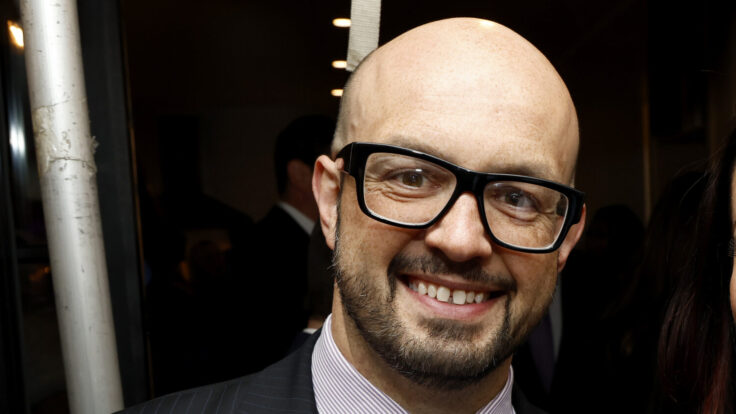
say that ICE is targeting peaceful people who aren’t a threat to public safety. Maybe they’re listening to Theo Von, who demanded that the White House remove his face from a deportation meme, and recently warned about a coming “surveillance state” during a rant about ICE. |
|
|
And while the Trump administration gets credit for deporting more illegal immigrants than previous
administrations, with 45 percent of voters saying those deportations make them feel “safer,” opinions shift when voters are pressed on how immigration arrests are conducted. We had Echelon ask about the Trump administration “using ICE raids to arrest illegal immigrants in public spaces.” When the question is framed that way, only about a third of voters (36 percent) said they felt safer, while roughly the same amount (34 percent) said public ICE raids made them feel less safe. Here again,
independent voters proved more ICE-skeptical: They were more likely to say they felt less safe compared to Republicans, who generally supported ICE actions across the board.
Echelon also found a massive gender gap emerging on opinions about ICE arrests. Overall, women are 20 points less likely to support ICE than men were: Only 37 percent of women backed the agency and its enforcement efforts, compared to 57 percent of men. |
If voters are wary of masked ICE agents showing up at their local car washes and Home Depot parking lots with
automatic weapons, they give higher marks to the National Guard and Trump’s willingness to send them into cities. Why? Americans generally agree with Trump—and his law-and-order echo chamber on Fox News and the MAGA internet—that U.S. cities are unsafe. Echelon found that 49 percent of voters believe that “large American cities” in this country are either “not safe at all” or “not too safe,” with 43 percent of voters disagreeing. (People who live in cities, the poll found, were, unsurprisingly,
more likely to call them safe, but 44 percent of urban dwellers still said they considered cities unsafe.)
That dynamic might explain the other surprise in Echelon’s poll: 47 percent of voters said they support the deployment of the National Guard to cities “to crack down on crime, and support ICE officers and immigration enforcement in places where their presence has been met with civil unrest.” Meanwhile, 45 percent of voters opposed the deployment of the National Guard under those
circumstances. This is an outlier compared to other polls showing public opposition to National Guard troops being sent into U.S. cities.
But as with most polls, the varying responses are probably related to how the questions are phrased. For instance, over the summer, Quinnipiac found 55 percent of voters disapproved of “President Trump’s decision to send National Guard troops to respond to protests in Los Angeles.” More recently, a Reuters/Ipsos poll on the matter this month found
majority opposition to “troops” in cities unless there are “external threats”—but that poll didn’t distinguish between the National Guard and the U.S. Marines, which were sent to Los Angeles this summer. Meanwhile, the Echelon poll, which asked about the National Guard specifically, didn’t mention Trump’s polarizing name, and mentioned “civil unrest” as a reason to dispatch troops.
But even if voters overall feel slightly safer with the National Guard hanging around their cities compared
to frisky ICE agents, most of that sentiment is being driven by overwhelming support from Republicans. As with most of the questions in this latest Echelon survey, independent voters are siding with Democrats: 51 percent of them oppose National Guard troops in American cities. |
|
|
Join Emmy Award-winning journalist Peter Hamby, along with the team of expert journalists at Puck, as they let you in on the
conversations insiders are having across the four corners of power in America: Wall Street, Washington, Silicon Valley, and Hollywood. Presented in partnership with Audacy, new episodes publish daily, Monday through Friday. |
|
|
The industry’s go-to source for unflinching reporting on the trillion-dollar business of artificial intelligence - perhaps the
single most important technology of our time. Ian Krietzberg, the powerhouse journalist behind The Deep View, delivers twice-weekly insights into the latest dealmaking and breakthroughs in A.I., and how the intersecting worlds of finance, entertainment, media, and politics are being transformed in its wake. |
|
|
Need help? Review our FAQ page or contact us for assistance. For brand partnerships, email ads@puck.news. You received this email because you signed up to receive emails from Puck, or as part of your Puck account associated with {{customer.email}}. To stop receiving this newsletter and/or manage all your email preferences,
click here. |
Puck is published by Heat Media LLC. 107 Greenwich St, New York, NY 10006 |
|
|
|