Hello and welcome back to The Best & The Brightest. I’m Leigh Ann
Caldwell.
By the time this hits your inbox, I'll be at an exclusive screening of The House of Dynamite, the phenomenal new film from Oscar-winning director Kathryn Bigelow and screenwriter Noah Oppenheim, at the Navy Memorial in Washington, D.C., hosted by Puck and Netflix. After the movie, I’ll talk to Bigelow, Oppenheim, and a strategic advisor to the film, followed by a swanky reception. Hope to see you there.
No doubt,
yesterday’s elections were very good for Democrats. Even Donald Trump said as much today when he hosted a breakfast at the White House with Senate Republicans. Now the question is whether Republicans adjust their positions and messaging heading into an election year that suddenly looks a lot more treacherous. More on all that, plus John Thune’s filibuster calculation, below the fold.
But first… |
- Shutdown
centrists under pressure: This is now the longest government shutdown in U.S. history, and the optimism that was coursing through the hallways of the Capitol last week and the first part of this one has stalled. Republicans are depressed after last night’s election walloping, and a core group of Democrats who were amenable to cutting a deal have run straight into their party’s jubilation. In a statement released today, MoveOn Political Action executive director Katie
Bethell wrote, “Moderate Senate Democrats who are looking for an offramp right now are completely missing the moment if, on the heels of last night’s election landslide, they are entertaining the idea of capitulating to Trump and the Republicans.” The statement won’t derail talks, but it does underscore the pressure Democrats are under to deal with the healthcare issue. Still, it doesn’t seem impossible that a deal can be clinched this week or weekend.
|
|
|
Last year, Instagram launched Teen Accounts, which default teens into automatic protections. Now, a stricter “Limited
Content” setting is available for parents who prefer extra controls. Instagram will continue adding new safeguards, giving parents more peace of mind. Learn more. |
|
|
- Trump’s
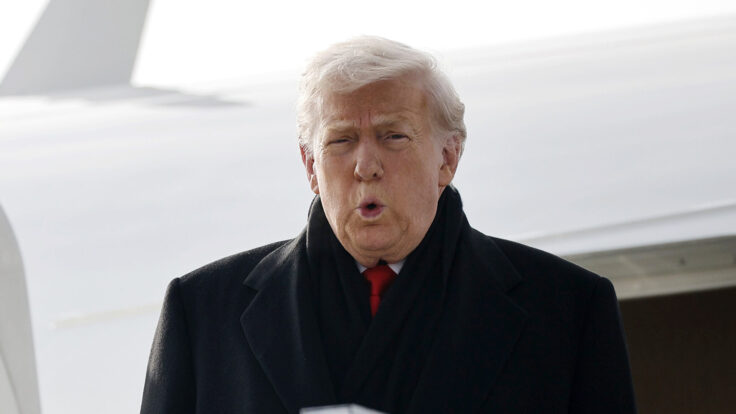
tariffs reach a skeptical Supreme Court: The nine members of the nation’s highest court heard oral arguments today on Trump’s unprecedented use of emergency powers to impose tariffs, which the White House has justified under the International Emergency Economic Powers Act, or IEEPA. The president, who has leveraged incessant tariff threats to extract concessions from U.S. allies and adversaries alike, has said that this is one of the most important court cases for his administration,
posting on Truth Social that the case would mean, “literally, LIFE OR DEATH for our Country.”
Constitutional law organizations, former national security officials, and nearly every Democratic member of the House and Senate filed amicus briefs challenging the president’s claim. The brief authored by Democrats, who have been making the case for months that the power to impose tariffs sits with Congress, was signed by a lone Republican, Sen. Lisa Murkowski of
Alaska.
Two Republican members of Congress—Rep. Darrell Issa, chairman of the House Judiciary Subcommittee on Courts, Intellectual Property, Artificial Intelligence, and the Internet, and Rep. Brian Mast, chairman of the House Foreign Affairs Committee—submitted their own brief defending Trump’s invocation of IEEPA, essentially arguing for executive authority over their own. It’s also telling how silent the remaining 269 Republicans in Congress
continue to be, apparently concluding that, for now, giving Trump a blank check is more conducive to their political survival. Most of the justices, for their part, seemed less sympathetic to this view, including some on the conservative majority. - Blue dog takes a lap: Rep. Jared Golden of Maine has
announced that he’s not running for reelection, a disappointment for Democrats who had established a toehold in a district Trump won three times, albeit with a moderate Dem who often breaks with his party. In an opinion piece in the Bangor Daily News, the Iraq and Afghanistan combat veteran wrote that violent threats, polarization, and the dysfunction of Congress all played into his decision to leave Congress at the tender age of 43. What he claimed didn’t motivate him was a
fear of losing, though he would have faced a tough reelection next year against former Maine Gov. Paul LePage.
Golden had been considered a top candidate to run for Senate, but he passed on the opportunity this year. He and Sen. Susan Collins are close—he used to work for her—and he didn’t want to challenge his former boss and mentor. As a parting shot, Golden wrote that LePage and Democrat Matt Dunlap, the two candidates for his
soon-to-be-vacant seat, are “a far cry” from what is needed in Congress.
|
|
|
After an election night shellacking, the president is leaning on Senate Republicans to rid
him of the meddlesome filibuster—the first real test of G.O.P. unity since Trump’s re-inauguration. Meanwhile, Republicans in competitive districts face a choice before the midterms: Stick with Trump, or start drafting the divorce papers. |
|
|
Last night, Democrats swept races across the country by margins that exceeded their own expectations and
Republicans’ private fears, in what was widely interpreted as a blunt-force rejection of Trump 2.0 from liberal New York City and California to purplish Virginia and MAGA-curious Pennsylvania. Even the White House seemed to get the message that a president who ran on affordability hadn’t delivered it: The following day, Trump advisor Alex Bruesewitz posted that
the president is “laser focused” on lowering housing costs and called on Republicans to “join this critical fight.”
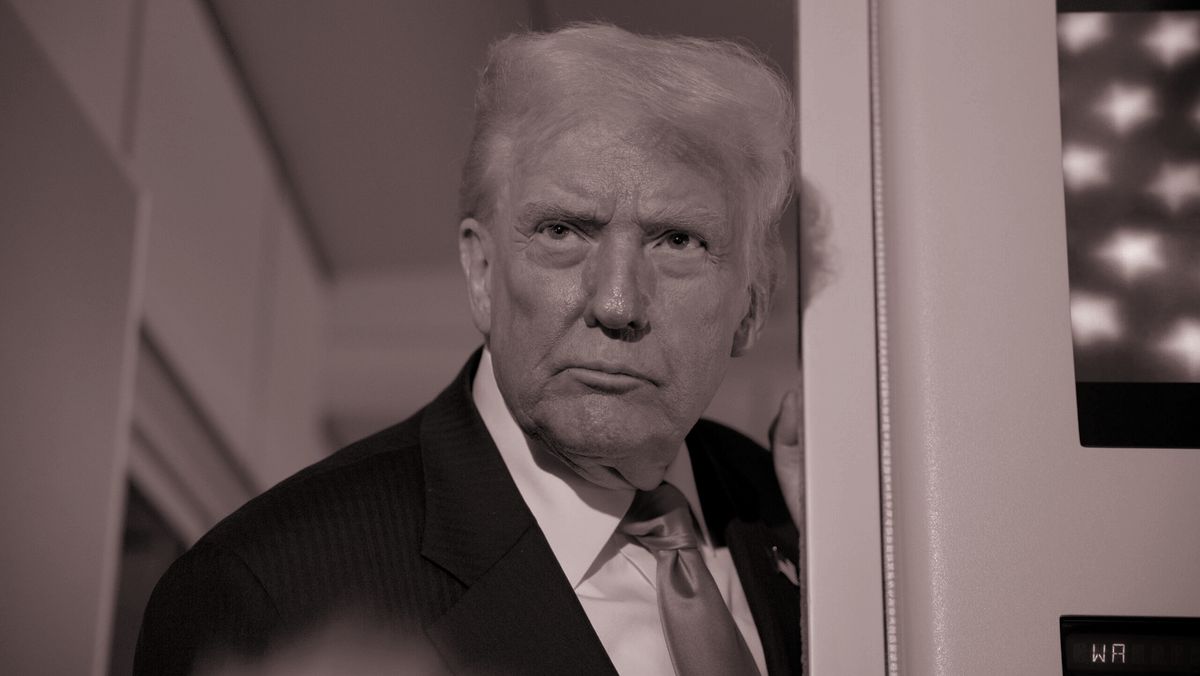
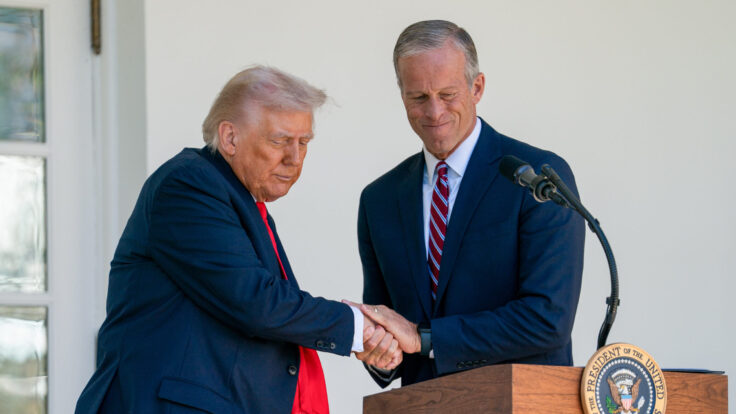
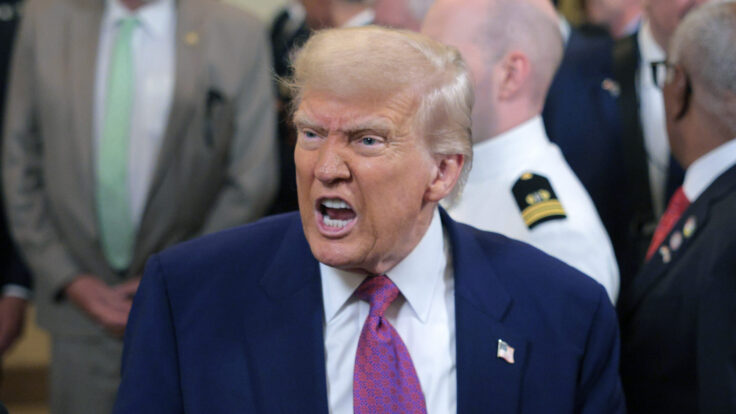
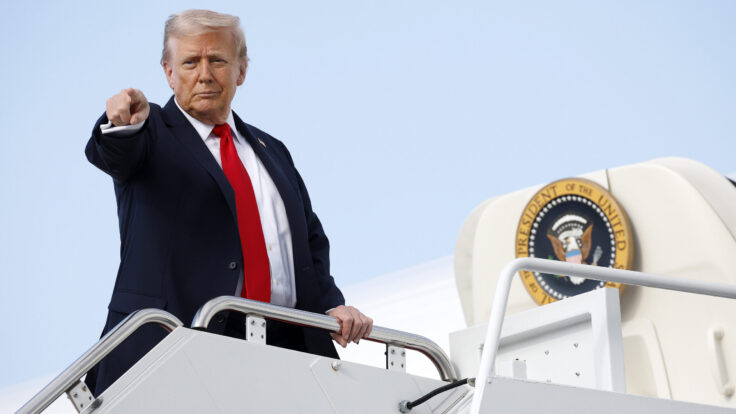
And yet, the still-rising cost of living wasn’t what Trump “laser-focused” on during the breakfast at the White House with Senate Republicans this morning. Instead, the president was fixated on one of the only issues where he doesn’t have the support of the entire Republican conference: ditching the filibuster. With the C-SPAN cameras rolling, Trump publicly
urged a stone-faced Majority Leader John Thune to eliminate the upper chamber’s tradition of requiring a 60-vote threshold for most business, including funding the government, in order to end the government shutdown. |
|
|
Instagram Teen Accounts default teens into automatic protections for who can contact them and the content they can
see.
Nearly 95% of parents say Teen Accounts help them safeguard their teens online. And we’ll continue adding new protections, giving parents more peace of mind. Explore our ongoing work to keep teens safe online. |
|
|
Thune has said repeatedly that he would not support that move. But Trump appeared agitated by the previous
day’s electoral shellacking, which he blamed in part on the now-record-long shutdown. One person briefed on the event said that after the cameras left the room, the meeting got even more tense. “It did not go well,” this person said.
Trump’s filibuster demand, along with his attacks on the Senate tradition of blue slips, could become the first real test of Republican
unity since the president’s second inauguration nearly 10 months ago. Republicans have nearly unanimously passed spending bills, which was unheard of before Trump 2.0. They also nearly unanimously passed Trump’s One Big Beautiful Bill, which continues to be unpopular with voters. They’ve willingly relinquished their own constitutional powers—including to levy tariffs, appropriate (or un-appropriate) funds, and declare war—with barely a murmur. But the totality of these concessions is
making many of them privately uncomfortable. Two Republicans reminded me that Trump becomes more aggressive when he feels like he’s losing, indicating that his pressure to eliminate the filibuster may intensify.
Trump’s fixation on the filibuster, one frustrated senior Republican aide said, “significantly divides our conference” at a time when the president should, in their view, be promoting the popular parts of the One Big Beautiful Bill. Several senior aides told me that Republicans
absolutely will not get rid of the 60-vote threshold, even though the idea has some soft support in their conference. “I understand his frustration, but it’s not going to happen,” one Republican aide insisted. Indeed, Republicans told me it would be crazy to blow up a tradition they’ve defended in the past in service of reopening the government with a bill that maintains spending at levels set by Democrats under Biden. |
Meanwhile, Trump is making this push as Hill Republicans are much more worried about their fate in
2026 than they were just two days ago. After all, it will be them on the ballot, not Trump. If they appease the president for political expediency, they risk making their own jobs obsolete—and then losing anyway. Some Republicans are now contemplating (again) whether backing Trump at all costs is the best strategy.
Last night’s result only made those questions more acute. “Trump galvanizes the Dems and he makes zero efforts to work with them in Congress,” said Nebraska Rep. Don
Bacon, a Republican representing a district that Kamala Harris won by 4.6 points in 2024. “That’s why he wants the filibuster gone.” Bacon is an extremely rare Republican on the Hill who will speak freely about Trump’s railroading of his own branch, not least because he’s retiring. “I hope Congress reclaims its voice and protects Article I authorities as a result of the recent losses,” he said. “We all expected to lose these races, but the margin of victory should be a
big red flag.” |
|
|
One of the biggest red flags, of course, was Democrat Mikie Sherrill’s double-digit victory
in New Jersey’s gubernatorial election, which was a much wider margin than anyone anticipated. In the end, Sherrill flipped five counties that went for Trump just a year ago—including heavily Black and Hispanic areas that had previously trended right. Now, G.O.P. members, especially those in competitive districts
and states, are wondering whether they should begin tiptoeing away from Trump, or risk the same fate as Jack Ciattarelli and Winsome Earle-Sears.
The dilemma is especially agonizing because Trump motivates both his own base and Democratic voters. “I tend to think that Trump is still a really powerful tool,” a Republican strategist who works on House races told me. “If you’re not with Trump, the base is not going to come out.” But that calculus will likely
begin to vary more from district to district. One Republican who works with House members predicted that some would start to put some daylight between them and the president on the most controversial issues, including mass deportations and especially tariffs, which are negatively impacting prices.
Regardless, it’s not 2024 anymore, and some of the identity issues that played well for Trump in that campaign—like anti-trans rhetoric—are now starting to look like a liability. The debate
among Republicans now is almost a mirror image of the one Democrats have been having since last November, even down to the worry that messaging on affordability is getting buried under culture war chum. One of the G.O.P.’s leading voices on such issues, Ohio gubernatorial candidate Vivek Ramaswamy, rushed out a video after last night’s results, arguing that
“our side needs to focus on affordability” and urging his party to “cut out the identity politics.” But for his shot at the “woke left,” he sounded much like the Democrats I spoke to just days ago, who see the same approach as key to their own future in 2026.
The administration could well heed this lesson themselves: A Republican close to the White House told
me last week that they were planning to roll out policies focused on lowering prices by the end of the year, though the timeline may be accelerated now. Another potential source of hope for Republicans for ’26 was Zohran Mamdani’s win in New York, a convenient socialist foil whom they can use to taint other Democrats, whether they endorsed him or kept their distance like Chuck Schumer. “Zohran Mamdani will be every Democrat’s middle name,” one Republican
told me. |
|
|
Join Emmy Award-winning journalist Peter Hamby, along with the team of expert journalists at Puck, as they let you in on the
conversations insiders are having across the four corners of power in America: Wall Street, Washington, Silicon Valley, and Hollywood. Presented in partnership with Audacy, new episodes publish daily, Monday through Friday. |
|
|
Unique and privileged insight into the private conversations taking place inside boardrooms and corner offices up and down Wall
Street, relayed by best-selling author, journalist, and former M&A senior banker William D. Cohan. |
|
|
Need help? Review our
FAQ page or contact us for assistance. For brand partnerships, email ads@puck.news.
You received this email because you signed up to receive emails from Puck, or as part of your Puck account associated with {{customer.email}}. To stop receiving this newsletter and/or manage all your email preferences, click here.
|
Puck is published by Heat Media LLC. 107 Greenwich St., New York, NY 10006 |
|
|
|