{{ 'now' | timezone: 'America/New_York' | date: '%b %d, %Y' }} |
|
|
|
Hello, and welcome back to The Best & The Brightest, your daily politics dispatch from Puck. It’s
foreign policy Thursday and I’m Julia Ioffe, on my way back to D.C. from New York, where I was deeply honored to receive a National Jewish Book Award for Motherland.
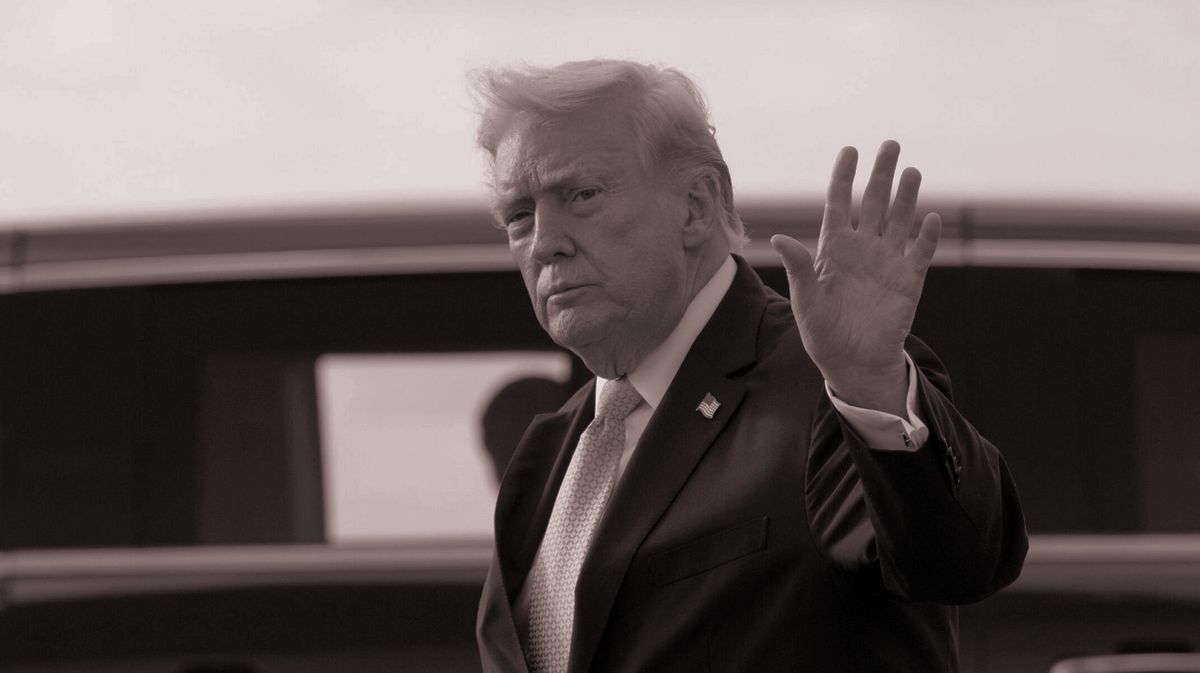
Yesterday morning, on the way there, I had to pass through a Union Station that was busily being shut down and swept by the Secret Service ahead of President Trump headlining an N.R.C.C. dinner, where he said he wasn’t calling the war in Iran a “war” because of the political
ramifications of that word. Instead, he said, he’d use the term “military operation.” We’ve seen this slippery language from the president’s defenders a lot in the last month, but this, to me, felt eerily reminiscent of that other war launched by a legacy-crazed Boomer: Vladimir Putin’s war on Ukraine. More on that below.
Plus, my colleague Dylan Byers has an update on Bari Weiss’s ratings disaster and Scott MacFarlane’s
new political gig, and Ian Krietzberg reports on Trump’s new, billionaire-C.E.O.-heavy tech advisory council, which I’m sure will be totally neutral on matters affecting the industry.
Also mentioned in this issue: Pete Hegseth, Will Lewis, David Sacks, Marc Andreessen, Sergey Brin, Michael Dell, Jensen Huang, Mark Zuckerberg, and
many more… |
|
|
|
Health care can feel stressful and complicated – especially when patients lack clear
information about their care or what it will cost. This uncertainty can create barriers to getting the right treatment. By offering intuitive digital tools with upfront information, UnitedHealth Group is making health care easier to navigate. This empowers patients to make confident decisions, often helping them save hundreds of dollars each year.
Learn more.
|
|
|
|

| Dylan Byers
|
|
- Bari’s CBS News blues:
Bari Weiss’s first full quarter at the helm of CBS News has been, well, not great. Preliminary Nielsen ratings have Tony Dokoupil’s Evening News on track for its lowest-rated quarter this century, both in total and demo. Gayle King & Co.’s CBS Mornings is similarly on pace for its lowest quarter on record.
Status’s Oliver Darcy, who reported on these numbers last night, calls them “catastrophic,” but that’s too
simplistic. Bari inherited a declining news network and she has certainly alienated a chunk of its core audience, but that’s an inevitable hazard of an editorial pivot. Indeed, Jeff Zucker hit his own ratings lows a full year into his tenure at CNN. The question is whether she’ll build a new audience, à la
Zucker, or destroy the brand trying, à la Will Lewis at The Washington Post. Most Bari obsessives have already formed their opinion, but the jury’s still out.
All that said, it’s certainly true that Bari’s early tenure at CBS News is not going as well as the Ellisons would have liked. And as I’ve noted
before, that’s likely to put limits on the extent of her influence at CNN. - The MacFarlane touch: Scott MacFarlane, the CBS News justice correspondent who recently left the network, has joined the liberal political action committee-cum-digital media company MeidasTouch as its chief Washington correspondent. MacFarlane is a fine reporter and they’re lucky to have him, but consider the optics of a CBS News correspondent decamping to a liberal news
outlet that began as a Democratic PAC aiming to stop Trump’s reelection. You can imagine how that’s playing with legacy media’s conservative critics—and can you blame them?
|
|
|
|

| Ian Krietzberg
|
|
- Don’t bother trying to hide
it: On Wednesday, President Trump named a who’s who of tech executives to a new body called the President’s Council of Advisors on Science and Technology (PCAST). Chaired by V.C. David Sacks and former V.C. Michael Kratsios, the council will include a16z strongman Marc Andreessen, Google co-founder Sergey Brin, Oracle co-founder Larry Ellison, Oracle C.E.O. Safra Catz, Dell founder
and C.E.O. Michael Dell, Nvidia C.E.O. Jensen Huang, AMD C.E.O. Lisa Su, Coinbase co-founder Fred Ehrsam, and Meta C.E.O. Mark Zuckerberg. It’s an unsurprising move for Trump, whose core policy stance on A.I. can be summed up as decidedly pro-business.
The council is expected to grow to 24 members, and of the 13 members appointed so far, all but four are billionaires. Five of them—Brin, Zuckerberg,
Ellison, Huang, and Dell—are among the 10 wealthiest people alive today, with a combined net worth of more than $900 billion. Only one appointee, physicist John Martinis, is an academic.
|
|
|
|
Donald Trump’s so-called “military operation” against Iran is rapidly beginning to mirror
Vladimir Putin’s Ukraine misadventure—overconfident, poorly planned, and sliding toward a drawn-out quagmire. |
|
|
|
This weekend will mark one month since Donald Trump took America to war against Iran without
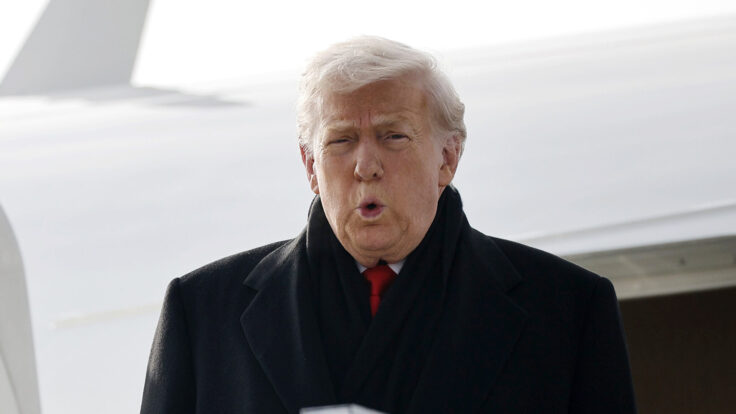
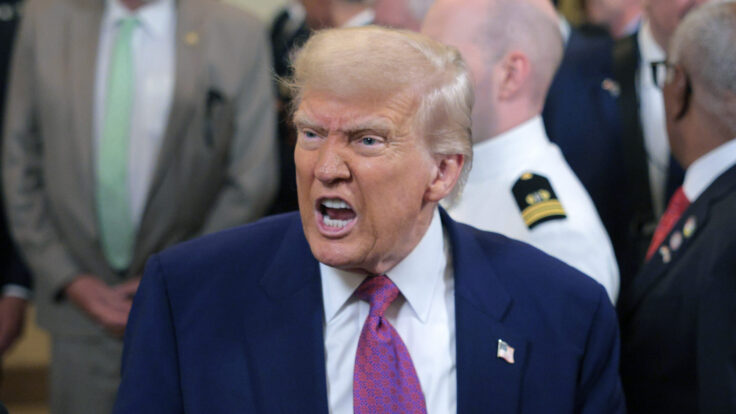
congressional approval or a plan. But do you really need congressional approval if you don’t call it a war? “I won’t use the word ‘war,’ ’cause they say if you use the word ‘war,’ that’s maybe not a good thing to do,” Trump said last night at the N.R.C.C.’s annual fundraising dinner at Union Station. “They don’t like the word ‘war,’ because you’re supposed to get approval. So
I’ll use the word ‘military operation,’ because that’s what it is.”
The comment was reminiscent of Vladimir Putin’s insistence that the full-scale invasion of Ukraine, which he launched four years ago, was a “special military operation.” That, too, was an operation that was supposed to be short—a week to take Kyiv. An excursion, if you will. |
|
|
|
For many families, navigating appointments, providers and costs can feel confusing and
unpredictable. UnitedHealth Group is working to make health care both easier to navigate and more affordable. By using the company’s digital tools, parents can find nearby providers and view expected costs before ever scheduling care. Having this clear information in one place empowers them to make confident decisions and often save hundreds of dollars each year. Learn more. |
|
|
|
But Putin’s war plans, like Trump’s, quickly disintegrated on impact with reality. Ukrainians did not rise up
to hail the Russians as liberators, just as Iranians have not heeded Trump’s call to “take” their government. The Ukrainian military didn’t follow Putin’s invitation to defect, just as Iranian soldiers have not (not least because there’s no one on the ground to defect to). The Ukrainian navy, decimated in the invasion’s early days, was able to use novel naval drones to break Russia’s Black Sea blockade and push its fleet back, much as Iran has closed the Strait of Hormuz despite the U.S. sinking
so many of its ships. When Russia pounded Ukraine’s cities with sophisticated missiles, Ukraine responded with drones, striking Russian energy infrastructure, just as Iran has used cheap Shahed drones to attack the Gulf’s oil and gas facilities.
Despite Putin’s bravado, Ukraine’s much smaller military has been able to bog down Russia’s massive war machine, in a long and bloody slog that’s looking very much like a forever war. And now, President Trump is sending thousands of Marines and
paratroopers from the 82nd Airborne to the Gulf, where it looks increasingly likely that the U.S. is about to launch a ground operation to reopen the Strait of Hormuz—which had been open just a month ago, before Trump launched the war. Oh, and the U.S. Army is
raising the ceiling for maximum enlistment from age 35 to 42, and removing restrictions on people with a marijuana-related conviction. (Just a few months into its “special military operation,” Russia started running low on manpower and began recruiting directly from jails.)
Tired of winning yet? Because the parallels don’t end there.
Yesterday, NBC reported that Trump wasn’t being briefed on the full picture of what was happening in the war. Instead, he was being shown daily two-minute sizzle reels that one official described as “stuff blowing up.” The things that aren't going so well—like when Iranian drones struck five American refueling planes at the Prince
Sultan Air Base in Saudi Arabia—are glossed over. When Trump learned about the strike from the media, he was told the planes were only lightly damaged.
Putin, too, began the assault on Ukraine only after sycophantic briefings by officials who told him what he wanted to hear: that Ukrainians would welcome the Russians, that the Russian military would sail into Kyiv, that toppling the Ukrainian government would be a cakewalk, etcetera. He continued to get rosy assessments of the war’s
progress even as everything was falling apart in the invasion’s early stages.
Democratic decision-making might seem slow and frustratingly unwieldy if you want to move fast and break shit—or blow stuff up—but it could have prevented the morass we’re quickly sinking into. As Vietnam taught us, sending a couple thousand Marines overseas to fix something real quick has a way of turning into hundreds of thousands of troops, two decades of war, tens of thousands of casualties, and a deeply
wounded nation. Getting approval from Congress would have required building public consensus and preparing the public for the fallout of a war, in addition to interrogating the premise of going to war in the first place.
The MAGA ideology is built on denigrating expertise, but everything that the experts predicted in this case—that the Iranian regime would harden instead of folding, that it would respond asymmetrically, that it would close the strait—has already come to pass. (The
experts, you may recall, also warned that Putin had no interest in a peace deal on Ukraine.) And so now that the war has begun—and has become, in fact, a war—the fact that the president is being fed only good news means only bad decisions can be made from here on out. |
Helping to drive that process is Secretary of Defense Pete Hegseth. The former Fox News
anchor has long been obsessed with “lethality,” a popular trope among the angry, right-wing young men who came home from Iraq and Afghanistan convinced that the U.S. lost those wars because the nerds in D.C. were tying their hands. Having to follow “rules written by dignified men in mahogany rooms eighty years ago”—such as the Geneva Convention—is the reason, as Hegseth wrote in his 2024 book, The War on Warriors, “why America hasn’t won a war since World War II.” |
|
|
|
“If we’re going to send our boys to fight—and it should be boys,” Hegseth, who served in the National Guard,
wrote, “We need to unleash them to win. They need to be the most ruthless. The most uncompromising. The most overwhelmingly lethal as they can be. We must break the enemy’s will.” In retrospect, renaming the Department of Defense the Department of War—also without the required congressional approval—was a clear signal of the administration’s intent.
Since becoming Defense secretary, Hegseth has made this right-wing mantra of “untying the warfighters’ hands” gospel in the Pentagon. On
Wednesday, Hegseth held yet another of his Pentagon Christian worship services, during which he prayed for “overwhelming violence of action against those who deserve no mercy.” In the fall, he flew in generals and admirals from all over the world at the last minute (and on the government’s dime on the eve of a shutdown) to lecture them about lethality
and personal grooming. In September, standing behind the Resolute Desk with Trump, he performed his strange version of slam poetry on the topic: War would now be fought with “maximum lethality, not tepid legality,” he intoned. That would be the way for America to win wars, for a change.
It’s hard to argue that the U.S.–Israeli military campaign in Iran hasn’t been lethal. Israeli air strikes have decimated the top ranks of the Iranian government and destroyed oil depots across
Tehran, in part to break the enemy’s will. But somehow it hasn’t worked. Neither has the U.S. strike on a girls’ elementary school, which killed more than 170 people, mostly children—utmost lethality, by any measure.
Yet it’s also hard to argue that the U.S. is winning the war. Trump is publicly begging Iran to sit down to ceasefire negotiations—which Iran is instantly rejecting—and praising the Iranian leadership for the great “gift” of allowing a couple of non-U.S., non-Israeli ships to
squeeze through the strait. That’s hardly the language of a victor who has broken his enemy’s will.
Because here’s the thing: Lethality is a tactic; strategy wins wars. And that kind of strategy has been glaringly absent. What is the war for? What are its goals? How will we know that they’ve been achieved? The job of general officers is to figure out how to use the military to help a president achieve a political goal, and the job of the military is to deliver lethality in service of that
goal. Doing the weave may be helpful in throwing a fake-news reporter off course, but not when guiding the world’s most powerful military. And just as lethality without guardrails is a war crime by another name, tactics without strategy is worse: a recipe for endless war. |
That’s all from me this week, friends. I’ll see you back here next week, with a slightly altered schedule
because of the Passover holiday. Until then, good night. Tomorrow will be worse.
Julia |
|
|
|
Join Emmy Award-winning journalist Peter Hamby, along with the team of expert journalists at Puck, as they let you in on the
conversations insiders are having across the four corners of power in America: Wall Street, Washington, Silicon Valley, and Hollywood. Presented in partnership with Audacy, new episodes publish daily, Monday through Friday. |
|
|
|
Unique and privileged insight into the private conversations taking place inside boardrooms and corner offices up and down Wall
Street, relayed by best-selling author, journalist, and former M&A senior banker William D. Cohan. |
|
|
|
Need help? Review our
FAQ page or contact us for assistance. For brand partnerships, email ads@puck.news.
You received this email because you signed up to receive emails from Puck, or as part of your Puck account associated with {{customer.email}}. To stop receiving this newsletter and/or manage all your email preferences, click here.
|
Puck is published by Heat Media LLC. 107 Greenwich St., New York, NY 10006 |
|
|
|
|