|
Welcome back to The Best & The Brightest. I’m Peter Hamby.
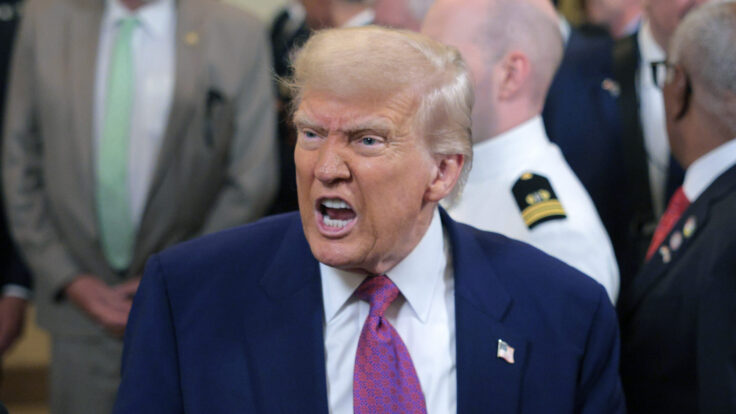
In recent days, I’ve detected a common thread running through Republican messaging at all levels of the party: the need for speed. Donald Trump, of course, is returning to the Oval with unrivaled attentional powers, full Republican control of government, and more political capital than ever before—but with only 18 months before midterm season arrives, the
coming two-year window will be critical for muscling through his MAGA agenda. For today’s issue, I chatted with a handful of insiders, including California’s newest senator, Adam Schiff, to get a sense of how, exactly, Trump’s historic single-term presidency might unfold.
But first, here’s Abby Livingston on the latest congressional chatter…
|
|
|
 |
Abby Livingston |
|
|
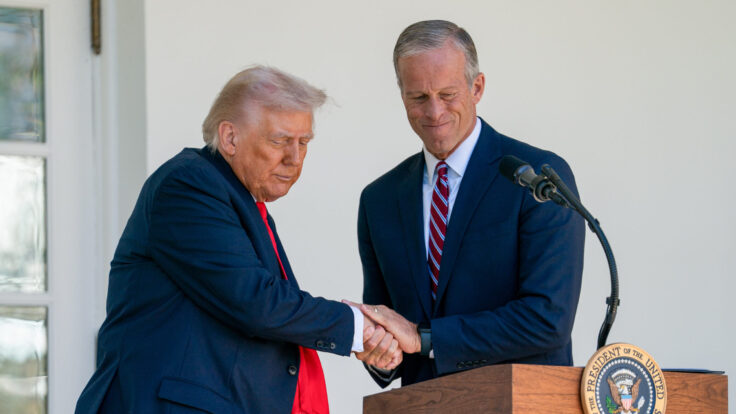
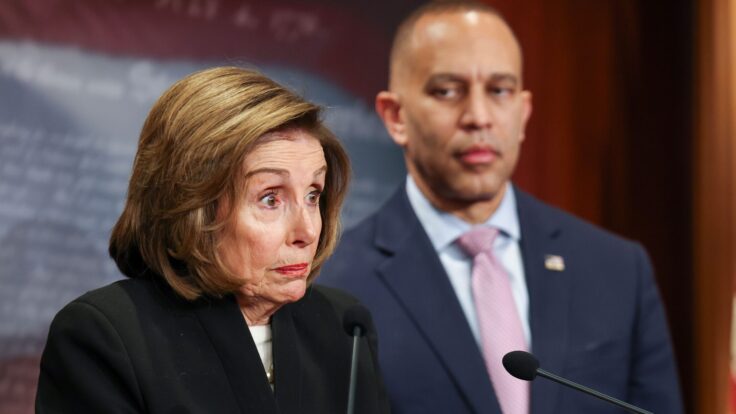
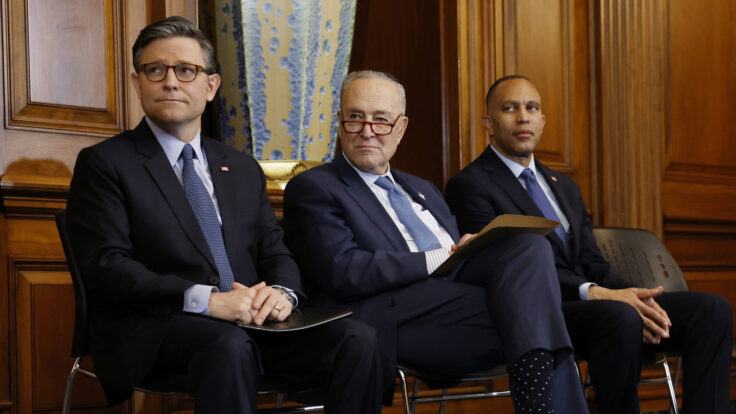
The House speaker’s race made blindingly obvious just how much Mike Johnson’s political life depends on Donald Trump, but the incoming president may be facing a less-obedient legislative leader across the Rotunda in the form of Senate Majority Leader John Thune. Johnson, having retained his gavel only by dint of Trump’s last-minute arm-twisting, can be expected to try to keep his House members in line behind the president-elect’s agenda. But Thune, who won his leadership post without Trump’s endorsement, is sending signals that the Senate won’t be as compliant.
Two days after Trump intervened to flip Ralph Norman and Keith Self to Johnson’s side, Thune appeared on Face the Nation and told Margaret Brennan that, while he and the president-elect shared a “set of objectives” and “want to get to the same destination,” he expected “there will be differences in how we get there.” He also engaged in some expectations management, saying he was going to “have to be able to share and convey to the president and help him understand … what the contours are, what we can accomplish here in the Senate, and what’s realistic.”
Trump, despite being the dominant figure in the G.O.P., is not the primary constituency for either Johnson or Thune—both answer to their rank-and-file members. But as any self-respecting Senate snob will tell you, the two chambers are entirely different beasts, even when they’re controlled by the same party. The House may be fractious, but Republicans proved docile to Trump on Friday. The Senate, on the other hand, still includes a half-dozen moderate Republicans whose reputations require that they occasionally buck the party leader.
Yes, Johnson must manage a miserable margin. But as we saw on Friday, the Trump come-to-Jesus phone call can be effective on a lonely House dissenter or two. Senate egos require much more massaging. Lisa Murkowski and Susan Collins have withstood Trumpian pressure before, and more broadly, six-year Senate terms insulate members from the immediate wrath of Trump voters.
Anyway, Thune may be all-in on Trump’s policy wishlist—defense, the border, tax cuts, etcetera—but his comments make plain that the Senate G.O.P. is still less likely to be a knee-jerk, rubber-stamp body, at least in the short term. The party preserved the filibuster on policy votes, keeping in place an arcane Senate tradition in lieu of removing a potentially large obstacle to passing major Trump priorities through the chamber. And Thune hasn’t expressed much eagerness to use recess appointments for Trump’s nominees—a tactic that would handicap the Senate’s powers.
On Sunday, Thune didn’t offer assurances that all of Trump’s nominees will be confirmed, but instead promised “a fair process” that will involve input from committees and their territorial chairs. “When it comes to his picks—and I would say this of any president—they deserve a lot of latitude. His picks are going to come through a process where, if they get reported out of the committee, come across the floor of the Senate, we’ll make sure that they get the vote,” Thune said. “I suspect a lot of them will get through. All of them remains to be seen. But I think that’s why we have the process, adhere to that process, and give all of these nominees an opportunity to make their case.”
|
|
|
|
Republicans are racing against an 18-month deadline to jam through their agenda before a likely midterm shakeup, and Trump’s inevitable lame-duck status, make legislation impossible. Meanwhile, Democrats Adam Schiff and Ritchie Torres are preparing a playbook to capitalize on G.O.P. overreach.
|
|
|
|
Republicans have been talking a lot lately about speed. On Monday, Republican Congressman Mike Lawler told CNN’s Jake Tapper that he and other G.O.P. members will be flying down to Mar-a-Lago this weekend—even before Donald Trump is sworn in—to strategize on a new tax bill. Incoming White House chief of staff Susie Wiles told Axios that her plan for Trump 2.0 includes “getting off to a quick start and staying on that pace.” And there was Trump, himself, calling into the Hugh Hewitt show this morning to discuss whether Republicans should pursue a single massive budget reconciliation bill with all the G.O.P. menu items bundled together—“one big, beautiful bill”—or deal with the border and taxes in separate bills. Trump said he’d be open to either, “as long as we get something passed as quickly as possible.”
Trump and his deputies are communicating something critical in the days before his second term begins. Even as he returns to office with full Republican control of government, unrivaled attentional powers, and Oval Office experience under his belt, Trump simply doesn’t have the time to push all his campaign promises through Congress before his presidency starts to give off the stench of lame duck. Sure, he made history in November by winning the presidency again after four years in exile. But he also made history in a way that doesn’t exactly work in his favor: Trump is now the first president in the post-F.D.R. era to be limited by law to just a single term.
Unlike in 2017, when a shell-shocked Washington establishment was contemplating the horror of an eight-year Trump run, D.C. pros this time around are mostly just eyeing the next two years. Trump is a known commodity. The midterm season arrives in 18 months or so, and Democrats could easily flip the House. After that, media attention inevitably drifts to the next presidential election and the long primary process. Sure, by that time, the 81-year-old Trump will still have the nuclear codes and the power of the executive order. But as George W. Bush, Barack Obama, Trump 1.0, and Joe Biden learned, presidents usually just walk through mud in their final two years before leaving office.
This is why Republicans are so determined to jam their agenda through using the budget reconciliation process, which requires only a simple majority vote for passage. But right now, Republicans are working with just a one-vote margin in the House, meaning they need absolute party unity to pass a border bill or a tax bill or one big, beautiful bill. And Trump will never have more political capital than he does on January 19. “Time is not on their side,” said Ron Bonjean, a longtime Republican strategist and veteran of many Capitol Hill battles. “The first two years are going to matter greatly, here. People talk about the first 100 days, but it’s probably going to take six to seven months to get their significant legislation through, whatever it looks like. And that is paramount, because then the House campaign cycle starts to kick in, with primaries and all the positioning that comes with it.”
Another plugged-in Republican veteran of Capitol Hill I spoke with Monday was not as charitable when I asked if Trump will be able to muscle through whatever he wants. The tax bill will have to get done somehow, this person told me, simply because the 2017 law is expiring this year. As for everything else? “I don’t think that they are going to get a lot done,” this person said. “I don’t know Susie Wiles that well. She seems to have a good rep. But with the combination of Trump’s lack of discipline, and the House being a complete shitshow, they’ll be lucky to get anything big done. The Senate, I think, will be an oasis of normalcy.”
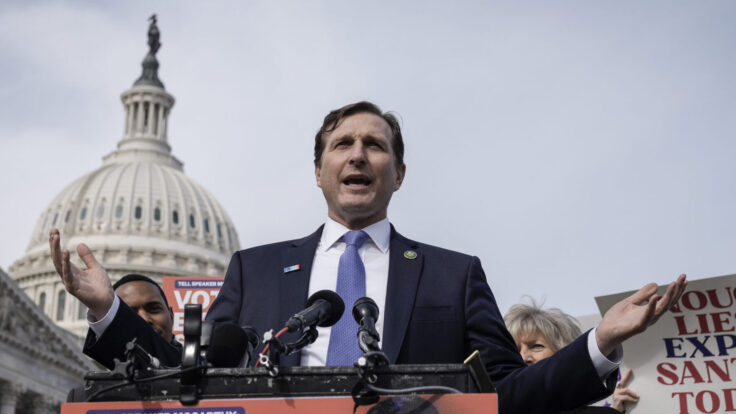
California Senator Adam Schiff—one of Trump’s most vocal Democratic critics, newly promoted from the House—told me Monday that Republicans are setting up an aggressive voting schedule for the new Congress, suggesting they can’t risk losing the early momentum. “They seem to see a very narrow window in which to act on a partisan level, with a very narrow majority,” Schiff said. “It’s clear they want to jam things through on a partisan basis. So it’s one big reconciliation bill, or two, so they can cram in as much as they can. But in the House, it will be tough for them to get their own people on board.”
|
|
While chatting with Bonjean, I was reminded of the long slog of the Inflation Reduction Act, originally the Build Back Better Plan—Biden’s landmark domestic spending legislation introduced back in August of 2021. It’s easy to forget today, given Biden’s dismal public standing, but at the time, he had an approval rating over 50 percent and was still basking in the honeymoon glow of his new presidency and the end of the pandemic. But by the time the I.R.A. was finally passed, a year later, Biden’s approval ratings were in the toilet, and the legislation had been stripped down and revised after repeated drubbings from Joe Manchin and Kyrsten Sinema. It was still a victory, but it was really all Biden could extract from Congress, and it took an entire year. Trump and his crew are hoping to do something similar on an even shorter time horizon.
Bonjean said he’s confident that Trump—and Republican members of Congress—have learned enough about each other over the years to work together, “play the inside game,” and pass something big. The Trump transition, too, seems to be humming under the disciplined management of Wiles—although I would point out that the veteran Florida campaign operative is just that: a campaign operative with relatively little experience calling shots in Washington.
Still, even with majority control in Congress, Bonjean said, getting a major bill passed before the end of the year will make for a wild ride. “The challenge for one of these large, comprehensive mega-bills is that, over time, they collapse under their own weight. Eventually, it becomes necessary to get it done under pressure, because everyone’s political livelihood depends on it. Again, it means time is not on their side. The funny thing about a unified Congress is that everyone’s priority becomes a top priority. Every committee chairman has a priority that they think is the most important. House and Senate leadership have theirs. It will take time to figure out.”
|
Overreach & Inevitability
|
|
What do Democrats think of Trump’s prospects the second time around? There are, of course, permanent anxieties on the left about Trump subverting the Constitution to stay in office for a third term come 2028. But I actually haven’t heard that sentiment very much from Democrats since the election. I’ve heard sadness and confusion about their losses in November, sure. But I haven’t detected the existential Trump dread that dominated Democratic politics in 2017 and 2018, when the #Resistance was everything and Democracy Was Dying in Darkness. Instead, I’ve been picking up an odd sort of calm determination about holding on through a second Trump term, and some cold comfort in the fact that they can see around the corner to the end of his time in office.
When I talked to Schiff today—on January 6, of all days—he told me he was confident that Trump will screw up, stir up public opposition with this issue or that, and generally do the work of making himself unpopular. “We obviously can’t wait for years to solve the problems we have, and we should work with Republicans where we can, and stand up to him where we can, especially when he wants to give big tax cuts to cronies,” Schiff told me. “But look, it will be no time at all before the Republicans are at each other’s throats, before people in the White House are at each other’s throats. The last four years? That was them throwing each other under the bus all the time. The question is, who gets thrown under the bus this time? And when they try to pick fights, they will overreach on certain issues. That will inevitably come.”
I asked another outspoken Democrat, New York’s Ritchie Torres, a similar question: How should Democrats approach a president with a four-year shelf life and an unruly Republican House known mostly for dysfunction? Torres’ response was, essentially, Let them burn. “Not only is Trump ill-fated to be a one-term president for four years, he has a Republican Congress with only the illusion of control,” Torres told me. “The Republican majority in the House of Representatives is so vanishingly small that nothing of consequence can happen without the buy-in of House Democrats. Trump might feel more emboldened than ever before, but he will find himself more constrained in his second presidency than he was in his first. The realities of divided government will trump any delusions of grandeur on Trump’s part.”
|
|
|
|
Join Emmy Award-winning journalist Peter Hamby, along with the team of expert journalists at Puck, as they let you in on the conversations insiders are having across the four corners of power in America: Wall Street, Washington, Silicon Valley, and Hollywood. Presented in partnership with Audacy, new episodes publish daily, Monday through Friday.
|
|
|
|
Unique and privileged insight into the private conversation going on inside Wall Street, as told by the best-selling journalist and former M&A banker.
|
|
|
Need help? Review our FAQ page or contact us for assistance. For brand partnerships, email ads@puck.news.
You received this email because you signed up to receive emails from Puck, or as part of your Puck account associated with . To stop receiving this newsletter and/or manage all your email preferences, click
here.
|
|
Puck is published by Heat Media LLC. 107 Greenwich St, New York, NY 10006
|
|
|
|