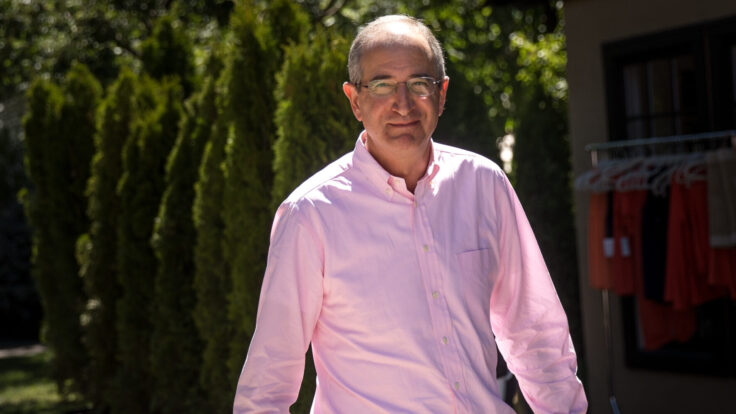
Welcome to Dry Powder. I’m Bill Cohan.
Today, we’ve got a jam-packed
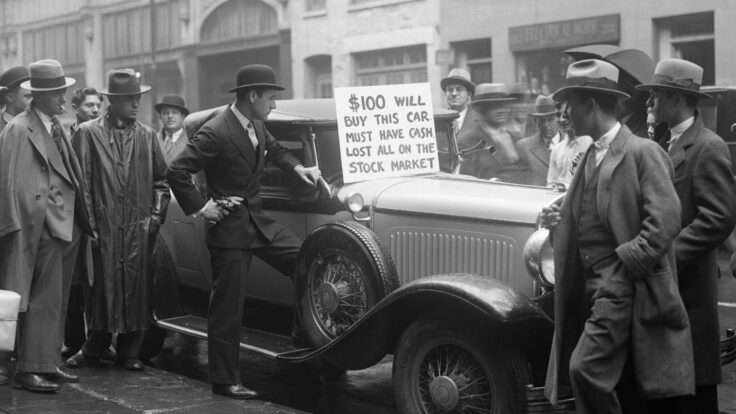
issue, featuring a few delights on some Trump-adjacent financial mishegas and curiosities. For the main event, I’m focusing on a debate unfolding in the markets, as stock indices keep pushing higher even while a number of prominent, historic consumer companies crater. Does this suggest the president’s economic policies are working, are a disaster, or something in between? Is it 1929, as friend-of-the-house Andrew Ross Sorkin might suggest? Read on to
find out.
And, you’ve likely read the news that Puck has completed its acquisition of Air Mail, the chic and sophisticated digital media company founded by my friend, the legendary editor Graydon Carter. I have contributed regularly to Air Mail since its founding six years ago, and am absolutely delighted by this combination and what it means for you and the wider Puck family. We’ll have news in the future regarding how you can combine your subscriptions. In the meantime,
I hope you are enjoying Puck and Air Mail.
But first… |
- Trump’s
$1.8 billion take: Have you ever wanted to know, exactly, how much Donald Trump, his wife, and his two eldest sons have pocketed since his second inauguration? The good folks at the Center for American Progress, the progressive think tank run by former Clinton-world denizen and erstwhile Biden advisor Neera Tanden, have pondered the same question. And now there is a CAP-sponsored website,
Trump’s Take, devoted to answering it on a minute-by-minute basis.
Trump’s Take seems modeled on the National Debt Clock in Midtown Manhattan. ($38.1 trillion and counting...) As of this morning, according to the site, the Trump family haul since January 20 is around $1.803 billion in cash, cash equivalents, and gifts—as opposed to unrealized profits on paper. (The site
notes that his unrealized gain is closer to $7.5 billion when you include the family’s stake in their various crypto holdings, including Bitcoin and World Liberty Financial.)
Not bad work if you can get it, right? “Trump has made most of the cash by launching his own crypto ventures—reversing his outspoken, skeptical stance on crypto—while aggressively deregulating the industry,” according to the website. “Trump takes a cut in cash from the trades and sales of the family’s coins
and tokens along with stablecoin interest.” Nota bene: The website does not include Trump’s wealth prior to January, from his existing real estate holdings and hotels and various licensing deals, “even though their value has inarguably increased as a result of his election.”
A 23-page white paper, available on the site, explains how the bulk of Trump’s winning—roughly $1 billion—is calculated from the success of World Liberty Financial, and how that crypto windfall does not
include any value from Trump’s other crypto ventures, including the Melania memecoin and the family’s stake in American Bitcoin. Meanwhile, according to the website, Trump has also raked in more than $200 million from the Trump memecoin, $400 million from the jet the Qataris gifted him, some $90 million in legal settlements, and $28 million from Amazon for Brett Ratner’s Melania Trump documentary.
The purpose of the site, of course, is to raise interest
in preventing another president from pulling a Trump. “The solution to this problem,” the authors write, “is to pass new laws to stop any president from having the ability to use their office for personal gain and for prosecutors to have independent jurisdiction to take on government corruption.” - Another Trump-adjacent curio: Wall Street has been atwitter from the recent near-collapse of the stock of Fiserv, which provides backend technology for banks
and payments providers. Fiserv, formerly known as First Data, was a KKR buyout once upon a time. But a very disappointing third-quarter earnings release on Wednesday resulted in new management slashing its full-year earnings projections, and the Fiserv stock tumbled 44 percent in one day, flushing some $30 billion in market capitalization in the process. The stock was down 47 percent for the week, and the company’s market value now stands at $36 billion.
Wall Street took note that the
former longtime C.E.O. of Fiserv was Frank Bisignano, the Jamie Dimon acolyte whom Trump named to head both the Social Security Administration and then the Internal Revenue Service. When Bisignano joined the administration in May, after being confirmed by the Senate, he sold his 3.3 million Fiserv shares for more than $500 million, and was able to defer the capital gains tax on those shares by buying Treasury securities. (This is one of the major perks for
corporate titans to encourage them to give up their lofty perches and enter government service.) Those 3.3 million shares would be worth $220 million today. “To see a company that, 12 months ago, had a sterling reputation fall off like this and finish the day down 44 percent, it is the most shocking earnings print I’ve had in my time covering the space,” Nate Svensson, a fintech analyst at Deutsche Bank, told the Financial Times. “Leaving aside what’s happening with the
financials, that is not something you can wave the magic wand and fix overnight.”
The company dutifully announced it was replacing its chief financial officer and several of its directors, including the board chairman and the head of its audit committee. Mike Lyons, who replaced Bisignano as C.E.O. in May, after joining Fiserv in January from PNC Financial, told analysts that he decided to “reset” analysts’ expectations for the company after reviewing and then rejecting
steps Bisignano had taken to achieve certain short-term goals.
“Frank routinely laid people off, deferred investments, and cut costs to meet quarterly earnings targets,” one longtime Fiserv analyst told me. He continued: “I think [Lyons] has finally woken up to the fact that Frank handed him an egg.” This analyst wondered aloud whether this sort of reset, with the corresponding collapse of the stock, might prompt federal scrutiny, but then offered his guess that “the D.O.J.
is not going to pursue him.” (A spokesman for the Treasury Department—Bisignano reports to Treasury Secretary Scott Bessent—did not respond to a request for comment.)
|
And now on to the main event… |
|
|
The market is notching record highs for the so-called Magnificent Seven—or should that be
Mag 10?—but a subterranean counternarrative is forming as once-secure food and consumer staples crater, and cracks emerge in the $3 trillion private-credit boom. |
|
|
Is it the best or the worst of times in the financial markets? That is the question. In the
last days of October, the Dow Jones Industrial Average, S&P 500, and Nasdaq all reached their all-time highs. The Dow is up 12 percent this year; the S&P 500 is up 17 percent; the Nasdaq is up 23 percent this year and 117 percent in five years. Can you catch your breath? And most of the stocks in the so-called Magnificent Seven—Apple, Microsoft, Nvidia, Alphabet, Meta, Tesla, and Amazon—are at or near their all-time highs, too.
Nvidia even hit a market capitalization of $5
trillion this past week. Apple, meanwhile, is worth more than $4 trillion and Microsoft is just behind. The equity markets have been so fuego that the Magnificent Seven is morphing into the Mag 10, with some Wall Street analysts adding Advanced Micro Devices, Broadcom, and Palantir to the club. Of course, Trump and his sycophants are touting these records as prima facie evidence of his noble stewardship of the economy, despite the tariff schizophrenia,
the government shutdown, and the rapid evisceration of our democratic norms.
And yet, a lurking insecurity lingers beyond the A.I.-fueled spoils of the Mag Seven, which now account for more than a third of the S&P 500. Indeed,
just about half of the index is in the red for the year. In particular, a group of food and consumer staples stocks—which should be the epitome of investing safety—tells a very different story than the one you hear every day on CNBC. The stock of Hain Celestial Group, the maker of Celestial teas and a variety of packaged foods like Terra chips, is down 81 percent
in 2025, and now has a market cap of a mere $105 million. Newell Brands, the maker of all sorts of consumer brands, including Rubbermaid, Sharpie, Graco, Yankee Candle, and Paper Mate, is down 66 percent year to date and 81 percent over the past five years. The company’s equity is now worth around $1.4 billion. It used to be a major highflier.
There’s more: Conagra Brands is down 38 percent year to date. Kenvue, the maker of a variety of consumer health brands, such as Band-Aids, that was
spun out of Johnson & Johnson, is down 34 percent this year and 46 percent since it was set up as an independent company in May 2023. Brown-Forman is down nearly 30 percent this year, Clorox is down 31 percent, and Campbell’s is down 29 percent. Even the venerable consumer behemoth Procter & Gamble, with a market cap of $350 billion, is down nearly 10 percent this year.
Who can say with certainty why this sector has been getting crushed this year? It could be that investors are just
desperate to chase the Mag Seven (or 10) and are giving up on these companies to reallocate their capital. Perhaps Trump’s tariffs, and inflation more generally, have been adding to the cost of the raw materials these companies use to make their products, and they have been unable to pass those costs onto consumers. Or maybe their growth trajectory has slowed and the market is punishing them: After all, consumer spending is cooling for the first time in a few years, as general anxiety about the economy and a weakening labor market starts to pervade personal buying habits. Anyway, it’s indeed beginning to look like a tale of two cities—a divided verdict for a divided nation. (As usual, this is not
investment advice.) |
It’s not just the equity markets. You will recall all the talk from Jamie Dimon and other
worthies about “cockroaches” a few weeks back after the unexpected freefall bankruptcies of First Brands and Tricolor Holdings. Yes, those were deals put together by Wall Street banks, not alternative asset managers. But there’s no question that there’s trouble afoot in the heretofore impenetrable private-credit market as borrowers struggle with their obligations. As Bloomberg
reported this week, holders of private credit positions in a variety of companies are increasingly converting those debt positions to equity to preserve the long-term value of their investments that might otherwise be lost.
Converting debt to equity is hardly a new phenomenon, of course. Apollo’s whole premise,
when it was first started in 1990 in the aftermath of the liquidation of Drexel Burnham, was that there was a huge opportunity in buying the debt of distressed companies at a discount and then converting that debt to equity. The difference here is that par buyers of the debt—investors who paid 100 cents on the dollar—are converting debt to equity, perhaps in the hope that things will improve. The Bloomberg article gave such recent examples of debt-to-equity conversions as those for Bonhams (the
auction house), Dainese (an Italian maker of sportswear), and Netceed (a telecom supplier). Nothing too major, in other words, but not nothing either.
Then there is the growing popularity of payment-in-kind, or PIK, debt issued by companies in financial stress that investors are still buying. Bloomberg dubbed this the “bad PIK” phenomenon, whereby corporate issuers are selling PIK debt—interest payments are deferred and added to the principal amount of the debt, hopefully to be paid
later—as a way to preserve badly needed cash.
Why investors are buying this crap paper is a mystery, of course. (Again, not investment advice…) But they are. Both First Brands and Lionsgate pedaled PIK debt, as did both Khoros, a Vista Equity–backed technology company, and Envision Healthcare, once owned by KKR, which used PIK debt before filing for bankruptcy and having ownership transferred to its creditors. Khoros, meanwhile, issued PIK debt at 16 percent interest before being sold
earlier this year in a so-called “distressed exit” to IgniteTech, an Austin-based company, and then something like 95 percent of its employees were laid off. |
The Gospel
According to Chanos
|
So should we listen to Trump and the other Mag Seven whisperers? The champions of private credit like
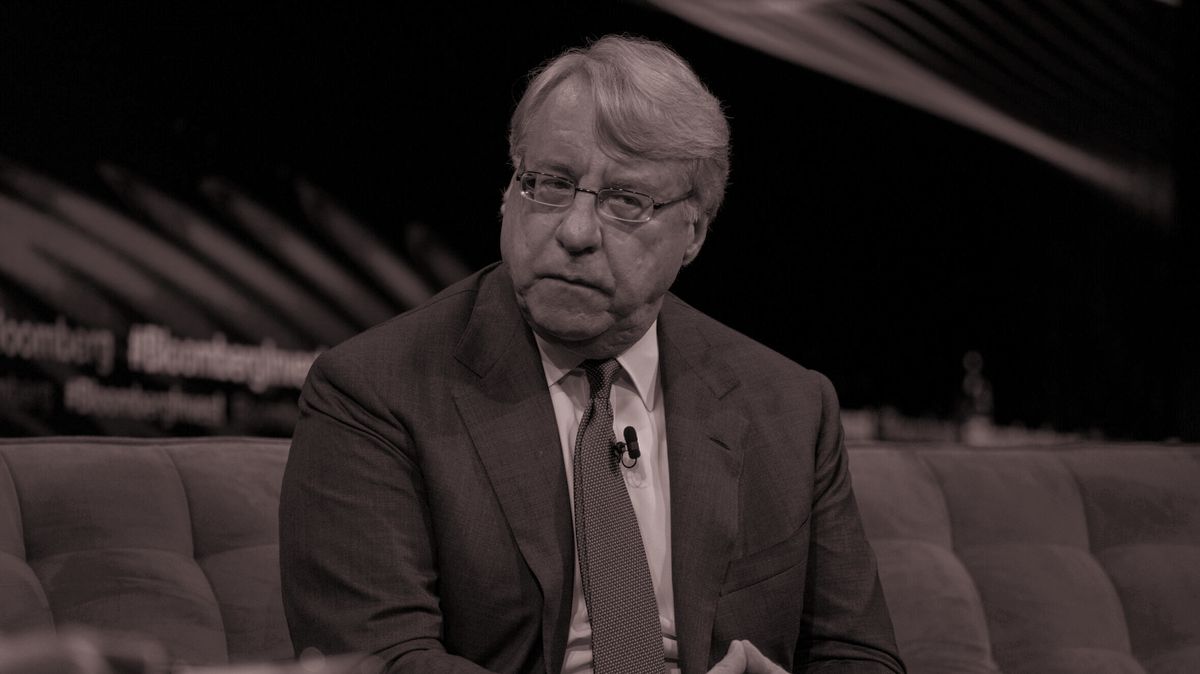
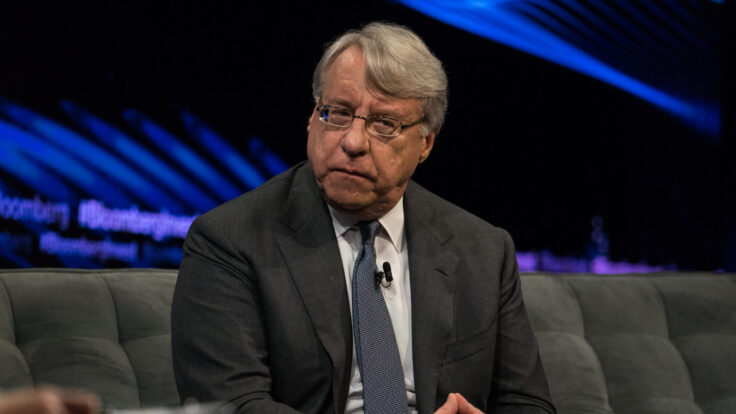
Jon Gray and Marc Rowan? Or should we follow the trajectory of less sexy, tariff-addled stocks? I rang up Jim Chanos, the legendary short seller, who has been starting to blow the shofar in recent weeks about potential trouble brewing in the credit markets. “With the advent of private credit … institutions [are] putting money into this magical machine that gives you equity rates of return for senior debt exposure,” he told the
Financial Times last month, adding that such high rates of return for senior secured debt “should be the first red flag” of trouble for investors.
Chanos told me he hadn’t seen anything yet that seemed systemic, such as an overabundance of poorly underwritten mortgage-backed securities in the years leading up to the 2008 financial crisis. The failures of both First Brands and Tricolor seem like “a series of one-offs” at the moment, and “so far,” he said, credit markets
“haven’t gotten concerned.” He noted that credit spreads—the difference between the yield on Treasury securities and the yield on riskier corporate debt—remain tight, indicating to him that credit investors don’t seem particularly worried about the risk of owning riskier debt—something that has always seemed like a “red flag” to me.
But Jim does have two growing concerns about potential problems in the exploding private-credit markets. One is just the general opacity of the promise of
getting high equity-like returns for investing in senior debt, which theoretically should be less risky and offer lower returns. But that seems to be the promise of the private-credit market. What could go wrong? “You don’t know how the sausage is made,” Chanos said. “You give them your money as an L.P., and they do all the work and lend money to all these great companies, who somehow magically are paying equity rates of return to borrow money because they have such good
businesses. I’m worried when the basics of investing get turned on their head, to the tune of hundreds of billions of dollars.” He warned to “be careful when something is too good to be true,” such as earning equity rates of return for senior debt, or senior secured debt. “What’s really at work here?” he wondered. “What don’t you see?” |
Chanos is also worried about the emergence of what is being portrayed as a virtuous circle in which issuing
institutions own captive insurance companies that pay out annuities to investors at a guaranteed rate of return. These issuing institutions then get paid fees to invest the annuitants’ money, hopefully in private credit and other loans and securities that provide a return in excess of the interest promised.
Jim watched the same thing happen back in the golden age of Mike Milken and Drexel Burnham, he told me, before the collapse of that investment bank.
“Milken was pushing his clients to get their hands on regulated financial institutions,” he recalled. “An increasing number of his biggest clients owned savings and loans, insurance companies, or trust companies.” He said he’s increasingly concerned that the likes of Apollo, Brookfield Asset Management, and KKR have captive insurance companies that provide the capital that the alternative asset managers then invest in their own deals.
Chanos has started to raise his concerns with his
clients and the investment committees on which he sits, he told me. “This whole thing is just setting up to be a witch’s brew,” he said. “It’s not blowing up yet, but they’re adding more and more ingredients to the fire. … Be careful in this rush to private credit, because there’s just some things here that don’t make sense and do seem too good to be true, and you’ve got to be asking a lot of questions to the sponsors.”
He’s always the person nobody wants to hear from in these situations,
he said, because he’s often the bearer of bad news in the middle of the raging party. But he’s happy to be the one to warn about trouble brewing, even if it’s still a little early. “I don’t think we’re going to be surprised when the cycle turns to see more and more of these funds cut their distributions, or, God forbid, close down,” he said. “But we’re not there yet.” |
|
|
Join Puck’s chief political columnist, John Heilemann, as he roams the corridors of power and influence in America on this
twice-weekly interview show, taking you beyond the headlines with the people who shape our culture: icons and up-and-comers, incumbents and insurgents, moguls and machers in the overlapping worlds of politics, entertainment, tech, business, sports, media, and beyond. The conversations are rich and revealing, unrehearsed and unexpected… and reliably impolitic. A Puck-Audacy joint, new episodes drop every Wednesday and Friday. |
|
|
Puck’s daily political newsletter from Washington on what’s really happening in this town, from the White House to the Pentagon
to Capitol Hill, K Street, and the campaign trail. |
|
|
Need help? Review our
FAQ page or contact us for assistance. For brand partnerships, email ads@puck.news.
You received this email because you signed up to receive emails from Puck, or as part of your Puck account associated with {{customer.email}}. To stop receiving this newsletter and/or manage all your email preferences, click here. |
Puck is published by Heat Media LLC. 107 Greenwich St., New York, NY 10006 |
|
|
|