|
Welcome back to The Best & The Brightest. I’m Peter Hamby.
Tonight, our new poll with Echelon Insights finds that voters keep souring on Donald Trump’s stewardship of the economy—and, simultaneously, their pessimism about prices is on the rise—even as the president tries to change the subject. We also have exclusive data on which Democratic protest tactics are resonating with the party’s base, which spectacles are flopping, and which Democrat has seen his 2028 stock rise in recent weeks…
But first, a few pertinent notes from Abby Livingston and Bill Cohan…
|
|
|
 |
Abby Livingston |
|
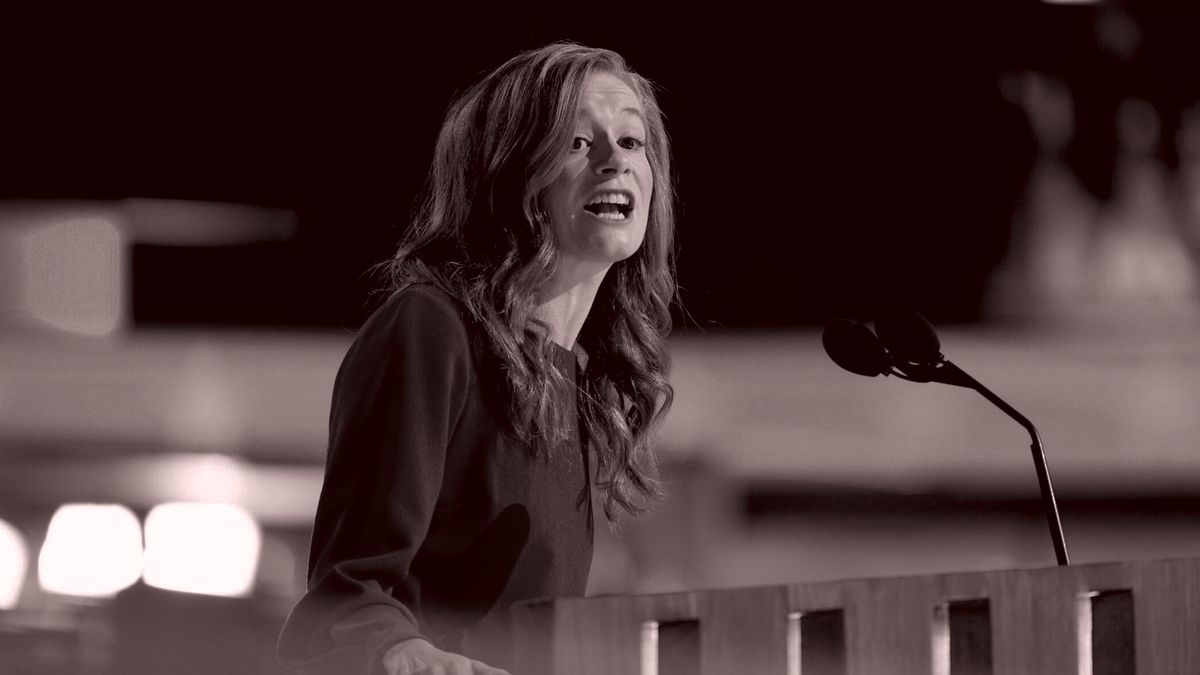
- A.O.C.’s money bomb: House Democrat Alexandria Ocasio-Cortez raised an ungodly sum of $9.6 million in the first quarter, according to her freshly filed campaign finance report. This is in the ballpark of Democratic Sen. Jon Ossoff’s $11 million for Q1. And while Ossoff is one of the best Democratic fundraisers ever, he’s also facing reelection in one of the most competitive races this cycle. Here’s another comparison for a sense of scale: A.O.C. raked in more during the first three months of this year than many of the House’s best fundraisers did over the course of the entire 2024 cycle, including Democrats Tom Suozzi ($9.5 million) and Pat Ryan ($8 million), and Republicans John James ($9.5 million) and Mike Lawler ($8.2 million).A.O.C. started this cycle with $3.7 million in cash on hand, spent about $5 million, and was sitting on $8.3 million as of March 31. Some of her biggest expenditures went to advertising on Facebook and to the Squad-friendly Democratic consulting firm Middle Seat for texting services and email list acquisitions. As I reported a few weeks ago, she’s recently become a dutiful donor to the D.C.C.C. after tangling with the campaign arm in the past. Over December and January, she paid off her assigned dues of $275,000—which we now know is a drop in the bucket for her campaign’s financial operation.
Speculating about A.O.C.’s future is a favorite Democratic parlor game. This demonstration of fundraising power will echo in Washington, whether her next move is to become a House committee leader, run for Senator Chuck Schumer’s seat in New York… or even make a bid for the White House.
|
|
|
|
And now, here’s Bill on the latest Trump chatter on Wall Street…
|
|
|
 |
William D. Cohan |
|
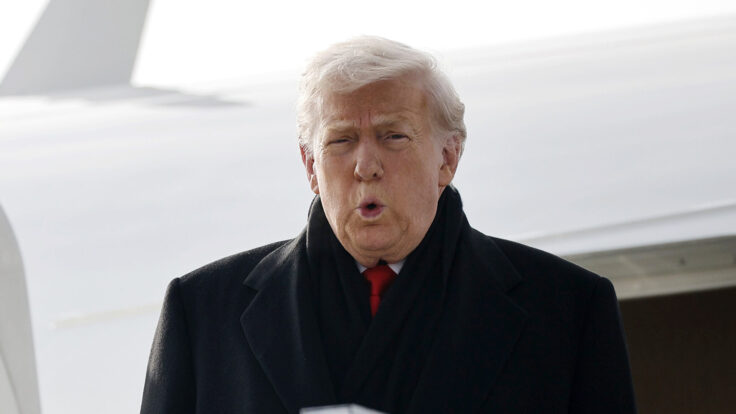
- It’s the bond market, stupid: The equity markets finally showed some signs of life on Friday, with the Dow Jones Industrial Average up 1.5 percent and the Nasdaq up 2 percent. But confidence in the financial markets has been seriously shaken, not stirred, by Donald Trump’s tariffpalooza. As far as I can tell, there has been no coherent logic to the president’s moves, despite the efforts of the sycophantic quartet of Peter Navarro, Howard Lutnick, Scott Bessent, and Stephen Miller to explain what Trump is doing via increasingly pathetic and contradictory public statements. The sole purpose, it would seem, is to use the wholesale imposition of tariffs as a power flex.To wit, late Friday night, in a jargon-filled technical document from the U.S. Customs Department, Trump—negotiating against himself, naturally—exempted smartphones, laptops, and other electronics from most of the tariffs, a clear sop to his good friends in Silicon Valley. The madness, however, continued to play out in the bond market, which did not follow the stock market’s gain on Friday. The yield on the 10-year Treasury bond is now 4.5 percent, up from 3.9 percent in a week—a pretty shocking 15.4 percent increase in just a matter of days. (As I discussed more extensively on Wednesday, it’s always the bond market, stupid.)
It’s possible that some of the president’s advisors recognize the danger lurking for the economy if the credit markets continue to back up so profoundly, which might explain Trump’s reversals. Navarro argued on Sunday on NBC’s Meet the Press that these exemptions are “not exclusions”—whatever that means—and suggested the details could change again to include tariffs on the computer chips within exempted electronics. Around the same time, Lutnick went on ABC’s This Week and said there would be an additional “semiconductor tariff” in “probably a month or two.” Who knows what the plan is at this point?
There were, however, some interesting notes of caution shared this past week from powerful corners. In a note to his inner circle that was shared with me, the former banker and Trump 1.0 Commerce secretary Wilbur Ross had a simple message: Everyone just calm down! [Read More]
|
|
|
|
As voters lose trust in his stewardship of the economy, the president is shifting to the familiar terrain of immigration. The problem for him is that, as fears of recession grow, the issue is tumbling down the list of voters’ concerns.
|
|
|
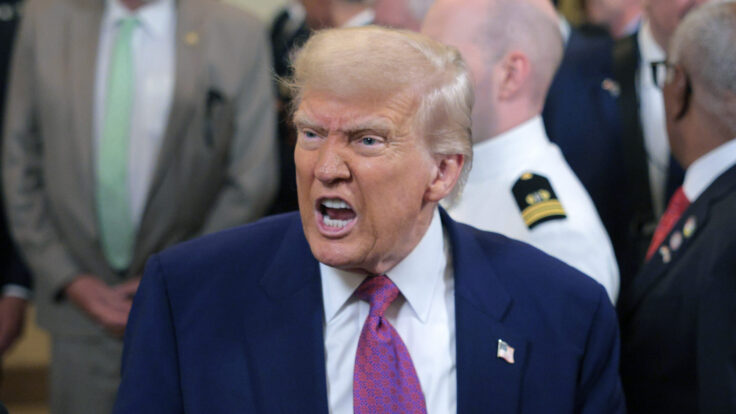
If it wasn’t abundantly clear, Donald Trump would love to talk about Kilmar Abrego Garcia, thank you very much. The Salvadoran migrant—who’d been living in the United States legally, but was deported and transferred to Nayib Bukele’s ghoulish prison camp in El Salvador last month without trial or due process, or really any evidence of wrongdoing at all—has become this week’s main character in Washington. Garcia’s family is fighting for his release, multiple federal judges have called his deportation “lawless” and “unconscionable,” and even the Supreme Court unanimously upheld a lower court order to “facilitate” Garcia’s return to the United States. Trump’s response? Openly defying the rule of law, backslapping Bukele in the Oval Office, and watching the news media go into outrage mode as the president courts a constitutional crisis.
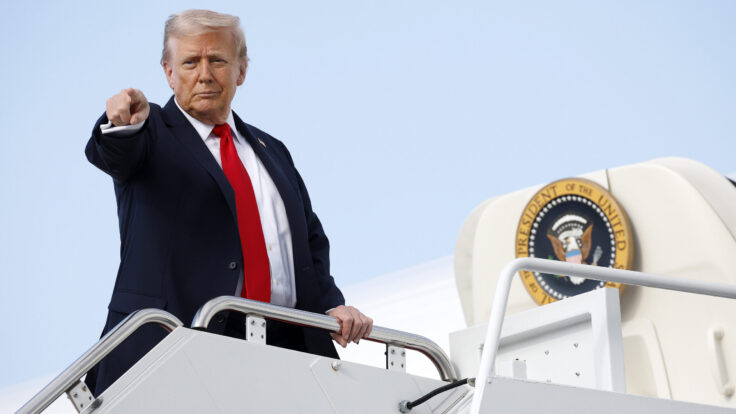
The behavior is predictable—the president wants to get back to playing the hits. Trump is coming off what was unquestionably the worst week of his still-new presidency, having launched a trade war that’s spooked global markets and made voters question whether he’s actually up to the task of lowering costs and supercharging the economy, as he promised during the 2024 campaign. Changing the subject to immigration puts him on safer ground. Trump loves a culture war fight, and after last year’s campaign wipeout, few elected Democrats seem willing or eager to speak out in loud defense of a person who initially entered the country illegally.
While polls demonstrate that voters of all stripes are starting to doubt Trump’s ability to manage the economy, as I wrote last week, the president still has majority support when it comes to immigration. In fact, a new poll from Echelon Insights, which partners with Puck for monthly polling on the electorate, uncovered that immigration is the only remaining issue where Trump has credibility with the American voter. The poll of likely voters, conducted from April 10-14, found that 54 percent “approve of the way Trump is handling immigration.” Those voters probably aren’t reading SCOTUSblog or following the legal intricacies of the Garcia case, but Trump knows that the public generally has his back on questions of who gets to be in the United States and who doesn’t.
The problem for Trump is that since the election, immigration has fallen down the voting public’s list of concerns, while anxieties about the economy and prices have only grown louder, with chatter about a possible recession becoming routine. In February, shortly after the inauguration, Echelon poll respondents said that immigration was the second-most important issue facing the country, after the cost of living. In the new poll, immigration has slipped to fourth place on the list of concerns, behind the cost of living, jobs and the economy, and political corruption. The numbers are showing that while Trump might be trying to change the subject—to illegal immigrants or Harvard or NPR—economically anxious voters aren’t interested in the sideshow.
Even Trump’s own voters are starting to express real concerns about his ability to bring down costs and manage the economy—an area that was once seen as a key strength of his, given his status as a “businessman” candidate and president. Echelon found that while 74 percent of Trump 2024 voters “strongly approve” of his immigration policies, only 53 percent strongly approve of his handling of the economy. “That gap speaks volumes,” said pollster Kristen Soltis Anderson, a founding partner at Echelon. “Donald Trump’s core strength in the polls over the last decade has been his strength on the economy. The fact that his job approval has softened on this is a potential red flag. If you look at Trump voters, the intensity of their approval for Trump’s economic moves is much lower than for immigration. A significant number of Trump’s own supporters are showing some hesitance around his latest moves on tariffs.”
Indeed, there are red flags for Trump lurking in every corner and crosstab of the Echelon poll. Only 44 percent of voters approve of his handling of the economy, down five points since February. On tariffs, 55 percent of voters disapprove, up six points from February, and a massive 70 percent of voters now say they are “concerned” about tariffs. A measly 11 percent of voters say tariffs should be “a top priority” for the U.S. economy—a hilariously bad number for a key presidential priority. A clear majority of voters (56 percent) also say that “Congress should act to prevent Donald Trump’s tariffs from taking effect.” The background music for these concerns: 54 percent of Americans say “the current economic situation in the United States is getting worse,” up a dramatic nine points from just two months ago. Also up nine points since then: The number of Americans (44 percent) who say their “personal economic situation is getting worse.”
|
|
Trump’s poll numbers on the economy are boosting Democrats, too. Last November, on the question of who would best handle the economy, Trump won over Kamala Harris by seven points. In the new Echelon poll, Republicans and Democrats are now tied at 43 percent on the question of which party is trusted more to manage the economy. Trump is also losing—in ugly fashion—crucial support among independent voters who swung in his direction last fall. In February, after Trump came into office, Echelon found that most independents supported Trump on the economy, with only 41 percent of them disapproving. Two months later? That disapproval rating has skyrocketed by 13 points: 54 percent of independents now disapprove of how Trump is handling the economy, a dire number for any president, especially one just a few months into a new term; the pollster and focus group guru Frank Luntz told CNN’s Jessica Dean on Tuesday that independents “are becoming increasingly hostile to this administration because they think [Trump] is too focused on political matters and not day-to-day concerns.”
Another CNN interview caught my eye last week, too, because it showcased another political challenge for Trump. After being asked by CNN’s Kasie Hunt, “Do you think it’s Donald Trump’s economy now?” Louisiana Republican Senator John Kennedy, whose state depends heavily on energy and agriculture exports, responded with a blunt yes. “I think it is, no question,” he said. “No question. I think once he decided to add the tariffs, clearly he will be held responsible, as he should.” Since launching his tariff crusade, roiling the markets, and possibly spiking prices on a multitude of consumer goods, it’s clear that Trump can no longer blame Joe Biden for the high cost of living in this country.
|
Democrats are remembering what it’s like to be in the opposition, where it’s easier to throw darts than actually take on the burden of governing. But given their across-the-board losses last November, party leaders have few options in Washington other than to get loud and figure out how to force an exhausted electorate to pay attention to the more unpopular elements of the Trump agenda. For Democrats, it’s a confusing and frustrating moment. When protests at local Tesla dealerships are the best thing going, it’s a good sign your party has some work to do. As for the Democratic base—they want more.
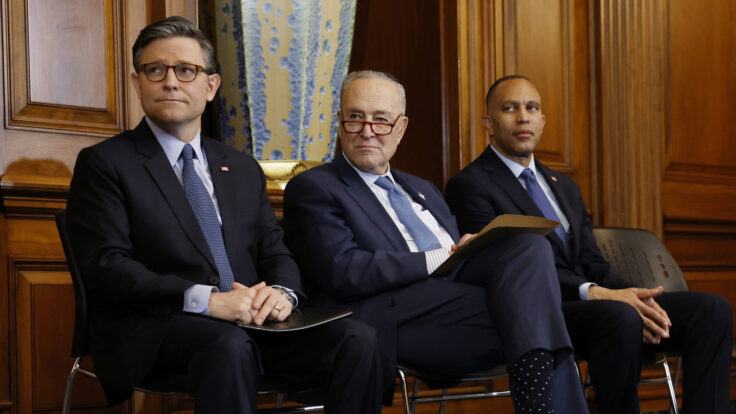
Senate Democratic leader Chuck Schumer was pilloried by progressives last month for not shutting down the government during budget negotiations, a move that’s looking more and more savvy as Trump drives down his own poll numbers; California Gov. Gavin Newsom took big-time flak from the Very Online crowd for daring to talk to the enemy on his fledgling podcast; and a younger generation of Democrats are now launching primary challenges against gerontocratic figures in the party. Meanwhile, gerontocratic figure Bernie Sanders has been drawing tens of thousands of angry progressives to his “Fighting Oligarchy” rallies in red states. Sanders also took his message to the Outdoor Stage at Coachella on Saturday, surprising festival-goers at sunset just as their molly was kicking in.
So what’s working, and what isn’t? We asked Echelon to test which protest tactics are resonating the most with Democratic voters in these early days of Trump 2.0. Almost all Democrats (86 percent) supported “contacting your elected representatives,” which, well, duh. And 74 percent of Dem voters supported “protests in the streets.” Meanwhile, a large number of Democrats (78 percent) were in favor of “boycotting companies that are supportive of Trump policies”—with Elon Musk–owned Tesla being the most prominent offender at this point. Still, a majority of Democratic voters (53 percent) opposed “leaving messages on Teslas,” a.k.a. vandalizing cars and trucks with anti-Elon messages. That would put House Democratic leader Hakeem Jeffries—who recently condemned Tesla vandalism as “political violence”—on the right side of his party’s base. As for the Senate, 61 percent of Democrats support “filibusters in the Senate,” but about a quarter of Dem voters said they were unsure, a good reminder that most Americans aren’t fluent in Washington jargon and aren’t paying attention to Capitol Hill process squabbles.
As for that government shutdown fight that Schumer avoided, Echelon found that while a majority of Democrats (57 percent) said they would support “a government shutdown to prevent permanent DOGE cuts going into effect,” shutdowns have less support than public protests or boycotts, and 43 percent of Democrats said they either oppose shutdowns or are “unsure” about the concept. In other words, while many highly engaged progressives wanted to hunt down Schumer with pitchforks, a significant number of Democrats had mixed feelings about the whole debate, if they were even paying attention at all.
One Senate spectacle did seem to score points with Democrats: Cory Booker’s record-breaking 25-hour floor speech earlier this month, a rhetorical marathon that did pretty much nothing to stop Trump or Republicans, but still managed to endear the New Jersey Senator to those voters demanding that Democrats “do something.” About half of all voters (49 percent) and 63 percent of Democrats said they had heard something about the Senate speech. (Curiously, given Booker’s efforts to promote the speech on social media, young voters were the least likely generational cohort to have heard about it.)
Still, Booker helped himself politically: He popped in Echelon’s monthly test of possible 2028 Democratic presidential contenders. Back in February, Booker was tracking at just 2 percent on the list of potential Democratic candidates. After his speech, Booker jumped to 11 percent, putting him in second place—well behind Kamala Harris, but now ahead of most other big names in the party.
|
|
|
|
Join Emmy Award-winning journalist Peter Hamby, along with the team of expert journalists at Puck, as they let you in on the conversations insiders are having across the four corners of power in America: Wall Street, Washington, Silicon Valley, and Hollywood. Presented in partnership with Audacy, new episodes publish daily, Monday through Friday.
|
|
|
|
Unique and privileged insight into the private conversations taking place inside boardrooms and corner offices up and down Wall Street, relayed by best-selling author, journalist, and former M&A senior banker William D. Cohan.
|
|
|
Need help? Review our FAQ page or contact us for assistance. For brand partnerships, email ads@puck.news.
You received this email because you signed up to receive emails from Puck, or as part of your Puck account associated with . To stop receiving this newsletter and/or manage all your email preferences,
click here.
|
|
Puck is published by Heat Media LLC. 107 Greenwich St, New York, NY 10006
|
|
|
|