Hello, and welcome back to The Best & The Brightest. I’m Julia Ioffe with your Thursday foreign policy dispatch. Happy Juneteenth, which, five years after the protests against police violence and for racial justice in this country, is all that has survived the backlash: a new federal holiday.
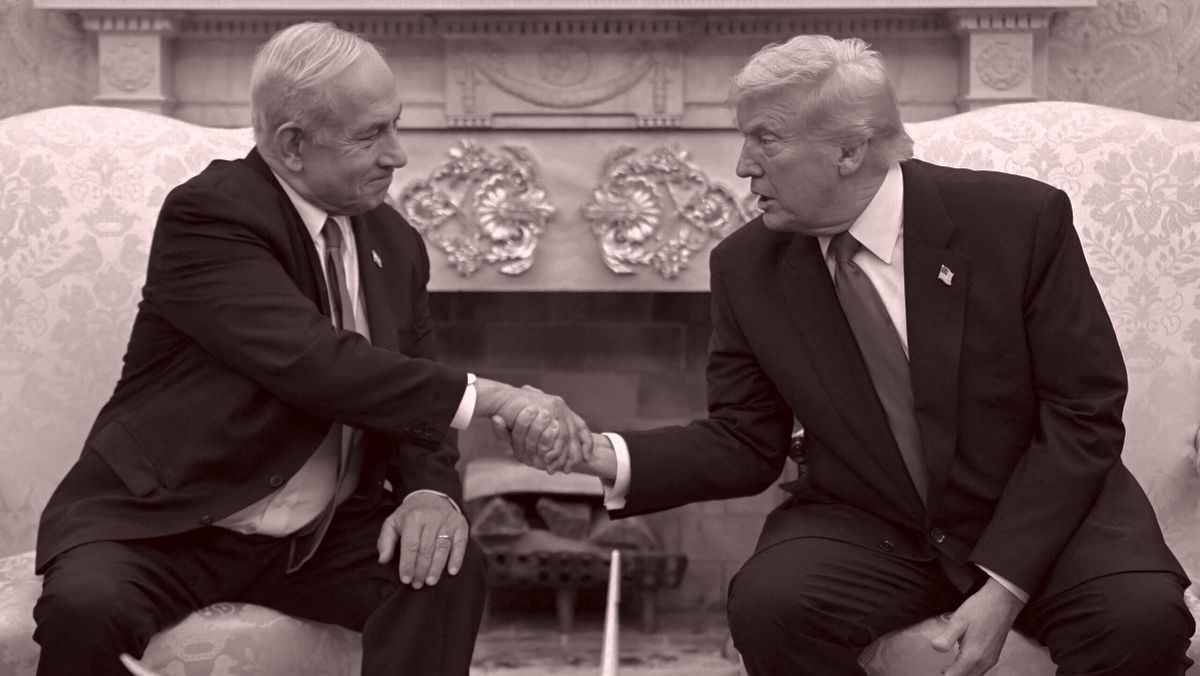
As I write this, the U.S. stands on the precipice of its third major war in the Middle East in 25 years—maybe. The U.S. president is deliberating whether to help Bibi Netanyahu finish the job in Iran—maybe. This will-he-or-won’t-he moment feels a lot like August 2013, when we awaited then-President Barack Obama’s decision on whether to bomb Syria in retaliation for Bashar al-Assad’s use of chemical weapons on civilians in Ghouta, which Obama had called a “red line.”
Obama ultimately used Congress’s anticipated disapproval as a fig leaf to avoid a military strike, but the reality then was the same as it is now: The president alone, not Congress, will make the choice. Trump, like Obama before him, positioned himself as a rejection of George W. Bush’s disastrous foreign policy. But both men ultimately found that actually commanding the world’s strongest military is much thornier than being in the opposition—and that America just can’t quit the Middle East.
More on this—and on the chatter in Washington—below.
But first…
|
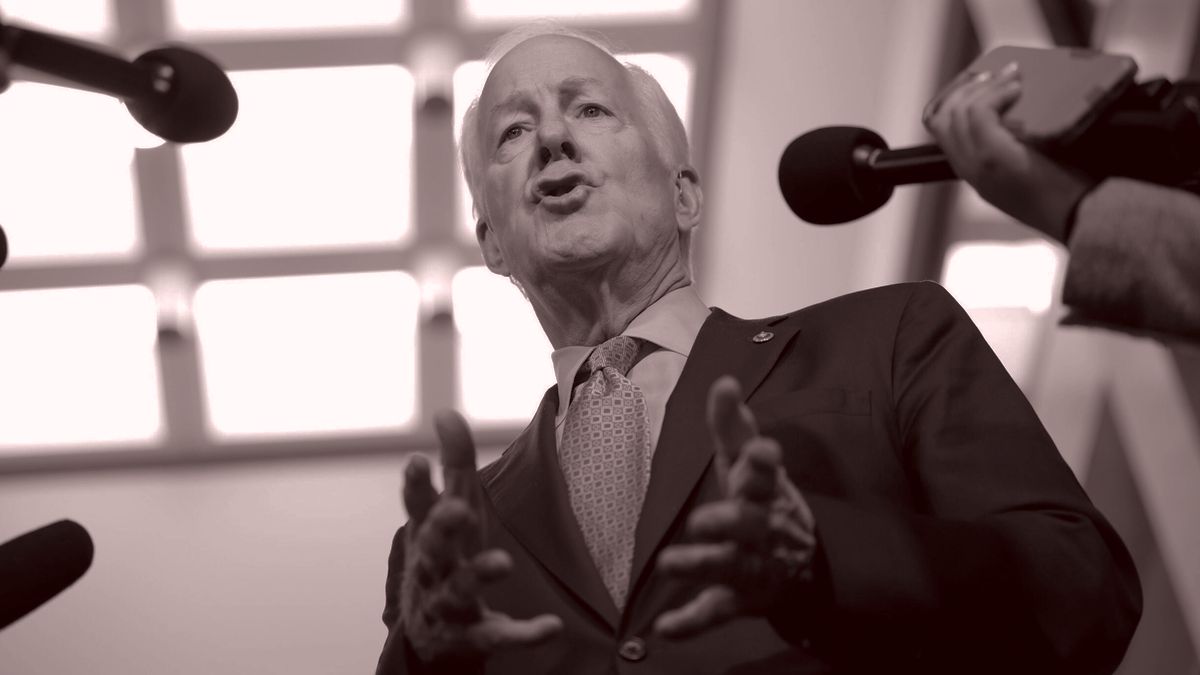
- Non-interventionism makes strange bedfellows: Much ink has already been spilled about how Iran and Israel are splintering the MAGA coalition, but what jumps out at me is how Trump has once again turned Washington’s political horseshoe into an ouroboros. We have Mehdi Hasan saying that Tucker Carlson’s thrashing of Ted Cruz over the senator’s support for Iran strikes is “so good. So on point.” Bari Weiss’s pro-Israel Free Press is slamming Marjorie Taylor Greene and A.O.C., both opposed to another war in the Middle East, as ideological allies. Progressive Rep. Ro Khanna is co-sponsoring a bill with the arch-libertarian Thomas Massie to make Trump get congressional approval before going to war—with A.O.C. publicly signing on. Khanna told Kaitlan Collins that he agrees with Greene, Carlson, and Steve Bannon on the issue more than he does with Chuck Schumer.The list goes on. People who expect ideological consistency from Trump have been consistently disappointed, but he has been remarkably consistent in scrambling traditional political alliances. Look, for example, at his embrace of putatively far-left figures like R.F.K. Jr. and Tulsi Gabbard (though the latter is now, apparently, sleeping on the couch)—or the emergence of an unlikely source of Republican opposition in the Senate: Josh Hawley.
|
|
|
|
A MESSAGE FROM OUR SPONSOR
|
bp added $190+ billion to the US economy over the last three years. Like investing in our Cherry Point refinery, the largest supplier of jet fuel to Seattle, Portland and Vancouver airports. These updates increased efficiency and reduced emissions. One more way we’re investing in America.
|
|
|
- Kirk-Wolicki horseshoe theory: Charlie Kirk, the far-right influencer who has the ear of Don Jr. and the president, had an interesting guest the other day on his popular podcast: Rabbi Pesach Wolicki, an Israeli American who acts as an intermediary between the American Christian-Zionist right and the Israeli right. When asked by Kirk if America should cut off aid to Israel, Wolicki said, surprisingly, yes. American aid forced certain parts of the Israeli defense industry to shut down because Israel had to buy American, Wolicki explained; it came with strings attached; and it wasn’t worth the political price.The idea of an aid cutoff, which the isolationist Kirk clearly found quite appealing, lives on the political fringes of Israeli discourse—though Finance Minister Bezalel Smotrich briefly embraced it when he felt that Joe Biden wasn’t allowing Netanyahu to do absolutely everything he wanted. “You have the occasional dumbasses in or out of the government who scream, Who needs the U.S.? and We can manage without U.S. military aid, but it’s on the margins,” said Alon Pinkas, a former Israeli consul general in New York. “It’s probably 20 to 30 percent on a good day,” Israeli journalist Amir Tibon told me. “It rises when America is more aggressive in demands from Israel, and falls when it is more permissive.”
But the Kirk-Wolicki conversation made me wonder: As Netanyahu involves Trump further into his Iranian adventure, angering the MAGA base, will an idea on the fringes of the Israeli right become more popular on the American right? After all, look at how viciously Carlson laid into Cruz for his blind support of Israel, or at Steve Bannon’s recent invective against Netanyahu. Or at how being tough on Russia and aiding Ukraine was G.O.P. scripture—until it wasn’t. The MAGA base hates foreign aid and other entanglements, hates feeling like they’re putting allies’ needs first, and hates being told that this is just how it’s always been done.
Bibi was so relentless in opposing the Obama administration’s Iran deal back in 2015 that he essentially wrote off Democrats, contributing to an anti-Israel turn in some factions of the party. If Bibi pulls the U.S. into war with Iran, does he risk permanently alienating the American right, too?
- Iran’s “breakout” timeline: There’s a dispute about how close Iran is to getting the bomb. Were they right on the precipice, as the Israeli government has insisted? Or were they months or even years away, as Gabbard and, apparently, the American intelligence community has said? The specific time horizon, though, is a red herring—Israel does not want Iran to have a nuclear program in any stage of development. Israel attacked now because it could: Hezbollah, Hamas, and the Houthis have been decimated; Assad is gone; and Iran is weak. The relevant factor was not the time to nuclear breakout, but the time left before Iran could reconstitute its conventional and proxy strength and better defend against the Israeli military.
|
|
And now, on to the main event…
|
|
|
|
An apparent Israeli campaign to credit Trump for the attack on Iran, and to flatter the president into joining the war, has met internal resistance and plenty of eye-rolling in the national security world. Still, there’s no question that Bibi knows how to play his counterpart—and that the American president is uniquely susceptible to ego stroking.
|
|
|
|
Almost as soon as Israeli bombs started falling on Tehran last Thursday, a debate sprung up in Washington: Had Benjamin Netanyahu ignored Donald Trump’s request to hold off on striking Iran until the nuclear talks ran their course? Or was Trump, as some in the D.C. national security establishment contended, in on it the whole time? It’s a particularly fateful question now, as Trump publicly weighs whether the United States should join Israel in attacking Iran’s nuclear infrastructure or stick it out at the negotiating table. Today, he said he would make a decision “within the next two weeks.”
Unless, of course, the decision had already been made, and the president’s equivocation was just a smokescreen. According to this school of thought, Trump hadn’t just given Bibi the greenlight to start bombing last week, two days before U.S. envoy Steve Witkoff’s planned meeting with the Iranians in Oman; he’d been helping Israel prepare for the attack, and his warnings against such an operation were all part of an elaborate disinformation campaign to lull the Iranian leadership into complacency. “It was pre-agreed,” one D.C. foreign-policy insider assured me.
|
|
|
|
A MESSAGE FROM OUR SPONSOR
|
bp supports ~300,000 US jobs. Like the construction, engineering and technology jobs that built our new centralized processing facilities in Texas. These help us produce more natural gas while also reducing our operational emissions. See all the ways bp is investing in America.
|
|
|
It sounded fantastical—can you imagine Trump keeping a secret of that magnitude?—especially when the U.S. continues to withhold the heavy ordinance the Israelis say they need. And there were others in the national security world who dismissed it as lunacy. Still, this theory was circulating on social media and on prominent OSINT channels, and being pushed by people like Aviva Klompas, a pro-Israel activist, who claimed that a “senior U.S. intelligence official” had told her that “the U.S. provided real-time reconnaissance support to Israel before, during, and after the ongoing strikes—using secure channels to coordinate every step.” The ostensible involvement of the U.S. was also reported in Israeli media, which was why I started hearing from friends in Israel that Trump and Bibi had run a brilliant psyop on the ayatollahs.
By Friday morning, this idea had found its way into a story by Axios’s ace Israel reporter, Barak Ravid. His piece was sourced to two Israeli officials, who insisted the attacks were “all coordinated with Washington,” and that the pretense of U.S. objections to them was actually just meant “to convince Iran that no attack was imminent and make sure Iranians on Israel’s target list wouldn’t move to new locations.” And though Ravid noted that “the U.S. side hasn’t confirmed any of that,” the fact that someone of his caliber had printed the suggestion gave it a whole new life in Washington.
But in the week since the Israeli attack on Iran commenced, it’s been looking more and more like the story of that brilliant Trump–Bibi psyop was itself a psyop, with Trump as the target. Whatever the president’s level of involvement in, or assent to, Israel’s bombing campaign—and all we have now are conflicting accounts—it’s clear that Bibi knows how to manipulate his counterpart, possibly right into a war that Trump has claimed he doesn’t want.
|
In the intelligence world, agents tailor their approach to a target based on that person’s specific psychological makeup and desires. Two classic weak points, of course, are money and ego, so bribes and elaborate flattery can be simple ways to get someone to do what you want. This is why, for example, Daimler, now known as Mercedes-Benz Group, bribed the dictator of Turkmenistan with a German translation of his book of philosophical musings, the Ruhnama, stuffing hundreds of copies of it into a solid gold chest. (Daimler got the contract—and, in 2010, was charged with violating the Foreign Corrupt Practices Act.)
Anyway, Trump has never been shy about what he likes: money, and winning. You could get on his good side by, say, giving him a $400 million jet or investing in his family’s crypto business. But if you don’t have Gulf levels of cash sloshing around, you can always try to engineer something that looks like a win for him. Bibi was presumably aware that he risked doing the opposite—making Trump look like he’d failed to score a big, beautiful nuclear deal with Iran and ward off yet another Middle East conflict. But he has, at every step since beginning his bombing campaign, found ways to flatter Trump and attribute the stealth and ingenuity of the operation at least partly to the American president.
After all, Bibi’s goal isn’t just to keep Trump from being angry at him, but to get Trump to finish the job of destroying Iran’s nuclear program with B-2s and bunker busters. He has been so shrewd in publicly over-attributing the campaign’s successes to Trump, and constantly showering him with praise. “Happy birthday to you, Donald J. Trump,” Bibi said in a cringey video over the weekend, in which he wished “a double happy birthday” to Trump and the U.S. Army. “You’ve been an extraordinary leader: decisive, courageous, clear-visioned, clear-actioned. You have done great things for Israel. You have been an extraordinary friend to the Jewish state, and to me personally. And we appreciate what you’re doing now, helping protect Israeli lives against the criminal regime in Iran.” A few days later, he added that “American pilots are intercepting drones alongside our pilots.”
|
|
|
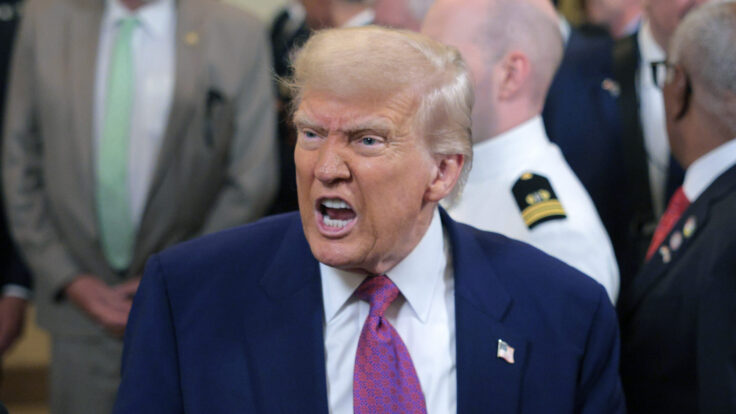
Trump likes a winner, which is why he changed his tone on the Israeli operation as soon as it became clear that it was being praised as a daring, ingenious success. While Secretary of State Marco Rubio put out a hasty statement last Thursday night to disclaim any American involvement in the just-commenced Israeli bombing campaign, by Friday morning Trump was calling reporters to praise what he called “a very successful attack, to put it mildly,” and to affirm that “we of course support Israel, obviously, and supported it like nobody has ever supported it.” By Tuesday, Trump was using the first-person plural to describe the Israeli attack, writing that “We now have complete and total control of the skies over Iran,” adding, “Nobody does it better than the good ol’ USA.”
|
Bibi’s been happy to let Trump take as much ownership as he wants, praising him, giving credit where it’s not necessarily due and—perhaps learning from Zelensky’s Oval Office experience—making sure to say thank you. For good measure, according to some reports, he has also reminded Trump that the Iranian regime has tried to kill him.
Meanwhile, the Israeli government continues to box Trump in by playing up the likelihood he will join their military operation. The closer he gets to his decision, it seems, the more anonymous Israeli officials are telling American reporters that Trump is leaning toward busting those Iranian bunkers. (In fairness, American officials are leaking much the same.)
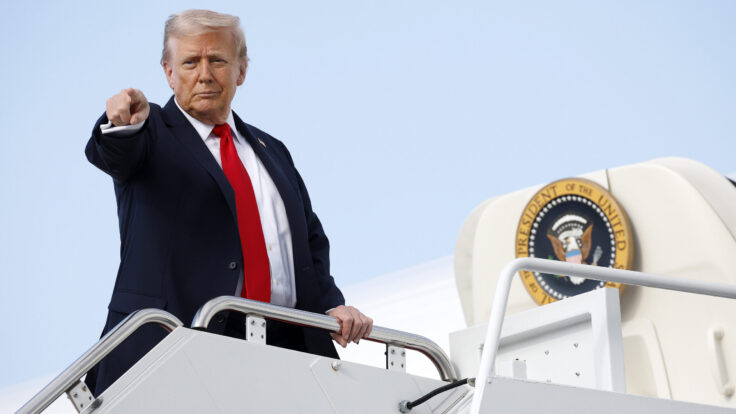
Trump, however, continues to maintain what he sees as his singular competitive advantage: unpredictability. And he, too, appears to be playing for time. Yesterday, Trump told reporters, “I may do it, I may not do it.” Today, the White House gave itself a two-week window and pointed to “a substantial chance of negotiations that may or may not take place with Iran in the near future.” If you followed the retreating horizon on when Trump would impose tough new sanctions on Russia, which receded two weeks at a time, you’ll recognize that time frame: two weeks seems to be Trump’s way of saying “maybe never.”
It is quite possible that Bibi will go too far, making Trump realize he’s being boxed in and manipulated. Then again, it’s Trump. He could easily take the thank-yous and the credit for an Israeli military job well done, pocket it, get cold feet, and give nothing in return. Which is perhaps why Bibi, standing at an Israeli hospital bombed by Iran on Thursday, declared that, actually, Israel can finish the job alone.
|
|
That’s all from me, friends. I’ll see you back here next week. Until then, good night. Tomorrow will be worse.
Julia
|
|
|
|
Join Emmy Award-winning journalist Peter Hamby, along with the team of expert journalists at Puck, as they let you in on the conversations insiders are having across the four corners of power in America: Wall Street, Washington, Silicon Valley, and Hollywood. Presented in partnership with Audacy, new episodes publish daily, Monday through Friday.
|
|
|
|
Unique and privileged insight into the private conversations taking place inside boardrooms and corner offices up and down Wall Street, relayed by best-selling author, journalist, and former M&A senior banker William D. Cohan.
|
|
|
Need help? Review our FAQ page or contact us for assistance. For brand partnerships, email ads@puck.news.
You received this email because you signed up to receive emails from Puck, or as part of your Puck account associated with . To stop receiving this newsletter and/or manage all your email preferences, click here.
|
|
Puck is published by Heat Media LLC. 107 Greenwich St, New York, NY 10006
|
|
|
|