Welcome back to The Hidden Layer. I’m Ian Krietzberg. Thanks to those of you who
signed up following my TV appearance on CBS News in the midst of the truly hectic 24-48 hours surrounding Trump’s new A.I. Action Plan.
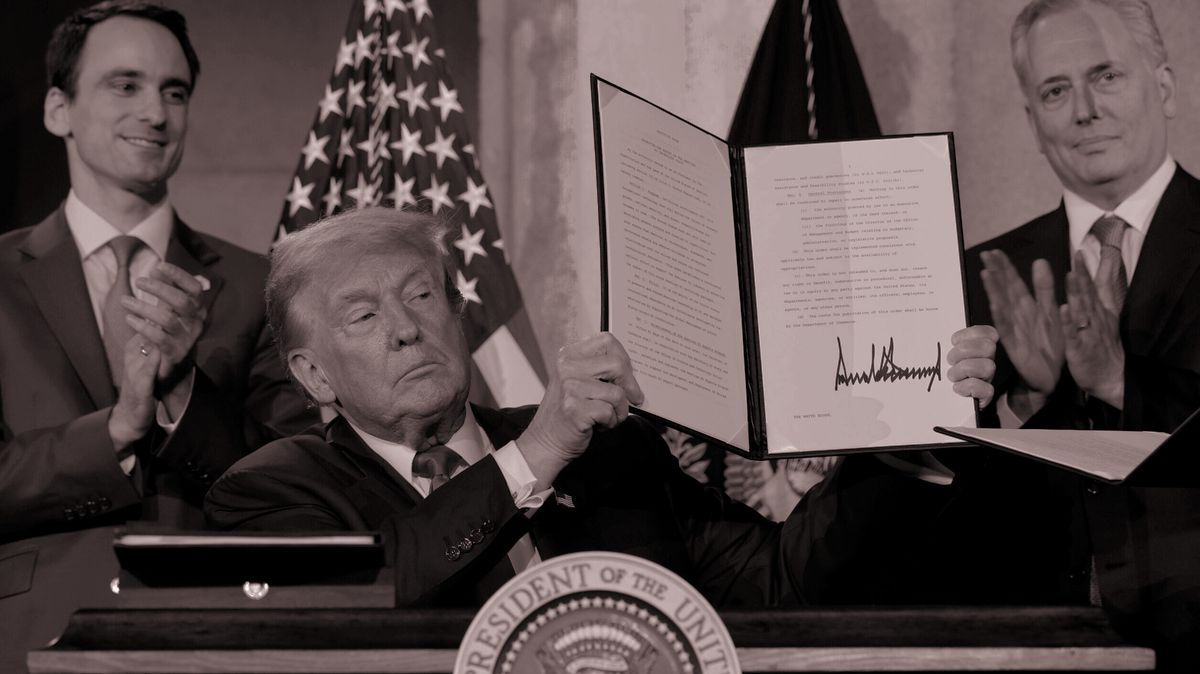
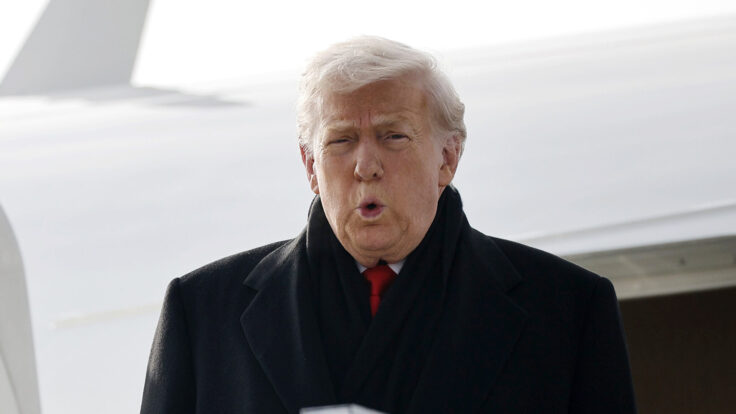
The president said quite a lot during his policy speech last night, which was delivered to a cheering crowd of Silicon Valley heavyweights, and featured Nvidia’s Jensen
Huang right up front. But I’ll just drop this line for you, here: “Winning the A.I. race will demand a new spirit of patriotism and national loyalty in Silicon Valley and long beyond Silicon Valley.”
In today’s issue, the verdict on the administration’s long-awaited A.I. Action Plan, what it might mean, and what we can expect to happen next.
Also discussed today: Jim Steyer, Nick Reese, Chris Lehane, Epoch
AI, Sam Altman, OpenAI, the Stargate project, Mistral, David Sacks, Sarah Myers West, Hamid Ekbia, Sasha Luccioni, and... a Gabe Dixon song that doesn’t exist.
Let’s get into it… |
Two Things You Should
Know: Emissions Edition
|
- OpenAI’s
carbon footprint confusion: It’s increasingly clear that global efforts to scale A.I. will have outsize impacts on the environment—mainly due to the erection and operation of the gigantic data centers these systems require, and their attendant carbon emissions and water usage. But companies keep those crucial details close to the vest.
On Tuesday, OpenAI said
that its 500 million users now send more than 2.5 billion messages to ChatGPT every day, with more than 330 million of those coming from the U.S. The company didn’t respond to my request for comment about how that might translate to carbon emissions, so here’s some back-of-the-envelope math: Assuming 0.3 watt-hours per query (a best-case guesstimate
from research lab Epoch AI, and echoed by Sam Altman), and carbon emissions of 384 grams per kilowatt-hour in the U.S. (according to energy think tank Ember), we might be looking at a rough total of 3.8 tons of CO2 emissions per day in this country. (On
average, Europe’s carbon intensity is lower than the U.S., and Asia’s is higher. This makes for a challenging calculation between electricity consumption and actual, market-based carbon emissions. All queries are also not created equal, and the labs have provided no data regarding electricity intensity for different types of responses.)
For now, the A.I. industry constitutes a small, but growing, fraction of total U.S. carbon emissions, which add up to something like 13 million tons
per day. The bigger problem, according to Dr. Sasha Luccioni, a leading A.I. and sustainability researcher, is that the environmental impact is purposefully obscured. “I make a point to not try to estimate the energy consumption of closed-source models, since it’s futile at best and gives them deniability at worst,” she told me. Indeed, Altman recently said that a single
ChatGPT query uses “roughly one-fifteenth of a teaspoon” of water and 0.34 watt-hours of electricity—though it’s not clear how he came up with those measurements. - Mistral’s transparency: Other A.I. players are offering a dash more transparency. French A.I. lab Mistral, which raised $645 million at a $6 billion valuation last summer, recently released the results of a “comprehensive life-cycle analysis” of its A.I. models, the first time we’ve
seen something like this from a major lab. According to Mistral, the cost of its model generating a 400-token response (roughly one short page of text) is about 1.14 grams of CO2 emissions and 45 milliliters of water.
Among other things, the company noted that data center location plays a significant role in its downstream impact; it’s building
one in France to take advantage of low-carbon electricity and lower water consumption. The results also noted that environmental impact is closely correlated to model size, and that training its Mistral Large 2 model produced roughly 2,200 tons of CO2 and consumed roughly 74 million gallons of water.
A.I. climate researchers lauded Mistral’s transparency, though some
noted that there’s still a bunch of missing information—including metrics related to energy consumption and details regarding the methodology of the study. We also don’t know how many queries Mistral is fielding on a daily basis (though it’s certainly fewer than
ChatGPT).
|
And now, on to the main event… |
|
|
The president’s grandly displayed A.I. Action Plan is long on frameworks but notably short
on policy—a Rorschach test for fans and critics alike, revealing what researchers, scientists, and Big Tech companies want this young trillion-dollar industry to become (or avoid) as it matures at warp speed. |
|
|
Among the initial flurry of executive actions that President Trump issued in late January,
upon his return to the Oval Office, was an order rescinding Joe Biden’s 2023 executive order to ensure the “safe, secure” development of artificial intelligence. In its place, Trump
called for the removal of “barriers to American leadership” in A.I. and promised his own set of rules. Now, after six months of waiting—and the publication of over 10,000
public comments—Trump’s so-called “A.I. Action Plan” has arrived. On Wednesday, the president delivered his big A.I. speech and signed a trio of executive orders at an event co-hosted by the Hill and Valley Forum and the All-In guys (David Sacks is the president’s A.I. czar, after all),
accompanied by the publication of a 28-page memo, titled “Winning the Race.”
The plan, perhaps unsurprisingly, is loaded with Silicon Valley talking points and closely mirrors OpenAI’s own
proposal for less regulation (specifically, a preemption of state regulation); fewer export controls for allies (and more restrictions for adversaries); a streamlined permitting process for data centers; and an “ambitious”
government adoption strategy, among other things. On the copyright front, Trump sent jitters through the entertainment industry by declaring in his speech that A.I. companies shouldn’t “have to make deals with every content provider,” an impression notably absent from the plan itself.
It’s a big win for the so-called “accelerationists” in the industry. Among its key pillars, the plan calls for the U.S. to establish a “dynamic, ‘try-first’ culture for A.I. across American industry,”
especially in “critical” sectors, such as healthcare, and for A.I. to be adopted across all federal agencies, particularly the Department of Defense, which recently signed separate $200 million defense contracts with xAI, OpenAI, Anthropic, and Google. To support all that growth, the plan calls for a stronger electric grid, more U.S.-made semiconductor chips, and higher security standards for data centers. The streamlining of the permitting process, alongside the allocation of federal
lands for data centers, was cemented in one of the three executive orders Trump signed last night. (Another order relates to the export of
A.I. technology to allies.)
Dr. Sarah Myers West, the co-executive director of the independent research institute AI Now, told me that the plan “reads like the wish list for Silicon Valley’s big A.I. firms.” OpenAI didn’t return a request for comment on the plan, but the company seems suitably pleased with the result—at least according to a LinkedIn
post from chief policy officer Chris Lehane, the former Democratic consultant turned tech regulatory rainmaker, declaring that Trump’s A.I. plan will “fuel growth, opportunity, and innovation for everyone, everywhere.” |
In fact, the A.I. Action Plan—which contains zero clear mandates, deadlines, or due dates—is really more of a
policy recommendation “road map.” It vaguely states that A.I. companies “must be unencumbered by bureaucratic red tape” at both the state and federal levels, and that the federal government should “limit” A.I.-related funding to states with “burdensome” A.I. regulations. The definition of “burdensome,” of course, is unclear, especially since the plan also indicates that the federal government shouldn’t interfere with states’ rights to pass “prudent” A.I.
legislation.
Naturally, criticism of the plan rolled in from a number of fronts. Dr. Myers West expressed particular concern about the plan’s potential to revive a sort of backdoor iteration of the A.I. state law preemption, a concern echoed by Jim
Steyer’s Common Sense Media and a coalition of dozens of other organizations. She added that the push for rapid A.I. adoption in the military “is a really dangerous stance, because there are inherent vulnerabilities with these systems that ultimately can undermine the security of the very same national security infrastructure.”
The Climate Justice Alliance, meanwhile, said in a statement that “we need an A.I. plan that protects people and the planet, not a plan that accelerates
extraction.” That’s in line with a recent open letter from the AI Now Institute—signed by dozens of other organizations, including the Climate Justice Alliance—that called for the development of a so-called People’s A.I. Action Plan. Others raised concerns with the plan’s efforts to prevent so-called “woke” A.I. models from operating within the federal government. One section of the plan, focused on free
speech and the advancement of “American values” within A.I. models, called for the National Institute of Standards and Technology’s A.I. Risk Management Framework to “eliminate references to misinformation; diversity, equity, and inclusion; and climate change.” (Naturally…) An element of this was solidified in Trump’s third executive
order for the evening, which called for “ideological neutrality,” though it’s hard to know what the impact of that would be, or how it would be quantified.
Other researchers were cautiously optimistic. Charlie Bullock, a senior research fellow at the Institute for Law & AI, is particularly
excited about policy recommendations that call for federal evaluations of national security risks inherent in frontier models, advancements in the science of A.I. interpretability, and the general construction of an A.I. evaluation ecosystem. He also pointed to investments in biosecurity, and physical and cybersecurity more generally as it relates to A.I. hardware and software.
Amazon, IBM, Meta, Hugging Face, and Google all welcomed the order, as did the Chamber of Commerce and
Business Software Alliance.
Dr. Hamid Ekbia, the director of Syracuse University’s Autonomous Systems Policy Institute, told me he was both impressed and surprised by the breadth of the Action Plan’s contents. “Given the circumstances, this exceeded my expectations,” he said. In particular, he pointed to
recommendations to create training programs for workers to integrate A.I. and to advance A.I.-enabled scientific innovations.
But he also raised plenty of flags—surrounding environmental impacts and the possible preemption of state A.I. laws, of course, but also the fact that recommending more than 100 policy actions would place an extraordinary burden on government agencies that might not be equipped to implement them. The N.I.S.T., for instance, was
assigned 10 policy directives by the plan; the National Science Foundation was assigned 13; and the Center for A.I. Standards and Innovation was assigned 16. Meanwhile, the Trump administration has proposed a $325 million cut to
N.I.S.T.’s discretionary budget, and a 55 percent, multibillion-dollar reduction to the N.S.F.’s budget. Perhaps the left hand had not spoken to the right. |
The leitmotif of Trump’s plan and speech—descended from Silicon Valley and often echoed by the tech dudes
vying for the president’s attention—is the belief that the only way to win the A.I. arms race is through the so-called freedom to innovate. But not only is it unclear what winning really means—discovering new physics without praising Hitler?—it’s also worth noting that this approach is markedly different
from the strategy of our perceived adversary in this contest.
In China, strong, clear regulation has become a key component to its plans for A.I. leadership. “I don’t buy that the only way for us to compete is to do so in an unguarded, freewheeling sort of way,” said NYU’s Nick Reese, who served as the first
director of emerging technology policy at the Department of Homeland Security. “Nothing in the world is as simple as that argument, If you just flip one switch—no regulation—then we win.” (He’s got a point.)
However, there’s at least some appetite in the federal government for increased regulation, as highlighted by a recent bipartisan legislative
proposal that would certify creators’ rights to their copyrighted work. The big question, Reese told me, is “whether enough congressional members feel as though they can vote for something that is very clearly in conflict with a White House priority.”
That remains an open
question for state regulators, as well. Amina Fazlullah, the head of tech advocacy policy for Common Sense Media, finds it “very possible that states will be worried that existing federal funding will be deemed as being related to supporting A.I. innovation,” which “could have a chilling effect on states” as far as regulation is concerned.
In the end, though, the vast majority of Americans want to see A.I. regulated. “We’re not giving up, that’s for sure,” Myers West told
me. “We don’t have to accept this trajectory for A.I. as being inevitable, and there’s a lot we can do to reshape it in the broader public interest. The path forward is for all of us to work together to articulate this alternative vision for A.I. that’s going to benefit us all.” |
Professors Gary Marcus and Ernest Davis
got into the weeds, breaking down what the recent International Mathematical Olympiad medals for A.I. companies might actually mean. [Substack]
OpenAI’s “Stargate” project might have been a bit too ambitious. The project apparently “has yet to complete a single deal for a data center,” according to The Wall Street
Journal. A day after the article was published, OpenAI announced a 4.5-gigawatt data center deal with Oracle, although it added in the fine print that Stargate now refers more broadly to “OpenAI’s overarching A.I. infrastructure platform,” making it harder to differentiate. [WSJ]
A recent study identified a new A.I. safety risk: A.I. models can “learn” biases from
other models by ingesting seemingly unrelated text. [The Verge]
Insiders at the F.D.A. say the agency’s A.I. tool is hallucinating studies and misrepresenting key research. Not a surprise, but damn. [CNN]
|
Finally… My
Hallucination of the Week
|
On Monday morning, I got a song stuck in my head. Not sure where it came from, but the lyric “and if all goes
well maybe this time next year” was on repeat in my internal record player. I thought it might’ve been a Gabe Dixon song, but I couldn’t find the right one, so I entered the lyrics into Gemini.
It immediately said that I’d been thinking of the song “This Time Next Year” by The Gabe Dixon Band. Fantastic. Time to cure the earworm. The problem is that no song of that title—by either Gabe Dixon or The Gabe Dixon Band—actually exists. When I told Gemini it wasn’t a real song,
the bot doubled-down, saying that, while it’s “not one of his most widely known hits,” it is nonetheless “quite confident” that the song “is indeed a song.” So I asked for a link, which Gemini was unable to provide. After another couple of back-and-forths, the bot linked me to a sheet music website, which it claimed featured sheet music for the song in question. That didn’t exist either.
If anyone knows the song I’m thinking of, please help me out. We’ll send a status-defining Puck hat to
the first person to email the correct answer. |
That’s all for today. I’ll see you next week.
Ian |
|
|
Join Emmy Award-winning journalist Peter Hamby, along with the team of expert journalists at Puck, as they let you in on the
conversations insiders are having across the four corners of power in America: Wall Street, Washington, Silicon Valley, and Hollywood. Presented in partnership with Audacy, new episodes publish daily, Monday through Friday. |
|
|
Need help? Review our FAQ page or contact us for assistance. For brand partnerships, email ads@puck.news. You received this email because you signed up to receive emails from Puck, or as part of your Puck account associated with {{customer.email}}. To stop receiving this newsletter and/or manage all your email preferences, click here. |
Puck is published by Heat Media LLC. 107 Greenwich St, New York, NY 10006 |
|
|
|