Welcome to the inaugural Tuesday edition of The Varsity, your indispensable primer on everything you need to know about the sports media business. I’m John Ourand, and I’m still at N.A.B. in Vegas, where almost every conversation has included the words grinfuck, leitmotif, and defenestration. Seriously, it’s been great fun teaching the jockocracy a new lexicon. Not everyone here took Latin in college.
🚨🚨 Julia Alexander, who will be your tour guide today and every Tuesday, is one of the most lucid minds in the business when it comes to the intersection of the streamers and the leagues. She’ll take the helm of this special edition of The Varsity, which is available only to our Inner Circle subscribers. Click here to upgrade.
🚨🚨🚨 You’ll love the Inner Circle! Not only can you afford it, but you can’t afford to miss out on it. And if you sign up today, we can apply a special tariff on Marchand. Meanwhile, Julia is digging into how Major League Baseball can deploy various streaming strategies to solve its existential small-market challenges. F.Y.I., I’m sending Manfred the names of everyone who doesn’t dig in…
Before throwing it over to Julia, I want to highlight one viewership stat from the weekend. As many of you know, the golf world had last Sunday circled on their calendar for a long time as a kind of litmus test for the ratings viability of LIV; it seemed to be the Saudi-backed upstart’s best chance to defeat the PGA in the ratings. The final day of the PGA Tour’s Valero Texas Open, which featured a leaderboard with Brian Harman and a bunch of nobodies, went head-to-head with LIV Golf’s star-laden roster, including Bryson DeChambeau, Sergio García, Phil Mickelson, Dustin Johnson, etcetera. Well, the Tour event on NBC had nearly four times the number of viewers (1.75 million) as LIV’s event on Fox (484,000). If this was a test, LIV failed spectacularly to—sorry— liv up to the hype.
Now, let’s get to Julia…
|
|
|
 |
Julia Alexander |
|
The Triple Play
(Yes, That’s Our Tuesday Version of The Starting Five)
|
- Tariffs come for the ad business: According to a survey of brand marketers conducted by the Interactive Advertising Bureau, a combined 36 percent of respondents anticipated linear and connected TV ad spending cuts related to Trump’s Liberation Day tariff spree. Unsurprisingly, most respondents also anticipate reducing their social media spend in light of the economic uncertainty.Some might find these numbers low, given the sell-off in equities and tremors in the bond market. But the numbers also reflect longitudinal advertising contracts and the will-he-or-won’t-he nature of this political moment. I’m curious to see what these numbers look like in a quarter.
- The niche sports streaming strategy: Earlier this year, the boutique venture firm Left Lane Capital invested $15 million into Shaun White’s snowboarding venture, Snow League. Likewise, a few years ago, Athletes Unlimited secured $30 million to invest in various women’s sports leagues, including softball, indoor volleyball, and lacrosse, while forming multiyear partnerships with ESPN.
Yes, we like to focus on long-term, top-heavy sports rights deals. But with lower overhead costs, and the rising interest in niche topics on global platforms like YouTube and TikTok, a few bets placed today may pay off big-time down the line. Sure, there is an unprecedented proliferation of new leagues hitting the market—anyone want to invest in a Puck padel tournament?—that are exploiting the new economic realities of the platform shift. But the leagues that generate authentic followings are working on streaming. More than 30 percent of U.S. streaming subscribers signed up for a specialty, a.k.a. niche, service in 2024, per Antenna. More than 50 percent of those sign-ups came from Prime Video Channels.
- The gospel according to Franzetta: As R.S.N.s crumble and cable descends, the entanglement of technology and streaming with sports rights is only beginning to enter escape velocity mode. I recently sat down with Joe Franzetta, the head of sports at Roku Media, which has the rights to the X Games, MLB, NWSL, and other assets. We chatted about ESPN’s Flagship model, the potential for Roku to bid on more sports rights, and whether the sports rights bubble will pop. Here’s a brief excerpt of our chat, edited for length and clarity.
Julia Alexander: Is Flagship friend or foe?
Joe Franzetta: It’s overall complementary. There are different ingress points that people have, and getting people into the content that they want to watch as seamlessly as possible is a noble pursuit that I encourage any and all partners to leverage their platform to do.
Beyond the MLB’s Sunday game, is Roku in the business for more sports?
When we look at live rights, we’re typically looking at, Where is there an opportunity to leverage the platform to drive engagement, to drive your ship? We’re also working with a number of different new entrants into the live rights space. We have an opportunity, because of the scale of our platform, and because of the way we’re able to promote on our platform. That’s incredibly powerful for Formula E, the X Games, Bassmaster, the Professional Volleyball Federation, and the women’s volleyball league, which we recently launched with. We’re very excited about those opportunities, because we can help elevate sports that are looking for engagement and awareness, and we can integrate that into the larger experience.
Will the sports rights bubble break anytime soon?
The sports rights bubble is something people have talked about for as long as I can recall. Everybody says, Oh, this can’t last, and then it just continues to expand. I foresee that continuing more or less. I think that’s a fairly safe bet; maybe it’s not the right bet, but I think it’s a fairly safe bet. Obviously, the bigger sports are getting top heavy. There are challenges there with some of the smaller brands, and how they differentiate themselves, and how they fit into the ecosystem. There are so many things that can be attached to sports engagement and sports rights that I think will help continue to grow the overall pie. And therefore, the rights will continue to be expensive.
|
|
|
|
Okay, now on to the main event…
|
|
|
|
Major League Baseball is facing a complex streaming challenge: The league’s social audience is growing while the once-reliable R.S.N. business is collapsing, and cable partner ESPN is going away (at least for now). It seems like a good time to get creative.
|
|
|
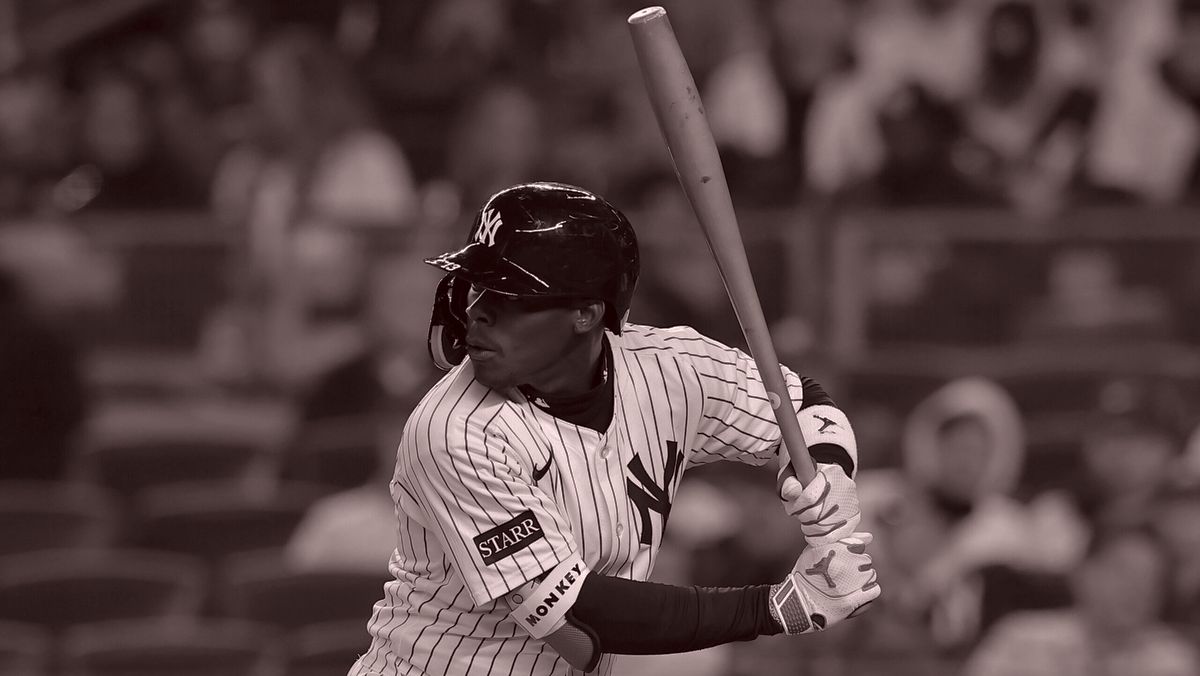
Depending on which side of the aisle your team sits on, torpedo bats are either the best thing to happen to baseball this season or an illegal advantage masterminded by the most villainous organization in all of sports: the Yankees, of course, whose nine home runs on Opening Day against the Milwaukee Brewers led to several other teams rushing out to equip their clubhouses with the new lumber. If you’re MLB commissioner Rob Manfred, however, torpedo bats are a net positive—the latest micro-innovation, after the pitch-clock, to add enthusiasm around a game that has fallen behind its peers in media hype and deal size.
In a recent sit-down with the Times, Manfred said that the bats provided entertainment, and that robust public discussion about the equipment was a proxy for the league’s relevance. Left unsaid, of course, was a larger point: Torpedo bats drive more attention, which enhances fandom, all of which creates leverage at the negotiation table. One presumes this is on Manfred’s mind amid the final year of his $550 million agreement with ESPN, as he tests out new potential streaming partners and prepares for a significant set of negotiations in ’28 as Fox’s and WBD’s deals expire.
In many ways, Major League Baseball’s current predicament is misunderstood. While ESPN might have felt that its rights package was not worth the half-billion dollars it was paying, the game has rarely been more popular with audiences aged 18 to 35—the result of Manfred and Theo Epstein’s rules changes, and the cadre of historical talents in the game today. For example, last year’s Dodgers-Yankees World Series drove 136 percent more TikTok engagement for the MLB account than the 2023 World Series, with a 36 percent increase in views, to 72 million. MLB has grown faster on TikTok than on sites that skew older, like X, where it took twice as long to amass roughly the same number of followers. Since 2019, the number of ticket buyers aged 18 to 35 has increased 8.5 percent, and that cohort’s viewership for national baseball games has seen double-digit increases.
Social growth, of course, can’t make up for lost cable revenue. And, alas, sometimes covering sports media can feel like beating the same drum a little bit louder every day: We know that local revenue is vital to all franchises but existential to smaller-market clubs. For most teams, roughly a quarter of their finances come from those deals, and yet R.S.N.s are a fire that can’t be put out. In his Times interview, Manfred literally used that word— existential—to encapsulate the challenges of his small-market clubs. But at least their challenges frame his mandate: If fandom is growing while local media revenue is disintegrating, how can you offset those losses? It’s time to get creative…
|
|
Really creative, actually. The downside of youthful fandom, of course, is that this crowd knows the workarounds, and I’m not just talking about deploying their parents’ or old roommate’s passwords. The anti-piracy firm Synamedia and Ampere Analysis have reported that 83 percent of sports fans between ages 13 and 40 watch at least one game or match per week through illegal streams.
Piracy is an issue for all leagues, everywhere. According to the same report, more than 65 percent of fans who are illegally streaming content say they do so because legitimate means of access are too expensive. Another study found that paid illegal content streaming—i.e., using a V.P.N. to watch in-market games—exploded in growth during the pandemic. All of this adds up to a potential $28 billion in lost revenue for global sports leagues, as organizations like the NFL, NBA, and UFC have publicly said.
We know that cable subs are declining and that younger audiences are finding new, more affordable methods of accessing games. If you don’t give them an opportunity to access your games affordably and legally, they’ll find other options.
|
(Mostly) All Baseball Is Local
|
|
Now that we’ve accumulated enough time, data, and knowledge to look back at the start of the streaming revolution, we can see what worked and what didn’t. Relying on owned and operated programming, despite the logic of vertical integration, did not provide the necessary scale. Neither did reliance on pure-play ad-free growth alone. What worked was a combination of bundling, differentiated pricing for more cost-sensitive homes, and sports. And, crucially, streaming sports strategies are predicated on leagues and superstars, not teams. According to a Disney study, Gen Z is only half as likely as their Gen X parents to root for their home team.
Baseball executives recognize that, within our increasingly nationalized sports environment, their league remains the most local of the major sports leagues—a relic of their franchise-based, non-rev-share model, and their long season. Fay Vincent, the former MLB commissioner, had spoken about the difficulty in getting big-market audiences interested in watching small-market teams play one another. It hadn’t mattered when the revenues were tilted locally and the revenues from those R.S.N.s were thriving—but those days are over, and changing fan behavior doesn’t happen on a whim.
Indeed, those losses in cable are increasing, not stabilizing, and specialty S.V.O.D.s for small-team markets will never make up for the ghosts of profits past. Integrating with a streaming ecosystem that’s looking to unify television—which Google and Amazon are clearly working toward across their operating systems, platforms, and third-party stores—could make baseball accessible again for the first time in years, leveraging its current popularity.
Media executives typically have strong salesmanship but lack product focus—mostly because they haven’t needed it until now. To manifest a profitable future, you have to meet people where they are, even if they seem icky at the outset. Aggregation plays through Amazon (and Google) are always contested—remember when former WarnerMedia executives removed HBO Max (prior to the Max change) from Prime Video Channels to own the audience relationship? Under David Zaslav, Max returned. Other companies, like Comcast, go back and forth on whether to put Peacock into the Amazon Channels offering. But even a slightly slimmed-down nationalized deal between the MLB and Amazon that worked within the Channels ecosystem could help boost overall viewership for viewers already in the Prime ecosystem—a one-stop shop in a busy marketplace.
According to this framework, MLB could partner with Amazon and Google, and work out its challenges with ESPN—albeit on a smaller deal, perhaps. This arrangement would lead to stronger reach on the national games, a much better integration system for smaller teams’ own streaming efforts through the Channels businesses, and a clear way to leverage online discovery. It could make all the difference for a league trying to retrain its audience to expect to find a game and be able to watch without hassle. Amazon has seemed very willing to deepen its MLB relationship; YouTube ostensibly less so. As for ESPN, I’ll leave that one to Manfred and Pitaro, but I think it makes sense for both of them.
|
The Inner Circle cheap seats—sort of an oxymoron I suppose (blame Marchand!)—will begin next week. In the meantime, send feedback to me or directly to Julia at JAlexander@puck.news.
See you Thursday,
John
|
|
|
|
Puck sports correspondent John Ourand and a rotating cast of industry insiders take you inside the executive suites and owners boxes where the decisions that shape the entire sports business are made. You’ll hear interviews with players, network execs, and everyone in between. The Varsity is an extension of John’s private email for Puck by the same name. New episodes publish every Wednesday and Sunday.
|
|
|
|
Ace media reporter Dylan Byers brings readers into the C-suite as he chronicles the biggest stories in the industry: the future of cable news in the streaming era, the transformation of legacy publishers, the tech giants remaking the market, and all the egos involved.
|
|
|
Need help? Review our FAQ page or contact us for assistance. For brand partnerships, email ads@puck.news.
You received this email because you signed up to receive emails from Puck, or as part of your Puck account associated with . To stop receiving this newsletter and/or manage all your email preferences, click here.
|
|
Puck is published by Heat Media LLC. 107 Greenwich St, New York, NY 10006
|
|
|
|